

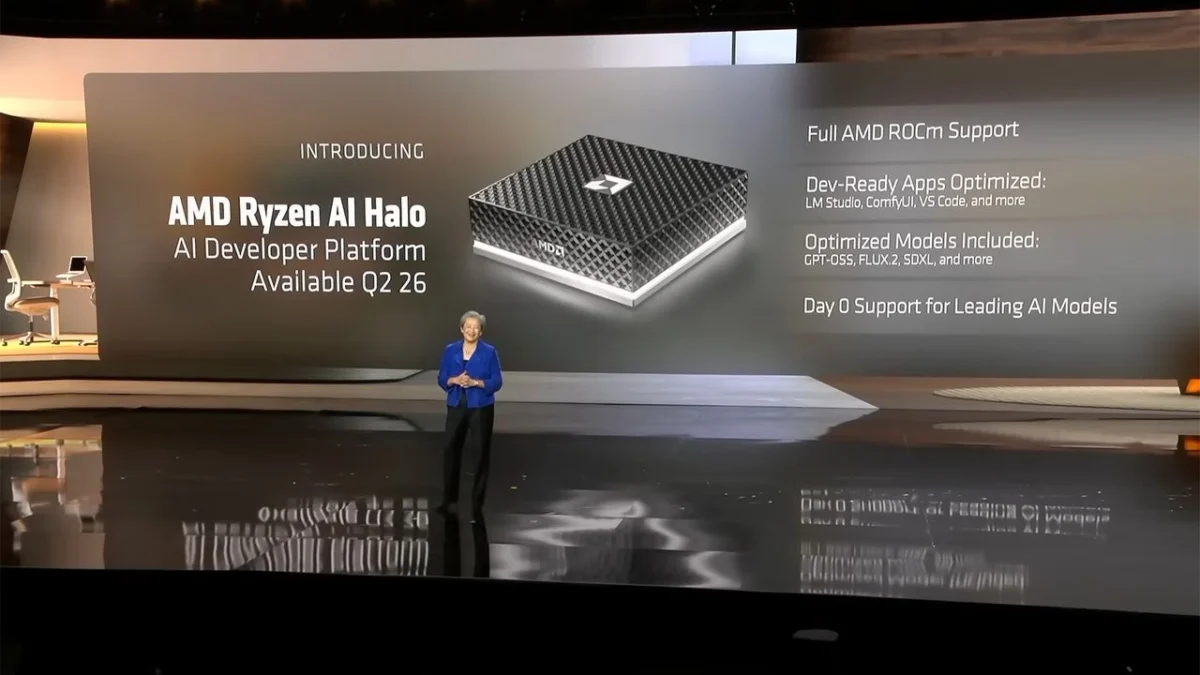
[City, State] – [Date] – AMD has officially launched its highly anticipated Ryzen AI Halo Developer Platform, marking a significant stride in the realm of on-device artificial intelligence. Available now for preorder in the U.S. exclusively through Micro Center, this powerful mini-PC is poised to become a cornerstone for developers eager to push the boundaries of local large language models (LLMs) and other AI applications. Priced competitively at $3,999, the platform is a direct challenge to Nvidia’s established DGX Spark, offering a compelling blend of raw computational power, integrated AI capabilities, and crucial operating system flexibility.
First unveiled with considerable fanfare at CES 2026, the Ryzen AI Halo Developer Platform is more than just a piece of hardware; it represents AMD’s strategic commitment to democratizing AI development. Its compact form factor belies the immense processing power housed within, making advanced AI research and application prototyping accessible outside of traditional, often costly, cloud-based environments. The platform arrives in two distinct variants, offering developers the choice between a pre-installed Linux operating system or the widely adopted Windows 11 Pro, a feature that immediately sets it apart from its primary competitor.
Main Facts: Redefining On-Device AI Development
The core announcement revolves around the immediate availability and key specifications of the AMD Ryzen AI Halo Developer Platform. This $3,999 mini-PC is designed from the ground up to serve as a high-performance workstation for artificial intelligence development, specifically targeting the burgeoning field of local large language models (LLMs). The ability to run sophisticated AI models directly on a personal device rather than relying on remote cloud servers offers numerous advantages, including enhanced data privacy, reduced latency, and potentially lower operational costs for developers over time.
AMD’s move is a clear strategic play to carve out a significant share in the rapidly expanding AI hardware market. The platform’s direct competitor, Nvidia’s DGX Spark, has previously held a strong position in this niche, but AMD’s entry brings a robust alternative. The Ryzen AI Halo is built around the flagship Ryzen AI Max+ 395 processor, a formidable piece of silicon engineered for demanding AI workloads.
A crucial differentiator highlighted by AMD is the choice of operating systems. While Nvidia’s DGX Spark is exclusively limited to Linux-based environments, the Ryzen AI Halo Developer Platform offers both Linux and Windows 11 Pro options. This dual-OS approach significantly broadens the platform’s appeal, catering to a wider array of developers who may prefer the familiar Windows ecosystem for certain tasks or require the flexibility to seamlessly integrate their AI projects with existing Windows-native tools and workflows. The option to dual-boot further enhances this versatility, allowing developers to leverage the strengths of both operating systems as needed.
The platform’s initial pricing of $3,999 mirrors the original launch price of the DGX Spark. However, market dynamics, particularly global supply chain constraints affecting LPDDR5X memory and NAND flash, led Nvidia to recently increase the DGX Spark’s price to $4,699. This makes AMD’s offering not only more flexible but also, at present, more cost-effective, positioning it as an attractive proposition for developers seeking powerful, local AI development capabilities without the premium price tag. The preorders are currently live, with local pickup for the Linux variant scheduled for July 10, signaling a swift transition from announcement to market availability.
Chronology: From Concept to Commercialization
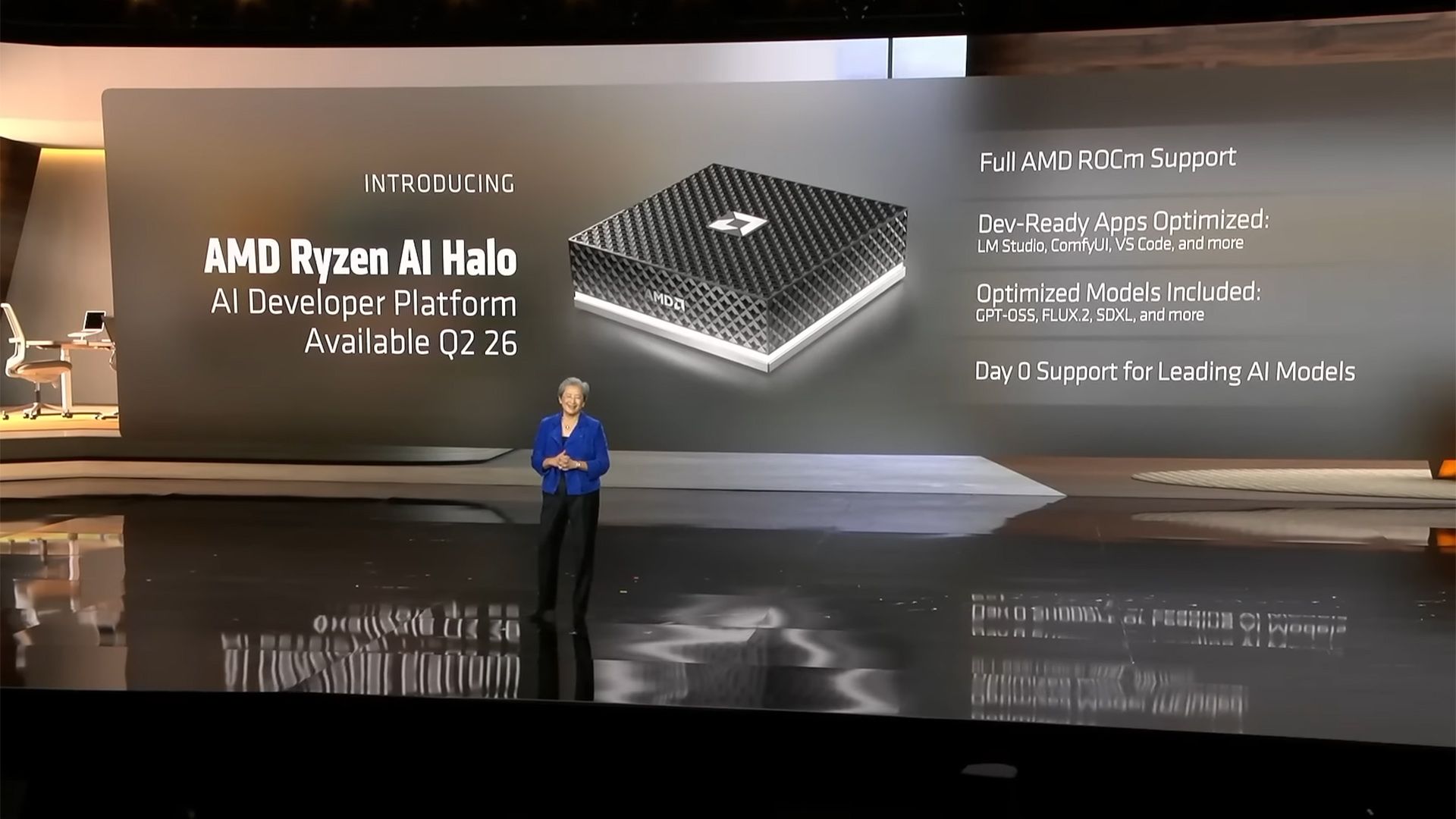
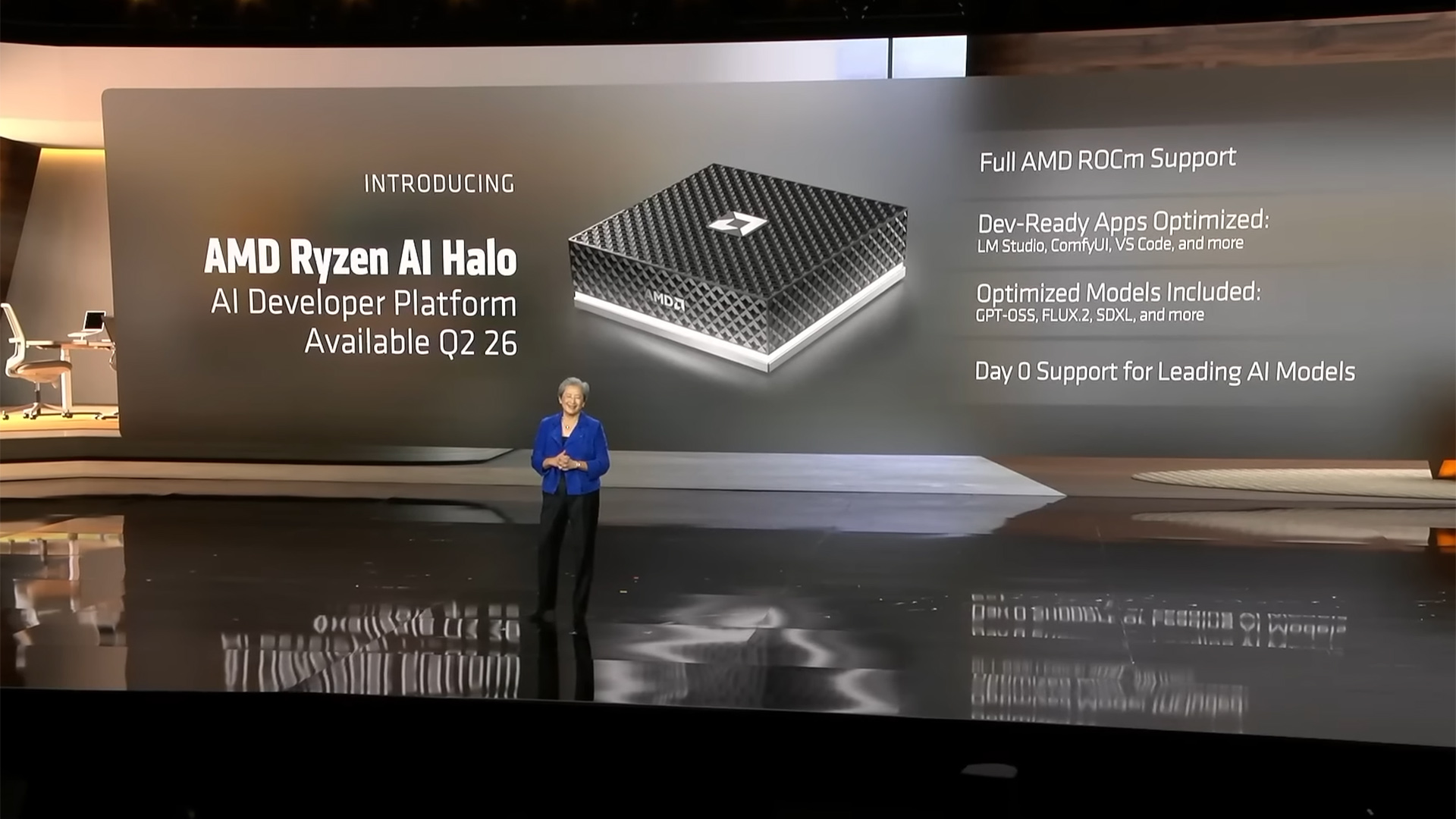
The journey of the Ryzen AI Halo Developer Platform to commercial availability underscores a concerted effort by AMD to establish itself as a dominant force in the AI hardware landscape. The platform first captured public attention during its grand unveiling at CES 2026, where AMD executives, including President and CEO Dr. Lisa Su, showcased its potential as a game-changer for on-device AI. This initial announcement generated considerable excitement, setting expectations for a new class of AI-accelerated mini-PCs.
AMD’s strategic roadmap for AI has been building momentum for several years. The company’s prior generations of Ryzen AI processors, featuring integrated Neural Processing Units (NPUs) based on the XDNA architecture, laid the groundwork for the more advanced capabilities seen in the Halo platform. These earlier iterations primarily focused on enabling AI features in consumer laptops, but the Ryzen AI Halo signifies a leap into dedicated developer hardware, pushing the limits of what integrated AI can achieve. The development of the XDNA NPU architecture itself has been a multi-year endeavor, reflecting AMD’s long-term vision for pervasive AI across its product stack.
The competitive landscape also played a crucial role in the timing and positioning of the Ryzen AI Halo. Nvidia’s DGX Spark, launched roughly a year prior, had already established a market for compact, high-performance AI workstations. Nvidia, a long-standing leader in GPU-accelerated computing for AI, demonstrated the demand for such specialized devices. The DGX Spark’s success, coupled with its subsequent price adjustment due to memory shortages, provided AMD with valuable market intelligence and an opportunity to refine its own offering to meet or exceed competitor benchmarks.
The decision to offer both Linux and Windows 11 Pro variants from day one reflects a responsive strategy to cater to the diverse needs of the developer community. Historically, AI development has been heavily skewed towards Linux environments due to the prevalence of open-source tools and frameworks. However, the increasing integration of AI capabilities into mainstream applications and the growing number of developers familiar with Windows necessitated a more inclusive approach. By providing native Windows support, AMD aims to lower the barrier to entry for a broader demographic of AI innovators.
The current global supply chain dynamics, particularly the scarcity and rising cost of high-bandwidth memory like LPDDR5X, also factor into the platform’s chronological rollout. While these challenges impacted Nvidia’s pricing, AMD appears to have navigated them to maintain its initial $3,999 price point. This ability to stabilize pricing despite market volatility further enhances the platform’s appeal, indicating robust supply chain management or strategic component procurement by AMD. The July 10 availability date, following preorders, signifies the culmination of extensive design, testing, and manufacturing efforts, bringing AMD’s vision for local AI development to fruition.
Supporting Data: A Deep Dive into Hardware and Performance
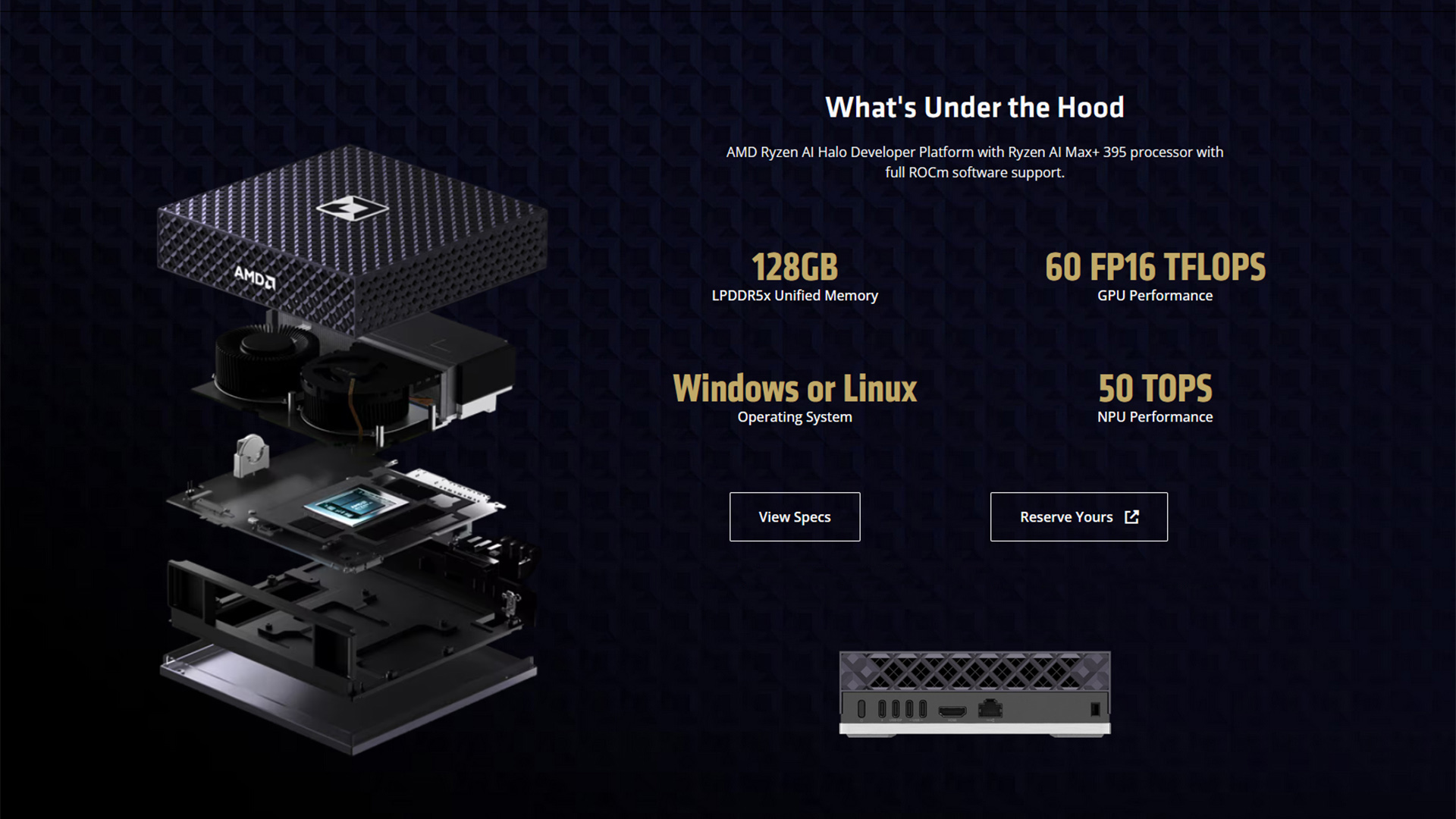
The AMD Ryzen AI Halo Developer Platform is a meticulously engineered system, packing an impressive array of specifications into its compact frame. At its heart lies the Ryzen AI Max+ 395 processor, a testament to AMD’s advanced chip design. This processor boasts a formidable 16 cores and 32 threads, providing substantial parallel processing power for complex AI models and general computing tasks. With a base clock speed of 3 GHz and a max boost clock speed soaring to 5.1 GHz, the CPU component alone is capable of handling demanding workloads with exceptional efficiency.
Complementing the powerful CPU is a staggering 128GB of unified LPDDR5X-8000 memory. This high-speed, high-capacity unified memory architecture is a critical asset for AI development, particularly for running large language models. Unified memory means the CPU, GPU, and NPU can all access the same pool of data, significantly reducing latency and increasing bandwidth compared to systems with separate memory pools for different processing units. The 8000 MT/s (megatransfers per second) speed ensures rapid data transfer, which is vital for feeding the vast datasets required by modern AI algorithms. The inclusion of 16MB of L2 cache and 64MB of L3 cache further enhances memory access efficiency, reducing bottlenecks and accelerating computation.
For graphical and specific AI acceleration, the platform integrates RDNA 3.5 Radeon 8060S graphics with 40 compute units. While not a discrete GPU, this integrated graphics solution is far more potent than typical integrated graphics, capable of handling graphics-intensive AI tasks, data visualization, and even some traditional gaming workloads. Its role in a hybrid AI environment is crucial, offloading tasks that are better suited for parallel processing on the GPU.
Perhaps the most defining feature for AI workloads is the dedicated Neural Processing Unit (NPU), which delivers an impressive 50 TOPS (Tera Operations Per Second). TOPS is a measure of an NPU’s performance, indicating how many trillion operations it can perform per second. A 50 TOPS NPU is a significant leap forward, allowing the system to efficiently execute complex AI inference tasks, such as real-time image recognition, natural language processing, and other machine learning algorithms, with vastly reduced power consumption compared to running these tasks on the CPU or GPU alone. This dedicated hardware acceleration is key to the platform’s ability to run demanding LLMs locally.
The physical design of the mini-PC is equally noteworthy. Measuring a mere 149 x 149 x 43.18 mm, its compact dimensions make it suitable for a variety of work environments. The robust aluminum chassis not only provides durability but also contributes to efficient heat dissipation. Inside, a 2TB M.2 SSD offers ample and fast storage for operating systems, development tools, and extensive AI datasets.
Connectivity options are comprehensive, mirroring the needs of a modern development workstation. It includes Wi-Fi 7 for cutting-edge wireless networking, Bluetooth 5.4 for peripheral connectivity, a 10 GbE LAN port for high-speed wired network access (crucial for data transfer in development environments), four versatile USB-C ports (one dedicated for power input), and an HDMI 2.1b port for high-resolution display output.
A critical aspect for such a high-performance, compact system is its thermal management. AMD has implemented a unique cooling solution for the Strix Halo chip, comprising a baseplate, direct-touch flat heatpipes, an aluminum channel heatsink, and two lateral airflow blower-style fans. This intricate design ensures that the powerful components remain cool under sustained load, preventing thermal throttling and maintaining optimal performance during intensive AI computations.
Comparative Analysis: AMD Ryzen AI Halo vs. Nvidia DGX Spark
The most direct comparison for the Ryzen AI Halo is Nvidia’s DGX Spark. While both are compact AI workstations, their architectural philosophies and current market positioning offer distinct choices for developers.
| Feature | AMD Ryzen AI Halo Developer Platform | Nvidia DGX Spark Founders Edition |
|---|---|---|
| Processor | Ryzen AI Max+ 395 (16C/32T) | NVIDIA Grace CPU (72 ARM Neoverse V2 cores) |
| Integrated Graphics | RDNA 3.5 Radeon 8060S (40 CUs) | N/A (Relies on discrete GPU) |
| NPU Performance | 50 TOPS | Integrated with GPU/CPU (Different metric) |
| Memory | 128GB LPDDR5X-8000 (Unified) | 128GB LPDDR5X (Unified) |
| Storage | 2TB M.2 SSD | 1TB NVMe SSD |
| Operating System | Linux or Windows 11 Pro | Linux-based environment only |
| Price (USD) | $3,999 | $4,699 (originally $3,999) |
| Multi-Device Link | No NVLink equivalent | NVLink (for pairing two units) |
| Connectivity | Wi-Fi 7, BT 5.4, 10 GbE LAN, 4x USB-C, HDMI 2.1b | Similar (10 GbE, USB-C, DisplayPort) |
AMD’s offering stands out with its native Windows support, offering unparalleled flexibility. While the DGX Spark leverages Nvidia’s Grace CPU and its strong CUDA ecosystem, AMD’s integrated approach with a powerful CPU, GPU, and NPU on a single chip (Strix Halo) provides a highly optimized, power-efficient solution for many on-device AI tasks. The absence of NVLink in the AMD unit, which allows two DGX Spark machines to pair for enhanced performance, is a notable difference for developers considering scaling their local AI infrastructure. However, for a single, powerful workstation, the Ryzen AI Halo presents a compelling case, especially given its current price advantage.
The ongoing global supply constraints affecting LPDDR5X memory and NAND flash have impacted both companies. Nvidia explicitly cited these shortages for its price increase, suggesting that the demand for these high-performance components remains high. AMD’s ability to maintain its initial price point at launch could be indicative of better supply chain resilience or a more aggressive pricing strategy to gain market share.
Alternative Considerations:
For developers exploring alternatives, the Corsair AI Workstation 300 also utilizes the same Ryzen AI Max+ 395 processor. While a slightly larger system, it offers similar core capabilities. Its current starting price of $2,699 for the 1TB storage model and $3,399 for the 4TB model positions it as a more budget-friendly option, albeit with potentially different form factor, cooling, and I/O configurations. This shows that the underlying Strix Halo architecture is finding its way into various form factors, offering developers choices based on their specific needs and budget.
Official Responses: AMD’s Vision and Market Reception
While direct, explicit official responses in the original article are limited, the launch of the Ryzen AI Halo Developer Platform speaks volumes about AMD’s strategic intent and confidence in its integrated AI hardware. AMD’s presentation at CES 2026, where the platform was first unveiled, highlighted the company’s vision of bringing powerful, efficient AI processing closer to the user, moving away from an exclusive reliance on cloud infrastructure. This aligns with a broader industry trend towards "edge AI" or "on-device AI," where privacy, latency, and cost-effectiveness are paramount.
The collaboration with Micro Center for exclusive U.S. preorders signifies a strategic retail partnership. Micro Center, known for catering to PC enthusiasts and developers, provides AMD with a focused channel to reach its target audience effectively. This partnership also streamlines distribution and support for early adopters of the platform. The fact that preorders are now live, with a concrete local pickup date, suggests that AMD has moved beyond the conceptual phase and has robust production and distribution capabilities in place.
From AMD’s perspective, this platform is not just about competing with Nvidia; it’s about expanding the entire ecosystem for AI development. By offering native Windows support, AMD is effectively sending a message to the vast community of Windows developers that their platform is ready for AI innovation. This inclusive approach aims to foster a broader developer base for AMD’s AI software stack, including its ROCm (Radeon Open Compute) platform and Vitis AI development environment, which are crucial for optimizing AI workloads on AMD hardware.
Industry analysts are likely to view this launch as a critical step for AMD in solidifying its position in the high-growth AI market. The competitive pricing relative to Nvidia’s adjusted DGX Spark price, coupled with the OS flexibility, presents a strong value proposition. While Nvidia holds a dominant position in high-end AI training with its discrete GPUs and CUDA ecosystem, AMD is strategically targeting the on-device inference and development segment, where integrated solutions with NPUs are becoming increasingly important.
While Nvidia has not issued a direct public statement regarding the Ryzen AI Halo launch, its recent price adjustment for the DGX Spark due to memory shortages implicitly acknowledges the challenging market conditions. The competitive pressure from AMD’s new platform will undoubtedly influence Nvidia’s future strategies in the compact AI workstation segment, potentially leading to further innovation and competitive offerings from both sides. This healthy competition is ultimately beneficial for developers, driving down costs and accelerating technological advancements.
Implications: Reshaping the AI Landscape
The introduction of the AMD Ryzen AI Halo Developer Platform carries profound implications for developers, the broader AI market, and the tech industry as a whole. Its arrival signifies a pivotal moment in the ongoing shift towards more accessible and versatile AI development.
For Developers:
The most immediate beneficiaries are developers. The Ryzen AI Halo platform offers unprecedented access to powerful, local AI processing capabilities. This means:
- Democratization of AI: High-performance AI development is no longer solely the domain of large corporations with access to vast cloud resources or expensive server racks. Individual developers, startups, and academic researchers can now experiment with and deploy complex LLMs and other AI models locally, reducing reliance on costly cloud subscriptions and easing budget constraints.
- Enhanced Privacy and Security: Running AI models locally keeps sensitive data on the device, significantly improving privacy and security, especially for applications dealing with personal information or proprietary data. This is crucial for sectors like healthcare, finance, and defense.
- Reduced Latency: Local inference eliminates network latency, leading to faster response times for AI applications. This is critical for real-time applications such as autonomous systems, interactive AI assistants, and advanced gaming AI.
- Greater Flexibility with OS: The choice between Linux and Windows 11 Pro is a game-changer. Developers can leverage their preferred environment, whether it’s the open-source power of Linux or the user-friendliness and extensive software ecosystem of Windows. This flexibility can accelerate development cycles and lower the learning curve for new AI practitioners.
- Hardware-Software Co-optimization: The integrated nature of the Ryzen AI Max+ 395 processor, with its powerful CPU, RDNA 3.5 GPU, and dedicated NPU, encourages developers to optimize their AI workloads for hybrid architectures. This can lead to more efficient and power-conscious AI applications.
For the AI Market:
AMD’s entry into this segment intensifies the competition and drives innovation:
- Acceleration of Edge AI: The platform champions the growth of edge AI, where AI processing occurs close to the data source rather than in centralized cloud data centers. This trend is vital for IoT devices, smart homes, industrial automation, and smart cities.
- Competitive Pressure on Nvidia: The direct competition with Nvidia’s DGX Spark will likely spur both companies to innovate faster, offer more compelling features, and potentially engage in price competition, ultimately benefiting consumers and developers.
- Expansion of AI Software Ecosystems: AMD’s push requires a robust software ecosystem. This will encourage the development of new tools, frameworks, and libraries optimized for AMD’s XDNA NPU architecture and ROCm platform, fostering a more diverse and vibrant AI software landscape beyond Nvidia’s CUDA dominance.
- Impact on AI Model Development: The availability of powerful local machines may influence the design and optimization of LLMs and other AI models, encouraging the development of models that are more efficient for on-device inference.
For the Broader Tech Industry:
The Ryzen AI Halo platform is a bellwether for future trends in personal computing:
- The Rise of the "AI PC": This developer platform is a precursor to a new generation of consumer-focused "AI PCs" that will embed powerful AI capabilities directly into everyday devices. These future PCs will offer enhanced productivity, creativity, and user experience through AI-driven features like advanced noise cancellation, real-time language translation, intelligent content creation, and personalized assistants.
- AMD’s Strategic Positioning: This launch strengthens AMD’s position as a formidable competitor to both Intel and Nvidia in the high-growth AI segment. By offering a comprehensive solution that integrates CPU, GPU, and NPU, AMD is showcasing its full-stack capabilities and challenging the traditional discrete component model for AI acceleration.
- Supply Chain Resilience and Pricing: The differing pricing strategies of AMD and Nvidia amidst memory shortages highlight the ongoing challenges and importance of supply chain management in the tech industry. It also underscores how component availability can directly impact product pricing and market competitiveness.
- Evolution of Mini-PCs: The Ryzen AI Halo demonstrates that mini-PCs are evolving beyond basic desktop replacements into highly specialized, high-performance workstations capable of tackling cutting-edge computing challenges.
In conclusion, the AMD Ryzen AI Halo Developer Platform is more than just another product launch; it’s a strategic move that could fundamentally alter the landscape of AI development. By making powerful local AI processing accessible, flexible, and competitively priced, AMD is empowering a new generation of innovators and accelerating the widespread adoption of artificial intelligence across various applications and industries. The future of AI, increasingly, looks to be on the edge.

