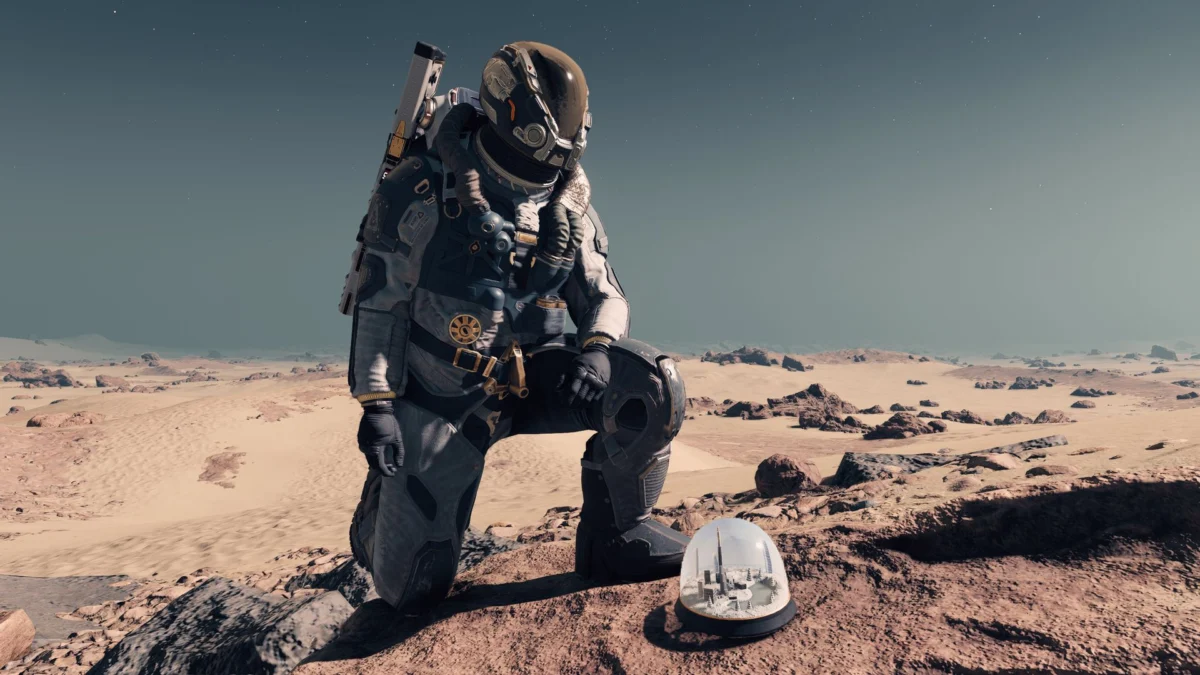
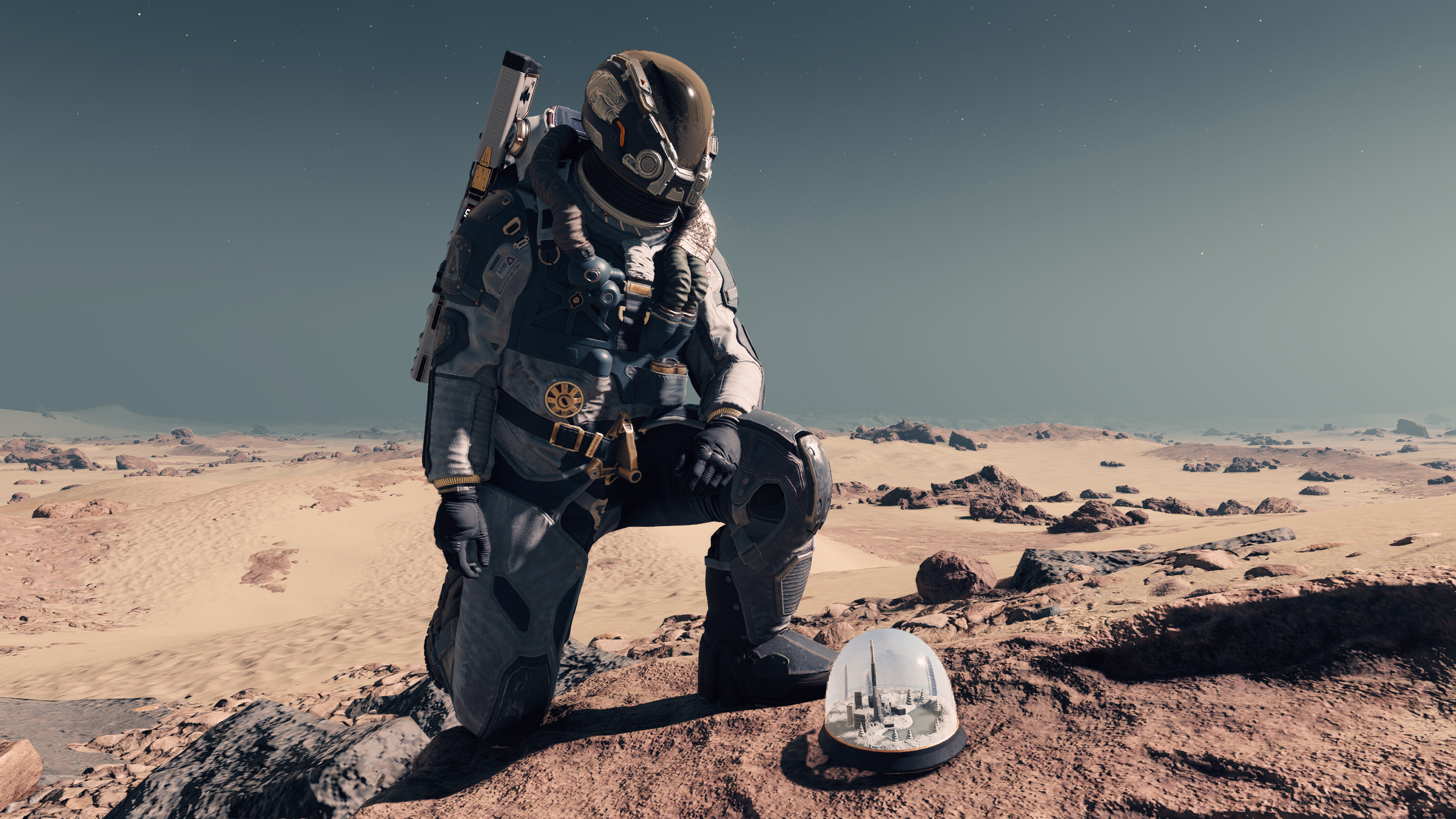
When Bethesda Game Studios released Starfield in September 2023, it marked a monumental milestone for the legendary developer: its first entirely new intellectual property in a quarter of a century. Billed as an epic "NASA-punk" role-playing game where players could traverse a sprawling, star-studded galaxy, the title carried the monumental weight of expectations built over eight years of active development.
Yet, nearly two years after its initial launch, the conversation surrounding the franchise has taken a somber turn. According to former Bethesda systems designer Kurt Kuhlmann, players should not hold their breath for a sequel. In a candid recent interview, Kuhlmann suggested that Starfield 2 will likely never materialize, citing a combination of underwhelming commercial reception relative to expectations, shifting corporate priorities at parent company Microsoft, and deep-seated structural flaws in how the game’s core systems were implemented.
While Bethesda’s official corporate stance insists that the universe remains a vital part of its long-term roadmap, the testimony of a veteran developer paints a complex picture of a studio grappling with the immense friction of launching a brand-new franchise in a rapidly evolving gaming landscape.
Main Facts: The Unlikely Future of a Sci-Fi Franchise
The core revelation stems from remarks made by Kuhlmann, who departed Bethesda shortly after Starfield shipped, during a discussion with FRVR. When pressed on the possibility of a follow-up, Kuhlmann pulled no punches.
"I would be very surprised," Kuhlmann stated regarding the prospect of Starfield 2. "I don’t think Starfield was anywhere near successful enough to do a Starfield 2."
This assessment cuts sharply against the initial hype surrounding the game, which drew millions of players at launch, largely fueled by its inclusion on the Xbox Game Pass subscription service on day one. However, despite generating an estimated $300 million in revenue by April of the following year against a reported development budget of roughly $200 million, the game’s financial footprint falls short of the generational, multi-decade cash cows Bethesda is historically known for—most notably The Elder Scrolls V: Skyrim, which has surpassed 65 million units sold.
Compounding the issue is the broader corporate strategy of Xbox. With leadership explicitly demanding faster turnaround times and tighter focus on legacy powerhouses like The Fallout and The Elder Scrolls series, greenlighting another high-budget, high-risk sci-fi epic becomes an increasingly difficult sell for corporate executives.
Chronology: From Launch Hype to Quiet Uncertainty
To understand how Starfield arrived at this precarious crossroads, it is helpful to trace the timeline of its development and public reception:
1997–2018 (The Conception Era): Concepts for a space-faring RPG floated within Bethesda for decades. Director Todd Howard and his team officially began pre-production following the completion of Fallout 4, utilizing an upgraded Creation Engine 2 to build a massive, procedurally assisted universe.
September 2023 (The Launch):Starfield launches globally across PC and Xbox Series X/S. It pulls in massive player counts, crossing millions of concurrent users in its first week, but immediately sparks polarized debates across the gaming community regarding its exploration loop, loading screens, and narrative pacing.
Late 2023–Early 2024 (The Post-Launch Reality): Financial estimates place the game’s revenue around $300 million. While profitable, public discourse shifts as players compare its systemic depth unfavorably to contemporary masterpieces like Larian Studios’ Baldur’s Gate 3.
Mid-2024 (The Departure and Revelations): Key veteran developers, including systems designer Kurt Kuhlmann, depart the company. Subsequent interviews begin to shed light on internal creative struggles during development.
July 2024–Present (Ongoing Support vs. Future Uncertainty): Bethesda rolls out major patches—such as the "Free Lanes" updates aimed at reducing navigational friction—alongside story DLC like the Terran Armada expansion. Bethesda leadership publicly reassures fans that Starfield remains "an important part of our future," even as the studio’s primary focus shifts squarely to The Elder Scrolls VI.
Supporting Data: Budget, Revenue, and the Shadow of Skyrim
Analyzing the commercial viability of a modern AAA game requires looking past the initial marketing hype and examining the hard metrics of production, monetization, and player retention.
Development Costs: Industry reports peg Starfield’s budget at approximately $200 million, backed by a massive development team boasting over 500 active contributors at its peak.
Revenue Benchmarks: Financial analytics released in early 2024 estimated the game’s lifetime revenue at roughly $300 million. While this technically clears the baseline threshold for profitability, it leaves slim profit margins when factoring in marketing campaigns, platform revenue splits, and ongoing post-launch development costs.
The Industry Giant Benchmark: To put Starfield‘s performance into perspective, Bethesda’s crown jewel, Skyrim, has sustained multi-platform re-releases for over a decade, crossing the 65-million-units-sold milestone. Starfield, by contrast, experienced a sharp drop in concurrent player retention on PC within months of release, struggling to maintain the cultural momentum required to justify an immediate, equally expensive sequel.
Design Missteps: The Outpost Paradox
Beyond cold sales figures, Kuhlmann’s critique dives deep into the creative friction that plagued Starfield’s development—specifically, how sprawling gameplay systems were conceptualized and executed.
A primary casualty of this design philosophy was the outpost-building mechanic. According to Kuhlmann, the ability for players to construct bases on virtually any planet in the galaxy was implemented as a standalone feature rather than an organic pillar of the narrative experience.
"You can build a base anywhere you want on a planet. For what it is, as a standalone system, it’s cool, but it’s not nearly as integrated with the rest of the game," Kuhlmann explained.
Kuhlmann noted that Bethesda fell into a remarkably similar trap during the creation of Fallout 4, where base-building was heavily emphasized but often felt disconnected from the emotional stakes of the main questline. Despite internal questions about whether the feature deserved a place in Starfield if it couldn’t be properly woven into the storytelling, the decision to keep it was made "above" his level. This left the development team pouring a massive amount of working hours into a feature that ultimately functioned as an isolated sandbox rather than a narrative engine.
Critics and industry analysts have echoed these sentiments, pointing out that Starfield’s overarching design—relying heavily on disconnected cells, loading screens, and procedural generation—felt antiquated when measured against the tightly knit, reactive world-building seen in titles like The Witcher 3 or Baldur’s Gate 3.
Implications: What Lies Ahead for Bethesda Game Studios?
The revelation that Starfield 2 is unlikely to happen carries profound implications not just for Bethesda, but for the broader strategy of Microsoft’s Xbox ecosystem.
Risk Aversion in AAA Development: With ballooning budgets and development cycles routinely pushing past half a decade, publishers are becoming increasingly reluctant to gamble hundreds of millions of dollars on untested IPs that fail to capture cultural dominance. The chilling effect of Starfield’s lukewarm critical reception may push Bethesda to stick strictly to its tried-and-true heavy hitters (The Elder Scrolls and Fallout) for the foreseeable future.
The Lifespan of Starfield 1: Just because a sequel is unlikely doesn’t mean Bethesda is abandoning the universe entirely. The studio has proven its commitment to long-tail support, rolling out sweeping quality-of-life updates, official modding tools via the Creation Club, and narrative expansions like the Terran Armada DLC. For the millions who do enjoy the lonely, contemplative nature of its NASA-punk universe, Starfield is being treated as a platform rather than a single-release stepping stone.
Creative Evolution: For the developers who crafted the game, the lessons learned—both painful and educational—will inevitably shape how future projects are approached. While Kuhlmann laments that a hypothetical Starfield 2 could have finally realized Todd Howard’s ultimate vision for the game, the reality of modern game development means those lessons may have to be applied elsewhere in Bethesda’s catalog.
Ultimately, Starfield stands as a monument to ambition—a colossal endeavor that reached for the stars, even if it stumbled upon landing. Whether it remains a standalone experiment in Bethesda’s storied history or experiences a miraculous renaissance down the line, its impact on the developer’s legacy will be debated by RPG enthusiasts for years to come.