

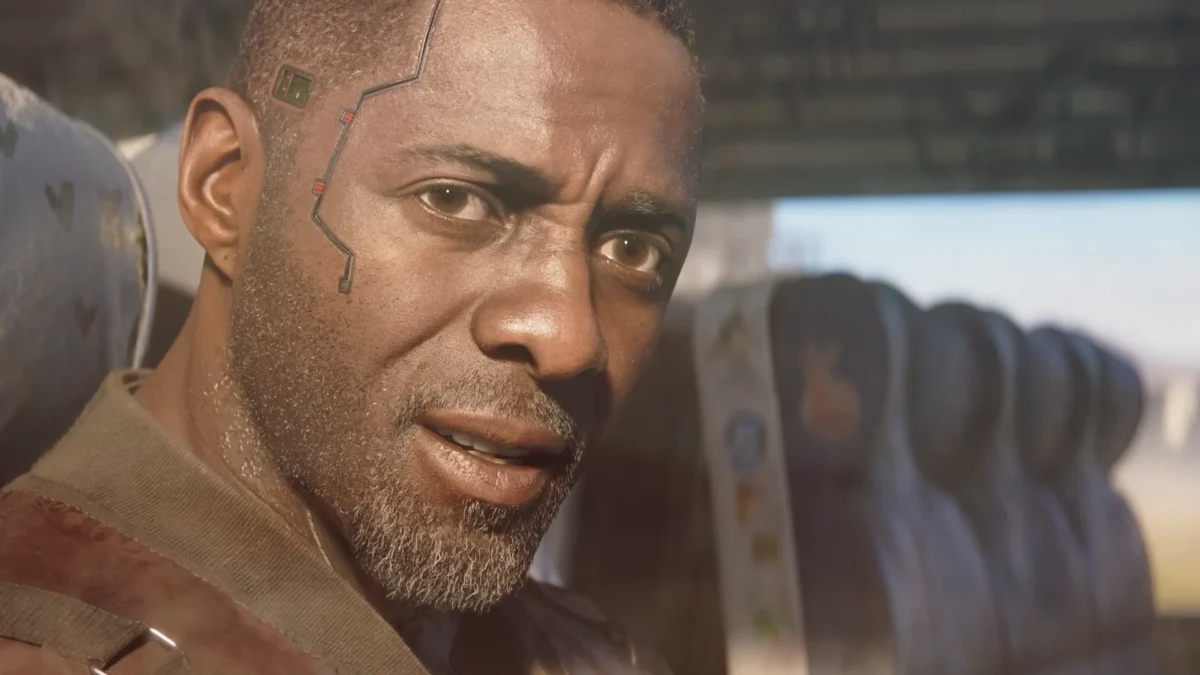
Main Facts
The development of video games is rarely a linear path of simple execution; often, it is an exhaustive crucible where art, code, and narrative collide. Recently, the creative masterminds behind Cyberpunk 2077: Phantom Liberty pulled back the curtain to reveal the staggering amount of effort required to craft one of the expansion’s most unforgettable set pieces: the Chimera Tank boss fight.
Serving as the explosive culmination of Phantom Liberty’s gripping opening act, this sequence requires players—in the shoes of mercenary V alongside New United States of America (NUSA) President Rosalind Myers—to fight for their lives against a towering, arachnid-inspired combat vehicle deep within the subterranean recesses of a Barghest-controlled facility. Inspired visually by the iconic mecha aesthetics of Ghost in the Shell, the mechanical monstrosity is designed to terrorize.
However, getting the encounter to a state where it felt both terrifying and fair was no simple feat. Speaking on CD Projekt Red’s official AnsweRED podcast, Game Director Gabe Amatangelo, Creative Director Igor Sarzyński, and Art Director Paweł Mielniczuk detailed the monumental production hurdles they faced. According to the studio’s leadership, the Chimera Tank was not just a boss encounter; it was a grueling, two-year cross-disciplinary nexus point that demanded constant synchronization between gameplay mechanics, narrative pacing, environmental worldbuilding, and high-end artistic direction.
Chronology of Development
The journey of the Chimera Tank from concept to the final, heart-pounding encounter was anything but straightforward. CD Projekt Red’s development cycle for the sequence spans nearly the entire production timeline of the Phantom Liberty expansion, highlighting the immense iterative process required to bring modern triple-A spectacles to life.
Phase 1: Conceptualization and the Vision (Years 0–1)
When initial planning for Phantom Liberty began, the development team sought a definitive opening-act anchor that would instantly establish the high-stakes, espionage-thriller tone of the expansion. Drawing inspiration from classic cyberpunk anime tropes—specifically the multi-legged, heavily armed armored units popularized by Ghost in the Shell—the team envisioned a mechanical predator capable of evoking sheer dread.
The early concept was grand: a multi-tiered, highly intelligent spider-tank that could navigate confined industrial spaces while unleashing devastating firepower. Yet, translating this ambitious vision from a concept artist’s sketchpad into an interactive digital space immediately triggered logistical friction.
Phase 2: The Iterative Tug-of-War (Years 1–2)
According to Art Director Paweł Mielniczuk, the boss fight underwent four distinct major iterations over a two-year period. During this phase, the team constantly overhauled the tank’s equipment, weaponry, and movement behaviors.

Game Director Gabe Amatangelo noted that the challenge lay heavily in balancing the conflicting priorities of different departmental disciplines. At various points in development, the encounter leaned too heavily into pure gameplay mechanics at the expense of storytelling flow; at other times, it became too cinematic and narrative-driven, or was bogged down by visual direction that obscured player feedback.
"Sometimes it was too gameplay-focused, sometimes it was too narrative, sometimes too art direction," Amatangelo explained. "It was about striking a balance and I think the three of us got into it and went: ‘Okay, beat-by-beat, let’s do this.’"
Phase 3: Final Polish and Launch (Late Year 2)
After dozens of recalibrations, adjustments to enemy tracking, weapon damage scaling, and arena layout optimization, the team locked down the encounter. When Phantom Liberty finally launched to widespread critical acclaim, the Chimera fight instantly cemented itself as a defining moment of the expansion—leaving players breathless as they slowly chipped away at the armored titan’s health bars in a desperate subterranean battle.
Supporting Data and Production Insights
The creation of the Chimera Tank offers a fascinating glimpse into the ballooning costs, time investments, and specialized workflows required to build modern role-playing games. CD Projekt Red’s leadership did not shy away from quantifying the sheer weight of the asset.
- Two-Year Development Cycle: The boss fight was in active iteration for approximately two years, a timeframe equivalent to the full production cycle of many smaller standalone indie titles.
- Four Major Iterations: The team completely redesigned the encounter’s core mechanics, weapon loadouts, and phase structures four separate times before finding the right equilibrium.
- Staggering Financial and Artistic Investment: Creative Director Igor Sarzyński made a striking revelation during the podcast, asserting that the Chimera Tank represents "one of the most expensive art assets I think ever." While exact budget figures were not disclosed, the combination of high-poly modeling, complex rigging for multi-legged articulation, custom particle effects for explosions, and tightly scripted narrative integration places it in an elite tier of game development expenditure.
- Cross-Disciplinary Coordination: The project required a tight-knit feedback loop between at least four major development pillars: combat gameplay design, narrative writing, environmental art direction, and worldbuilding lore integration.
Official Responses and Studio Perspectives
The revelations surrounding the Chimera Tank came directly from CD Projekt Red’s internal leadership via the AnsweRED podcast series. By openly discussing the friction points of development, the studio has continued a transparency trend that has characterized its post-launch recovery phase for the Cyberpunk 2077 intellectual property.
Gabe Amatangelo emphasized the difficulty of orchestrating a creative vision that satisfies multiple artistic disciplines simultaneously. By viewing the Chimera as a "nexus point," the team recognized early on that no single department could dictate the direction of the fight. Narrative could not override playability, and raw combat mechanics could not override the oppressive atmosphere of a decaying NUSA underground bunker.
Paweł Mielniczuk reinforced this sentiment by detailing the psychological toll and meticulous trial-and-error required of the art team. Modifying equipment and weapon systems across four distinct overhauls meant that artists and animators frequently had to scrap hours of intricate work to align with shifting gameplay balances implemented by the design team.

Meanwhile, Igor Sarzyński’s commentary on the asset’s unprecedented cost underscores the financial realities of modern game development. As player expectations for visual fidelity and cinematic immersion scale upward, single encounters within a game often command resources that rival entire historical software development budgets.
Implications for CD Projekt Red’s Future
The lessons learned during the grueling development of Cyberpunk 2077: Phantom Liberty—and the Chimera Tank specifically—carry significant implications for the future of CD Projekt Red as the studio transitions its massive workforce toward upcoming franchise pillars.
Refining Development Pipelines
The multi-disciplinary friction experienced during the creation of the Chimera highlights the perennial struggle of coordinating massive teams across complex design goals. CD Projekt Red’s willingness to spend two years refining a single boss fight demonstrates a renewed commitment to quality control and polish—a crucial priority following the turbulent launch of the base game in 2020. Moving forward, the studio is utilizing these collaborative workflows to streamline development between writers, coders, and artists much earlier in production pipelines.
Expectations for the Cyberpunk Sequel (Project Orion)
Phantom Liberty is widely regarded by critics and fans alike as one of the finest expansions of the decade, effectively redeeming the foundational promise of Cyberpunk 2077. The meticulous design lessons gleaned from encounters like the Chimera Tank will inevitably inform Project Orion, the upcoming full-fledged sequel to Cyberpunk 2077. Fans can likely expect even more refined, mechanically rich, and cinematically integrated boss encounters when they eventually return to the dystopian future.
The Road Ahead: The Witcher Remasters and The Witcher 4
Before the cyberpunk universe returns to the forefront, CD Projekt Red has a sprawling roadmap ahead. The studio is currently balancing multiple major initiatives, including ongoing work on The Witcher 3 expansions, the development of full-game remasters (such as The Witcher 3: Songs of the Past), and full production on the next generation of fantasy role-playing with The Witcher 4, which is currently targeting a 2028 release window.
The patience, iterative rigor, and cross-departmental communication forged in the fiery depths of the Barghest facility with the Chimera Tank will undoubtedly serve as a guiding blueprint for these upcoming massive endeavors.

