

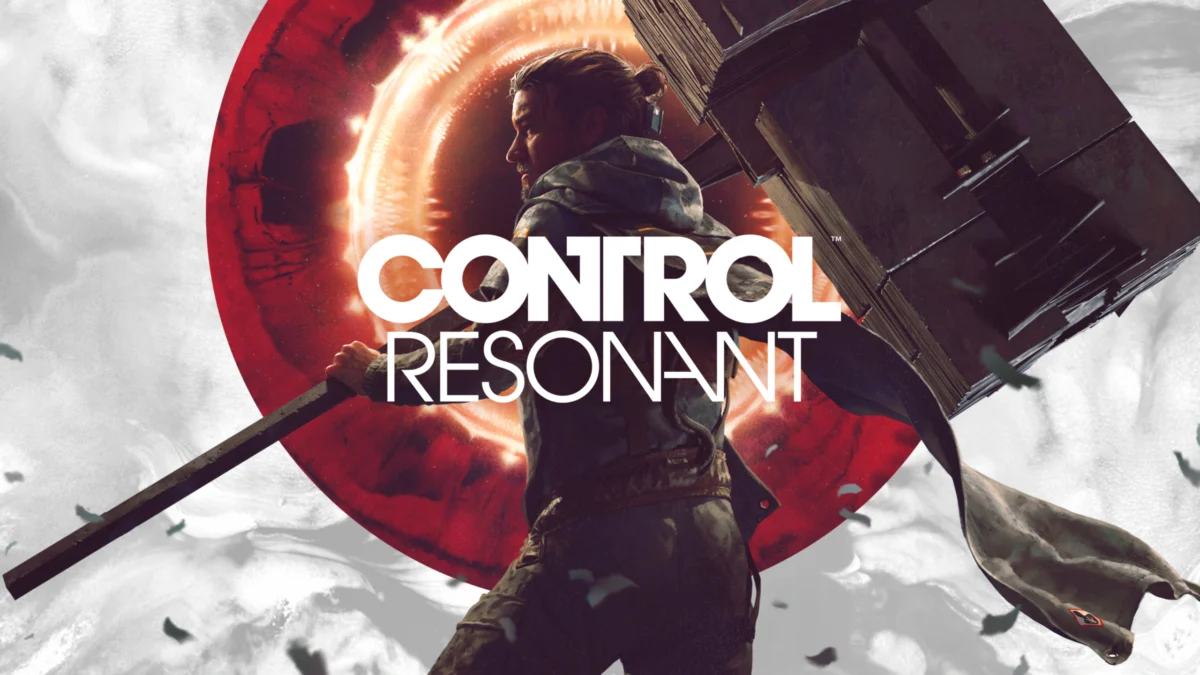
On September 24, Remedy Entertainment will officially open the doors to a new chapter of its supernatural universe with the release of Control Resonant. Arriving seven years after the genre-defining 2019 original, the sequel represents a monumental shift for the Finnish studio. Moving away from the claustrophobic, shifting corridors of the Oldest House, Control Resonant thrusts players into an open-world interpretation of Manhattan, while shifting the protagonist’s mantle from Jesse Faden to her brother, Dylan.
As the industry turns its gaze toward this ambitious project, the technical and creative hurdles of building a truly vertical, high-speed sandbox have become a primary point of interest. For senior level designer Arhi Makkonen, the challenge was not merely about scale, but about managing the player’s god-like movement capabilities within a space that promises total freedom.
The Evolution of the Faden Legacy
Control Resonant is more than a simple continuation; it is a mechanical evolution. While the original Control introduced players to the concept of the Federal Bureau of Control, its sequel demands a higher level of kinetic mastery. Dylan Faden, the game’s protagonist, is built for speed and aggression. His kit is designed to complement the game’s primary mechanical pivot: a heavy, visceral focus on melee combat.
For a studio renowned for its third-person shooters, this transition to close-quarters supernatural combat is a high-stakes gamble. "Dylan needs to feel different and fresh," says Makkonen, who joined the studio in 2018 during the final stretch of the first game’s development. "He is faster, more aggressive, and his ability to manipulate the environment is far more tactile."
Central to this new combat loop is the ‘Aberrant,’ a shape-shifting weapon capable of morphing between bladed forms and heavy blunt instruments. This allows for a rhythm of play that feels distinct from Jesse’s Service Weapon, forcing players to close the distance rather than hang back in cover.
A Chronology of Development
The journey to Control Resonant has been a long and complex one for Remedy. Since the 2019 debut of the first game, the studio has navigated a volatile release schedule. The years following the original Control saw the successful, albeit slow-burning, critical triumph of Alan Wake 2 and the controversial trajectory of FBC: Firebreak.
- 2019: Control launches to critical acclaim, establishing the "New Weird" aesthetic and the popularity of the FBC lore.
- 2020–2022: Remedy pivots toward expanded universe integration, focusing on the development of Alan Wake 2 and early prototyping for the Control sequel.
- 2023: Early teasers for the project emerge, signaling the transition to a larger, outdoor environment.
- 2024: Control Resonant is finalized for a September 24 release, marking the studio’s move toward a more "open-ended" design structure.
Throughout this period, the design team grappled with the inherent contradictions of their own creation. If a player can walk on walls and levitate across city blocks, how do you prevent them from breaking the map?
Solving the "Vertical Sandbox" Paradox
The primary challenge Makkonen and his team faced was the design of "The Open Zone." In the first game, the indoor environment provided natural bottlenecks and ceilings that acted as invisible boundaries. In Control Resonant, those constraints are gone.
"In the first game, we have the levitate ability—everybody loves it—but there is always a ceiling," Makkonen notes. "Now, when we are outside in our version of Manhattan, we have a lot of freedom to make a lot of height distance. That is what we really want to encourage."
However, this encouragement creates a paradox: how do you guide a player through a narrative when they can walk up the side of a skyscraper? The team’s approach was a delicate balance of "soft guidance" rather than restrictive invisible walls.

Visual Anchoring and Landmark Design
To prevent players from becoming lost in the massive urban sprawl, the level design team utilized "landmark-based navigation." When a player enters a new zone, the primary objective or point of interest is placed directly within their line of sight. By layering these landmarks, the designers create a subconscious path that leads the player toward the next story beat without ever forcing them into a corridor.
Color Theory as Navigation
Perhaps the most effective tool in the team’s arsenal is the use of distinct color palettes for different sectors of the city. Makkonen explains that each zone—whether it’s the park or the evacuation sector—is painted with strong, evocative colors. If a player looks at a screenshot of a specific area, the color coding tells them exactly where they are and what kind of story beats they are likely to encounter there. This allows for a "guided freedom," where players feel they are exploring of their own volition, even when they are subconsciously following the breadcrumbs laid by the designers.
The Gravity Challenge: "If It Looks Walkable, It Is"
The most daring technical feature of Control Resonant is the dynamic gravity manipulation. Players can, in designated areas, alter the direction of gravity to traverse surfaces that were previously considered inaccessible.
This created a nightmare for the art and collision teams. "Initially, it wasn’t always clear what surfaces were walkable," Makkonen admits. To solve this, the team adopted a strict design philosophy: "If it looks walkable, it is walkable."
This "truth-to-materials" approach required an unprecedented level of collaboration between environment artists and level designers. Every ledge, every wall, and every rooftop had to be tested for "breakout" potential—the risk that a player might use their powers to leave the designated gameplay space entirely. The result was a massive, iterative process of tweaking the height of architectural elements to ensure that while the world feels immense, it remains structurally sound.

Data and Performance: The Market Context
The success of the Control franchise is undeniable. According to data from Video Game Insights, the original Control has sold roughly 7.6 million units, positioning it as the studio’s most successful modern IP. By comparison, Alan Wake 2, while critically beloved, sits at around 3 million lifetime sales.
This financial disparity underscores the pressure on Control Resonant. Remedy is not just building a sequel; they are expanding their flagship product. The inclusion of deep side content—which testers reported can easily consume 15 hours of gameplay before touching the main campaign—suggests that Remedy is aiming to provide a "forever game" experience that keeps players engaged well beyond the initial story completion.
Implications for the Future of Remedy
The shift toward open-world, high-mobility design in Control Resonant signals a change in the studio’s DNA. By successfully marrying the "New Weird" narrative style with a truly open, vertical sandbox, Remedy is attempting to solve the problem that has plagued many open-world developers: the feeling of "empty space."
By prioritizing the player’s agency—allowing them to tackle zones in any order and explore the rooftops of a reimagined Manhattan—Remedy is betting that players will reward a game that trusts them. As Makkonen concludes, the goal was never to restrict the player, but to create a world where the player’s power fantasy is fully realized.
"I’m very excited to see where the players actually go first," Makkonen says. "We see that sometimes players might go more into the main campaign, but some people might spend like 15 hours doing all kinds of side content… and they haven’t even started the main quest yet."

As the release date approaches, the gaming community remains eager to see if this marriage of high-speed melee combat and vast, gravity-defying urban exploration will set a new standard for the genre. For Remedy, Control Resonant is the culmination of years of technical iteration and a bold statement on the future of narrative-driven open worlds.

