

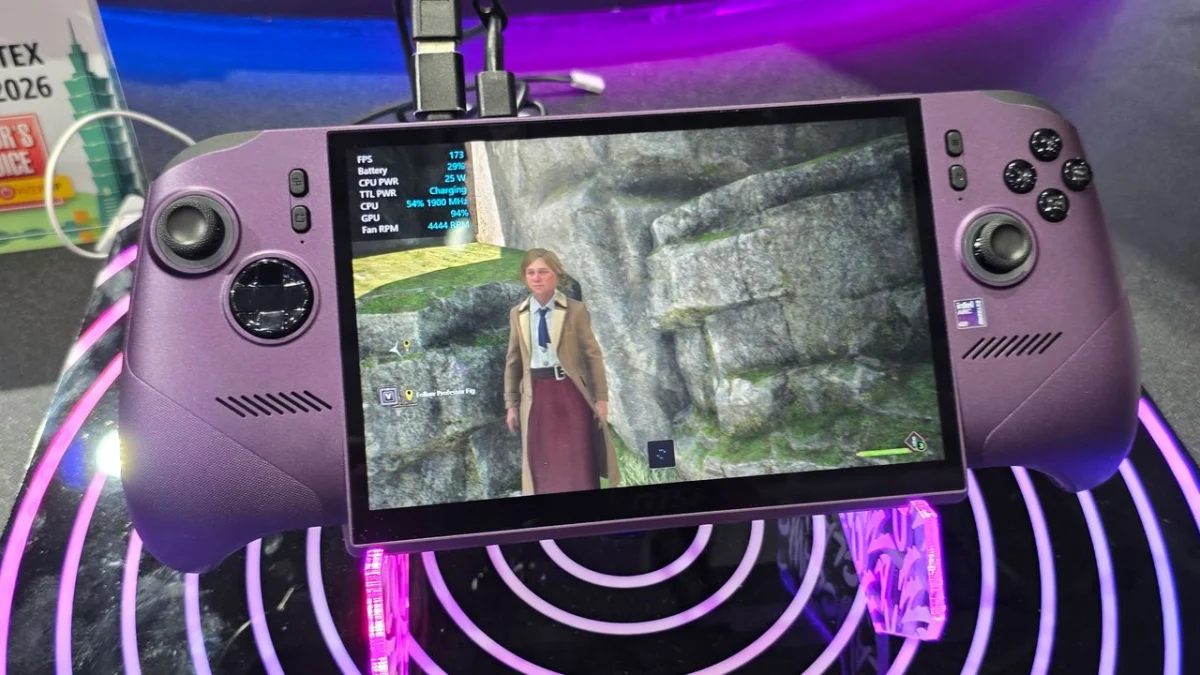
Taipei, Taiwan – MSI’s latest entry into the burgeoning handheld gaming PC market, the Claw 8 EX AI+, has officially arrived on retail shelves, commanding a premium price point that has ignited discussions across the tech industry. Unveiled with considerable fanfare at Computex earlier this month, the device is now listed on MSI’s official website for $1,799, with Newegg offering a slightly lower price of $1,699. This pricing strategy, while positioning the Claw 8 EX AI+ as a high-end contender, also brings to light the increasing pressures faced by manufacturers due to escalating component costs, a trend that MSI itself acknowledges will make the coming year "tough" for both companies and consumers alike.
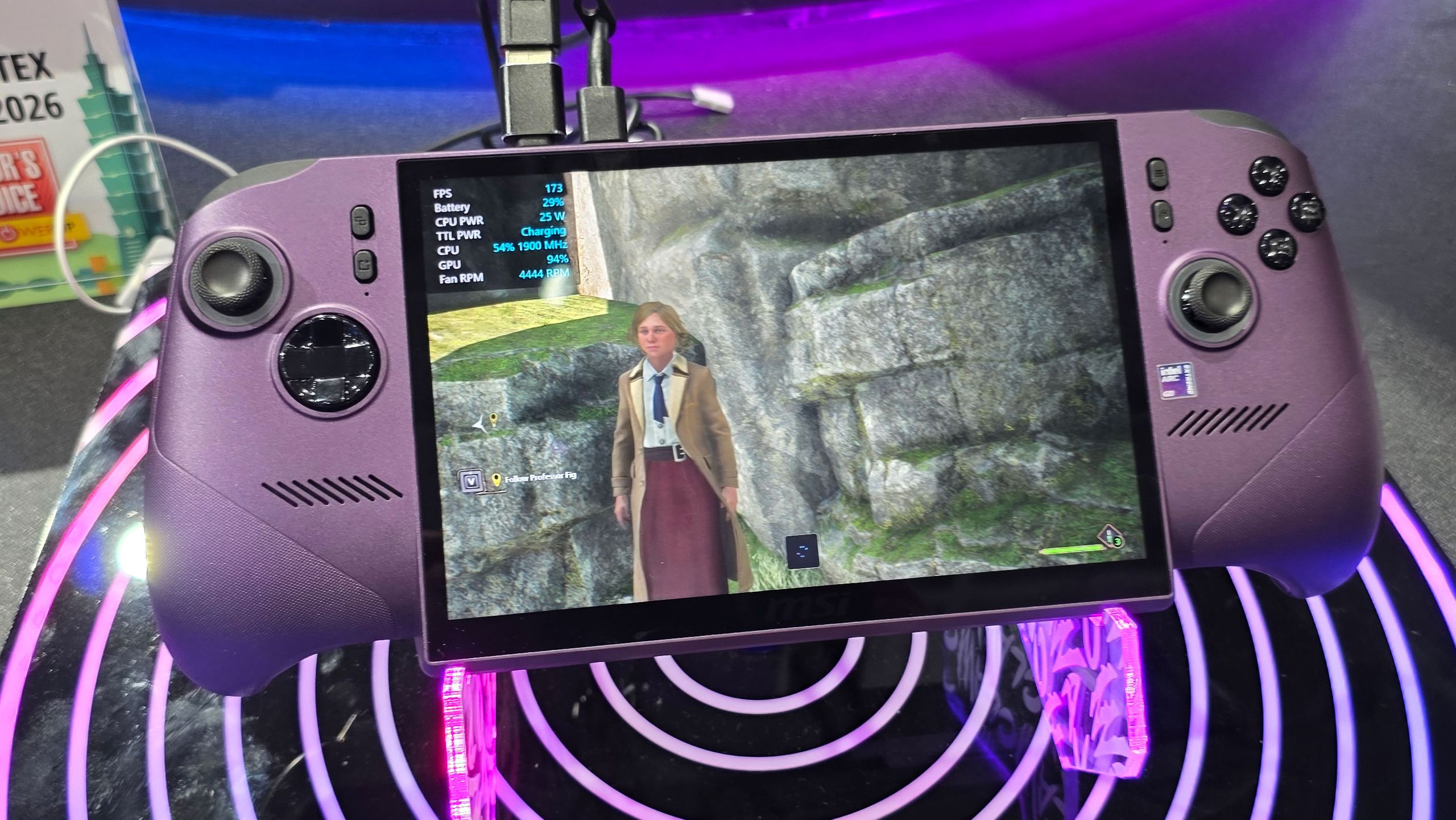
The Claw 8 EX AI+ distinguishes itself with Intel’s cutting-edge Arc G3 Extreme APU, featuring the flagship Arc B390 integrated graphics, paired with a substantial 32GB of LPDDR5X memory. Complementing these powerful internals are an 8-inch 120Hz display and newly designed ergonomic grips, aiming to deliver a superior portable gaming experience. However, the advanced specifications come at a cost, prompting MSI to candidly address the financial headwinds impacting the consumer electronics sector.
The Unveiling: A New Chapter for MSI’s Handheld Vision
The journey of the MSI Claw series has been one of continuous evolution, marked by MSI’s determination to carve out a significant presence in the increasingly competitive handheld gaming PC arena. The original MSI Claw, launched earlier this year, represented a bold step for the company, particularly in its adoption of Intel’s then-new Core Ultra (Meteor Lake) processors, a departure from the AMD Ryzen Z1 Extreme chips favored by many rivals. While its initial reception was mixed, largely due to software optimization challenges and performance comparisons against established competitors, MSI demonstrated a commitment to iterating and improving.
The Computex unveiling of the Claw 8 EX AI+ signaled a significant leap forward. Moving beyond its predecessor, the "AI+" moniker is not merely a marketing embellishment but reflects the integration of Intel’s next-generation Lunar Lake architecture, featuring the more powerful Arc G3 Extreme APU. This new platform promises enhanced processing capabilities, significantly improved integrated graphics performance through the Arc B390, and a dedicated Neural Processing Unit (NPU) for AI acceleration – a feature increasingly becoming standard in modern computing devices.
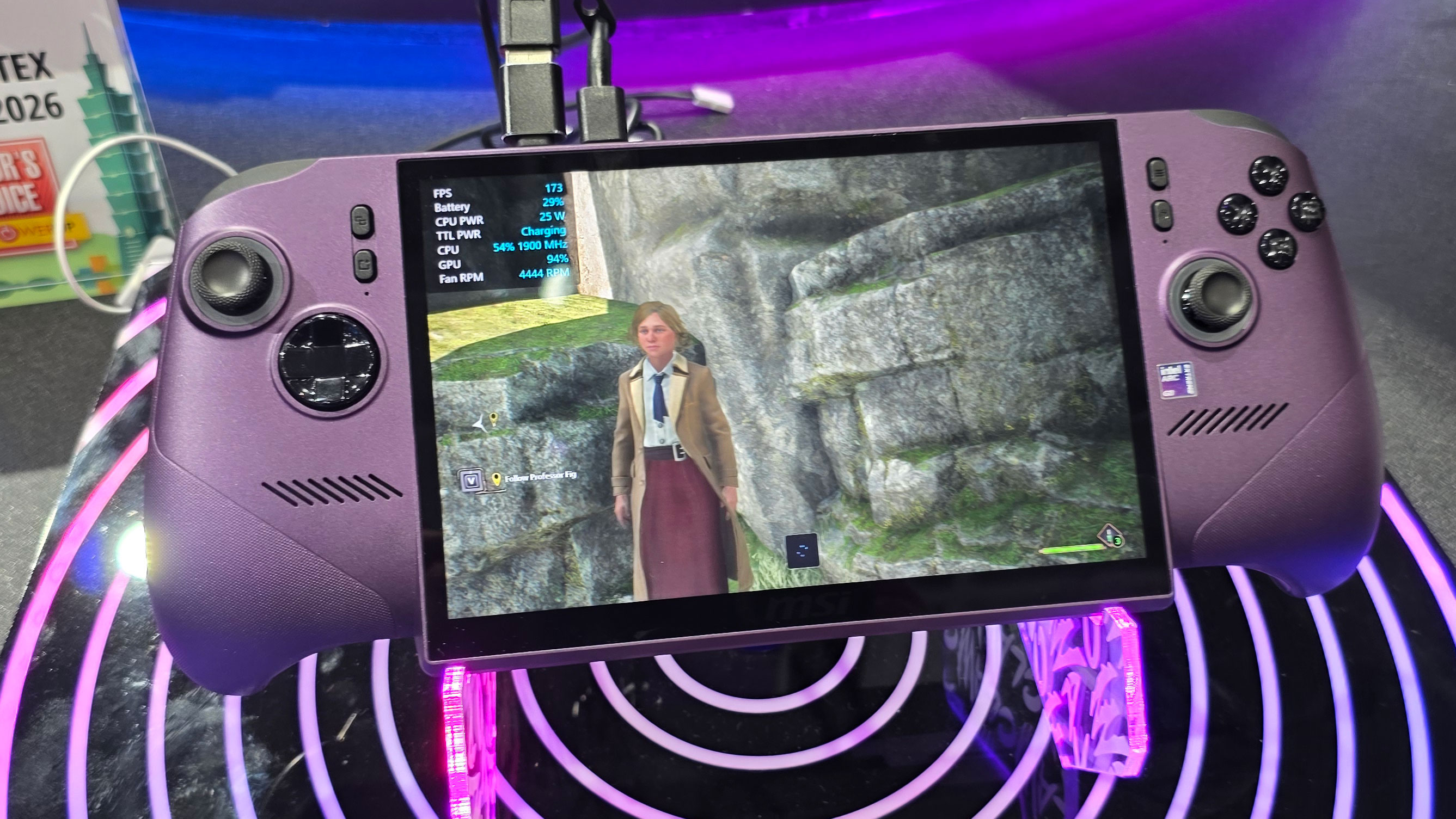
The design refinements extend beyond internal components. MSI has listened to user feedback, incorporating new ergonomic grips designed for prolonged, comfortable gaming sessions. The larger 8-inch display, a notable upgrade from the original Claw’s 7-inch screen, offers a more expansive and immersive visual experience, crucial for today’s graphically intensive games. The 120Hz refresh rate ensures smooth gameplay, a critical factor for competitive titles and overall user enjoyment. These enhancements collectively aim to position the Claw 8 EX AI+ not just as an iteration, but as a substantially improved device capable of delivering a premium handheld gaming experience.
Market Realities: The Unyielding Pressure of Component Costs
The conversation around the Claw 8 EX AI+ price point quickly shifts to the broader economic landscape impacting the technology industry. Andy Chu, MSI’s product marketing lead, provided a stark assessment to FRVR, stating, "it’s a really difficult year for Intel and especially the OEM like us […] because we also need to take those cost hikes for those key components like memory and also storage." This sentiment echoes a widespread concern across the industry, where the stability of supply chains and component pricing has been significantly disrupted.
DRAM and NAND Price Volatility: The past several months have seen a dramatic escalation in prices for dynamic random-access memory (DRAM) and NAND flash storage. This surge is not a transient fluctuation but rather a reflection of several converging factors. Demand, particularly from the burgeoning artificial intelligence (AI) sector and cloud computing giants (often referred to as "hyperscalers"), has skyrocketed. These large-scale data centers require vast quantities of high-bandwidth memory and high-capacity, high-speed storage to train complex AI models and manage massive datasets.
Hyperscalers, with their immense purchasing power and strategic importance to memory manufacturers, are reportedly "annexing all the production lines." This means they are securing large volumes of components, often through long-term contracts and preferential pricing, leaving smaller orders from consumer electronics manufacturers like MSI with higher spot market prices or reduced allocation. This imbalance in demand and supply dynamics inevitably translates into increased costs for OEMs.
Manufacturing and Geopolitical Factors: Beyond direct demand, manufacturing costs for advanced semiconductors and memory chips have also been on an upward trajectory. The increasing complexity of chip fabrication, requiring state-of-the-art lithography and advanced materials, drives up production expenses. Geopolitical tensions and trade policies further complicate the supply chain, adding layers of risk and cost. Any disruption, from natural disasters to trade disputes, can reverberate through the global electronics supply chain, leading to price spikes and shortages.
Industry-Wide Trend: MSI’s predicament is far from isolated. The notion that "every console is now more expensive than it was at launch" underscores a pervasive trend. Even traditionally affordable platforms like Valve’s Steam Deck have seen price adjustments. The Steam Deck OLED, for instance, now retails for $949 for its 1TB version, despite utilizing hardware that is, by many metrics, a generation behind the cutting-edge components found in the Claw 8 EX AI+. This comparison, while not directly pitting apples against apples, highlights the general upward pressure on pricing across the entire handheld gaming spectrum. When a device with "last-gen hardware" commands nearly a thousand dollars, the $1,799 tag for a device featuring Intel’s latest APU, a larger screen, and 32GB of RAM, starts to appear within a broader, albeit expensive, market context.
Official Responses: MSI’s Stance and Industry Commentary
Andy Chu’s remarks serve as a candid reflection of the internal battles OEMs are fighting to keep their products competitive and accessible. "All I can say is we have tried every approach to get the memory and also storage at a lower cost. Like, deepen the relationship between us and also those suppliers, like to have some deals… and I think we have done everything we can do to make our system as affordable as possible," Chu explained. This statement paints a picture of intense negotiations and strategic maneuvering in a challenging procurement environment. OEMs are forced to leverage long-standing relationships with suppliers, explore bulk purchasing agreements, and potentially diversify their component sourcing to mitigate risks and costs. However, when core memory and storage manufacturers are prioritizing hyperscalers with significantly larger orders and fatter margins, the leverage of a consumer electronics company can be limited.
The "AI+" branding itself, while indicative of the device’s advanced NPU capabilities, presents a subtle irony when juxtaposed with the cost complaints. The very boom in AI that justifies the "AI+" label is, in large part, responsible for the increased demand and subsequent price hikes in critical components like high-bandwidth memory. While the Claw 8 EX AI+ is not directly powering data centers, it benefits from the technological advancements driven by the AI sector, yet also suffers from its economic ripple effects. Chu acknowledges this complex reality, noting, "Unfortunately, I think the situation, the result is what you see right here. So, I would say, yes, it will be a tough year for us and for the gamers."
This sentiment is not unique to MSI. Industry leaders have been vocal about the unsustainable trajectory of hardware costs. Reports have indicated that companies like Xbox anticipate paying significantly more for components in the coming years, with executives admitting to an "unsustainable hardware gap." This widespread concern underscores that the challenges faced by MSI are symptomatic of a larger structural shift in the tech manufacturing landscape, driven by factors beyond the control of individual companies.
Implications: Navigating a Premium Market and Future Outlook
The launch of the MSI Claw 8 EX AI+ at a premium price has several significant implications for consumers, the competitive landscape, and MSI’s future strategy.
Consumer Affordability vs. Performance: For the average gamer, a price tag north of $1,600 for a handheld device is a substantial investment. While the Claw 8 EX AI+ promises a "huge performance boost" over the Steam Deck OLED and features Intel’s latest integrated graphics, it enters a market where competitors like the ROG Ally X (with AMD’s Ryzen Z2 Extreme) are available for $999. This creates a clear value proposition challenge for MSI. The target audience for the Claw 8 EX AI+ is likely the early adopter, the enthusiast who prioritizes cutting-edge performance and the latest technology, and those specifically interested in Intel’s platform for its unique capabilities or software ecosystem. It is not designed to be a mainstream, budget-friendly option.
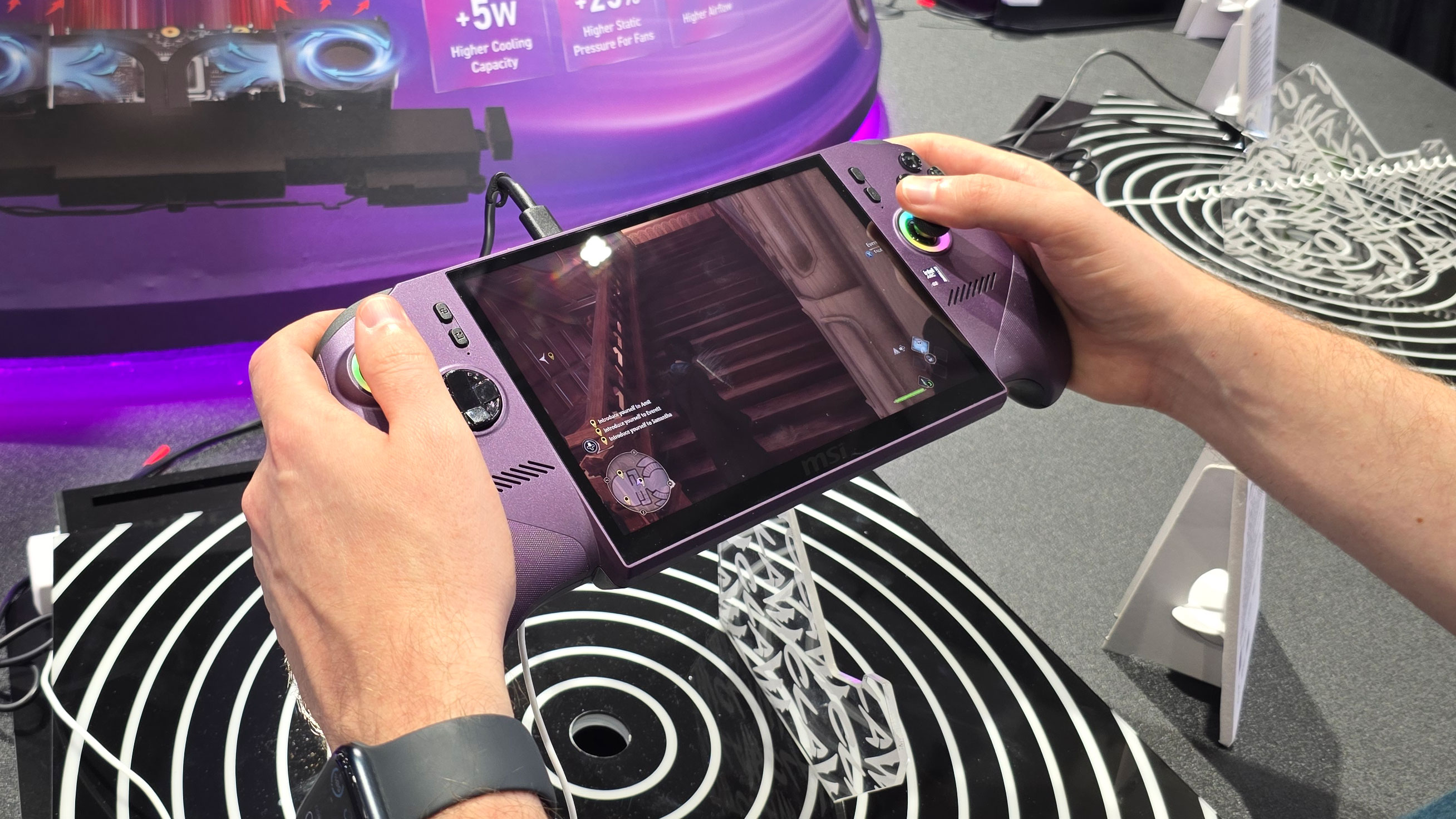
The "AI+" Paradox and Practical Benefits: The "AI+" branding, while technically accurate due to the integrated NPU in Lunar Lake, raises questions about its immediate practical benefit for handheld gaming. While AI upscaling technologies (like Intel XeSS) are becoming more prevalent, the NPU’s direct impact on current game performance or general handheld usage for consumers might be limited compared to its influence on component pricing. For a device struggling with cost perception, the focus on "AI+" might feel more like future-proofing or marketing buzz rather than an immediate value-add that justifies the price.
Configuration Flexibility and Cost Reduction: The decision to equip the Claw 8 EX AI+ with 32GB of LPDDR5X memory is a point of contention. While Intel mandates specific memory speeds for Panther Lake (7,467 MT/s) to enable the "Arc B370" and "B390" labels, the quantity of RAM is a different matter. As the original article points out, MSI could have explored lower RAM configurations, such as 24GB or even 12GB options, to potentially reduce the overall cost. For many handheld gaming scenarios, 32GB might be considered overkill, especially if lower configurations could significantly shave off hundreds of dollars from the final price, making the device more competitive against its AMD-powered rivals. This highlights a strategic choice by MSI to equip the device with a top-tier memory configuration, perhaps to ensure maximum performance headroom or to align with its premium positioning, despite the associated cost implications.
Future Price Hikes and Market Volatility: Andy Chu’s grim warning that "there’s much room for another price hike" is perhaps the most disheartening takeaway for consumers. It suggests that the current pricing is not a stable ceiling but rather a temporary benchmark in an escalating cost environment. This perpetual upward pressure could further alienate potential buyers and make high-end handheld gaming an increasingly niche pursuit. The comparison to AMD’s Strix Halo-equipped handhelds, which are "significantly more capable machines" but priced "above the $2,000 mark," indicates a potential future trajectory for top-tier devices across the board. Even laptops with Panther Lake silicon are cited as costing less than $2,000, presenting an alternative for those seeking raw performance in a portable format, albeit without the dedicated handheld form factor.
MSI’s Positioning: For MSI, the Claw 8 EX AI+ represents a commitment to the Intel ecosystem and a desire to offer a premium, high-performance handheld. However, its success will depend on how effectively it can communicate the value proposition of its Intel Arc G3 Extreme APU and other features against a backdrop of increasing costs and strong competition. The company’s transparency about the challenges is commendable, but the market will ultimately judge the device on its performance, user experience, and price-to-value ratio.
In conclusion, the MSI Claw 8 EX AI+ enters a complex and challenging market. While technically impressive, its premium price reflects the harsh realities of a global supply chain grappling with unprecedented demand from the AI sector and escalating component costs. The ongoing "tough year" predicted by MSI’s product marketing lead is a stark reminder that the era of affordable, cutting-edge consumer electronics may be facing significant headwinds, impacting not just manufacturers, but ultimately, the gamers they serve.

