

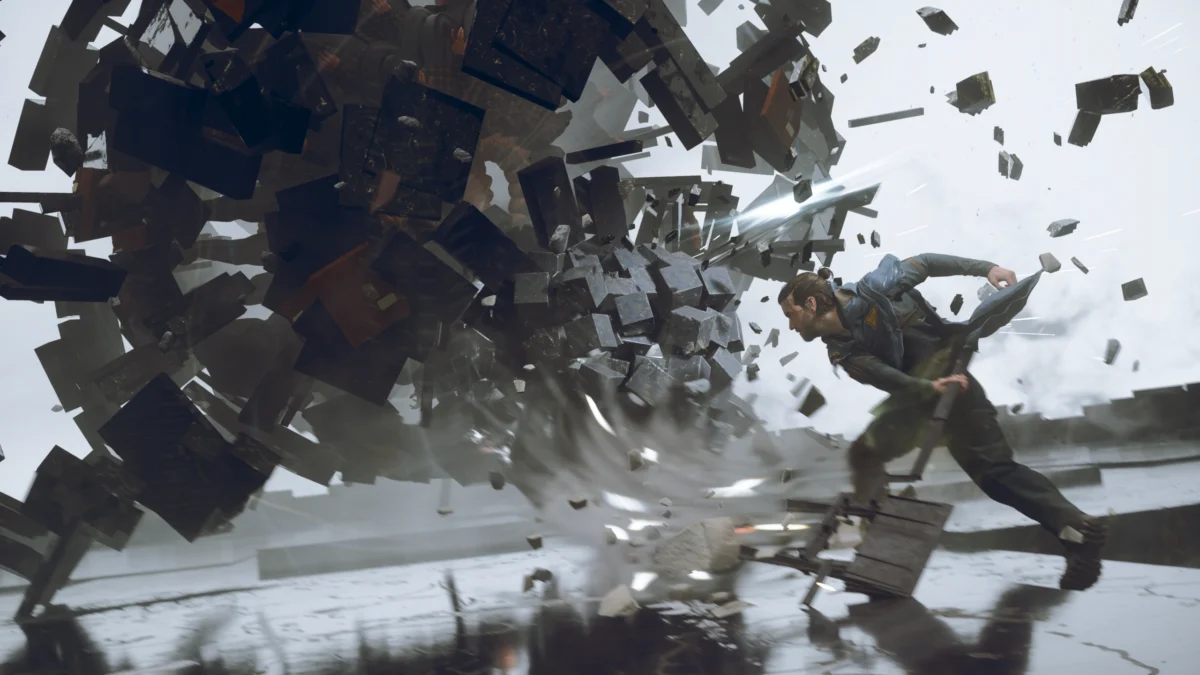
Seven years after the original Control redefined the supernatural thriller genre, Remedy Entertainment has returned to the fray with its highly anticipated successor, Control Resonant. While the first game was a tightly contained, claustrophobic descent into the shifting architecture of the "Oldest House," Resonant marks a departure into the sprawling, warped reality of a paranatural Manhattan.
As Remedy transitions from its proven third-person shooter roots into a more experimental, melee-focused open world, the industry is watching closely. With an 84 on Metacritic, the game is being hailed as a "not so safe sequel"—a testament to the studio’s willingness to disrupt its own successful formula in favor of artistic evolution.
The Chronology of a Paranormal Shift
The journey to Control Resonant began long before its announcement. Creative director Mikael Kasurinen established the vision for the Faden siblings’ arc early in the development of the original title. While the first game focused on Jesse Faden’s reclamation of the Federal Bureau of Control, Resonant shifts the spotlight to her younger brother, Dylan.
The timeline of the series has always been marked by its obsession with the "Remedyverse"—a shared reality where paranatural entities and human drama collide. Resonant serves as both a sequel and a historical touchstone, filling in the gaps left by the implication-heavy narrative of the first game. By centering the story on Dylan, Remedy provides a fresh perspective on the Hiss entity and the Bureau’s reach.
The game’s development cycle represents a significant pivot for the studio. After three decades of perfecting the third-person shooter, the team opted to strip back traditional gunplay. Instead, Resonant introduces the "Aberrant," a modular, shifting weapon that favors fluid, rhythmic melee combat. This design philosophy was intended to force players to interact with the environment in new, tactile ways, moving away from the static cover-based shooters that once defined the studio’s output.
A City in Flux: The Mechanics of ‘The Pattern’
The setting of Control Resonant is, in many ways, the game’s primary character. Manhattan has been compromised by "The Pattern," an otherworldly force that causes the city to fold, intersect, and defy Euclidean geometry.
Unlike the singular, imposing interior of the Oldest House, the Manhattan of Resonant is divided into distinct, interconnected zones. Critics have noted that this structure creates a unique rhythm of exploration. Rather than relying on traditional map markers, the game utilizes environmental storytelling to guide the player. As Michael Higham of IGN noted, "The design language of the Oldest House has spilled into the streets," creating a cohesive visual identity that makes the world feel alive and, more importantly, dangerous.
The progression system has also been overhauled to encourage deep exploration. By tying character power and XP to specific zones, Remedy has created a loop that mirrors the "get rewards, challenge boss" cycle popularized by titles like Elden Ring. This approach has been largely praised for lending a "digestible structure" to an otherwise chaotic and sprawling open world.

Combat: The Growing Pains of a New Genre
The shift to a melee-centric combat system has been the most contentious aspect of the game’s launch. While the "Aberrant" offers a high ceiling for skill expression, reviewers have highlighted a discrepancy between the ambition of the system and its technical execution.
IGN’s Michael Higham observed that while the combat is "foundationally sound," it occasionally feels "undercooked." The frustration is most palpable during boss encounters, which some critics have described as "spongy slogs"—a reliance on massive health bars rather than mechanical complexity.
However, others see the combat as a necessary evolution. Kotaku’s Cole Kronman praised the "gratifying synergy" between movement and combat, noting that the game rewards mastery of traversal as much as it rewards mastery of the blade. For Kronman, the combat isn’t about precision gunplay; it’s about the "video-game-per-square-inch" density that makes Resonant feel like an interactive art exhibit.
Conversely, Eurogamer’s Alexis Ong offered a more critical view of the movement-based traversal, likening it to a "Spider-Man helping literal puppies" aesthetic that occasionally clashes with the game’s darker, more serious narrative tone. Her review serves as a reminder that not all fans of the original Control are enamored with the move toward a more conventional "open-world action" structure.
Narrative Architecture and the ‘Remedyverse’
The story of Control Resonant is an ambitious attempt to weave personal, character-first drama into a massive, reality-bending plot. For returning fans, the game acts as a bridge, tidying up the lore that was previously relegated to collectible documents and subtle environmental cues.
However, this ambition comes with its own set of narrative challenges. Critics have noted that the game occasionally suffers from "narrative sprawl." By attempting to balance high-stakes world-ending events with minor, "nothingburger" side tasks, the pacing can feel inconsistent. The dialogue, too, has been a point of debate; while some applaud the sharp, biting banter, others argue it occasionally falls into the trap of being "too-clever-by-half," mistaking snark for genuine character development.
Despite these critiques, the consensus remains that Resonant is a significant, thoughtful entry in the series. It does not shy away from the existential questions posed by the original, and it pushes the boundaries of what a "sequel" can be, moving away from a simple repeat of the first game’s successes toward something more challenging and expansive.
Supporting Data and Critical Reception
The critical reception to Control Resonant serves as a case study in how audiences react to established franchises taking risks. With a Metacritic score of 84, the game sits in the "generally favorable" category, but the breakdown of individual reviews reveals a polarized landscape:

- Rock Paper Shotgun (James Archer): Praised the "gamble" of the game, highlighting the "kaleidoscopic Manhattan" and the "best action in ages."
- IGN (Michael Higham): Awarded an 8/10, noting that while the boss design falters, the world design and atmosphere are "distinctly Control."
- Eurogamer (Alexis Ong): Awarded a 3/5, critiquing the loss of the "moody, ancient Brutalist" atmosphere of the Oldest House and the pacing issues of the open-world format.
- Kotaku (Cole Kronman): Emphasized that the game is a "technical marvel," focusing on its identity as a piece of "interactive art."
These scores reflect a title that is clearly not for everyone, yet it is a title that demands to be played. The technical achievement—the ability to render a folding, reality-warping city at this scale—is largely undisputed.
Implications for the Future of Remedy
The success—and the specific, granular criticisms—of Control Resonant will undoubtedly shape the future of Remedy Entertainment. For thirty years, the studio has been defined by its ability to marry cinematic storytelling with third-person action. Resonant suggests that they are looking to expand this definition.
The decision to move away from the "Oldest House" is the most telling sign of their intent. By moving into the streets of Manhattan, Remedy has signaled that the "Remedyverse" is not a static location, but a flexible, narrative framework. They are no longer content to simply build a "game"; they are building a persistent, evolving mythology.
The "live-service" concerns raised by some critics—that the game’s structure echoes the grinds of current market trends—are likely to be a focus for the studio moving forward. Whether they lean further into these systems or pivot back toward a more linear, tightly controlled narrative will be the defining question of their next major project.
For now, Control Resonant stands as a bold, if slightly messy, triumph. It is a game that respects the intelligence of its players, assumes their familiarity with the complex lore of the Bureau, and asks them to look at the world through a fractured lens. In an era of safe, iterative sequels, Control Resonant is a rare, breathing thing: a game that is, above all else, relentlessly interested in its own potential.
As players continue to navigate the warped geometry of its Manhattan, the legacy of the Faden siblings continues to expand. Whether one finds the combat "undercooked" or "slickly synergistic," there is no denying that Remedy has once again proven that they are among the few developers truly dedicated to the craft of the "video game" as a unique, irreplaceable medium. The paranatural has moved from the basement to the streets, and the world is all the more interesting for it.

