

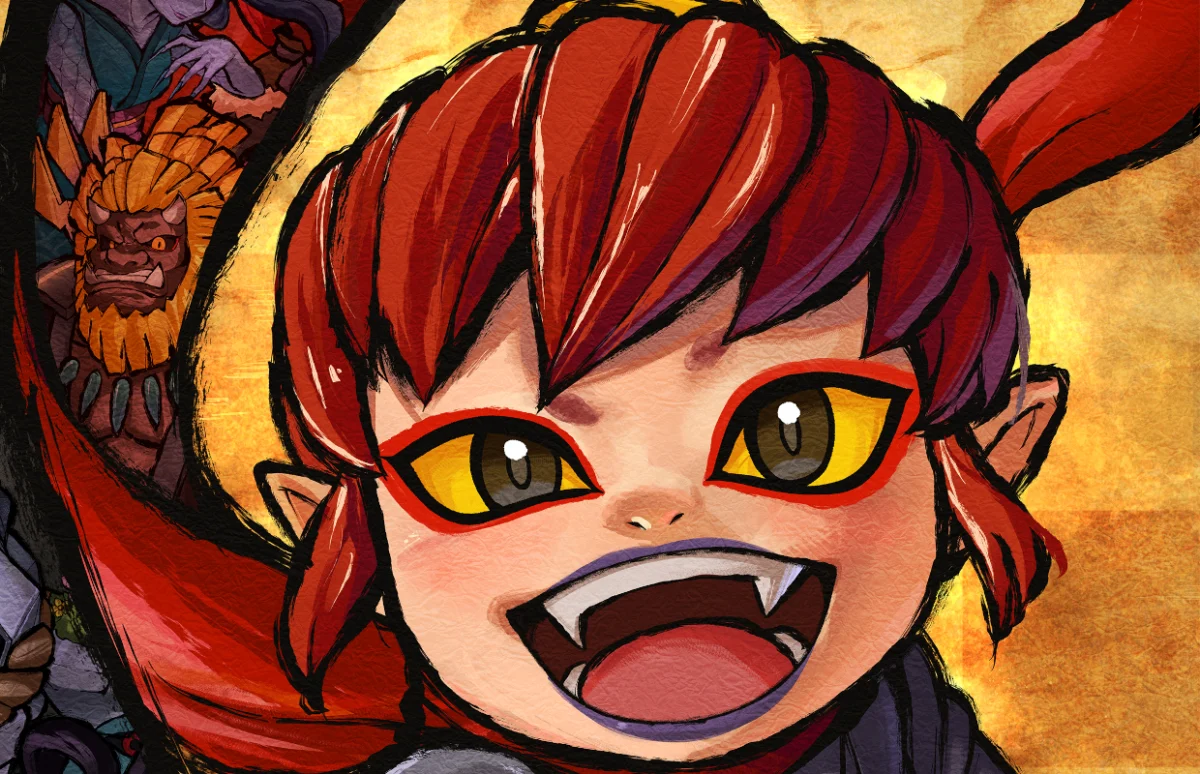
TOKYO — Developer and publisher Jet Studio has officially announced Kaguraden, an ambitious new 3D roguelike role-playing game deeply rooted in Japanese mythology and folklore. Slated for release sometime in 2027, the title will launch globally across Nintendo Switch, its successor console (referred to as Nintendo Switch 2), and PC via Steam.
Promising a fresh take on traditional dungeon-crawling mechanics, Kaguraden stands out by replacing the industry-standard square grid with a dynamic, three-dimensional hexagonal grid system. Before its official 2027 launch, gaming enthusiasts will get their first hands-on opportunity with the title via a playable demo build slated for Tokyo Game Show 2026.
The announcement has already generated significant buzz within the Japanese gaming industry, amplified by Jet Studio’s confirmation of an all-star voice acting lineup featuring prominent industry talents such as Mutsumi Tamura, Showtaro Morikubo, and Maria Naganawa. Featuring Japanese voiceovers paired with comprehensive Japanese and English subtitle support, Kaguraden is clearly positioning itself as an international contender in the tactical roguelike genre.
Main Facts: What is Kaguraden?
Set in a richly realized, folklore-inspired Japanese world, Kaguraden combines traditional rogue-lite progression loops with tactical, grid-based positioning. Players control Kagura, a young boy born of mixed human and oni (demon) heritage, who sports a single, distinctive horn.
The game’s core hook revolves around its traversal and combat systems, built entirely upon three-dimensional hexagonal grids featuring varied elevations. Unlike conventional dungeon crawlers where movement is restricted to four or eight cardinal directions, the hex-grid architecture opens up multi-directional tactical depth. Terrain management, high-ground advantages, enemy spacing, and route planning dictate the flow of every encounter.
Key facts surrounding the release include:
- Platforms: Nintendo Switch, Nintendo Switch 2, and PC (Steam).
- Release Window: 2027.
- First Public Playable Demo: Tokyo Game Show 2026.
- Languages: Japanese voiceovers; Japanese and English text/subtitles.
- Core Mechanics: Procedurally generated 3D hex-grid dungeons, permanent resource management, high-risk/high-reward extraction loops, and village development systems.
Chronology and Development Roadmap
While Jet Studio has set a broad release window of 2027, the development timeline points toward a meticulously planned rollout designed to build community momentum over the coming years.
- Pre-Announcement Phase: Jet Studio quietly conceptualized and built the foundational mechanics of Kaguraden, focusing heavily on engineering a functional 3D hexagonal pathfinding and elevation system that avoids the spatial limitations of traditional grid-based dungeon crawlers.
- The Official Reveal: In late 2024, the studio published official press releases and promotional materials via PR Times, officially pulling back the curtain on the title, detailing its systems, and revealing its core narrative premise and voice cast.
- Tokyo Game Show 2026 (Upcoming Milestone): Jet Studio confirmed that a playable demo build will be showcased on the convention floor at Tokyo Game Show 2026. This will mark the public’s very first opportunity to test the hex-grid combat, trial the weapon-combining mechanics, and experience the game’s high-stakes extraction loop.
- 2027 Global Launch: The game is scheduled to debut simultaneously across PC and Nintendo platforms, ensuring both handheld/hybrid console players and PC gamers can access the title on day one.
Supporting Data and Game Systems Breakdown
Kaguraden distinguishes itself through a staggering amount of combinatorial depth and tactical variety. Jet Studio has released detailed specifications outlining the scope of the game’s equipment, enemies, and progression loops:
1. Equipment and Customization
The game features a robust loot and upgrading ecosystem comprising:
- 40 distinct weapons
- 30 shields
- 20 unique outfits
Equipment discovered during dungeon delves can be brought back to the village, where players can upgrade them, combine attributes, and affix specialized talismans to grant gear new elemental effects or combat capabilities. Notably, outfits do not merely alter statistics; they visibly transform Kagura’s in-game appearance.
2. Bestiary and Encounters
Dungeons are populated by a diverse array of folkloric threats:
- 60 base monsters inspired by traditional Japanese mythology and aesthetic design.
- Three distinct ranks per monster, altering both visual presentation and tactical abilities, culminating in 180 total enemy variations.
- 6 major bosses guarding the depths of the mountain dungeons, requiring players to fully utilize verticality, terrain advantages, and optimized gear to claim victory.
3. The Extraction Loop: Push or Retreat?
Every dungeon run strips Kagura down to Level 1, requiring players to organically build power and gather gear as they descend. However, the game enforces a strict risk-and-reward extraction rule: if Kagura falls in battle, all items, currency, and gear gathered during that specific run are permanently lost.
Players must constantly weigh their current inventory health against the unexplored depths ahead. Do you press forward in hopes of finding a rarer artifact, or do you cut your losses and retreat to the safety of the village? Because inventory space and item carry limits are strictly capped, inventory management becomes just as critical as combat prowess.
4. Village Development
Resources and currency successfully extracted from the mountains are reinvested directly into Kagura’s home village. As players spend money to upgrade villagers’ homes and facilities, the physical layout of the settlement evolves. Shops expand their inventories, unlocking specialized services that make subsequent dungeon runs more manageable.
Narrative and Character Cast
At its heart, Kaguraden is a character-driven coming-of-age story wrapped in tragedy and dark fantasy.
The Plot
Kagura lives a quiet life until curiosity—or fate—compels him to enter the village’s sacred kagura hall. There, he shatters the seal holding back the ancient "Sealed Blade." This catastrophic mistake unleashes a wave of dark phenomena across the land, supercharging the local mononoke (spirit) population and driving them into frenzied activity.
Tasked with cleaning up the mess he created, Kagura journeys deep into the mountain dungeons to recover the lost blade and its divine power. Along the way, he begins to unravel hidden truths about his lineage, forcing him to confront the duality of his blood: human and oni.
Voice Cast and Characters
Jet Studio has enlisted top-tier acting talent to bring the narrative to life:
- Kagura (Voiced by Mutsumi Tamura): The game’s protagonist. A one-horned youth born of a human and an oni. Raised and combat-trained by his grandfather Jiya, Kagura sets out on his perilous quest burdened by guilt and a desire for redemption. Tamura is well-known in the anime and gaming spheres for portraying grounded, determined young heroes.
- Jiya (Voiced by Showtaro Morikubo): Kagura’s grandfather. Having trained the boy since infancy, Jiya carries the heavy emotional weight of watching over a child caught between two warring species. Morikubo brings a seasoned, resonant gravity to the role.
- Kotomi (Voiced by Maria Naganawa): Kagura’s younger sister. Deeply devoted to her older brother, Kotomi becomes inextricably caught up in the supernatural events and fate that await Kagura at the end of his journey. Naganawa lends her signature expressive vocal range to capture the character’s fierce loyalty and affection.
Official Responses and Industry Implications
While formal critical reviews will wait until the playable demo debuts at Tokyo Game Show 2026, early industry commentary surrounding the announcement highlights several major implications for the roguelike genre:
- Reinventing Grid-Based Tactics: Most grid-based roguelikes (such as the Mystery Dungeon series) rely rigidly on 90-degree square grids. By shifting to a 3D hexagonal grid system with varying elevations, Jet Studio is introducing a spatial layer of strategy more commonly found in tactical turn-based strategy games. This change fundamentally alters how line-of-sight, flanking, and area-of-effect abilities operate.
- Platform Strategy: Targeting both the established Nintendo Switch and its highly anticipated successor console—alongside PC via Steam—indicates that Jet Studio intends to capture both the massive hybrid-console portable market and high-performance desktop enthusiasts right out of the gate in 2027.
- Mid-Tier Japanese Development Growth: Kaguraden underscores the continued vitality of mid-tier Japanese studios leveraging rich cultural folklore to craft distinct, systems-driven single-player experiences that appeal to international audiences through dual-language support.
As anticipation builds toward Tokyo Game Show 2026, all eyes will be on Jet Studio to see if Kaguraden can successfully merge its innovative hexagonal dungeon design with a compelling, high-stakes roguelike progression loop.

