

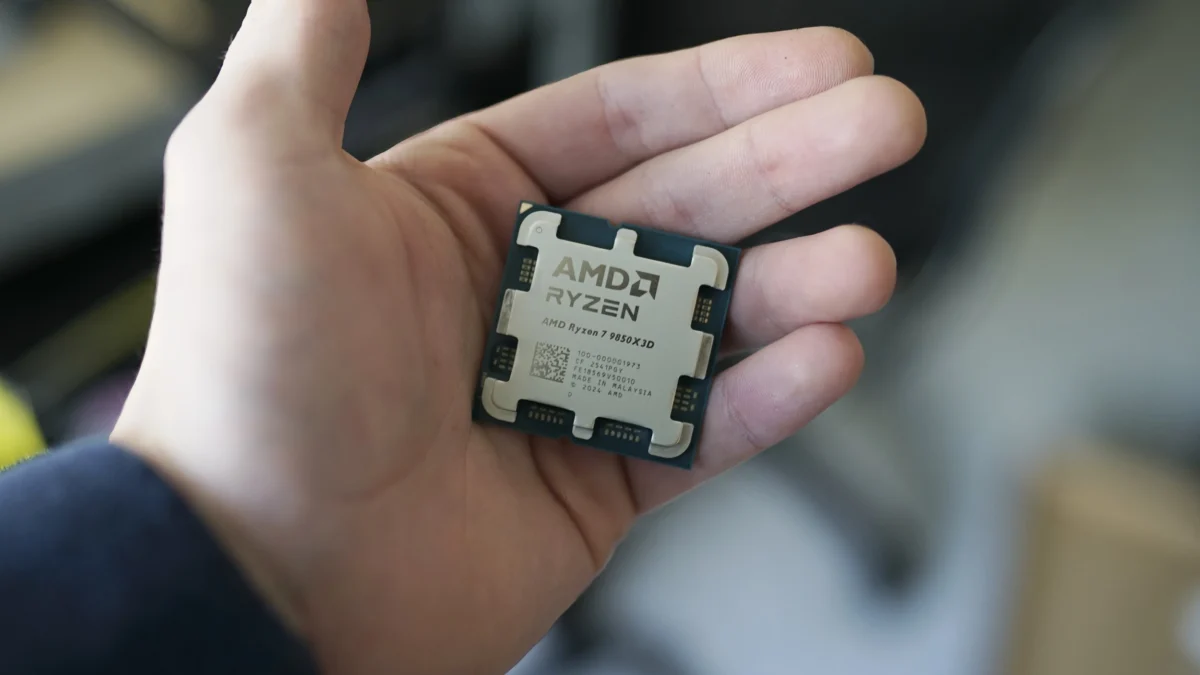
AMD has officially expanded its desktop processor portfolio with the launch of two compelling additions to its budget-conscious lineup: the Ryzen 5 5500F and the Ryzen 5 7500. Aimed at system builders, value-driven gamers, and everyday desktop users looking to maximize performance without breaking the bank, these hexa-core processors bridge critical pricing and architecture gaps in AMD’s current offerings.
Priced aggressively at $99 for the AM4-based Ryzen 5 5500F and $189 for the AM5-based Ryzen 5 7500, both chips are available starting today through major U.S. electronics retailers. While they occupy different architectural generations—relying on the battle-tested Zen 3 and the modern Zen 4 microarchitectures, respectively—they share a common goal: delivering high-efficiency, multi-threaded performance at price points that redefine entry-level computing.
Main Facts at a Glance
- AMD Ryzen 5 5500F: A Zen 3 (Vermeer) hexa-core, 12-thread desktop processor built for the AM4 platform. It features a base clock of 3.0 GHz, a boost clock of 4.4 GHz, 16MB of L3 cache, and a 65W TDP. It retails for an affordable $99, making it one of the most accessible entry points for modern multi-core computing.
- AMD Ryzen 5 7500: A Zen 4 (Raphael) hexa-core, 12-thread processor built for the next-generation AM5 platform. It includes integrated AMD Radeon graphics (unlike its "F-series" sibling, the 7500F), a base clock of 3.7 GHz, a boost clock of 5.0 GHz, 32MB of L3 cache, and a 65W TDP. It carries an MSRP of $189.
- Target Audience: Budget-conscious gamers, budget PC builders, office professionals, and users upgrading aging systems who want to leverage either the mature, cost-effective AM4 ecosystem or the future-proof AM5 platform.
Chronology and Evolution of AMD’s Budget Segment
To understand the strategic importance of the Ryzen 5 5500F and Ryzen 5 7500, it helps to examine the historical trajectory of AMD’s mid-range and entry-level CPU families.
Over the past several years, AMD has maintained a dual-platform strategy, keeping the legacy AM4 socket alive while aggressively pushing consumers toward the newer AM5 platform powered by DDR5 memory and PCIe 5.0 capabilities.
The AM4 Saga: From Vermeer and Cezanne to the 5500F
When AMD introduced the Ryzen 5000 desktop series (codenamed Vermeer) based on the Zen 3 architecture, chips like the Ryzen 5 5600 debuted near the $199 price point. Over time, as manufacturing matured and newer generations took center stage, prices adjusted. However, gaps remained in the ultra-budget category.
While the standard Ryzen 5 5500 (derived from the Cezanne APU silicon with monolithic architecture) provided an affordable entry point, its architectural roots meant it lacked PCIe 4.0 support, relying instead on PCIe 3.0 speeds.
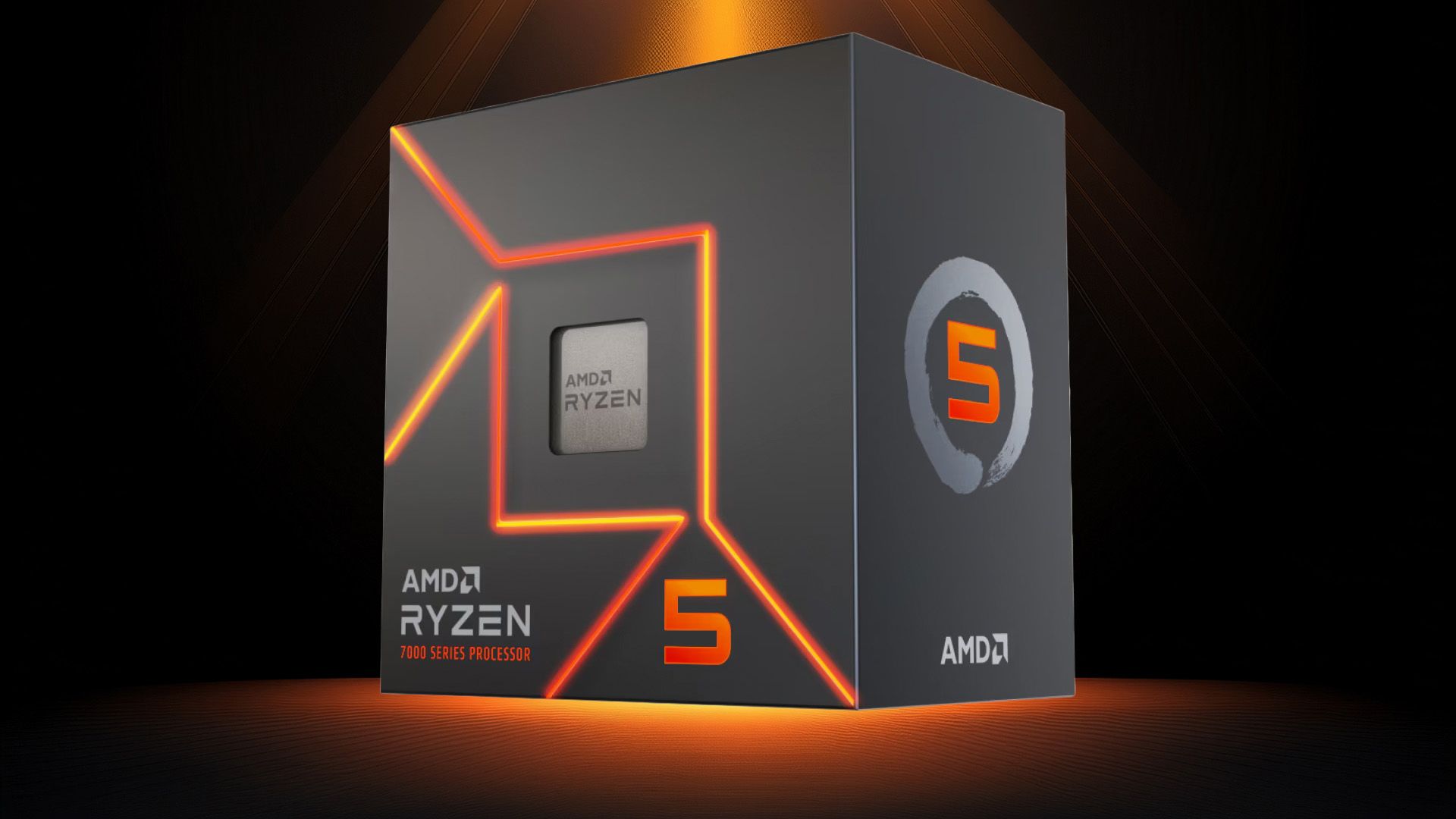
The newly launched Ryzen 5 5500F changes this dynamic. Despite sharing a similar numerical moniker, the 5500F is derived from the multi-chiplet Vermeer architecture. It effectively serves as a lower-binned derivative of the popular Ryzen 5 5600. It features a lower base clock and half the L3 cache of the 5600, but it retains crucial modern features like PCIe 4.0 support. The "F" designation explicitly communicates the absence of integrated graphics, a standard naming convention for chips that require a discrete GPU.
The AM5 Evolution: Bringing iGPU to the 7500 Line
On the AM5 side, AMD previously released the Ryzen 5 7500F as a tray-only or regional budget chip, offering Zen 4 performance without integrated graphics. The new Ryzen 5 7500 rectifies that omission by adding basic integrated AMD Radeon graphics.
This gives system builders flexibility: users who need a functional desktop for productivity, media consumption, or temporary use while waiting to purchase a high-end discrete graphics card can now rely on the Ryzen 5 7500 without needing an external GPU from day one.
Supporting Data and Specifications
A side-by-side comparison of AMD’s budget and mid-range stack highlights how the Ryzen 5 5500F and Ryzen 5 7500 fit into the broader ecosystem:
| Processor | MSRP / Current Price | Architecture / Codename | Platform | Cores / Threads | Base / Boost Clock (GHz) | L3 Cache (MB) | Graphics Model | Memory Support | PCIe Lanes | TDP (W) |
|---|---|---|---|---|---|---|---|---|---|---|
| Ryzen 5 7600 | $229 / $226 | Zen 4 / Raphael | AM5 | 6 / 12 | 3.8 / 5.1 | 32 | AMD Radeon | DDR5-5200 | 24 PCIe 5.0 | 65 |
| Ryzen 5 7500 | $189 / $189 | Zen 4 / Raphael | AM5 | 6 / 12 | 3.7 / 5.0 | 32 | AMD Radeon | DDR5-5200 | 24 PCIe 5.0 | 65 |
| Ryzen 5 7500F | $179 / $157 | Zen 4 / Raphael | AM5 | 6 / 12 | 3.7 / 5.0 | 32 | N/A | DDR5-5200 | 24 PCIe 5.0 | 65 |
| Ryzen 5 5600 | $199 / $159 | Zen 3 / Vermeer | AM4 | 6 / 12 | 3.5 / 4.4 | 32 | N/A | DDR4-3200 | 20 PCIe 4.0 | 65 |
| Ryzen 5 5500F | $99 / $99 | Zen 3 / Vermeer | AM4 | 6 / 12 | 3.0 / 4.4 | 16 | N/A | DDR4-3200 | 20 PCIe 4.0 | 65 |
| Ryzen 5 5500 | $159 / $74 | Zen 3 / Cezanne | AM4 | 6 / 12 | 3.6 / 4.2 | 16 | N/A | DDR4-3200 | 20 PCIe 3.0 | 65 |
Analyzing the Ryzen 5 5500F Value Proposition
At $99, the Ryzen 5 5500F undercuts the Ryzen 5 5600 (which currently retails around $159) by roughly 38%. While it features a reduced 3.0 GHz base clock and 16MB of L3 cache, its support for PCIe 4.0 gives it a distinct advantage over the older Ryzen 5 5500 in handling faster modern NVMe SSDs and high-bandwidth discrete graphics cards without bandwidth throttling. For users holding onto AM4 motherboards who want a low-cost performance boost, the 5500F represents a compelling upgrade path.
Analyzing the Ryzen 5 7500 Value Proposition
Positioned at $189, the Ryzen 5 7500 sits comfortably between the stripped-down Ryzen 5 7500F and the slightly faster Ryzen 5 7600 ($229 MSRP). By retaining the full 32MB of L3 cache, Zen 4 architecture, and DDR5 support of its siblings—while adding integrated Radeon graphics—it offers a well-rounded option for users entering the AM5 ecosystem. It trades away only 100 MHz of clock speed compared to the 7600, a minor delta that yields significant financial savings for system integrators.
Official Industry Context and Market Positioning
Market analysts and hardware reviewers have noted that AMD’s timing for these releases addresses a persistent pain point in the DIY PC building community: the rising cost of entry-level components.
While high-end hardware continues to climb in price, budget builders have frequently had to choose between outdated platforms or expensive memory ecosystems. By refreshing the AM4 platform with a sub-$100 chip like the Ryzen 5 5500F, AMD ensures that millions of existing motherboard owners have an extremely cheap, modern-performing path forward.
Conversely, the Ryzen 5 7500 lowers the entry barrier for AM5. Although the platform itself remains tied to the fluctuating costs of DDR5 RAM, the inclusion of integrated graphics means consumers can build a functioning system without being forced to purchase an expensive discrete GPU immediately. This flexibility is expected to make the Ryzen 5 7500 a favorite among office-bound power users, home theater PC builders, and entry-level gamers operating on strict fiscal limits.
Broader Implications for Consumers and the PC Market
The introduction of the Ryzen 5 5500F and Ryzen 5 7500 carries several long-term implications for the personal computer ecosystem:
- Prolonging the Lifespan of AM4: Despite being several years old, the AM4 platform refuses to fade away. The launch of a new sub-$100 processor proves that AMD recognizes the massive installed base of AM4 users who are reluctant to pay for a full platform overhaul (including new motherboards and DDR5 RAM). The 5500F keeps AM4 viable as a premier budget gaming and productivity platform.
- Easing AM5 Adoption: AM5 has sometimes faced criticism for having a higher barrier to entry due to motherboard and memory pricing. By introducing the Ryzen 5 7500 with integrated graphics at a competitive $189 price point, AMD gives budget-conscious builders a more palatable way to step into the world of DDR5 and PCIe 5.0 technologies.
- Competitive Pressure: These launches force rival manufacturers to rethink their entry-level strategies, particularly in the sub-$200 market segment where consumers demand maximum performance per dollar. As discrete graphics card prices remain volatile, processors equipped with capable integrated graphics or paired with ultra-cheap core execution units will continue to dominate volume sales.
Ultimately, whether you are looking to squeeze a few more years out of an older AM4 motherboard with the $99 Ryzen 5 5500F or planning a modern, upgradeable build around the $189 Ryzen 5 7500, AMD’s latest additions provide flexible, cost-effective solutions for every tier of PC builder.

