

In the fast-paced world of modern gaming, where "live service" models and annual sequel cycles have become the industry standard, CD Projekt Red (CDPR) stands as an anomaly. As the Polish developer behind the critically acclaimed The Witcher trilogy and the redemption arc of Cyberpunk 2077, the company has cultivated a reputation for high-fidelity, narrative-driven experiences that prioritize quality over quantity. However, as the studio looks toward its next decade, the industry is watching closely to see how it navigates the pressure to scale without sacrificing the "CDPR DNA."
Joint CEO Michał Nowakowski recently offered a rare glimpse into the company’s long-term strategy, explicitly rejecting the notion that the studio aims to become an annual production machine. In a landscape defined by rapid content delivery, CDPR is choosing a different, albeit more ambitious, path.
The Core Philosophy: Quality Over Frequency
The allure of a CD Projekt Red title has historically been tied to its scarcity. Unlike franchises that see a new installment every twelve to twenty-four months, CDPR titles are often separated by years of development, refinement, and world-building. This patience has rewarded the studio with immense brand loyalty, but it has also left fans hungry for more content, more often.
In a recent interview featured in Edge’s "Knowledge" newsletter, Nowakowski addressed the studio’s future release cadence. "Our dream is to be making more games, although we never want to turn into the studio that’s going to be launching a big game every year," Nowakowski explained. "It may happen, but this is not the goal."
This distinction is vital for investors and fans alike. The CEO emphasized that the company operates under a "rough ten-year rolling plan," designed to ensure sustainable output rather than a frantic race to hit quarterly earnings targets. For CDPR, the priority is to avoid "flooding the market," a trap that has led to the dilution of many other established gaming IPs. By focusing on a lean portfolio of high-quality titles, the studio hopes to maintain the prestige that has become synonymous with its name.
A Decade of Expansion: The Development Roadmap
To understand where CDPR is heading, one must look at the current "slate" of projects currently in the pipeline. The next decade for the studio is significantly more crowded than the last, marking a pivot in their operational capacity.
The Witcher Renaissance
The immediate future of the studio is dominated by the world of Geralt of Rivia and beyond. Following the massive success of The Witcher 3: Wild Hunt, the studio is moving full steam ahead on:
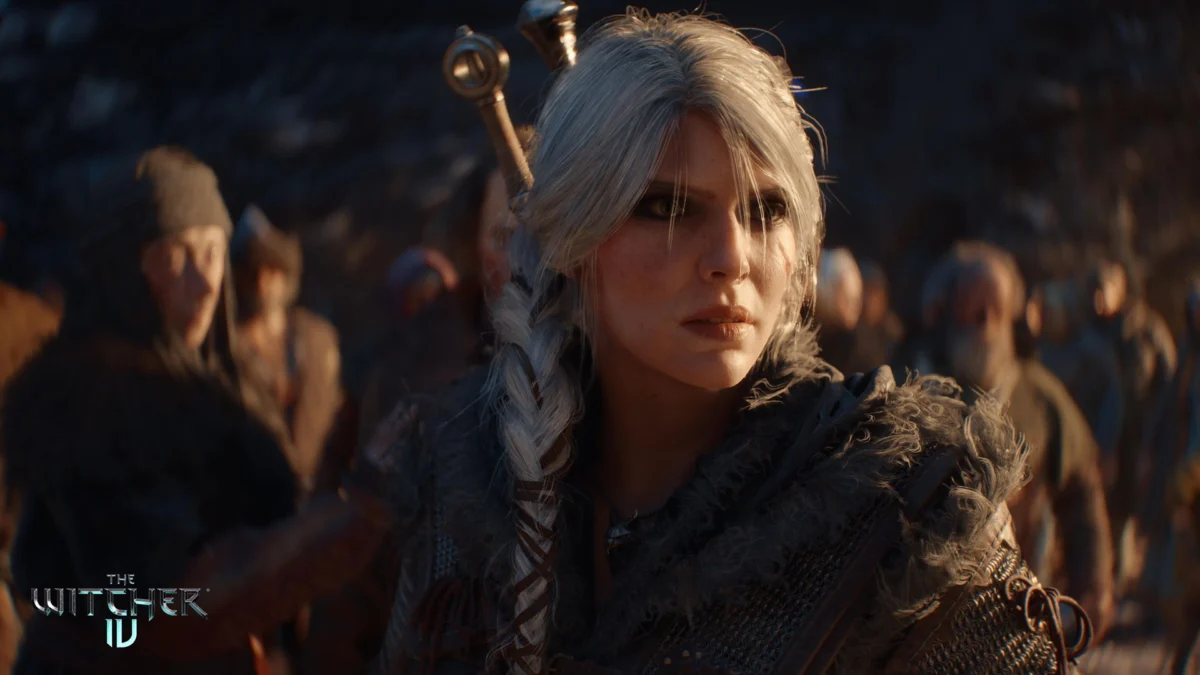
- The Witcher 4 (Project Polaris): The next flagship entry in the series, currently in active development.
- The Witcher 1 Remake: A ground-up reimagining of the original title, utilizing modern technology to bring the studio’s debut into the current era.
- The Witcher Sequels: The company has ambitious plans to release three major Witcher games within a six-year window, a feat that would be unprecedented for the studio.
Cyberpunk and Beyond
Beyond the continent of The Witcher, the studio is solidifying Cyberpunk 2077 as a permanent fixture in its portfolio. A direct sequel to Cyberpunk 2077 (Project Orion) is in the works, tasked with carrying the torch of the dark, dystopian future.
Perhaps most intriguing is Project Hadar, the company’s first entirely new IP developed from scratch. This represents a critical shift: moving away from a reliance on existing licensed or adapted properties toward original world-building.
Supporting Data: Can the Studio Scale?
The transition from a "one-game-at-a-time" studio to a multi-project powerhouse is fraught with risk. Historically, CDPR functioned as a centralized hub, pouring nearly all its resources into a single massive release. To achieve its current roadmap, the company has undergone significant structural changes.
The integration of the "RedEngine" into Unreal Engine 5 is the primary technological catalyst for this change. By moving to a third-party engine, CDPR has reduced the time spent on proprietary tool development, allowing developers to focus on gameplay and narrative. Furthermore, the company has decentralized its workforce, establishing regional studios (such as the Boston-based development team) to allow for 24-hour development cycles and access to a wider pool of global talent.
However, the "three games in six years" goal remains a point of contention among industry analysts. Skeptics point to the production bottlenecks that plagued Cyberpunk 2077 at launch, noting that managing multiple high-budget projects concurrently requires a level of project management precision that the studio is still actively refining.
Official Responses and Strategic Shifts
Nowakowski’s statements reflect a maturation of the company’s leadership. The goal is no longer just to make "the best game," but to build a stable, recurring business model that doesn’t rely on the "boom or bust" cycle of single-title development.
In a recent clarification regarding post-launch content, the studio confirmed that it would not be pursuing expansions for The Witcher 4. The reasoning is pragmatic: when you are trying to squeeze three massive AAA games into a six-year window, the overhead of supporting secondary content for a single title becomes a distraction. This "all-in" approach on primary releases is a clear signal that the studio is prioritizing the efficiency of its production pipeline over the longevity of a single game’s lifecycle.
Furthermore, the studio has been transparent about its lack of interest in "IP bloat." Nowakowski explicitly stated, "We don’t want to have a ton of IPs either. We’re not planning to grow in that way." This is a stark contrast to competitors like Ubisoft or Activision, which rely on a deep library of dozens of brands. CDPR is choosing to cultivate a few "super-IPs" and deepening them, rather than spreading its creative talent thin.
Implications: The Road Ahead
What does this mean for the average gamer? First, it suggests a more consistent, if not constant, stream of high-quality releases. While players won’t be seeing a new CDPR game every year, the "dry spells" that characterized the last decade—where fans waited nearly eight years between The Witcher 3 and the next significant narrative expansion—are likely a thing of the past.
Second, it implies a shift in the studio’s culture. Moving to a multi-project model requires a high degree of autonomy for individual team leads. The "CDPR style"—a blend of mature, choice-driven storytelling and immersive, open-world environments—is being codified into a repeatable process. If successful, this will cement CD Projekt Red as a permanent tier-one studio, capable of weathering the volatility of the gaming industry.
However, the risks remain high. The industry is littered with studios that attempted to scale too quickly, only to suffer from "crunch" culture, development delays, or a decline in the quality that made them famous in the first place. The challenge for Nowakowski and his team is to maintain the "artisan" feel of their games while operating with the infrastructure of a global conglomerate.
Ultimately, CD Projekt Red is attempting to thread the needle. They want to be a modern, agile, multi-project studio that retains the heart and soul of an independent developer. Whether they can deliver on the massive promise of The Witcher 4, the Cyberpunk sequel, and Project Hadar without losing the magic that made them an industry icon remains the most compelling narrative in gaming today.
As the next ten years unfold, the studio’s success will likely hinge not on how many games they release, but on whether they can maintain the "cool factor" that keeps players coming back, game after game. If they can stick to their plan—focusing on depth over breadth—they may well define the next generation of AAA gaming.

