

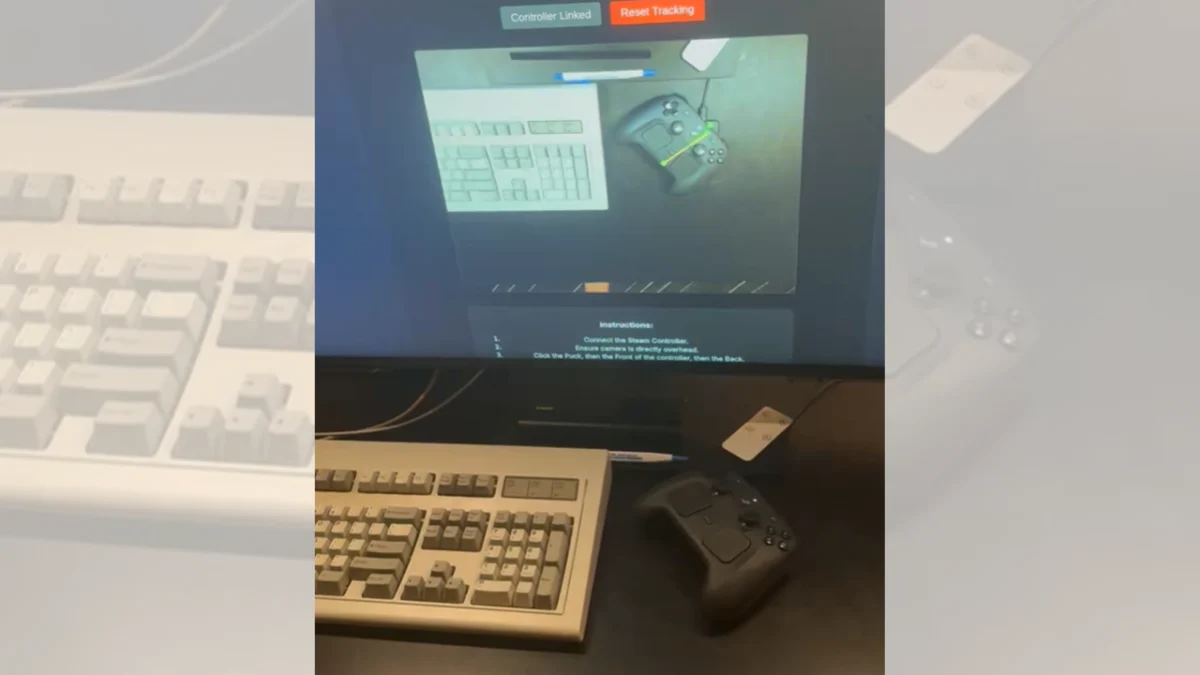
[CITY, STATE] – [Date, e.g., June 26, 2026] – In a remarkable display of ingenuity and the burgeoning potential of open-source hardware, an aerospace worker and programmer has unveiled a revolutionary web application that grants the Valve Steam Controller a surprising degree of autonomy. Ray Foss, the mastermind behind the "Auto-Charge Vision Tracker," has developed a GitHub-hosted program that allows the popular gaming peripheral to intelligently navigate itself back to its charging dock using a combination of computer vision and its own built-in haptic motors. This innovative project transforms a static gaming accessory into a miniature, self-managing robot, heralding a fascinating — if somewhat whimsical — evolution in device interaction.
The development, which recently captured widespread attention following a viral video shared by Foss himself, showcases the Steam Controller’s robust internal mechanics repurposed for an entirely novel function. No longer solely a tool for immersive tactile feedback during gameplay, the controller’s powerful haptic motors are now employed as a propulsion system, enabling it to "creep" across a flat surface. What truly elevates Foss’s creation above previous experiments in controller locomotion is the integration of computer vision. By utilizing a standard overhead camera, the web app precisely determines the controller’s position relative to its charging puck, then orchestrates a series of controlled vibrations to guide it home automatically as soon as it’s placed down.
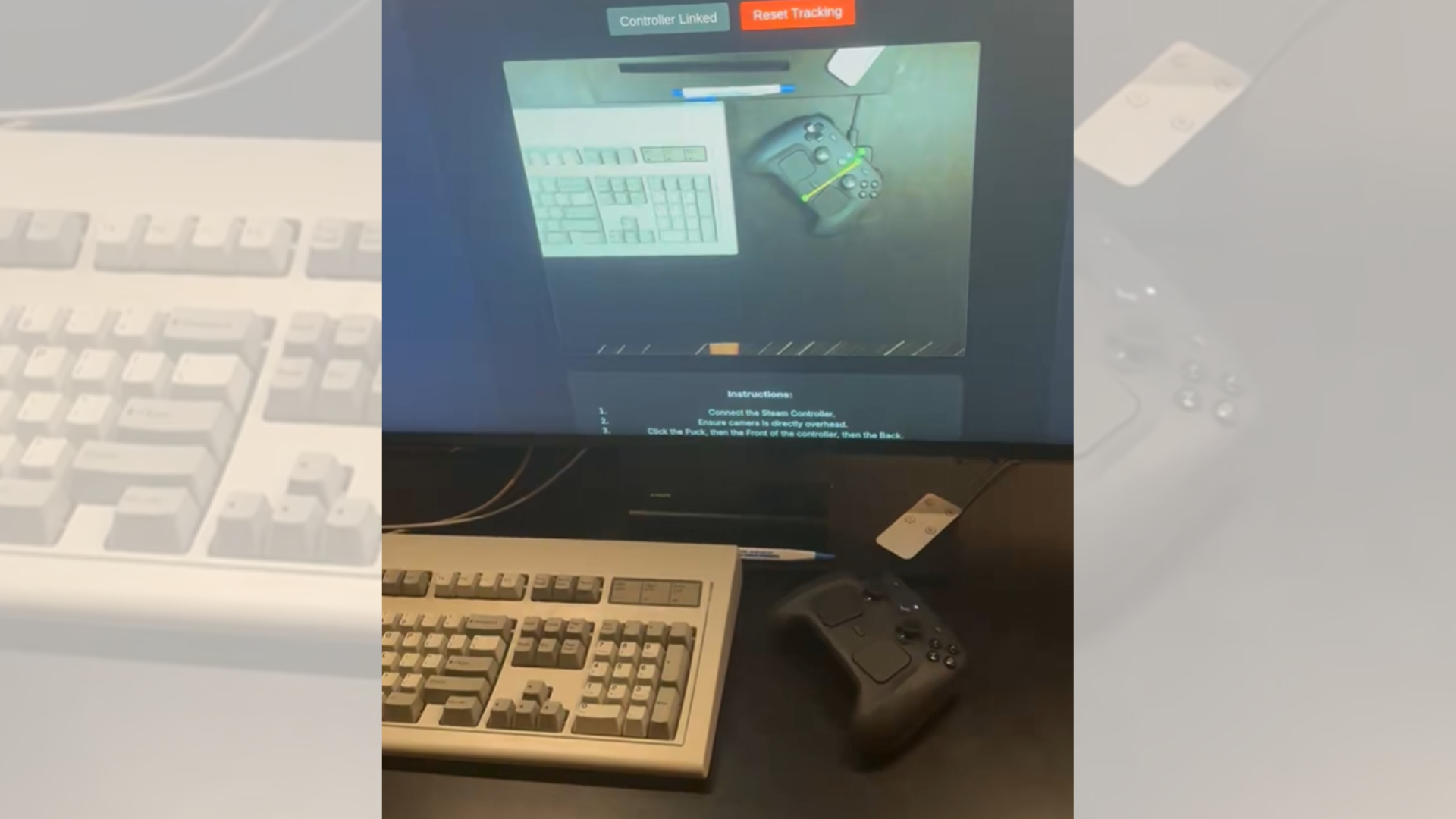
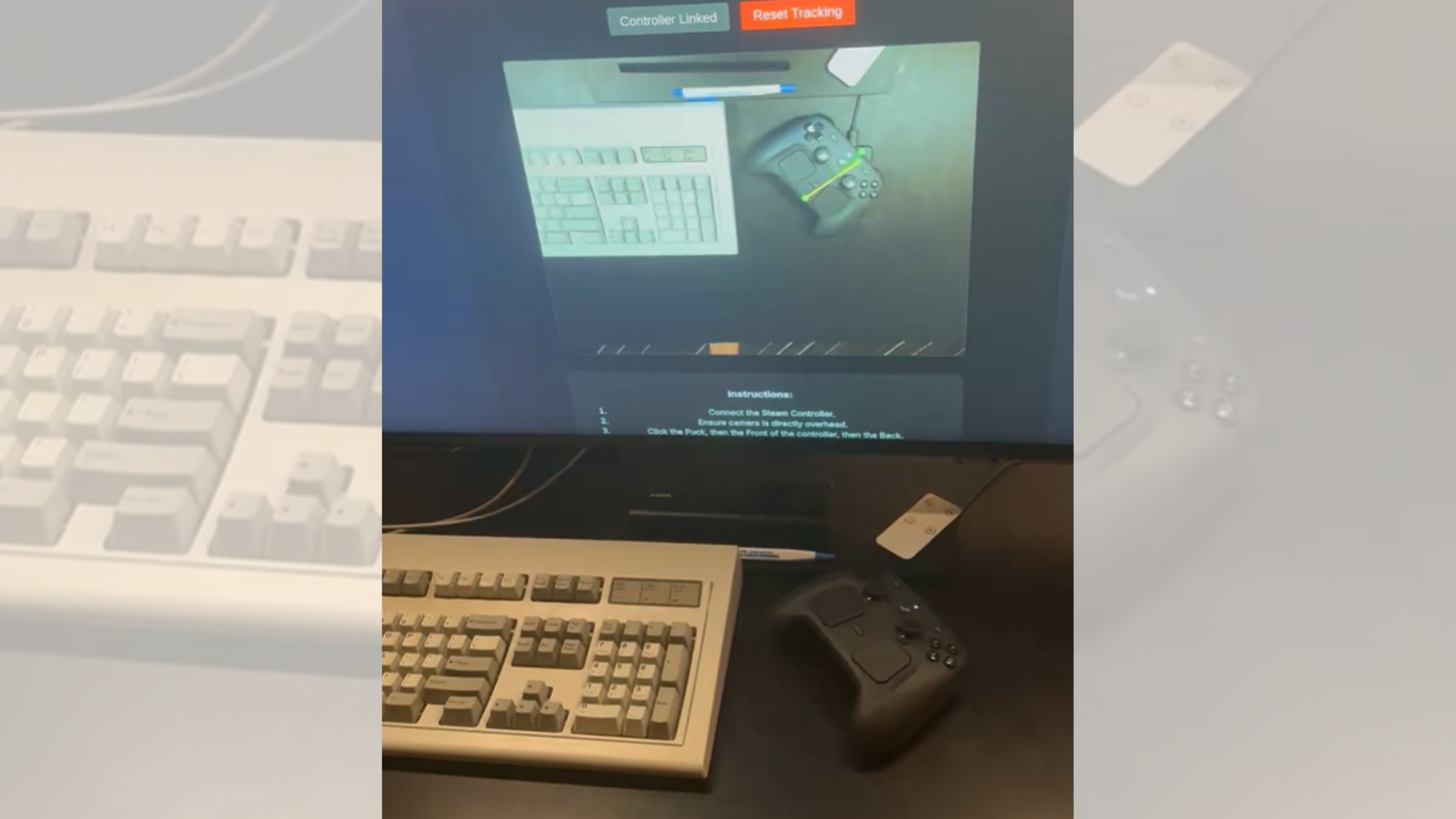
The accessibility of the Auto-Charge Vision Tracker is a testament to its elegant design. Users require no complex software installations; the entire system operates through a simple web interface. After navigating to the dedicated website, connecting their Steam Controller, and ensuring a camera is positioned directly overhead their desk, a quick calibration process involving clicking on the puck, the front, and the back of the controller is all that’s needed to bring this robotic charging dream to life. This ease of entry makes the project not just a technical marvel but also an inviting demonstration of what creative minds can achieve when given the freedom to innovate with hardware.
The Genesis of an Autonomous Gadget
The concept of a self-managing peripheral, while seemingly pulled from a science fiction novel, is deeply rooted in the principles of automation and user convenience. Ray Foss, with his background as an aerospace worker and programmer, brings a unique perspective to this niche of hardware hacking. His professional life likely involves intricate systems, precise movements, and automated processes, elements that clearly resonate in the design of the Auto-Charge Vision Tracker. The transition from designing components for aircraft to orchestrating a gaming controller’s delicate dance towards its charger, while disparate in scale, shares a common thread of engineering challenge and problem-solving.
Foss’s project didn’t emerge in a vacuum. The Steam Controller, with its distinctive haptic feedback system, has long been a subject of fascination for tinkerers and developers. Prior to Foss’s work, other programmers had already explored the concept of using the controller’s rumble motors for movement. Indeed, a similar web application existed that allowed users to manually "drive" the Steam Controller across a surface by activating its rumble motors in specific patterns, making it "slip and slide" on a desk. This earlier iteration, while amusing and a clever repurposing of the hardware, lacked the crucial element of autonomy. It required direct user input, much like controlling a remote-controlled car.
What distinguishes Foss’s Auto-Charge Vision Tracker is the leap from manual control to intelligent automation. By integrating computer vision, Foss elevated a playful experiment into a genuinely clever utility. The system’s ability to "see" its environment and make decisions about its movement trajectory evokes comparisons to miniature robot vacuums, adding a layer of sophisticated interaction that was previously absent. This evolution highlights a growing trend in consumer electronics where devices are becoming more aware of their surroundings and capable of performing tasks with reduced human intervention.
Valve’s own commitment to fostering such innovation has been a significant enabler. The company has historically championed an open-ended approach to its hardware, often providing tools and documentation that empower users and developers to push the boundaries of their products. A pivotal moment in this philosophy came in May 2026, just days after the Steam Controller’s widespread availability, when Valve officially released the CAD (Computer-Aided Design) files for both the controller and its charging puck under a Creative Commons license. This unprecedented move openly encouraged users to design and create their own accessories, modifications, and even entirely new applications for the device. It was a clear signal that Valve embraced a community-driven ecosystem, recognizing that the collective ingenuity of its user base could unlock unforeseen potential in its hardware. Foss’s project stands as a prime example of this philosophy bearing fruit, demonstrating the power of an open platform to inspire truly original creations.
Unpacking the Technology: Vision, Vibration, and the Web
The Auto-Charge Vision Tracker, despite its seemingly simple operation, is a clever fusion of accessible technologies. At its heart lies the principle of computer vision, a field of artificial intelligence that enables computers to "see" and interpret visual information from the real world. In this application, a standard webcam positioned overhead acts as the "eyes" of the system. The web app, running in the user’s browser, processes the live video feed. It employs algorithms to identify key visual markers: the distinct shape and color of the Steam Controller and its charging puck. During the initial calibration, the user’s clicks provide the system with precise coordinates for these objects, allowing it to establish a spatial understanding of the desk environment.
Once the controller’s position and the target charging puck’s location are known, the system’s "brain" takes over. It calculates the optimal path for the controller to travel. This is where the Steam Controller’s unique haptic motors come into play. Unlike traditional rumble motors that simply vibrate, the Steam Controller’s haptics are highly configurable, capable of producing very precise and directional vibrations. By strategically activating these motors, the web app can induce a controlled "creep" or "slide" motion. For instance, activating motors on one side of the controller might cause it to pivot, while coordinated activation of motors across the base can propel it forward or backward. The computer vision system continuously monitors the controller’s progress, providing real-time feedback to adjust the motor activations, ensuring it stays on course and corrects for any deviations until it successfully docks with the charging puck.
The choice of a web application for this project is a strategic one, offering several advantages. Primarily, it eliminates the need for any software installation, making it incredibly accessible. Users simply open a browser, navigate to the URL, and the application runs client-side, leveraging the user’s local computing resources and webcam. This approach also simplifies updates and distribution, as any improvements or bug fixes can be instantly deployed to all users through the web. However, it also introduces certain requirements. The continuous processing of a live camera feed and the constant communication with the controller’s motors demand a reasonably capable computer and a stable connection to the controller.
While innovative, the project also highlights practical considerations and potential limitations. Ray Foss himself acknowledged one significant challenge: abrasion. The repetitive vibration and movement across a desk surface can cause wear and tear on the controller’s plastic casing, potentially leading to "flat spots." To mitigate this, Foss suggested the simple yet effective solution of adding rubber feet to the controller. This would not only protect the device but also potentially enhance its "acceleration and handling" by providing better grip and reducing friction. The system also necessitates a perfectly flat and unobstructed surface for optimal performance. Any bumps, cables, or other objects could impede the controller’s path, disrupting its autonomous journey. Furthermore, while the web app is designed for convenience, the overhead camera setup might not be practical or aesthetically pleasing for all users, especially in a living room environment where a controller might typically reside.
Community Buzz and Valve’s Unspoken Endorsement
The unveiling of the Auto-Charge Vision Tracker sparked considerable discussion across tech and gaming communities. Videos of the Steam Controller gracefully (or sometimes comically) wiggling its way to its charger quickly went viral, attracting attention on platforms like X (formerly Twitter), Reddit, and various tech forums. The reaction was largely one of awe and amusement, with many praising Foss’s ingenuity and the sheer novelty of the concept. Users expressed fascination with the repurposing of the controller’s haptic motors and the clever application of computer vision in such a practical, albeit niche, context. It was widely seen as a brilliant proof-of-concept, showcasing the untapped potential of existing hardware.
While Valve, the creators of the Steam Controller, has not issued a direct, official statement specifically endorsing Ray Foss’s Auto-Charge Vision Tracker, their actions and overarching philosophy speak volumes. As previously noted, Valve’s decision to release the CAD files for the Steam Controller and Puck under a Creative Commons license was a deliberate move to foster an ecosystem of user-driven innovation. This act effectively provided the blueprints for projects like Foss’s, implicitly encouraging the community to experiment, modify, and expand upon their hardware. In this sense, Foss’s creation is a direct validation of Valve’s open hardware strategy, demonstrating the kind of creative output they hoped to inspire. Their commitment to making it easy for gamers to use their devices "the way they want to" extends beyond official functionality to embrace the experimental and unconventional.
Ray Foss himself has been active in addressing the community’s questions and offering insights into his project. His suggestion regarding the addition of rubber feet to prevent abrasion and improve movement highlights his practical approach to development. His motivation appears to be a blend of technical curiosity and a desire to solve a minor, everyday inconvenience for gamers. The project, while perhaps not a grand technological breakthrough, perfectly embodies the spirit of a "maker" culture that thrives on leveraging readily available tools and open platforms to create something entirely new and unexpected. The availability of the project’s files on GitHub further reinforces this spirit, inviting other programmers and enthusiasts to explore, modify, and build upon his work, potentially leading to further iterations and improvements.
Implications: Beyond a Wiggling Controller
The Auto-Charge Vision Tracker, while a delightful curiosity, carries implications that stretch beyond the immediate utility of a self-charging game controller. It serves as a compelling demonstration of what’s possible when open hardware meets creative software, pointing towards a future where consumer electronics might exhibit greater autonomy and adaptability.
The Future of Peripherals: Could this project be a harbinger of more "aware" peripherals? Imagine a gaming mouse that subtly repositions itself on your desk for optimal ergonomics, or smart speakers that adjust their orientation for better sound projection based on your listening position. While the Steam Controller’s haptic movement is rudimentary, the underlying principles of computer vision and controlled locomotion could be scaled and refined for more complex tasks. This project hints at a future where devices are not just reactive to user input but can proactively manage their own states and even minor tasks, reducing friction in our daily interactions with technology.
The Power of Open Platforms: Foss’s success underscores the immense value of open hardware and software ecosystems. Valve’s decision to open-source the Steam Controller’s CAD files created a fertile ground for innovation. Similarly, hosting the project on GitHub allows for collaborative development and wider adoption. This model empowers individuals to experiment without prohibitive licensing barriers or access restrictions, fostering a vibrant community of modders and developers who can collectively push the boundaries of what’s possible. It challenges the traditional closed-ecosystem approach of many hardware manufacturers, suggesting that greater openness can lead to unexpected and valuable breakthroughs.
Limitations and Real-World Applicability: It’s crucial to acknowledge the practical limitations of the Auto-Charge Vision Tracker. As charming as the "robot vacuum" analogy is, the Steam Controller would still be unable to navigate complex environments, such as hopping from a coffee table in a living room to a TV console where a Steam Machine and charging puck might reside. The requirement for a clear, flat surface and an overhead camera setup means its application is currently restricted to specific desk environments. Therefore, while technically impressive, its broad real-world utility remains limited, primarily serving as a novelty or a fascinating technical demonstration rather than a revolutionary change in how most people interact with their controllers.
Inspiration for Future Innovators: Despite its current constraints, the Auto-Charge Vision Tracker is a powerful source of inspiration. It encourages other developers and enthusiasts to look at existing hardware with fresh eyes, to question conventional uses, and to imagine new functionalities. It demonstrates that innovation doesn’t always require groundbreaking new components but can arise from cleverly repurposing existing capabilities through intelligent software. This could lead to a wave of creative projects that breathe new life into older devices or unlock hidden potentials in current ones, pushing the boundaries of what we expect from our everyday gadgets.
In conclusion, Ray Foss’s Auto-Charge Vision Tracker is more than just a quirky hack; it’s a testament to human ingenuity, the power of open-source collaboration, and a playful peek into a future where our devices might just be a little more independent. While the Steam Controller may not be sweeping floors anytime soon, its newfound ability to autonomously seek its charger marks a small, yet significant, step in the ongoing evolution of smart, self-managing peripherals. For those eager to witness this technological curiosity firsthand, the Auto-Charge Vision Tracker website and its GitHub repository remain open doors to a fascinating experiment in hardware autonomy.

