

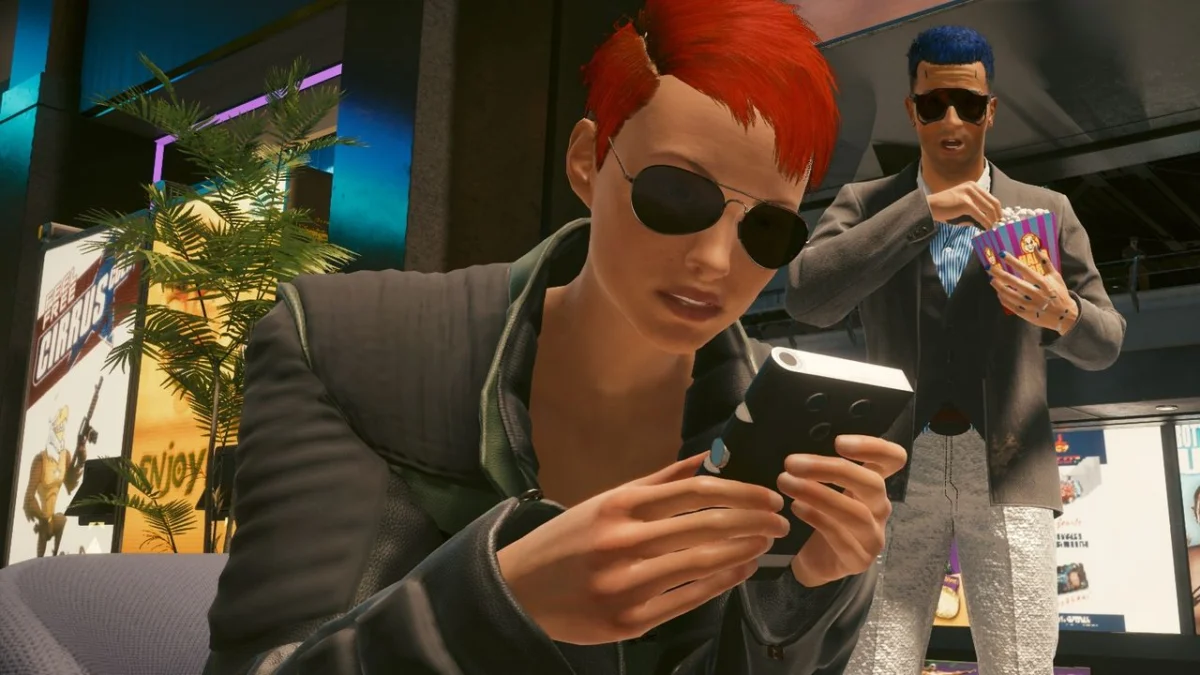
The story of Cyberpunk 2077 is more than just a case study in failed expectations; it is a seminal chapter in the history of the modern gaming industry. When CD Projekt Red (CDPR) released the title in December 2020, it arrived under the weight of unprecedented hype. It was positioned as the next evolution of the open-world RPG, a successor to the critically acclaimed The Witcher 3: Wild Hunt. Instead, the launch became a cautionary tale of corporate hubris, technical instability, and a fractured relationship between a developer and its community.
Years later, while the game has been transformed into a technical marvel and a fan favorite, the scars remain. CDPR co-CEO Michał Nowakowski recently offered a candid admission that highlights the complexity of the studio’s situation: despite the technical success of the "redemption arc," the damage to the studio’s brand may be irreversible for a significant portion of its audience.
A Chronology of Chaos: From Hype to Infamy
The descent from the heights of industry darling to the target of mass consumer ire was swift. Following years of marketing campaigns that promised a revolutionary urban experience, Cyberpunk 2077 launched on December 10, 2020. Players on PC experienced significant, albeit manageable, bugs, but those on console—particularly the base PlayStation 4 and Xbox One—faced a game that was, by many accounts, fundamentally unplayable.
The fallout was immediate and historic. Sony took the unprecedented step of pulling the game from the PlayStation Store, while CDPR issued a public apology. The company’s share price plummeted, wiping out billions in market value, and the studio found itself at the center of a class-action lawsuit from investors who felt misled regarding the game’s console readiness.
For the better part of two years, the studio operated in "crisis mode." The initial months were spent on emergency hotfixes, followed by a long-term roadmap to rebuild the game from the ground up. This period was not just about coding; it was about internal restructuring and a fundamental shift in how CDPR approached development lifecycles and communications.
The Turning Point: 2.0 and Phantom Liberty
The transformation of Cyberpunk 2077 is often categorized into two major milestones. The first was the comprehensive 2.0 update, a massive overhaul of the game’s underlying systems, including police AI, perk trees, and vehicle combat. The second was the release of Phantom Liberty, a narrative expansion that effectively served as the "final polish," delivering the quality of storytelling and atmosphere that fans had originally expected in 2020.
These efforts paid off. Cyberpunk 2077 eventually achieved "Overwhelmingly Positive" status on platforms like Steam. The game became a commercial powerhouse, outpacing the post-launch trajectory of The Witcher 3. However, as CDPR management acknowledges, the sheer effort required to "fix" the game does not automatically equate to total forgiveness from the global gaming populace.
Nowakowski’s Admission: The Lingering Doubt
In a candid discussion at the DevGAMM Gdańsk conference, co-CEO Michał Nowakowski addressed the current state of the studio’s reputation. His comments, later echoed in Edge magazine, provided a rare moment of corporate vulnerability.
"I’m not 100 per cent convinced we went through the full redemption arc," Nowakowski admitted. "I’m convinced that we lost the faith of some people indefinitely, and that’s a fair thing."
This perspective is crucial. It suggests that while the studio’s internal metrics and sales figures suggest a recovery, the executive team understands the nuance of brand loyalty. A lost consumer is not just a lost sale; it is a loss of trust that cannot be bought back with patches or DLC. Nowakowski expressed a hope that future titles—specifically the upcoming The Witcher 4 (codenamed Project Polaris)—might serve as the bridge to win back those who walked away, but he remains pragmatic about the difficulty of that task.
The "Battle-Hardened" Legacy
While the launch of Cyberpunk 2077 was a net negative for the studio’s reputation, it acted as a brutal crucible for its internal talent. Nowakowski noted that the recovery process created a workforce of "seasoned, battle-hardened veterans." The individuals who stayed through the post-launch cleanup are now the leaders of the studio’s next generation of projects.
This has allowed CDPR to evolve into a multi-project developer. The studio is no longer reliant on a single "tentpole" release. Instead, they are operating on a ten-year rolling plan that includes:
- The Witcher 4 (Project Polaris): The highly anticipated sequel that aims to reinvigorate the studio’s most beloved franchise.
- Cyberpunk 2 (Project Orion): A sequel to the 2077 title, intended to explore the franchise’s potential further.
- Project Hadar: An entirely new, original IP that remains shrouded in mystery.
The goal is to maintain a sustainable, prolific output without succumbing to the "crunch" culture that defined the 2020 launch. "Our dream is to be making more games," Nowakowski explained, "although we never want to turn into the studio that’s going to be launching a big game every year. The goal is not to flood the games market with CDPR games."
Strategic Implications and Future Growth
The studio’s growth strategy is cautious. By diversifying its output, CDPR aims to mitigate the risks associated with single-game failures. However, this diversification requires time. The Witcher 4 is currently expected to arrive no earlier than 2027, with Cyberpunk 2 potentially slated for 2030.
To bridge this massive gap in their release schedule, the studio has sought external partnerships. A notable example is the upcoming expansion for The Witcher 3: Wild Hunt, titled Songs of the Past. Developed by Fool’s Theory—the team behind the acclaimed The Thaumaturge—this project is designed to offer a substantial, Blood and Wine-style experience. It serves a dual purpose: keeping the franchise relevant in the public consciousness and ensuring a steady flow of content for fans while the main internal teams focus on their next massive projects.
The Broader Industry Lesson
The trajectory of CD Projekt Red serves as a landmark lesson for the AAA gaming industry. It demonstrates that while the "live service" model of continuous patching can rescue a dying product, it cannot completely erase the memory of a disastrous launch.
The implications are clear: consumer trust is a finite resource. When major publishers sacrifice quality for quarterly earnings reports, the long-term impact on brand equity is often severe and, as Nowakowski fears, potentially permanent.
As CDPR looks toward 2027 and beyond, they are effectively auditioning for a new era of trust. They have proven they can fix a broken game, but the challenge now is to prove they can launch a finished one. Whether the upcoming Witcher title can serve as a true "redemption" remains to be seen, but the studio’s willingness to acknowledge its own limitations suggests that, at the very least, they have learned that transparency is as important as the quality of their game code.
The story of Cyberpunk 2077 is far from over, but for CD Projekt Red, the narrative has shifted from one of survival to one of long-term endurance. They are no longer the studio that tried to do too much, too fast; they are now a studio trying to learn the art of sustainable, high-quality production—one that, they hope, will eventually earn back every player they lost in the winter of 2020.

