

By Hardware Desk
The virtual reality landscape has seen its fair share of booms, busts, and cautious recalibrations over the past decade. For every major industry push, there has been an equal and opposite market fatigue. Headset shipments have faced mounting pressures—dropping double digits year-over-year in recent cycles—and market analysts have frequently projected a cold winter for PC-bound virtual reality hardware.
Yet, Valve Corporation has broken cover to introduce the Steam Frame, a device that hardware critics are already hailing as one of the most comfortable and mechanically refined VR headsets ever brought to market. Behind the glossy marketing and the impressive spec sheets, however, lies a multi-year story of near-misses, discarded prototypes, architectural hurdles, and a desperate race against global economic and supply chain constraints.
To understand how Valve finally delivered the Steam Frame, we sat down with two of the key minds behind its creation: Valve engineers Joy Lyons and Jeremy Selan. Their insights paint a vivid picture of a company willing to trash years of work to get the user experience right, relying on software wizardry perfected on the Steam Deck to conquer the impossible balancing act of modern hardware engineering.
Main Facts: The Anatomy of the Steam Frame
At its core, the Steam Frame is a dual-threat device attempting to bridge two distinct gaming paradigms: traditional PC VR and standalone portable immersion.
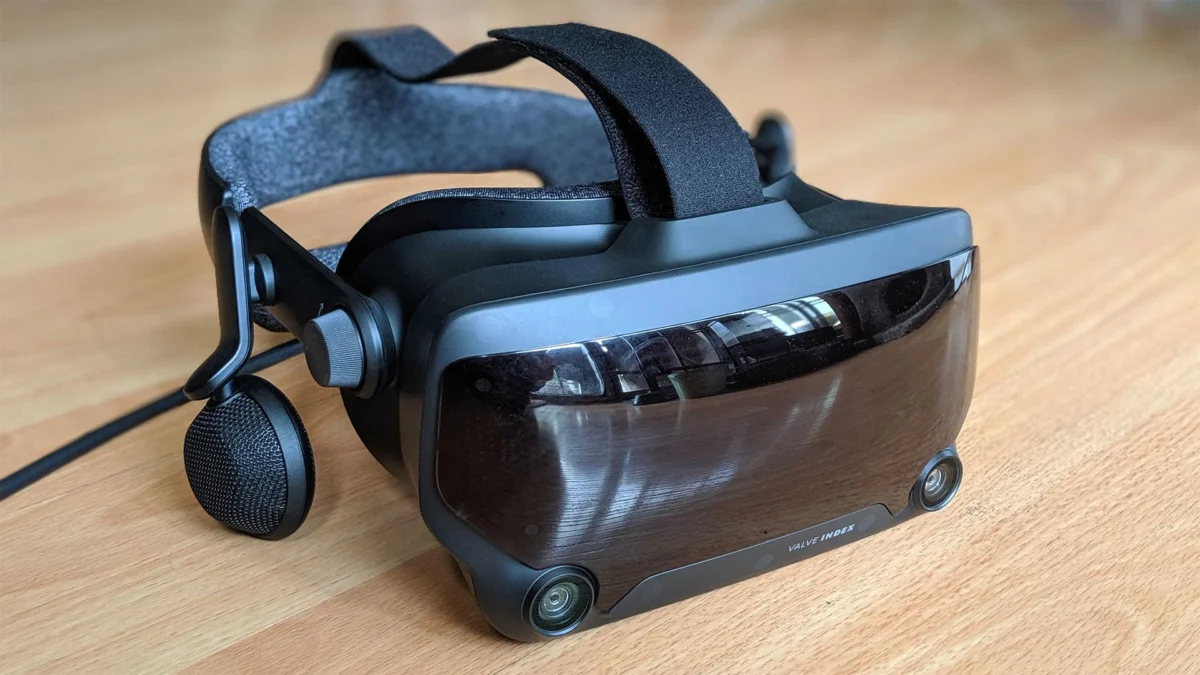
- The Form Factor: Abandoning the heavy, front-heavy, and cumbersome physical footprint reminiscent of the older Valve Index, the Steam Frame prioritizes a lightweight, highly ergonomic design.
- The Architecture Shift: Moving away from standard x86 configurations for standalone use, the Frame utilizes an ARM-based architecture. This allows for massive efficiency gains in battery weight, thermal management, and power consumption.
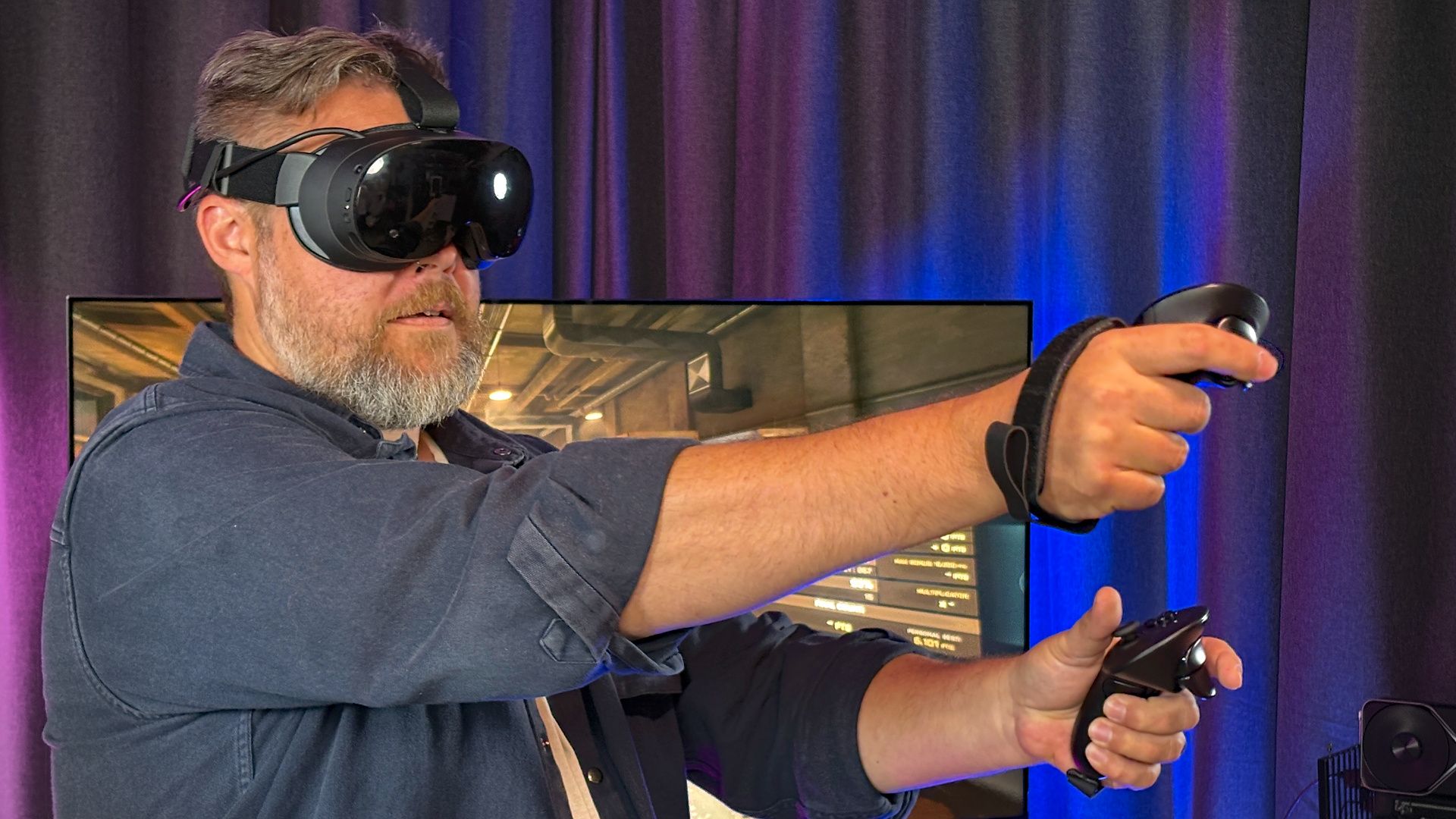
- Dual-Duty Capability: The device functions seamlessly as both a wireless PC VR headset—streaming demanding desktop titles with near-imperceptible latency—and a standalone machine capable of running native libraries through sophisticated translation layers.
- The Software Ecosystem: By integrating advancements like Proton (for running Windows-based x86 games on Linux-based SteamOS), FEX (which enables x86 instructions to run on ARM hardware), and Lepton (a brand-new translation layer designed to run Android-based games), Valve has effectively bypassed the content drought that typically plagues new hardware platforms.
Chronology: The Road Not Taken and the Long Path to Release
The journey toward the Steam Frame did not begin last year, nor did it kick off when supply chains began normalizing. According to Jeremy Selan, Valve’s hardware teams had functional, operational VR prototypes ready for evaluation as early as 2021 and 2022—roughly three to four years before the headset’s actual commercial unveiling.
However, those early iterations bore little resemblance to the sleek product hitting shelves today.
The Bulk and the Burden (2021–2022)
When Valve’s internal teams first strapped on those early prototypes, the reaction was swift and unanimous disappointment. They were large, heavy, and structurally tethered to the design philosophy of the past generation.
"We had the headsets ready three, four years ago," Selan explains. "And they were big, bulky devices. They were more in the style of the Valve Index, and we put them on, and we’re just like, this doesn’t feel like what we would want the next round of our product to be."
Faced with a choice between pushing a mediocre, heavyweight product to market or going back to the drawing board, Valve chose the harder path. The hardware engineers tore up their blueprints and restarted development with a singular, uncompromising mandate: shed the weight, fix the ergonomics, and master the thermal limits.
The Thermal and Economic Squeeze (2023–2025)
Re-engineering a high-end VR headset to achieve an ultra-light form factor while packing enough processing power to drive high-fidelity visuals is a masterclass in compromise. The engineering team spent years wrestling with the classic hardware trinity: power consumption versus battery weight versus cooling and thermals.
Valve originally anticipated a commercial window in early 2026. However, global memory shortages, volatile semiconductor pricing, and unpredictable component manufacturing economics forced the company to accelerate or adapt its rollout.
"The hardware engineers went back to the drawing board many, many times to finally achieve sort of the very small form factor, the comfortable, the lightweight," Selan notes. "So this was absolutely the fastest we were capable of shipping the device that we were proud of. Now we thought that was going to be early 2026, and it turns out due to supply and component shortages and economics that in fact now was the soonest we could release it."
Supporting Data: The Software Breakthroughs That Saved the Project
Hardware alone does not make a successful platform. Without games, even the most comfortable headset is little more than an expensive paperweight. While the hardware team was agonizing over grams and milliwatts, Valve’s software division was laying down the tracks that would eventually allow the Steam Frame to run an unprecedented breadth of content.
The secret sauce of the Steam Frame lies in the cumulative institutional knowledge Valve built during the development, launch, and continuous improvement of the Steam Deck.
[ Steam Deck Evolution ]
       │
       ├──> Proton (Running Windows games on Linux/SteamOS)
       │
       └──> ARM Architecture Transition
              │
              ├──> FEX (Translating x86 games for ARM hardware)
              │
              └──> Lepton (Integrating Android-based Horizon OS / Quest content)
As Joy Lyons explains, the lessons learned from portable systems directly enabled the Steam Frame’s software stack:
"We learned a lot with our portable systems, including the Steam Deck launch and all the work we did for emulation and the operating system, with Proton being able to run Windows-based games on Linux, on the SteamOS operating system."
Translating Worlds: FEX and Lepton
The technical hurdles of bringing a PC gaming library to an ARM-based standalone VR headset are staggering. PC games are written for x86 architectures; standalone VR headsets traditionally rely on ARM chips to conserve battery.
Valve solved this by leveraging FEX, a user-mode x86-to-ARM translation layer that allows traditional PC binaries to execute efficiently on ARM silicon. But Valve didn’t stop at the PC library.
Through Lepton, a new translation layer developed specifically for this ecosystem, the Steam Frame can run Android-based titles. This is not merely about playing mobile phone puzzle games on a virtual theater screen; it is a calculated move to ingest the massive backcatalog of VR-native software originally built for the Meta Quest and its Android-based Horizon OS ecosystem.
By opening the floodgates to both PCVR streaming, translated x86 standalone games, and Android-native VR content, Valve solved the software chicken-and-egg problem overnight.
Official Responses: Inside Valve’s Testing Culture
Developing hardware at Valve has always carried a unique internal culture—one driven less by rigid corporate milestones and more by whether the engineers themselves actually want to use the product in their daily lives.
Both Lyons and Selan shared anecdotal milestones that signaled when the Steam Frame crossed the line from a fascinating engineering experiment to a genuinely viable consumer product.
For Lyons, the turning point came when she stopped analyzing the device through the objective lens of an engineer and started experiencing it purely as a gamer.
"I’m like, ‘I wonder if this one will run?’ And you download it, and you open it, and it runs, and you put it on the huge screen," Lyons recalls. "That was the moment where it’s just like, ‘this is fun. I’m gonna take off my engineer hat. I’m gonna stop nitpicking every little thing that I know about the device, and I’ll definitely address that tomorrow. But right now, I’m actually having fun.’ I think I went through 89 games in a two-week period… that’s kind of the moment where it’s like, ‘yeah, this is great’."
Jeremy Selan echoes this sentiment, drawing a direct comparison to the cultural phenomenon of the Steam Deck rollout. During the prototyping phase, engineers often receive secret hardware to test at home. More often than not, they default back to their familiar, commercially available devices. With the Steam Frame, that behavior shifted.
"We’re our own best testers," says Selan. "So I do remember in those days I would have access to this secret prototype VR hardware, and I would take it home… and I’d still use my Steam Deck. And there became a transition point with this round of hardware, where when I took this home and this was my favorite device to use. And so, for me personally, that’s when sort of a switch flipped in my head, and I was like, ‘This is going to be a real thing’."
Implications: What the Steam Frame Means for the Future of VR
The arrival of the Steam Frame arrives at a delicate crossroads for the virtual reality industry. With shipments experiencing year-over-year contractions and mainstream enthusiasm cooling from its pandemic-era peaks, the market was desperately in need of a paradigm shift.
Valve’s strategic choices with the Steam Frame carry several profound implications for the industry at large:
1. The Death of the Proprietary Walled Garden
By building compatibility layers that ingest both PC libraries via Proton/FEX and mobile/Quest ecosystem titles via Lepton, Valve is positioning the Steam Frame as an open ecosystem aggregator. Rather than forcing developers to port games natively to yet another isolated storefront, Valve is letting software translation do the heavy lifting. This drastically lowers the barrier to entry for content availability.
2. Standalone Ergonomics Are the New Battlefield
For years, standalone VR headsets forced users to strap heavy battery packs and computing bricks directly to their foreheads, leading to neck strain and short play sessions. By prioritizing an ultra-light form factor and balancing thermal constraints through advanced ARM design, Valve has set a new ergonomic baseline that competitors like Meta, Apple, and HTC will be forced to match.
3. The PCVR Tether is Finally Severed (Without Losing the PC)
One of the most persistent criticisms of PCVR has been the physical tether—the thick cable chaining players to a high-end desktop rig. While wireless streaming solutions have existed via third-party apps and previous headsets, the Steam Frame’s native, near-instantaneous streaming integration paired with standalone capabilities proves that players no longer need to choose between untethered convenience and high-end desktop fidelity. They can have both in a single device.
Conclusion
The Steam Frame may face headwinds regarding its price point and the broader macroeconomic realities of hardware manufacturing in the mid-2020s. Yet, by throwing away years of bulky prototypes, weathering severe component shortages, and weaponizing the software breakthroughs forged in the fires of the Steam Deck, Valve has built something much more important than just another headset: they have built a device that makes VR fun again, even for the people who built it.

