

As the calendar turned on 2021, the gaming industry looked back on what many critics have labeled a "golden age" for independent developers. In a landscape dominated by massive, high-budget AAA titles, indie studios have consistently punched above their weight, delivering innovation where the mainstream often relies on iteration. Standing out in this crowded field is Archvale, a title that defies simple categorization by masterfully fusing the methodical progression of an RPG with the white-knuckle intensity of a bullet-hell shooter.
The Genesis of Archvale: Bridging Two Worlds
The fundamental appeal of Archvale lies in its audacity. Combining an action-RPG framework with the demanding precision of a bullet-hell game is a design choice fraught with risk; usually, the deliberate pace of RPG character building clashes with the twitch-reflex requirements of "danmaku" (bullet hell) mechanics. However, Archvale succeeds by treating the player’s build as the primary tool for survival.
Developed and published as a love letter to classic top-down adventures, the game places players in the shoes of a lone hero tasked with dismantling the remnants of a tyrannical king’s legacy. The world-building is steeped in classic high-fantasy tropes—relics, broken arches, and a kingdom in decline—but the gameplay loop is entirely modern.
Chronology of the Adventure
The narrative structure of Archvale is refreshingly non-linear. Players are tasked with locating the disparate pieces of the "Arch to Archvale," an ancient gateway that serves as the ultimate objective.
- The Awakening: Players begin in a hub-like environment, quickly introduced to the core mechanics of movement and projectile combat.
- The Exploration Phase: Unlike traditional RPGs that gate progress behind strictly linear narrative beats, Archvale invites players to explore various biomes in almost any order they choose.
- The Escalation: As players recover pieces of the arch, the density of enemy fire increases exponentially. This serves as a natural difficulty curve, testing whether the player has sufficiently upgraded their gear and personal skill.
- The Final Confrontation: The game culminates in a climactic showdown, pitting the player’s custom-built hero against the ultimate embodiment of the kingdom’s past corruption.
Gameplay Mechanics: More Than Just Bullets
To understand Archvale, one must look at its core systems. The game employs a badge-based customization system, which allows players to tailor their character’s stats and abilities on the fly. Rather than being locked into a rigid class structure, players can swap out gear and badges to suit the specific threats of a new region.
The "Bullet Hell" Integration
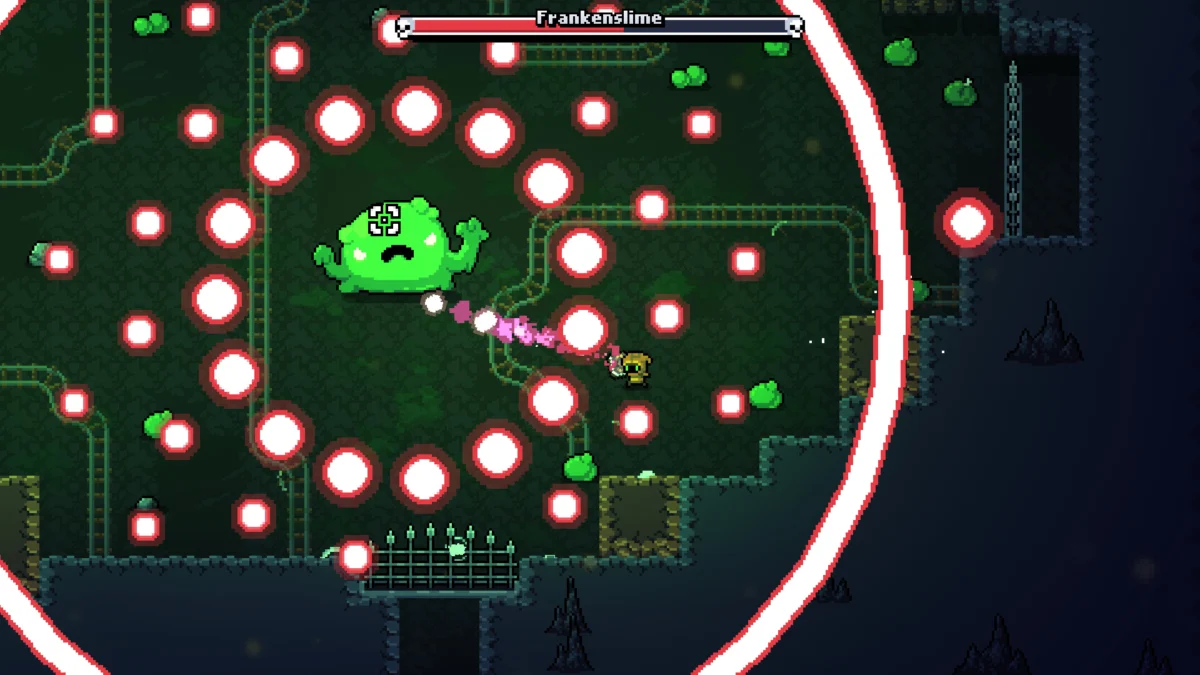
The "bullet hell" aspect is not merely a gimmick; it is the game’s primary language. Every enemy encounter, from low-level mobs to gargantuan bosses, is designed around patterns. Players must learn to "read" the screen, identifying gaps in projectiles while simultaneously managing their own offensive output.
- Weapon Variety: From short-range melee weapons that force the player into the thick of the fray to long-range projectiles that allow for safer, hit-and-run tactics, the arsenal is vast.
- The Badge System: This is where the RPG depth shines. Badges can grant passive bonuses, such as increased movement speed, health regeneration, or elemental damage modifiers. Mastering these combinations is essential for surviving the late-game gauntlets.
Supporting Data and The Indie Perspective
Industry analysts have noted that 2021 saw a significant shift in player preference toward "high-intensity, low-barrier" games. According to Steam analytics, titles that offer high replayability and "pick-up-and-play" sessions—like Archvale—saw significantly higher engagement metrics than longer, more bloated open-world titles.
The game’s aesthetic, a vibrant and clean pixel-art style, serves a dual purpose. Beyond its nostalgic charm, the clear visual language is a functional requirement. In a bullet-hell game, clarity is king; if the player cannot distinguish a deadly projectile from the background, the game feels unfair. Archvale avoids this pitfall, ensuring that every bullet is visible and every hitbox is precise.

A Whimsical Touch: The Frog Chef and World-Building
Amidst the high-stakes combat and the looming threat of an evil king, Archvale maintains a sense of humor. The inclusion of unconventional NPCs—most notably, a frog chef—serves to ground the world in a specific charm. This juxtaposition of high-tension combat and lighthearted narrative beats is a hallmark of the best indie games; it prevents the player from becoming overwhelmed by the difficulty, offering moments of levity that make the journey feel more human.
The Implications for Future Game Design
What does Archvale tell us about the future of the action-RPG genre?
- Genre Fluidity is the Future: Players are increasingly uninterested in strict genre definitions. The success of Archvale demonstrates that developers who are willing to cross-pollinate mechanics—in this case, taking the "danmaku" sub-genre and injecting it with the depth of a loot-heavy RPG—can find a dedicated, enthusiastic audience.
- Difficulty as a Feature, Not a Barrier: Archvale is not an easy game. It demands mastery. However, it manages to avoid the "frustration trap" by providing immediate, tangible rewards. Every boss defeated grants new loot, and every failed attempt provides the player with more knowledge about the enemy’s patterns. This "fail-forward" philosophy is crucial for modern indie success.
- The Importance of Player Agency: By allowing players to tackle regions in their preferred order, the game respects the player’s intelligence. It does not force a "correct" way to play; it provides a sandbox and allows the player to build the character that best fits their playstyle.
Expert Analysis: Why It Works
Professional critics and early adopters have lauded the game for its tight controls. In a genre where a single frame of input delay can mean the difference between a successful run and a "Game Over" screen, Archvale remains responsive. The input latency is virtually nonexistent, which is vital when navigating a screen filled with hundreds of projectiles.
Furthermore, the game’s sound design complements its visual intensity. The soundtrack provides a rhythmic backdrop that often aligns with the pacing of enemy patterns, helping players find a "flow state"—a psychological state of total immersion that is the gold standard for action gaming.
Conclusion: A Must-Play for the Discerning Gamer
As we reflect on the titles that defined the era, Archvale stands out not because it reinvents the wheel, but because it combines two existing wheels into a more exciting vehicle. It is a testament to the power of indie development, proving that small teams with a clear vision can out-innovate large corporations.
Whether you are a veteran of the bullet-hell genre looking for a new challenge, or an RPG enthusiast interested in seeing how your favorite progression systems can be applied to high-octane combat, Archvale is an essential experience. It is challenging, rewarding, and deeply fun—and yes, the frog chef alone is worth the price of admission.
If you haven’t yet navigated the trials of this kingdom, now is the time to pick up your weapon, find the pieces of the arch, and see if you have what it takes to save the world—one bullet at a time.

