

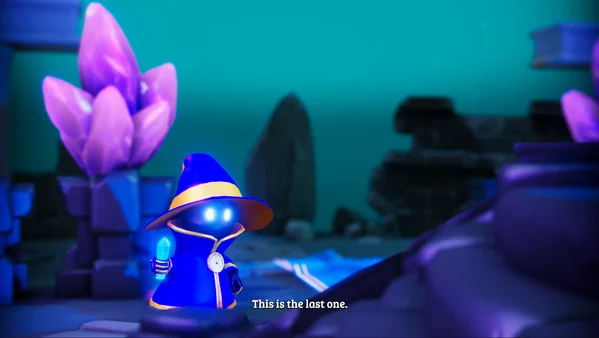
As the landscape of indie gaming continues to evolve, developers are increasingly turning toward the intersection of narrative depth and mechanical complexity. Standing at the forefront of this trend is MorpheusZ, a solo development studio poised to make its mark on the industry with its debut title, Time Master. A 3D puzzle platformer that challenges the player’s perception of cause and effect, the game promises to marry an endearing, whimsical aesthetic with the high-stakes intensity of a temporal paradox. With a scheduled release date of January 18, 2022, on Steam, Time Master is rapidly shaping up to be one of the most intriguing puzzle experiences for early-year gamers.
The Core Concept: A Wizard’s Regret
At its heart, Time Master is a story about redemption and the unintended consequences of power. The narrative follows Zeno, a wizard whose magical ambition leads to a catastrophic mistake. In a misguided attempt to refine his craft, Zeno accidentally banishes his own sister, Sophia, into the mysterious and inescapable Prison Vortex.
Driven by guilt and a desperate need to set things right, Zeno embarks on a journey through the Trials of Time—a series of ancient, labyrinthine challenges designed by enigmatic figures known as the Ancients. The game’s premise is deceptively simple: navigate complex environments, overcome obstacles, and rescue Sophia. However, the path to redemption is paved with logic-defying puzzles that force the player to think not just spatially, but temporally.
Chronology of Development and Release
The journey to the launch of Time Master has been a meticulous process of iteration and refinement. MorpheusZ, operating as a solo development entity, has dedicated significant resources to ensuring the game’s mechanics feel both fresh and intuitive.
- Early Development: The concept for Time Master began with a fascination for time-manipulation mechanics, specifically the idea of "cooperative solo play." The developer focused on the technical challenge of recording player actions and replaying them to create interactions between the present self and the past self.
- Announcement and Community Building: Following the reveal of the project, MorpheusZ utilized the Steam platform to build an audience. By releasing a playable demo, the developer allowed potential players to experience the core "time-loop" mechanic firsthand, gathering vital feedback to smooth out difficulty curves.
- The Launch Window: Originally slated for a late 2021 window, the final polish phase pushed the release to January 18, 2022. This shift allowed the developer to refine the fully-voiced cinematics and ensure that the narrative arc—which serves as the emotional anchor for the gameplay—was fully integrated with the puzzle progression.
The Mechanics of Time: How "Time Master" Works
The "genius hook" of Time Master is its unique approach to time manipulation. Unlike many platformers where the player must complete a task within a single, linear timeframe, Time Master requires players to actively collaborate with their past selves.
The Temporal Loop System
In many of the game’s trials, a single Zeno is not enough to flip the necessary switches, move objects, and reach the exit simultaneously. To succeed, the player must record their actions, then "reset" the timeline to replay those movements while they simultaneously control a new, present version of Zeno. This creates a layered, multi-dimensional puzzle-solving experience where the player’s past mistakes can literally block their present progress.

The Ancients’ Trials
The levels are structured around the Trials of Time, which are depicted as ancient, floating arenas that defy conventional geometry. As players progress, the complexity scales. What begins as a simple task—moving a crate to create a platform—eventually evolves into intricate, multi-stage sequences where three or four "Zenos" must work in perfect synchronization to unlock a pathway. The game rewards both creativity and precision, offering two ways to play:
- Chronological Mastery: Solving the puzzles in a standard, methodical order.
- Temporal Efficiency: Returning to previously mastered levels to optimize the time spent, aiming to complete the trials in ever-shorter intervals.
Supporting Data and Technical Ambition
While the aesthetic of Time Master is undeniably cute and approachable, the technical framework beneath the hood is sophisticated. Managing multiple instances of a character within the same 3D space requires a robust engine capable of handling state-tracking for every object manipulated by a previous "ghost" version of the player.
Visual and Narrative Design
MorpheusZ has placed a heavy emphasis on the game’s presentation. The character design for Zeno is intentionally soft and inviting, providing a stark contrast to the often cold, mechanical nature of puzzle games. This visual language is bolstered by:
- Fully-Voiced Cinematics: Narrative is not an afterthought in Time Master. The story of Zeno and Sophia is told through high-quality, fully-voiced cutscenes that provide context to the trials and drive the player toward the ultimate goal of defeating the antagonist, Lucix.
- Accessibility vs. Depth: The developer’s design philosophy aims to bridge the gap between casual gamers—who may be drawn in by the art style and the low barrier to entry—and puzzle enthusiasts, who will find deep, complex satisfaction in the high-level temporal manipulation mechanics.
Official Stance and Developer Philosophy
In statements regarding the game’s development, MorpheusZ has emphasized the importance of creating a title that respects the player’s time and intelligence. The developer notes that Time Master is designed to be "enjoyed by casual gamers with a depth of story and gameplay experiences."
By positioning the game as an accessible, narrative-driven puzzle title, MorpheusZ is carving out a niche for players who enjoy "brain-teasers" that don’t feel like chores. The decision to remain a solo developer has allowed for a singular, cohesive vision—a rare trait in an industry often defined by the compromises inherent in large-scale team development.
Implications for the Indie Puzzle Genre
Time Master arrives at a time when the puzzle platformer genre is experiencing a renaissance. Titles that challenge players to rethink traditional physics or time mechanics have historically performed well, yet many fall into the trap of becoming overly abstract or cold. By grounding the mechanics in a heartfelt story about a wizard trying to save his sister, Time Master provides a narrative "why" that fuels the player’s motivation to solve the "how."
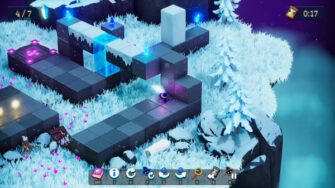
Furthermore, the game serves as a case study for the success of solo-developed indie titles. The ability to utilize Steam’s ecosystem—specifically the wishlisting system and the distribution of free demos—has allowed MorpheusZ to build a community of interest well before the launch date. This model suggests that for indie developers, transparency and accessibility are just as important as the mechanics of the game itself.
Looking Ahead: The Road to January 18th
As the release date approaches, anticipation continues to build. For those interested in testing their temporal reasoning skills, the developer has made the game’s demo available on Steam, offering a sneak peek at the early mechanics and the charm of the world.
The success of Time Master will ultimately hinge on whether the complexity of its time-loop puzzles remains rewarding throughout the entire duration of the game. If the difficulty curve is balanced correctly, and if the narrative payoff matches the mechanical complexity, Time Master could well be remembered as one of the standout indie releases of early 2022.
For now, the invitation remains open to all aspiring time masters: step into the shoes of Zeno, grapple with the ghosts of your past, and navigate the treacherous path to the Prison Vortex. Whether you are a fan of 3D platformers or a connoisseur of logic puzzles, the trials of the Ancients await.

