

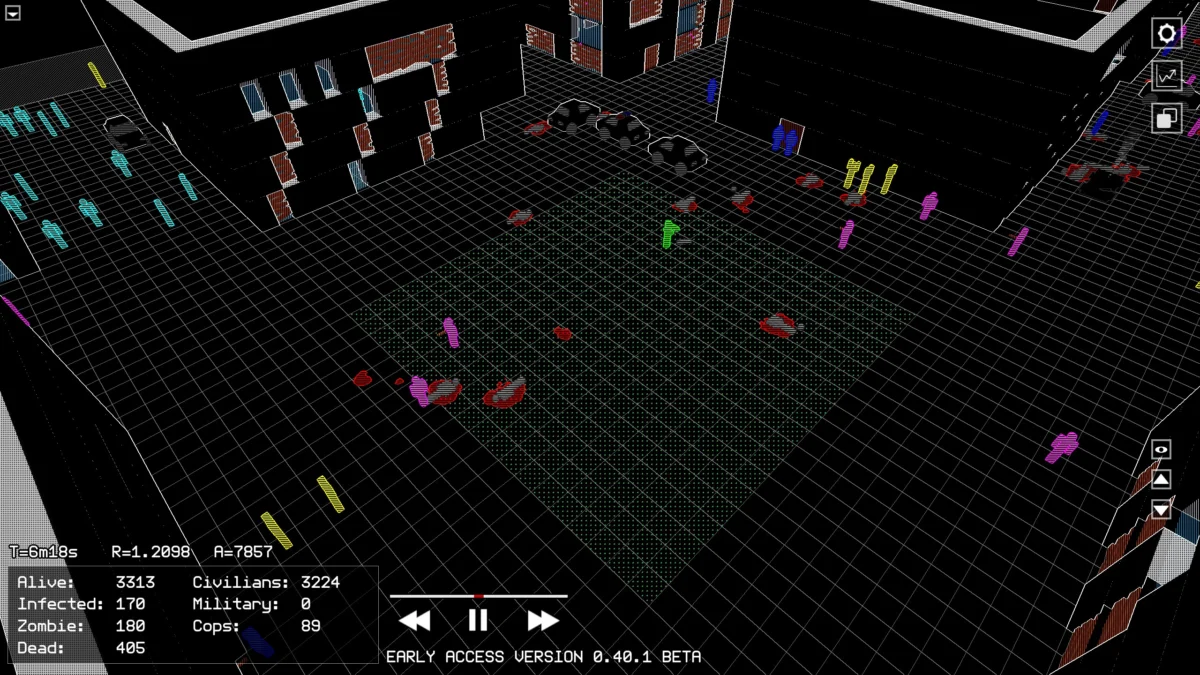
Every zombie movie follows a familiar, well-trodden path. A patient zero is bitten, the authorities fail to grasp the scale of the threat, the sirens wail, and eventually, the urban center collapses into a chaotic mosaic of panic and carnage. We have seen this story play out in Resident Evil, 28 Days Later, and World War Z. Yet, while these films provide the spectacle, they rarely offer a look at the granular mechanics of how an entire city descends into total systemic failure.
Enter DeadOS, an indie simulation sandbox that treats the zombie apocalypse not as a narrative backdrop, but as a complex epidemiological and social problem. Developed by Benn Powell, DeadOS invites players to act as architects of disaster, adjusting variables to see if humanity stands a chance against the shambling (or sprinting) dead.
The Genesis of an Outbreak: From Cutscenes to Code
For years, gamers have consumed the aftermath of a zombie infection. We play games that take place in the ruins, scavenging for supplies and fighting for survival. Benn Powell, an indie developer previously recognized for his intricate Resident Evil randomizer mods, noticed a glaring omission in the genre: the transition period.
"There’s a cutscene right at the beginning [of games like Resident Evil 3] where they show the helicopter flying over, all the people getting eaten and dying, and the police coming out and doing their bit," Powell explains. "Then everybody’s dead and the game starts. I really wanted to make a game that focused on that specific part, the part that never makes it into a game but is always in a cutscene."
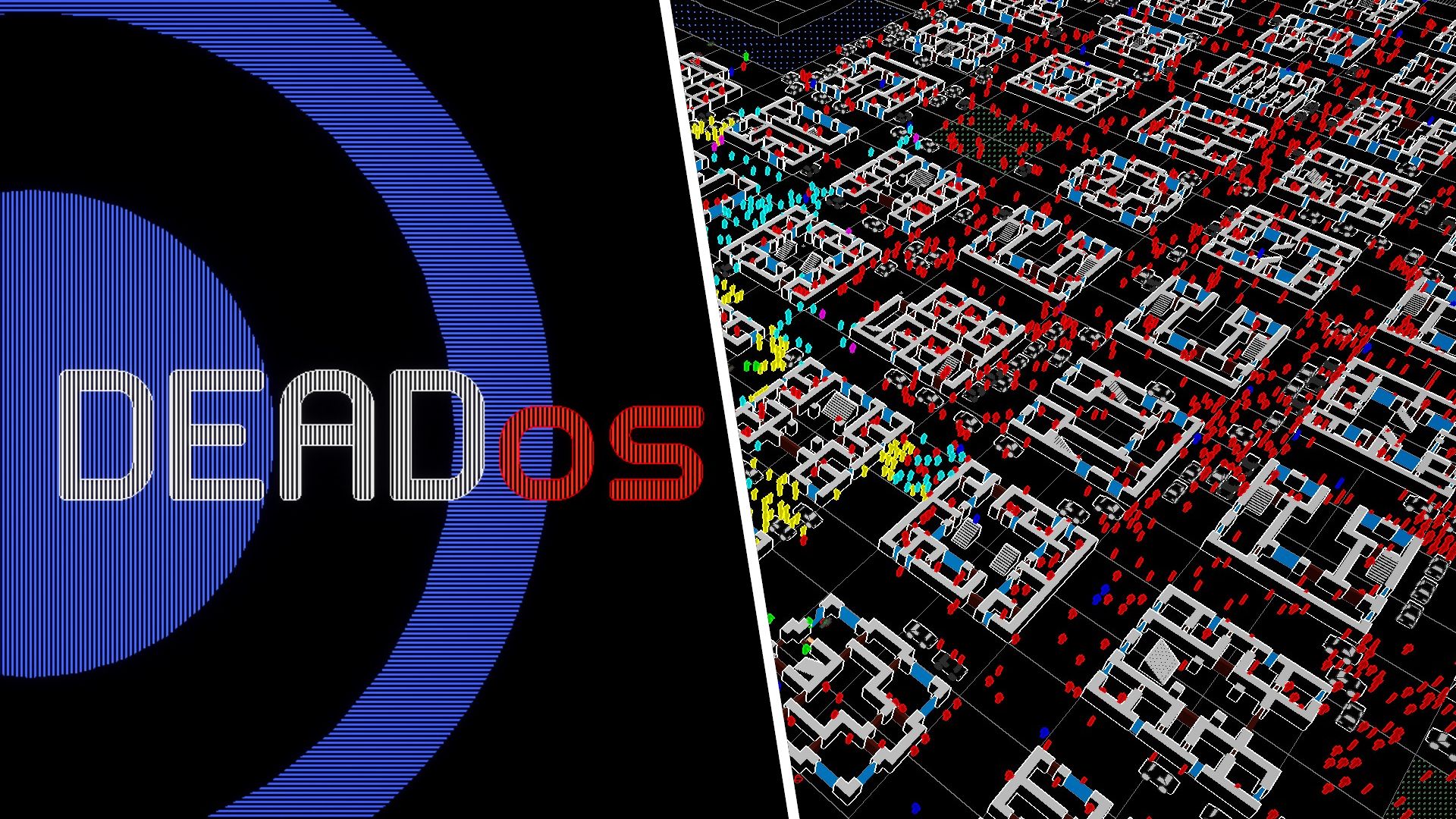
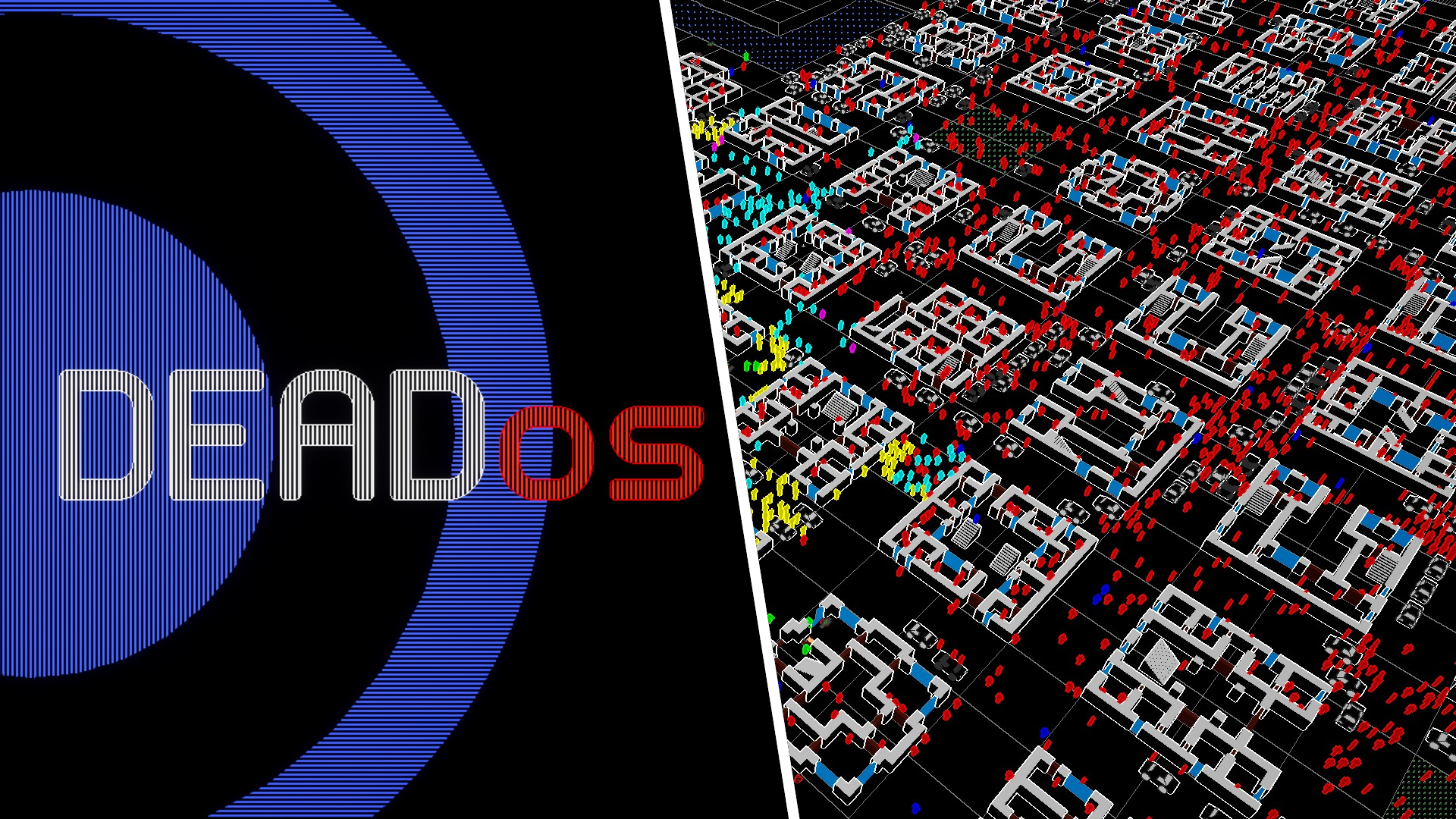
This desire to simulate the "collapse" led to the development of DeadOS, a project that began in 2019. Ironically, the timing coincided with the global onset of the COVID-19 pandemic, which provided Powell with an inadvertent masterclass in public health dynamics. Concepts like the R-number (the reproductive rate of a virus) became central to the simulation. In DeadOS, if the infection rate per zombie exceeds one, the city is mathematically doomed to an exponential catastrophe.
Chronology of a Simulation: The Architecture of Failure
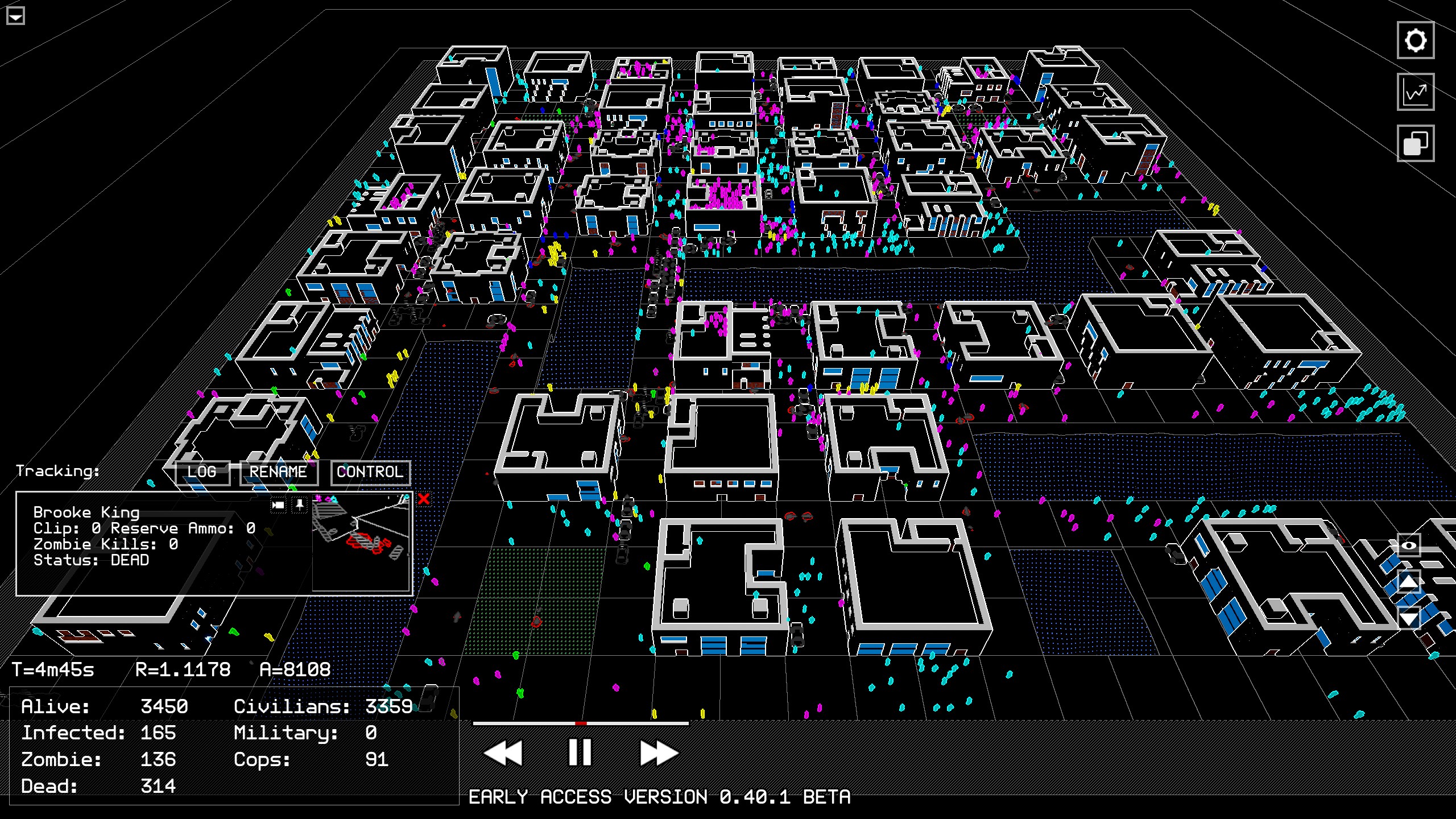
DeadOS is not a game in the traditional sense; it is a high-fidelity sandbox. Upon starting a session, the user is presented with a procedurally generated 3D cityscape. The simulation runs on a turn-based engine, but the calculations occur so rapidly that it appears to unfold in real-time.
The user’s role is that of a "God-mode" disaster coordinator. You define the population density, the ratio of armed citizens, the presence of law enforcement, and the specific biology of the pathogen. Once the parameters are set, you hit ‘play’ and observe.
The "Zombieville" Failure: A Case Study in Overconfidence
My own experience with the game illustrates how deceptive the mechanics can be. Attempting to create a high-speed, hyper-infectious pathogen—one that would make the Rage virus look benign—I set the stage for a total apocalypse. I named the starting location "Zombieville," a hubris-filled choice that immediately backfired.
The patient zero, an NPC named Ruby Mancini, was "infected" at an inner-city intersection. I had optimized her for speed and transmission. However, within seconds of the simulation beginning, Ruby was struck by a passing vehicle. The apocalypse ended before it truly began. This incident highlighted the game’s core reality: a successful zombie outbreak is remarkably difficult to sustain in a functioning urban environment. Human movement patterns, traffic, and the presence of armed responders create a dynamic system that actively resists total collapse.
Supporting Data: Variables of Mortality
The sophistication of DeadOS lies in its granular control over human behavior and zombie mechanics. Powell has painstakingly balanced the simulation to reflect common tropes while grounding them in logical, if brutal, variables.
The Human Factor
One of the most fascinating aspects of DeadOS is how it treats human psychology. Civilians are not just walking food sources; they are agents with varying levels of bravery, panic, and defensive capability.
- The Gun Effect: As discovered in the simulation, carrying a firearm drastically increases an individual’s survivability.
- The Cowardice Variable: Paradoxically, the most effective survival strategy for an NPC in DeadOS is to be a "massive coward." Braver individuals are more likely to engage the infected, which frequently leads to their demise.
- Panic and Hesitation: Borrowing from the cinematic tension of Resident Evil 2, Powell implemented a hesitation mechanic. When a civilian encounters a zombie, they don’t always fire immediately. They may panic, allowing the zombie to close the distance.
The Role of Speed and Crowd Dynamics
The speed of the undead is the primary determinant of the outbreak’s success. While traditional "shamblers" are easier for authorities to contain, 28 Days Later-style fast-infected are devastating. They can match or outpace human survivors, creating a feedback loop of panic.
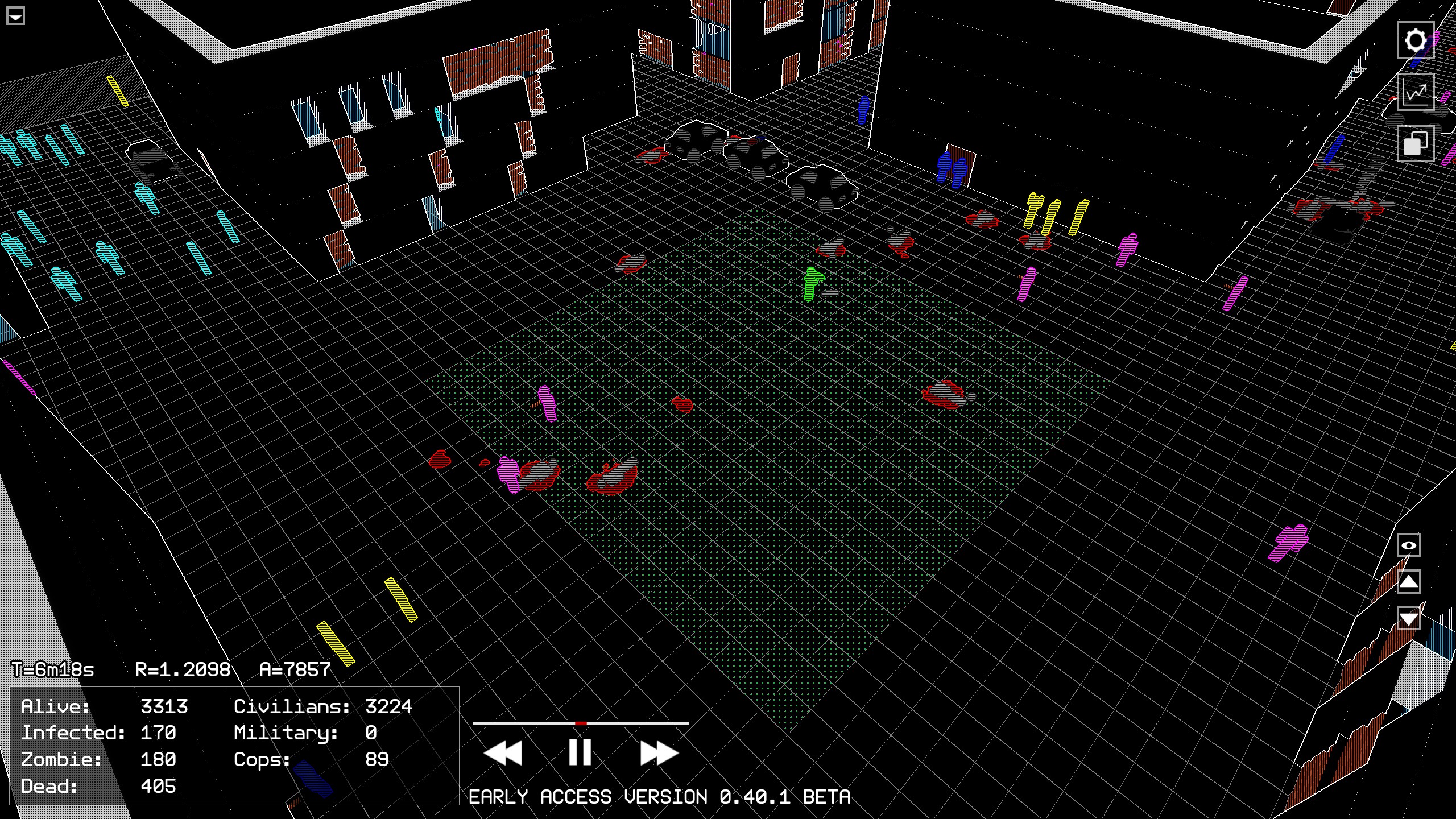
Powell’s data suggests that in a population of 4,000, roughly 250 slow-moving zombies are required to force a critical mass that overwhelms local authorities. However, the simulation also demonstrates that single-point outbreaks rarely succeed. The most effective way to trigger a true, civilization-ending event is to ensure multiple, simultaneous outbreaks that force citizens into "traps," moving them from one dangerous encounter directly into another.
Official Responses and Developer Philosophy
Benn Powell’s approach to DeadOS is one of long-term dedication. The project has been in development for seven years, with nearly five years spent in Steam Early Access. Despite the length of time, his vision remains focused. He is not interested in creating a traditional "winner-takes-all" game, but rather in providing a tool for sociological exploration.
When asked about the future of the game, Powell is ambitious. His roadmap includes:
- Steam Workshop Integration: Allowing users to share custom-designed cities, enabling the community to recreate real-world locations like London or New York.
- Institutional Simulation: Adding hospitals, schools, and more complex government response systems to simulate the "containment" phase of an outbreak.
- Military Intervention: Players can already call in the military, which arrives via helicopter to conduct systematic sweeps of the city. Future updates aim to refine this, including official quarantine protocols.
"I can’t think of another game like this," Powell says. "That’s my motivation. This is unique. It’s the game I wanted to play but couldn’t because it didn’t exist, so I made it."
Implications: The "Dwarf Fortress" of Undead Armageddon
DeadOS serves as a sobering reminder of the fragility of urban infrastructure. By simulating the "in-between" moments—the panic in the streets, the failed containment attempts, and the slow creep of infection—Powell has effectively created the Dwarf Fortress of the undead genre.
The implications for the gaming industry are clear: there is a significant, untapped audience for "emergent narrative" simulations. Players are increasingly interested in systems that they can manipulate to generate their own stories rather than following a scripted path.
As DeadOS continues to evolve, it stands as a testament to the power of niche simulation. It turns the zombie genre on its head, moving away from the "hero’s journey" and toward the objective, clinical analysis of a system under pressure. Whether you want to test the effectiveness of a quarantine zone, analyze the impact of civilian weapon ownership on survival rates, or simply watch the world burn in a digital recreation of your own neighborhood, DeadOS offers a level of depth that few games in the genre have ever dared to reach.
In the end, DeadOS proves that the true horror of a zombie apocalypse isn’t the monsters themselves—it’s the mathematical certainty of the collapse. And for those who enjoy the morbid science of the end of the world, there is no better laboratory.

