

By Editorial Staff
Published December 20, 2021
In the landscape of modern indie gaming, few titles manage to strike the delicate balance between aesthetic minimalism and emotional depth. Scarf, a 3D puzzle-platformer that arrived with little fanfare but significant ambition, occupies this space with grace. By drawing inspiration from the lineage of atmospheric adventure titles like Journey, the game offers a meditative, poignant experience that prioritizes player agency and environmental storytelling over traditional combat or high-stakes challenge.
The Core Concept: A Symbiotic Odyssey
At its heart, Scarf is a tale of companionship. The player assumes the role of a nomadic wanderer—a silent protagonist traversing a series of visually striking, ethereal realms. However, the nomad is never truly alone. The central mechanic and emotional anchor of the game is the eponymous scarf: a polymorphic, dragon-shaped entity that has been forcibly separated from its mother.
The game’s primary objective is straightforward yet deeply resonant. The nomad and the scarf must navigate ancient, crumbling landscapes to retrieve lost fragments of a portal. Once the portal is fully restored, it promises to reunite the scarf with its progenitor. This narrative framework serves as the engine for the entire experience, transforming what could have been a standard "collect-a-thon" into a heartfelt journey of shared burden and discovery.
Chronology of the Experience
The game unfolds across a series of distinct biomes, each presenting a different ecological challenge. The pacing is deliberate, encouraging the player to engage with the world at a contemplative speed.

- Introduction and Bond Formation: The initial phase of the game focuses on the burgeoning relationship between the nomad and the scarf. Here, the mechanics are introduced gently, teaching players to trust their companion as a primary tool for traversal.
- The Middle Epoch: As the player advances, the scarf begins to display its shapeshifting capabilities. The puzzles evolve from simple weight-based switches to complex platforming sequences that require the player to utilize the scarf as a wing-glider, a grappling hook, and other utilitarian forms.
- The Narrative Climax: The final acts shift from exploration to revelation. Through collectible "lore fragments"—presented as evocative, neolithic-style cave paintings—the player begins to realize that the world they are traversing holds a dark secret.
- The Resolution: The game concludes with a narrative twist that reframes the player’s previous actions, forcing a reflection on the nature of their mission and the ethics of their intervention within this world.
Visual and Auditory Synthesis
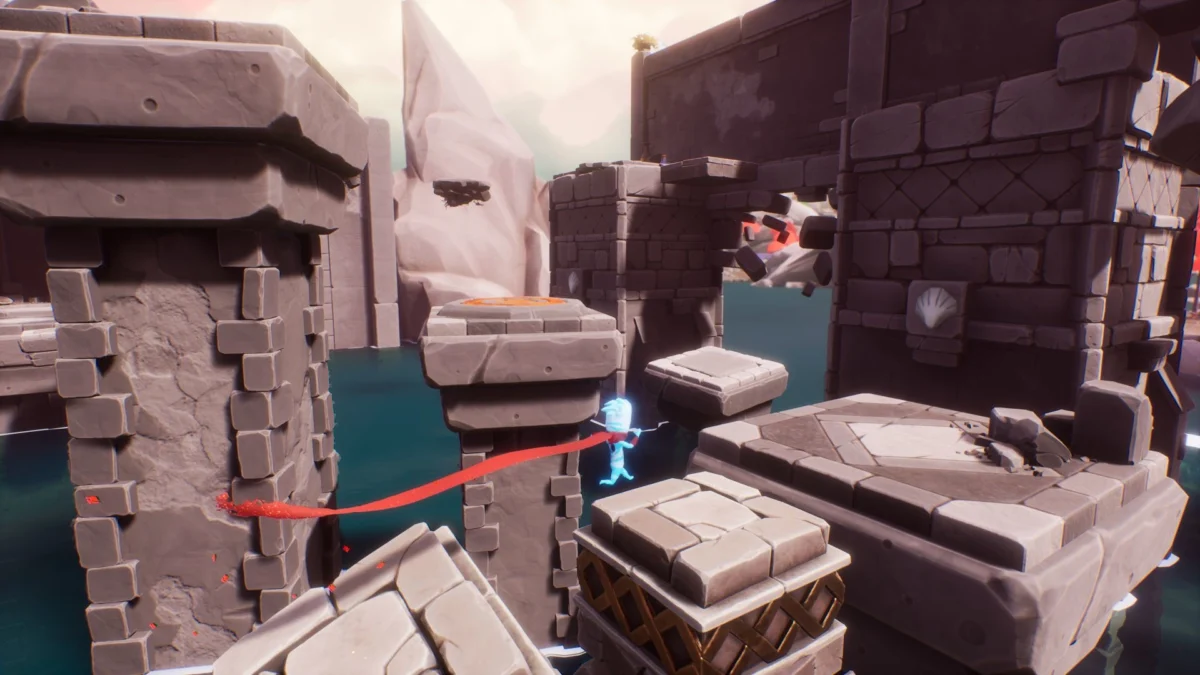
The visual language of Scarf is perhaps its most arresting feature. Utilizing a matte, painterly art style, the developers have crafted worlds that feel like living canvases. The color palette is vibrant without being garish, allowing for long-form sessions without eye strain.
This visual splendor is meticulously paired with an adaptive orchestral score. The music does not merely play in the background; it breathes with the environment. In the vast, open desert vistas, the score swells with sweeping strings and resonant brass, mirroring the grandeur of the setting. When the player enters a cavern or an area of solitude, the music pulls back, leaving room for ambient sound design—the subtle crunch of footsteps, the whistling wind, and the responsive movements of the scarf—to take center stage.
Mechanical Depth: Beyond the Basics
While Scarf is, on the surface, a conventional platformer, it distinguishes itself through its handling of the player-companion relationship.
The Shapeshifting Mechanic
The scarf is not merely an accessory; it is a sentient tool. Throughout the game, the player unlocks specific abilities attributed to the scarf. Watching the creature transition seamlessly from a glider to a platform-defying hook is a highlight of the game’s polish. The controls are smooth and responsive, with a level of camera-handling that rarely falters, even during high-intensity sequences.
The Absence of Conflict
One of the most notable design choices in Scarf is the complete omission of combat. By removing traditional enemies and combat mechanics, the developers have ensured that the focus remains entirely on the relationship between the nomad and the scarf, and the player’s interaction with the environment. This decision serves to heighten the emotional stakes; there is no "winning" by defeating an enemy, only by successfully navigating the world and understanding its history.

The "Petting" Factor and Emotional Attachment
The developers have leaned into the emotional connection between the player and the scarf by making the companion reactive. It investigates the world independently, occasionally straying from the nomad to inspect a hidden alcove or point of interest. This autonomy creates a genuine sense of loss when, at specific narrative junctures, the scarf is removed from the player’s control. It forces the player to prioritize the welfare of their companion over the completion of their tasks, effectively turning the game’s mechanics into an expression of care.
Data and Environmental Design
The game world is populated with a tiered system of collectibles:
- Portal Fragments: Necessary for main quest progression.
- Sigils and Orbs: Secondary items that unlock pathways.
- Hidden Art: Wood carvings and paintings that provide the context for the game’s lore.
While the "collect-a-thon" structure can occasionally lead to pacing issues—where progress is halted by the need to find specific items—it serves a secondary purpose: it forces the player to engage with the world’s intricate design. The game provides visual signposting, such as light particles gathering around points of interest, which acts as a gentle, non-intrusive guide.
Implications: A Deeper Commentary
For those willing to look past the surface, Scarf offers a surprisingly profound critique of environmental stewardship and the concept of "freedom." As the player uncovers the narrative through the cave-art cutscenes, the game reveals a sobering commentary on the cost of progress and the consequences of human (or humanoid) intervention in natural systems.
The "heel turn" in the narrative is a masterclass in subtlety. It forces the player to reconsider the legitimacy of their mission. Are they truly the heroes of this story, or are they agents of a cycle that requires the suppression of the world’s original spirit? This intellectual layer elevates the title from a standard platforming adventure to an allegorical piece of art.

Final Assessment: Who is this for?
Scarf is not designed to be a high-difficulty, adrenaline-fueled platformer. Veterans of the genre may find the puzzle solutions trivial—weight switches and platforming segments are standard, familiar fare. However, to judge Scarf by the metric of difficulty would be to miss the point entirely.
The game is a short, concentrated experience that can be completed in a single, immersive sitting. It is intended for players who seek an introspective, low-stress experience that prioritizes atmosphere and narrative substance. In an industry often preoccupied with adding more content, more enemies, and more complexity, Scarf is a refreshing reminder of the power of simplicity.
It is a title that values the player’s time, providing a beautiful, resonant journey that lingers long after the final cutscene has faded. By focusing on the bond between the nomad and their scarf, the developers have created a rare, touching experience that proves even the smallest games can have the largest emotional impact.

