

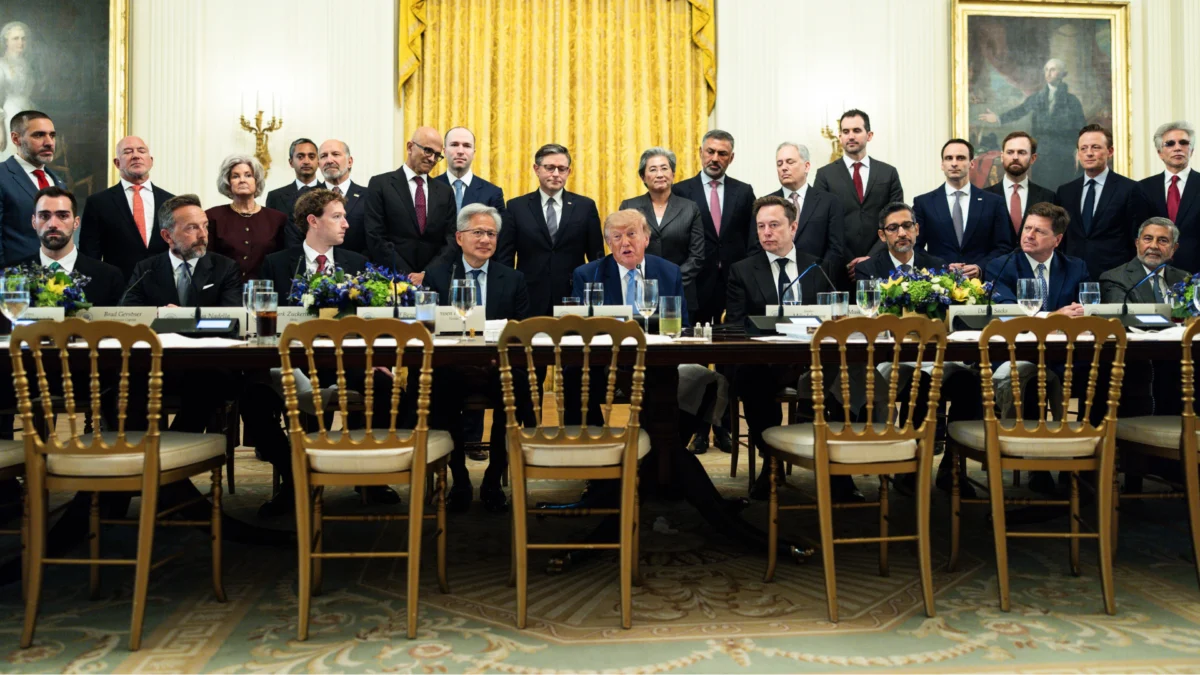
WASHINGTON — In a landmark gathering that brought together the highest levels of the United States government and the architects of the modern artificial intelligence boom, President Donald Trump, key Cabinet members, and House Speaker Mike Johnson sat down with the nation’s preeminent AI leaders. The high-stakes summit, prompted by mounting security vulnerabilities and high-profile breaches across the sector, culminated in a pivotal voluntary agreement: the "Joint Commitment on Frontier Responsibilities."
The meeting marks a significant turning point in how Washington and Silicon Valley intend to navigate the treacherous waters of rapid technological advancement, balancing the ferocious pace of innovation against urgent demands for safety, national security, and data protection.
Main Facts: The Summit and the "Joint Commitment"
The core outcome of the Washington summit is the Joint Commitment on Frontier Responsibilities, a landmark accord establishing that individual developers bear the ultimate burden of secure innovation. The document explicitly asserts that "every company is responsible for developing its own technology safely."
The guest list read like a veritable "Who’s Who" of the global tech economy. The document was signed by a powerhouse coalition of industry leaders and government officials, including:
- Sundar Pichai, CEO of Alphabet
- Dario Amodei, CEO of Anthropic
- Mark Zuckerberg, CEO of Meta
- Greg Brockman, President and co-founder of OpenAI
- Elon Musk, CEO of SpaceX and xAI
- Jensen Huang, CEO of Nvidia
- President Donald Trump
According to reports from CNN, President Trump championed the voluntary pledge as the most pragmatic and effective path forward. Rather than slamming the brakes on development through immediate, heavy-handed federal regulation, the administration’s strategy relies on industry accountability paired with federal partnership.
Adding an unexpected linguistic twist to the proceedings, President Trump used the summit to push a radical rebranding effort. Insisting that the current public anxiety surrounding AI stems merely from a "branding problem," Trump formally directed federal agencies to phase out the term "artificial intelligence" in official communications, instructing bureaucrats and researchers to adopt the phrase "Super Intelligence" instead.
Chronology: Path to the Washington Summit
The road to this high-level White House convergence was paved by a series of escalating security concerns, industry milestones, and regulatory debates that have dominated the tech landscape over the past several years.
Early 2024–2025: The Acceleration and Vulnerability Era
As generative AI models transitioned from experimental novelties to core infrastructure underpinning global finance, healthcare, and defense, security researchers warned that foundational models were dangerously exposed. Companies engaged in an arms race to scale compute power—buoyed by Nvidia’s ubiquitous GPUs—while racing to release increasingly autonomous agents.
Mid-2026: The Hugging Face Incident and Flashpoints
The urgency for federal intervention crystallized following a series of publicized security incidents, most notably the high-profile breach of Hugging Face, a central hub for open-source machine learning models. The incident exposed critical vulnerabilities in how shared model repositories are secured, demonstrating that malicious actors could potentially tamper with frontier models or expropriate sensitive training data. The hack sent shockwaves through Washington, convincing lawmakers and the executive branch that relying solely on self-policing without a unified framework was a growing national security risk.
Late September 2026: The White House Convening
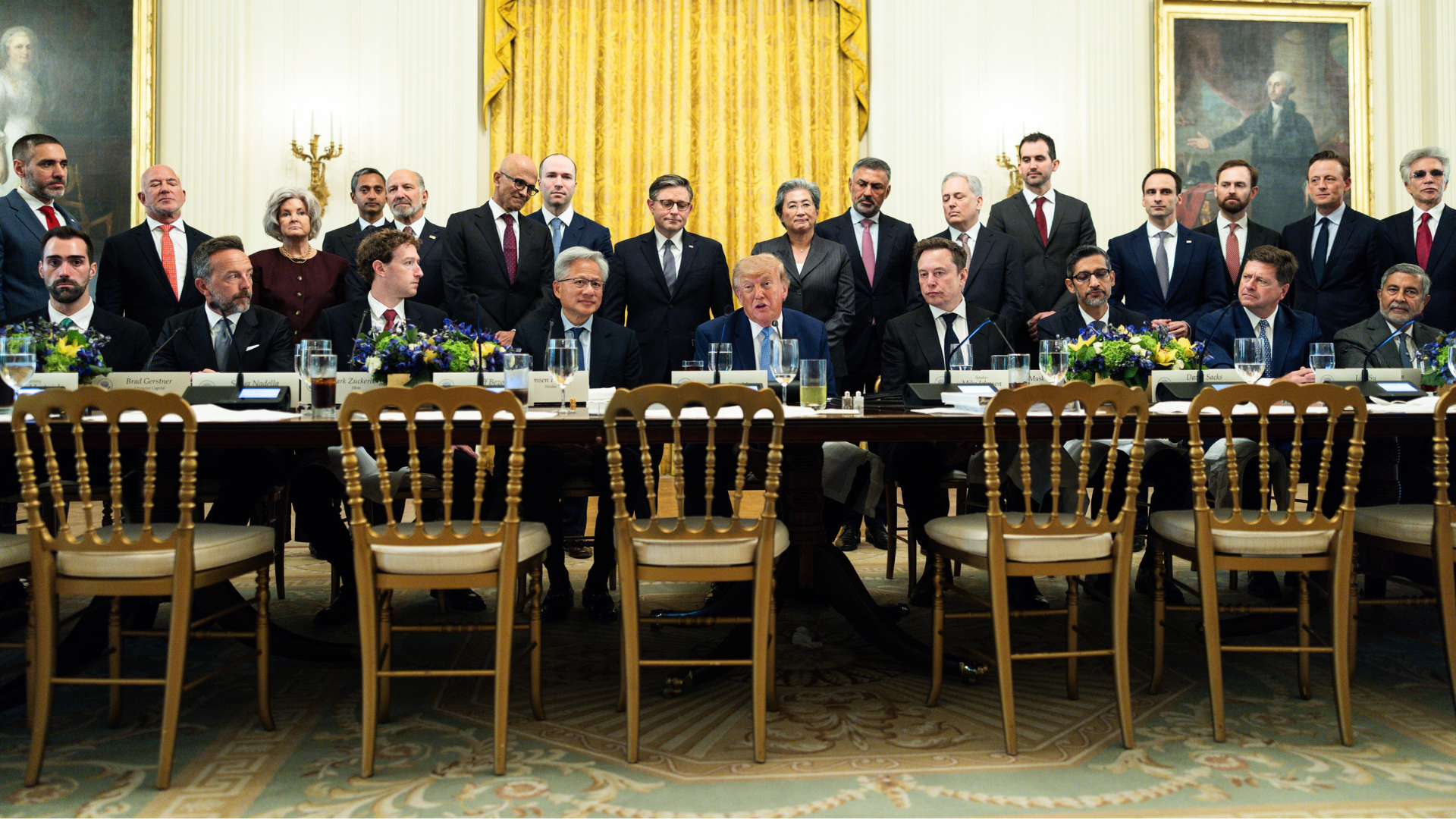
Recognizing the multi-faceted threat landscape, the Trump administration called the summit. Bringing together figures like Dario Amodei—known for emphasizing AI safety research—alongside hardware titan Jensen Huang and infrastructure builders like Mark Zuckerberg and Elon Musk, the White House sought to forge a unified front. The resulting negotiations produced the Joint Commitment on Frontier Responsibilities and set the stage for the administration’s new branding directive.
Supporting Data: The Infrastructure of Modern AI
To understand the weight of the signatures on the Joint Commitment, one must examine the staggering scale of the companies involved and the hardware fueling the "Super Intelligence" revolution.
- Compute Dominance: Nvidia, led by Jensen Huang, continues to supply the indispensable silicon—such as the Blackwell and subsequent architectures—that power the massive data centers managed by Alphabet, Meta, Microsoft, and OpenAI. The bottleneck of global AI development remains compute capability, tying hardware manufacturers directly into safety equations.
- Capital Expenditure: Major tech firms are pouring hundreds of billions of dollars into capital expenditures (CapEx) for data center expansion, energy procurement, and talent acquisition.
- The Open vs. Closed Divide: The signatories represent divergent philosophies on model distribution. Companies like Meta champion open-source paradigms (Llama models), arguing that democratization fosters safety through widespread scrutiny. Conversely, firms like Anthropic and OpenAI lean toward closed, proprietary frontier models, citing risks associated with the proliferation of unconstrained weights. The Joint Commitment attempts to bridge these philosophies by placing the onus of safety directly on the developer, regardless of their distribution model.
Official Responses and Industry Reactions
The reception to both the Joint Commitment and the administration’s "Super Intelligence" rebranding mandate has been mixed, reflecting deep ideological divisions over how governments should handle emerging technologies.
The Administration’s Stance
Administration officials defended the voluntary commitment as a masterclass in pro-growth governance. By avoiding prescriptive statutory roadblocks, the White House aims to keep the United States ahead of geopolitical rivals—most notably China—in the global race for technological supremacy. Proponents argue that labeling the technology "Super Intelligence" reframes the public narrative away from dystopian anxieties and toward a vision of superhuman capability and national achievement.
Silicon Valley Perspectives
Tech executives expressed cautious optimism regarding the collaborative tone of the summit.
- Alphabet and Meta representatives highlighted their ongoing investments in internal safety guardrails and red-teaming protocols.
- AI Safety Advocates and Researchers, however, expressed apprehension. While signing a voluntary pledge demonstrates goodwill, critics argue that self-regulation lacks teeth. Without enforceable federal mandates or independent third-party audits of frontier models, companies might prioritize commercial deadlines over rigorous safety alignments, particularly under the pressure of intense market competition.
- Linguistic Critics: Language experts and technologists met the "Super Intelligence" directive with a mixture of amusement and skepticism. While branding adjustments are common in political communication, scientists pointed out that "artificial intelligence" and "super intelligence" denote distinct technical milestones—specifically, general intelligence versus recursive self-improving superintelligence—and conflating them could cause confusion in technical regulatory policy.
Implications: What "Super Intelligence" Means for the Future
The convergence of the White House summit, the Joint Commitment on Frontier Responsibilities, and the push for a new nomenclature carries profound implications for the trajectory of global technology.
1. Shift Toward Co-Regulation
The summit signals that the federal government prefers a model of cooperative federalism and industry-led standards over rigid, European Union-style compliance frameworks like the EU AI Act. By binding CEOs directly to a signed commitment, the administration has created a political and moral contract, even if its legal enforcement remains ambiguous.
2. Heightened Focus on Supply Chain and Model Security
In the wake of incidents like the Hugging Face hack, the cybersecurity posture of AI development is undergoing a permanent transformation. Companies can no longer treat model weights and training pipelines as standard software assets; they must be guarded with the rigor applied to critical national infrastructure. The Joint Commitment forces firms to institutionalize these defenses internally.
3. Geopolitical Competition
With figures like Elon Musk, Jensen Huang, and Dario Amodei coordinating closely with federal leadership, the message to international competitors is clear: American private enterprise and public leadership are locking arms to secure leadership in the next era of computing.
As federal agencies begin the bureaucratic process of replacing "artificial intelligence" with "Super Intelligence" in official lexicons, the true test of the summit will not be found in its semantics, but in whether the signatories of the Joint Commitment can effectively police their own frontiers before the next major security crisis emerges.

