

Published: December 20, 2021
In the crowded landscape of indie adventure titles, few games dare to stand in the shadow of giants while simultaneously carving out their own distinct identity. Scarf, released in late 2021, is one such title. By marrying the ethereal, minimalist storytelling pioneered by genre-defining classics like Journey with a more tactile, mechanical sense of companionship, Scarf offers a meditative experience that prioritizes emotional resonance over high-octane tension.
The Foundation: A Narrative of Connection and Loss
At its core, Scarf is a tale of displacement and reunification. Players assume the mantle of a silent, nameless nomad—a wanderer navigating an ancient, sprawling landscape fractured by mystery. However, the nomad is not traversing this world in isolation. They are tethered to a polymorphic, dragon-shaped companion: a sentient, living scarf.

The central premise is deceptively simple yet carries significant emotional weight. The scarf has been forcibly separated from its mother, and the nomad’s mission is to traverse the world’s various biomes to retrieve fragments of a portal. These fragments, when unified, promise to bridge the gap between mother and child. It is a classic "hero’s journey" structure, but the bond between the player and their wearable companion elevates the stakes from a mere scavenger hunt to a poignant exploration of empathy and interdependence.
Chronology of the Experience: From Exploration to Revelation
The progression of Scarf follows a deliberate, rhythmic pace. The game is divided into distinct, expansive biomes—ranging from lush, verdant forests to desolate, wind-swept deserts—each offering a visual aesthetic that mimics the vibrancy of an oil painting.
- The Arrival: The player begins in a state of relative simplicity, learning the basic mechanics of movement and interaction. The world is presented as a blank canvas, inviting curiosity.
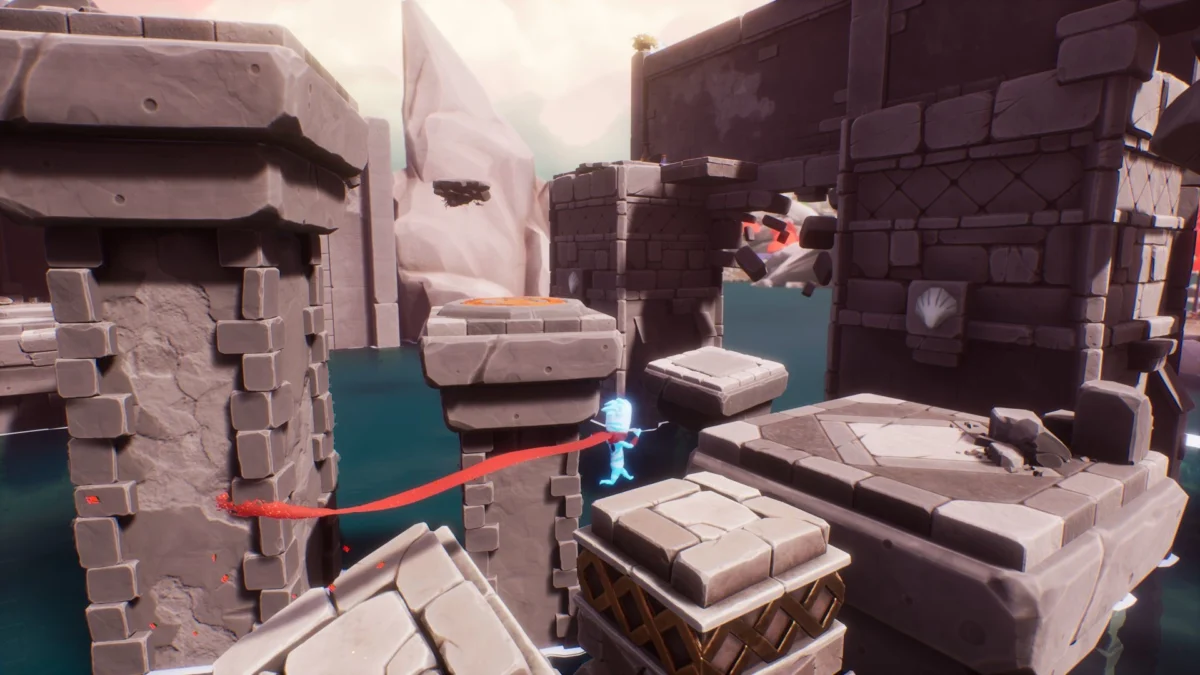
- The Partnership: As the player gains the scarf’s trust, the creature begins to demonstrate its utility. It shifts into various forms, acting as a hook, a glider, or a tool for interaction, effectively becoming an extension of the player’s own body.
- The Collection: The mid-game shifts into a "collect-a-thon" phase. Players must hunt for sigils, portal fragments, and orbs. While this pacing is intentionally slow, it serves as an invitation to inhabit the world fully.
- The Revelation: As the player collects "lore fragments"—presented as neolithic-style cave art—the narrative begins to coalesce. The final act introduces a narrative shift that recontextualizes the entire journey, transforming a lighthearted adventure into a sobering commentary on ecology and the ethics of freedom.
Supporting Data: Mechanics, Design, and Accessibility
Scarf is designed to be accessible. Unlike contemporary platformers that prioritize frame-perfect inputs or punishing difficulty curves, Scarf opts for a more forgiving approach.

Technical Performance and Gameplay Loop
- Controls: The game features highly responsive, fluid controls. While the character movement carries a "floaty" quality, it is consistent with the game’s serene tone.
- Environmental Design: The world utilizes visual signposting. Particles of light guide the player toward objectives, ensuring that the sense of agency is maintained without causing frustration.
- The "No-Combat" Philosophy: Perhaps the most notable design choice is the complete omission of a combat system. By removing enemies and violent conflict, the developers have successfully preserved the game’s "zen" atmosphere, ensuring that the player’s focus remains entirely on exploration and the evolving relationship with the scarf.
- The Scarf as an Entity: The scarf is not merely a utility belt. It reacts to the environment independently, at times unwinding from the nomad to investigate points of interest. This autonomy reinforces the idea that the scarf is a sentient being, not just a mechanic.
Implications: The Weight of Ambition
While Scarf has been occasionally critiqued for its reliance on genre-standard puzzles—such as weight switches and water physics—to view it solely through the lens of a platformer is to miss its greater intent. The implications of the game’s narrative are where it truly shines.
Beneath the surface of a colorful, relaxing adventure lies a philosophical inquiry into what it means to be "free." The game forces the player to consider the consequences of their actions within the game world. Is the nomad truly the hero of this story, or are they a catalyst for something far more complex? By the time the credits roll, the player is left with a sense of introspection that few titles of this scale manage to evoke.
A Balanced Perspective: Strengths and Considerations
The Strengths
- Visual and Auditory Immersion: The combination of matte, vibrant visuals and an adaptive orchestral score creates a sensory experience that remains engaging even after hours of play.
- Emotional Weight: The relationship between the protagonist and the scarf provides a constant, heartbeat-like emotional anchor for the player.
- Narrative Depth: The shift in the final act is masterfully executed, rewarding players who take the time to decipher the lore fragments.
Considerations for the Player
- Pacing: The game’s deliberate, slow pace may not appeal to those who prefer fast-paced action. The reliance on gathering multiple types of collectibles can feel repetitive for some.
- Genre Familiarity: Veterans of the platforming genre may find the puzzles trivial. The game is not designed to challenge one’s mechanical skill, but rather one’s patience and capacity for empathy.
Conclusion: Is the Journey Worth Taking?
In the final analysis, Scarf is a success not because it reinvents the platforming genre, but because it utilizes the genre as a vessel for something more profound. It is a short, digestible experience that can be completed in a single, immersive sitting.

For those who find themselves weary of the "crunch" of modern, high-intensity gaming, Scarf offers a much-needed reprieve. It is a game about quiet moments, the beauty of the natural world, and the silent, powerful bonds we form with those who accompany us on our travels. It is a reminder that even in a world of simple mechanics and familiar landscapes, there is always room for a story that touches the heart. Whether you are a fan of Journey or simply looking for a beautifully rendered interactive fable, Scarf is a title that deserves its place on your shelf—or, more accurately, wrapped around your shoulders.

