

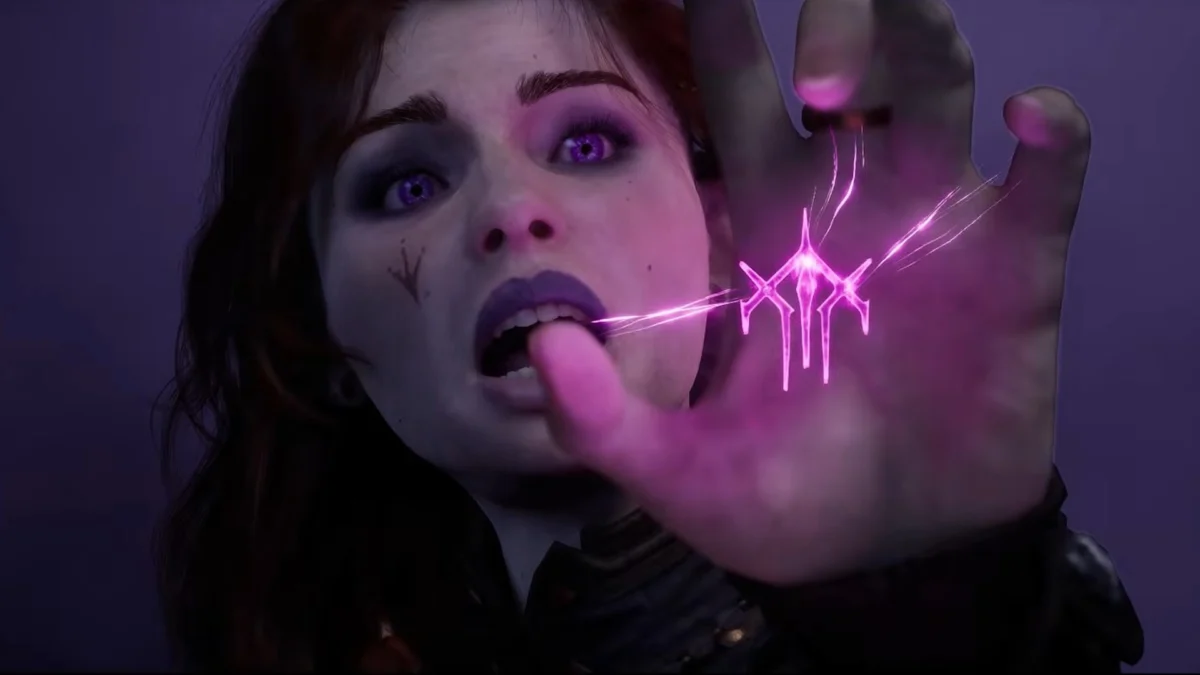
For fantasy RPG enthusiasts, the massive critical and commercial success of Larian Studios’ Baldur’s Gate 3 was a monumental triumph, yet it cast an intimidatingly long shadow over the entire genre. Developers attempting to build games within the rich, sprawling tapestry of the Dungeons & Dragons universe now face the daunting task of meeting—or escaping—the monumental expectations set by Larian’s masterpiece.
Enter Warlock, an ambitious upcoming open-world action-adventure game developed by Invoke Studios. Rather than trying to replicate the tactical, turn-based depth of Baldur’s Gate 3, Warlock is carving out its own distinct identity. By leaning heavily into high-octane action, creative environmental interactions, and a lightning-fast, real-time magic system, the game aims to redefine what it feels like to wield arcane power in a digital D&D setting.
Main Facts: A New Kind of D&D Experience
At its core, Warlock is designed to break away from the traditional, methodical pace usually associated with tabletop-inspired video games. Instead of waiting for turn counters, managing complex party menus, or relying solely on static spell lists, players are thrust into a dynamic, fluid sandbox where magic is immediate, visceral, and dangerously versatile.
- Developer: Invoke Studios, headed by studio head Dominic Guay.
- Genre: Open-world action-adventure with a heavy emphasis on real-time combat and spellcasting.
- Core Mechanic: A button-combination magic system that allows players to chain melee strikes and spells on the fly.
- Design Philosophy: Embracing overpowered ("OP") mechanics during early development to maximize fun before dialing in the balance.
According to recent insights shared in Edge Magazine issue #429, the development team made a conscious early decision to let players feel overwhelmingly powerful. Rather than restricting magical abilities out of fear that they might break the game, Invoke Studios chose to build a sandbox where breaking the rules of engagement is half the fun.
Chronology: From Concept to Combat Sandbox
The journey of bringing Warlock to life has been defined by a philosophy of iterative design and a willingness to break traditional video game conventions.
The Early Prototype Phase
In the nascent stages of development, the Invoke Studios team faced a common design dilemma: the spells being coded into the game were simply too effective. In traditional game development, the knee-jerk reaction to an overpowered mechanic is an immediate nerf. However, studio leadership recognized that forcing players into restrictive limitations too early could drain the excitement out of the fantasy.
Shifting the Paradigm
Rather than watering down the magic, the team adopted an "op-first" mantra. As Dominic Guay explained in Edge Magazine, developers had to actively silence their internal hesitation: "At some point we had to say, ‘No. Make it OP first, make it fun, and then we’ll balance it.’" This pivot allowed the team to explore wild, physics-bending interactions between spells, enemies, and the game world without creative handcuffs.
Refining the Onboarding Process
As the combat loop solidified into a real-time, combo-heavy system, the team realized that traditional controller layouts wouldn’t cut it. To ensure players didn’t feel overwhelmed by the velocity of the action, Invoke designed an intuitive progressive onboarding system. Players learn to become powerful spellcasting warlocks in tandem with their on-screen avatars, unlocking new abilities at a brisk pace while mastering the unique controller inputs naturally over time.
Supporting Data and Mechanics: How the Magic Works
What does an overpowered, real-time magic system actually look like in practice? Invoke Studios has provided tantalizing glimpses into the tactical depth and emergent gameplay that Warlock’s sandbox affords.
Tactical Environmental Manipulation
Combat in Warlock goes far beyond simply pointing a wand and depleting a health bar. The game’s spell system is deeply integrated with the environment and enemy behaviors.
Consider one of the game’s signature spells, Black Tentacles. In a standard encounter against a towering ogre, a player might choose to cast the spell directly onto the monster. While effective, the ogre’s brute strength allows it to break free from the grasping appendages relatively quickly.
However, a more creative player might look at the battlefield and decide to use Black Tentacles to anchor the ogre’s massive weapon to the ground. With its primary means of offense pinned, the beast is left completely helpless, creating a window for the player to unleash unmitigated fury upon the immobilized monster. This level of environmental puzzle-solving and creative exploitation is reminiscent of classic sandbox titles, encouraging players to experiment rather than follow a rigid script.

Real-Time Chain Casting
Unlike classic RPGs where casting a high-level spell requires pausing the action or navigating radial wheels, Warlock utilizes a dynamic button-combination system. By stringing together specific inputs, players can weave martial melee attacks seamlessly into rapid-fire magical onslaughts.
"Once you get the hang of it, you’re able to chain melee attacks, spell, spell, spell, and think on the fly," Guay notes. "We always wanted that realtime expression of magic instead of something that feels a bit slower."
Veterans of the genre might draw comparisons to games like Magicka—developed by Arrowhead Game Studios—where elemental combinations yield wildly diverse and chaotic results. While Warlock streamlines its inputs for modern controllers, it captures that same spirit of explosive, experimental wizardry.
Official Responses and Developer Insights
The reception to Warlock’s unconventional approach has sparked considerable discussion within the gaming community, particularly regarding how the studio manages player progression and learning curves.
Speaking on the challenges of introducing a completely fresh control scheme for magic, Dominic Guay emphasized the importance of pacing the player’s journey.
"The player will learn to be a warlock at the same time as the character," Guay stated. He acknowledged that while users will acquire new spells relatively quickly during the opening hours of the game, this rapid acquisition is intentional. It acts as an immersive tutorial, gently training muscle memory for controller layouts that diverge sharply from standard action-RPG conventions.
By tying character progression directly to the player’s actual mastery of the input combinations, Invoke Studios hopes to create a genuine sense of empowerment. You don’t just watch your character grow stronger; you, the player, become a more skilled spellcaster.
Implications: Escaping the Long Shadow
The release of Warlock represents a crucial litmus test for the future of Dungeons & Dragons adaptations in interactive media. While Baldur’s Gate 3 proved that audiences are hungry for deep, narrative-driven, turn-based roleplaying masterpieces, Warlock is betting that a significant portion of that same audience is also ready for adrenaline-fueled, sandbox-driven action.
Redefining D&D Adaptations
Historically, D&D video games have tended to lean heavily into simulation—replicating tabletop rulesets, dice rolls, and tactical grids as closely as possible. Warlock takes the lore, the monsters (like ogres), and the iconic spells, but completely reimagines the kinetic energy of the universe. If Invoke Studios succeeds, it could pave the way for a new sub-genre of D&D action games that prioritize player expression, physics-based chaos, and real-time mastery over adherence to paper-and-pencil mechanics.
The Balancing Act
Of course, building a game around mechanics that start "too OP" comes with inherent risks. Ensuring that late-game encounters remain challenging while still allowing players to feel like god-like wielders of dark magic will require delicate fine-tuning. However, by establishing the fun factor first and tackling balance second, Invoke Studios has given itself the best possible foundation to build upon.
As development continues, Warlock stands proudly outside the shadow of its predecessors. Armed with a fluid combat system, creative environmental interactions, and a refreshing design philosophy, it is shaping up to be one of the most anticipated titles for fantasy fans eager to roll the dice on something entirely new.

