

In a move that promises to fundamentally reshape the economics and technical workflows of the gaming industry, Unity Technologies has officially unveiled the roadmap for Unity 7. Announced at the Unite Seoul conference, the next-generation engine is set to enter beta testing in December 2026, with a full commercial release slated for the first quarter of 2027.
The announcement marks a radical departure from the traditional software lifecycle. By moving away from the disruptive, monolithic version jumps that have historically plagued game studios, Unity is positioning itself as a "living" platform. This shift aims to eliminate the technical debt and migration fatigue that have long been synonymous with engine transitions.
The Core Philosophy: Eliminating the Upgrade Wall
For decades, the standard procedure for engine updates involved arduous migration processes, where developers would spend months refactoring code and debugging broken assets to move from one major version to the next. Unity 7 aims to render this "version transition" obsolete.
Adam Smith, Unity’s Senior Vice President of Product, described the new engine as a "direct continuation of the Unity 6 architecture." By maintaining structural continuity, Unity 7 ensures that workflows remain intact. "Because the architecture underneath doesn’t change at the moment of version transition, teams can adopt with ease," Smith explained.
This means that new features will be "shipped and production-verified" within the current environment before being integrated into the main branch. This modular approach allows studios to adopt incremental updates without the fear of breaking their core build, effectively transforming Unity from a series of discrete products into a continuous service.
Chronology and Development Roadmap
The journey toward Unity 7 is designed to be transparent, reflecting the company’s push toward better developer relations following years of industry scrutiny.
- Pre-2026: Continuous integration of features into the current Unity 6 framework, serving as a proving ground for the architecture that will define Unity 7.
- December 2026: The official public beta launch. This phase is intended to allow enterprise partners and indie developers to test the new CLI and AI-integrated pipelines in live production environments.
- Q1 2027: Official release. The rollout will be global, targeting a seamless transition for studios currently operating on Unity 6.
Technical Innovations and Modernized Foundations
Under the hood, Unity 7 is built upon a modern CoreCLR foundation, representing a significant leap in performance and stability compared to previous iterations.
Rendering and Global Illumination
One of the headline features is the implementation of real-time global illumination powered by "Surface Cache GI." This technology is engineered to deliver high-fidelity, realistic lighting across a vast spectrum of hardware. Whether a title is being developed for a high-end gaming PC or a mid-range mobile device, Unity 7 utilizes AI-assisted graphics optimization to scale visual fidelity without manual downsampling or redundant asset creation.
The New CLI and Public API
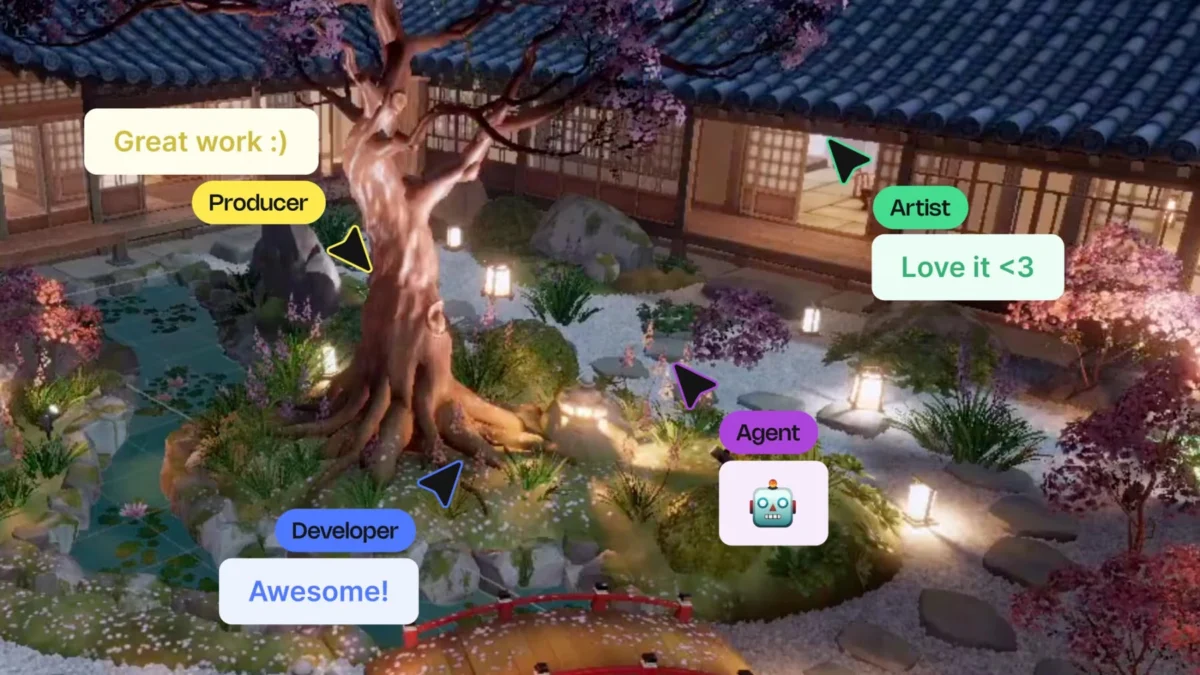
Perhaps the most significant workflow improvement is the introduction of a new Command Line Interface (CLI) and an expanded public API. This change democratizes access to the engine. Artists, producers, and data analysts—who may not be proficient in the Unity Editor interface—can now validate assets, monitor performance, and collaborate on project files using their preferred external tools. By decoupling the "engine" from the "editor," Unity is enabling a more heterogeneous workflow where specialists can contribute to a project without needing a deep understanding of the engine’s core environment.
The AI Question: Empowerment vs. Mandate
Unity 7 leans heavily into the AI revolution, but it does so with a caveat that addresses the industry’s ongoing debate regarding generative tools.
While the engine features a "free MCP" (Model Context Protocol) for connecting with AI coding agents, Unity has been explicit about the optional nature of these tools. The company is positioning itself as a platform that facilitates human-AI collaboration, rather than one that forces the issue.
"If your studio has committed to keeping AI out of your creative work—you’re not on the sidelines of this release," Smith stated during the announcement. "Unity 7 is built for a future where humans and coding agents can work together. But the choice is always the team’s, not the platform’s."
This stance is crucial for large-scale studios that maintain strict proprietary security protocols or ethical guidelines regarding AI-generated content. By keeping these tools as "opt-in" features, Unity maintains its utility for both AI-forward startups and traditional studios protective of their creative processes.
Commercial Integration: Beyond the Engine
Unity 7 is not merely a rendering and coding tool; it is a commerce platform. The engine now includes:
- Direct-to-consumer IAP (In-App Purchase) systems: Reducing the friction between gameplay and monetization.
- No-code web shops: Allowing developers to launch storefronts directly within the engine environment.
- Unified Catalogues: A system that funnels purchase data into "Unity Vector," the company’s AI-driven data engine. This allows studios to analyze player behavior and purchase intent in real-time, feeding that information back into the development cycle to optimize live-service updates.
Implications for the Gaming Industry
The launch of Unity 7 arrives at a critical juncture. As Unity CEO and President Matt Bromberg noted, "Game development is changing faster than at any point in history."
The End of the "Biggest Team" Advantage
Historically, large studios had an advantage because they could afford the specialized personnel required to manage engine migrations and custom middleware. By automating these processes and lowering the barrier to entry for cross-functional collaboration, Unity 7 threatens to level the playing field.
The Rise of the Data-Driven Studio
The integration of Unity Vector and unified purchase data suggests that the future of the engine is as much about business intelligence as it is about graphics. For developers, this means the ability to iterate on gameplay loops based on real-time economic data, potentially shifting the focus of development from "gut feeling" to "data-validated design."
Stability in a Volatile Market
For the mid-sized studio, the primary implication is one of financial stability. The ability to avoid the "version upgrade" cycle means that development costs become more predictable. When a studio doesn’t have to factor in a massive, months-long engine migration into their project schedule, they can focus their resources on content, polish, and creative risk-taking.
Conclusion
Unity 7 represents a fundamental shift in how the industry views game engine software. By moving toward a continuous, non-breaking architecture, integrating optional but powerful AI tools, and embedding commerce directly into the development workflow, Unity is attempting to build a future where the platform disappears into the background.
The success of this endeavor will depend on the stability of the beta starting in late 2026. However, if Unity delivers on the promise of an engine that evolves alongside its users rather than against them, it could usher in an era where the engine is no longer a hurdle to be overcome, but a silent partner in the creative process. As Bromberg suggested, the future belongs to those who can use technology to create something unique—and with Unity 7, the company is aiming to provide the foundation for exactly that.

