

By Tech & Gadgets Desk
Published: September 2026
Main Facts: The Curious Case of Apple’s New Foldable
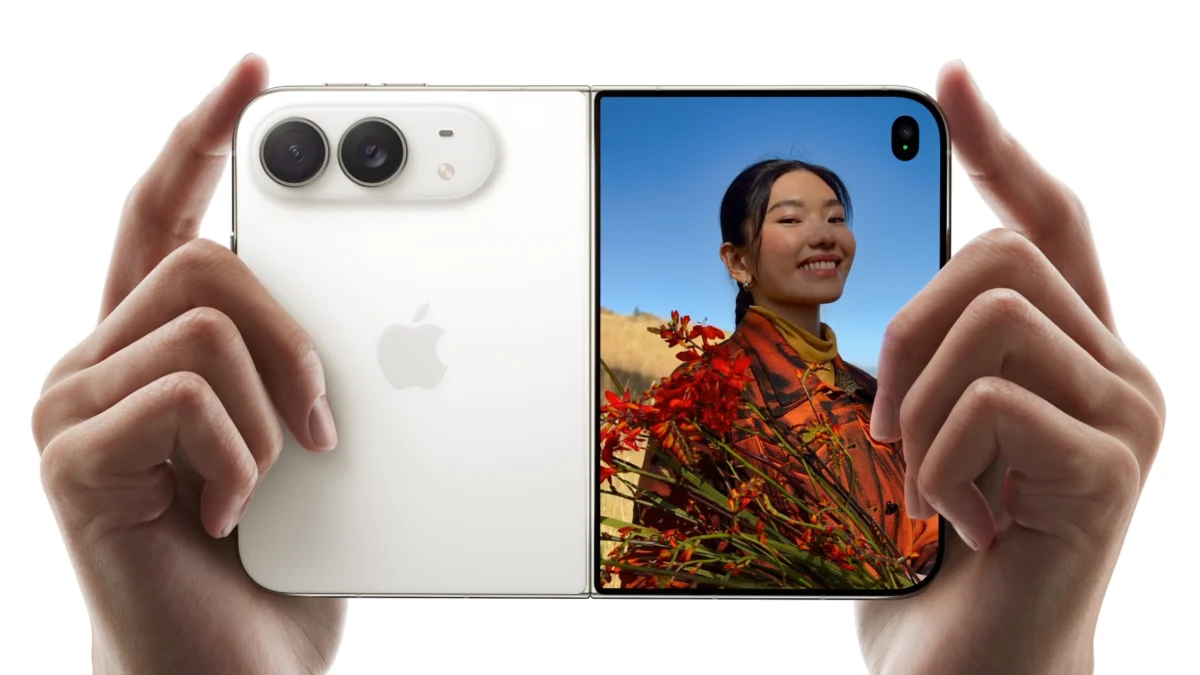
Apple’s product roadmap has long been celebrated for its hardware synergy, particularly regarding the seamless integration of its ecosystem devices. However, the tech giant’s latest flagship hardware release—the highly anticipated, premium-priced $1,999 iPhone Duo—has introduced an unexpected and baffling technical omission. Despite carrying a dual-camera system, top-tier processing silicon, and a luxury price tag that places it firmly at the bleeding edge of the mobile market, the iPhone Duo seemingly lacks the ability to capture native spatial photos and spatial videos for viewing on the Apple Vision Pro.
This revelation comes as a surprise to industry analysts and consumers alike. The iPhone Duo is outfitted with a powerful camera array that mirrors components found on its sibling devices, including a 48-megapixel Fusion Main camera and a 48-megapixel Fusion Ultra Wide camera. Furthermore, it runs on the exact same high-performance A20 Pro chip—complete with a dual 16-core Neural Engine—found in the standard iPhone 18 Pro lineup.
Yet, when cross-referencing Apple’s official technical specifications and hardware comparison tools, spatial photo and spatial video recording are conspicuously absent from the iPhone Duo’s supported camera features list. This stands in direct contrast to the iPhone 18 Pro and iPhone 18 Pro Max, which explicitly and prominently feature native spatial recording capabilities at 1080p and 30 frames per second.
As consumers evaluate whether to invest in Apple’s expensive new foldable form factor, questions are mounting over why a device marketed at the absolute peak of mobile innovation would leave behind a cornerstone feature designed to bridge the gap between traditional photography and spatial computing.
Chronology: The Evolution of Spatial Capture in the Apple Ecosystem
To understand why the omission on the iPhone Duo is turning heads, it is essential to trace the deliberate timeline through which Apple introduced spatial media to its consumer base.
- Late 2023: Apple officially introduces spatial video capture on the iPhone 15 Pro, strategically rolling out the feature ahead of the commercial release of the Apple Vision Pro headset. This feature relies on the simultaneous recording of visual data from both the Main and Ultra Wide cameras. The software then combines these two distinct perspectives into a single, cohesive spatial video file capable of offering depth when viewed in mixed reality.
- Late 2024: Building upon the foundation laid by the iPhone 15 Pro, Apple expands native spatial photo capture across the entire iPhone 16 lineup. This included not just the high-end Pro and Pro Max variants, but also the base iPhone 16 and iPhone 16 Plus models, signaling Apple’s intention to make spatial content creation ubiquitous across its smartphone ecosystem.
- 2025–Early 2026: As the spatial computing market matures, software-based 2D-to-3D conversion algorithms advance rapidly. Competitors like Meta introduce robust AI-driven conversion features on the Quest platform, turning standard web imagery, photos, and standard 2D videos into immersive stereoscopic 3D experiences.
- September 2026: Apple unveils its luxury $1,999 foldable device, the iPhone Duo. While the device boasts a robust dual-camera configuration and cutting-edge internals, its specification sheets confirm the omission of native spatial capture—reigniting discussions about hardware prioritization, feature segmentation, and software-based workarounds.
Supporting Data: Technical Specifications and Competitor Landscapes
A granular look at the hardware specifications highlights the puzzling nature of the iPhone Duo’s limitations. It is not a matter of raw computing horsepower, nor is it constrained by substandard camera sensors.
Hardware Parity vs. Feature Disparity
| Feature / Component | iPhone 18 Pro / Pro Max | iPhone Duo ($1,999) |
|---|---|---|
| Processor | A20 Pro (Dual 16-core Neural Engine) | A20 Pro (Dual 16-core Neural Engine) |
| Main Camera | 48MP Fusion Main | 48MP Fusion Main |
| Ultra Wide Camera | 48MP Fusion Ultra Wide | 48MP Fusion Ultra Wide |
| Native Spatial Video | Supported (1080p at 30fps) | Not Listed / Absent |
| Native Spatial Photos | Supported | Not Listed / Absent |
Because the iPhone Duo shares the identical A20 Pro architecture and utilizes the same 48MP Fusion Ultra Wide sensor as the iPhone 18 Pro variants, hardware limitations can largely be ruled out as the root cause.
The Software Workaround: AI and 2D-to-3D Conversion
Fortunately, the lack of native capture does not mean iPhone Duo owners are entirely locked out of the spatial ecosystem. Over the past few years, the reliance on dual-lens hardware capture has been increasingly supplemented by sophisticated machine learning models capable of estimating depth from a single 2D image.

- Apple Vision Pro ML Conversion: The Vision Pro headset itself possesses the processing capability to utilize machine learning to transform ordinary 2D photos—including those shot on devices lacking native spatial tools—into spatial photographs post-capture. Consequently, pictures taken on the iPhone Duo can still be viewed in an immersive format after being transferred to the headset.
- Meta Quest Ecosystem Advances: In the broader XR landscape, competitors have pushed conversion boundaries even further. Meta’s Quest 3 software updates allow ordinary web browser images to be rendered in stereoscopic 3D. Furthermore, Meta’s Instagram application for Quest employs advanced AI view synthesis to translate traditional 2D videos into 3D experiences upon playback.
- The Quality Gap: Native spatial video utilizes physical distance between two lenses to capture genuine stereoscopic perspectives, whereas AI conversion estimates depth algorithms to synthesize a secondary view. However, consumer testing indicates that modern AI-driven conversion yields results remarkably close to native capture, often introducing only minimal visual artifacts that go unnoticed by the casual viewer.
Official Responses and Industry Silence
As of publication, Apple has not issued an official statement or technical clarification explaining why spatial photo and video capture capabilities were excluded from the iPhone Duo’s specifications.
Industry analysts have posited several theories ranging from internal spatial-layout constraints within the foldable chassis to deliberate product segmentation. Foldable devices present extreme engineering challenges regarding thermal dissipation, battery distribution, and camera module placement due to the hinges and folding displays. It is plausible that engineering trade-offs required a rearrangement of the internal components, making the synchronized dual-camera positioning necessary for native spatial capture incompatible with the Duo’s physical architecture—at least in this first-generation iteration.
However, because reviewers and consumers are still in the early stages of hands-on testing with the hardware, a definitive verdict on whether the feature could theoretically be unlocked via a future software update remains up for debate.
Implications: What This Means for the Future of Spatial Computing and Foldables
The exclusion of spatial capture from Apple’s most expensive new iPhone carries several critical implications for the trajectory of both foldable technology and spatial computing:
1. Premium Pricing Does Not Always Equal Feature Completeness
Consumers accustomed to Apple’s "Pro" philosophy expect that paying the highest possible entry price guarantees access to the entire suite of the company’s marquee software and hardware features. At $1,999, the iPhone Duo sits well above the standard Pro Max tiers. Leaving out a feature that is standard on less expensive models like the base iPhone 16 and iPhone 18 Pro disrupts consumer expectations and complicates purchasing decisions for early adopters who are heavily invested in the Vision Pro ecosystem.
2. The Rise of AI as a Bridge for Legacy Media
The silver lining of this hardware omission is the rapid progression of machine learning conversion tools. As AI-based depth estimation and view synthesis improve, the strict dependency on multi-camera hardware arrays for spatial media creation is beginning to blur. If software can successfully bridge the gap between flat 2D captures and immersive spatial experiences, the pressure on hardware manufacturers to include specialized capture setups may eventually lessen—though purists will still argue that native stereoscopic capture remains the gold standard.
3. Shaping the Next Generation of Foldables
For Apple, the iPhone Duo represents a tentative, high-stakes entry into the foldable market. The engineering triumphs required to create a reliable, premium foldable device are immense. If spatial capture had to be sacrificed to achieve the desired form factor, durability, or thermal performance of the Duo, it signals that foldable engineering still forces difficult compromises.
As the market absorbs the reality of the iPhone Duo’s spec sheet, all eyes will turn to subsequent iterations to see if Apple can successfully reconcile the demands of foldable hardware design with the expanding ambitions of its spatial computing ecosystem.

