

Taipei, Taiwan – July 25, 2024 – Taiwan Semiconductor Manufacturing Company (TSMC), the world’s leading contract chipmaker, today announced a colossal additional investment of $100 billion in its U.S. operations, primarily centered in Arizona. This landmark commitment will fund the construction of at least four new advanced chipmaking plants and associated advanced packaging facilities, pushing TSMC’s total planned investment in the United States to an unprecedented $265 billion. The new facilities are slated to produce chips at the cutting-edge 2-nanometer (nm) node and beyond, significantly deepening America’s domestic semiconductor capabilities.
The revelation came from TSMC CEO C.C. Wei during the company’s second-quarter earnings conference in Taipei, confirming market rumors that had circulated since February. While the scale of the investment is monumental, TSMC stated that the exact timeline for construction would be dictated by evolving market demand. This strategic move is poised to reshape the global semiconductor landscape, enhance supply chain resilience for critical technologies, and solidify the U.S.’s position in the high-stakes race for advanced chip manufacturing.
A New Chapter in American Chipmaking: The $265 Billion Vision
TSMC’s expanded investment is a direct response to burgeoning demand from its leading U.S. customers, particularly in the high-performance computing (HPC) and artificial intelligence (AI) sectors. CEO C.C. Wei elaborated that the $100 billion infusion would finance "several more logic wafer fabs for 2-nanometer and below technologies," alongside critical advanced packaging plants. This aggressive expansion elevates TSMC’s projected U.S. footprint to an estimated ten fabrication plants (fabs) and two advanced packaging facilities, according to a Bloomberg report citing U.S. officials.
The financial implications of this expansion are staggering. Industry estimates suggest that a leading-edge 2nm-class fab module, capable of processing approximately 20,000 wafer starts per month, typically requires an investment of $25 billion to $35 billion for construction and equipment. Therefore, the additional $100 billion could fund approximately four such modules, aligning perfectly with Wei’s reference to "at least four" new plants. This places the Arizona site well on its way to reaching the 12-fab, four-packaging-facility endgame reportedly outlined in a broader U.S.-Taiwan agreement earlier this year.
Crucially, the advanced packaging component of this plan holds immense strategic value. Technologies like TSMC’s CoWoS (Chip-on-Wafer-on-Substrate) are indispensable for the fabrication of advanced AI accelerators and high-performance GPUs. Currently, CoWoS capacity, rather than wafer output, often serves as the primary bottleneck for AI chip production. Establishing on-site advanced packaging capabilities in Arizona means that, for the first time, TSMC’s U.S. customers will have access to a complete domestic supply chain – from raw silicon wafer processing to the final, packaged accelerator. This vertical integration within the U.S. borders represents a significant leap towards semiconductor self-sufficiency.
Chronology of an Expanding Partnership
The journey to this monumental investment has been a carefully orchestrated progression, reflecting both economic imperatives and geopolitical shifts.
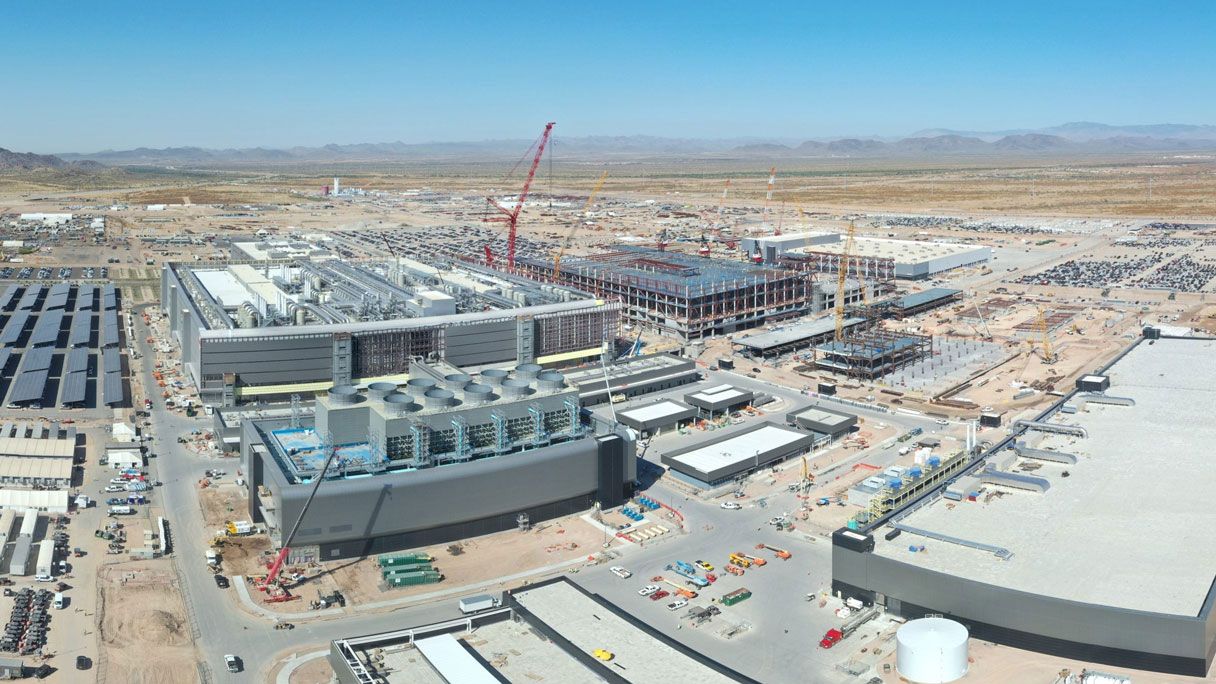
TSMC’s initial foray into Arizona began with a commitment of $12 billion in 2020 for its first fab, later expanded to $40 billion for two fabs, which are currently under construction. These initial projects were widely seen as a response to growing calls for diversifying global semiconductor supply chains and bringing critical manufacturing capabilities back to American soil, a sentiment heavily amplified during the COVID-19 pandemic and subsequent chip shortages.
The idea of a more substantial expansion gained traction in early 2024. In February, market rumors, initially reported by outlets like Tom’s Hardware, suggested TSMC was considering an additional $100 billion investment in Arizona. These rumors quickly gained credibility, aligning with the U.S. government’s aggressive push for domestic semiconductor manufacturing through initiatives like the CHIPS and Science Act.
Adding another layer of context, the current announcement follows a significant U.S.-Taiwan trade agreement. This accord, which included provisions for reduced tariffs on Taiwanese goods (down to 15%), was reportedly contingent on a pledge of $250 billion in Taiwanese investment in the U.S. The timing of TSMC’s announcement, confirming a total investment that aligns closely with this figure, underscores the strategic interplay between trade, geopolitics, and industrial policy. Notably, just weeks prior to this official announcement, former President Donald Trump had publicly stated that TSMC was "doubling the size" of its Arizona operations, hinting at the impending expansion.
TSMC’s decision to tie the construction pace to "market demand" allows for flexibility, acknowledging the cyclical nature of the semiconductor industry while fulfilling the broader commitment to U.S. investment. This demand-contingent pledge satisfies the terms of the U.S.-Taiwan arrangement without rigidly committing capital to a fixed schedule, offering a pragmatic approach to such a massive undertaking.
The Financial Engine: TSMC’s Record-Breaking Performance
The announcement of this unprecedented U.S. investment coincides with another period of stellar financial performance for TSMC, highlighting the robust health of the company that enables such ambitious global expansion. For the April-June quarter, TSMC posted a record net income of NT$706.56 billion (approximately $22.35 billion USD), marking an impressive 77.4% year-over-year increase and representing its fifth consecutive quarterly record.
Revenue similarly surged, rising 36% to NT$1.27 trillion (approximately $40.16 billion USD), while the company’s gross margin reached an all-time high of 67.7%. A significant driver of this growth was the high-performance computing (HPC) platform, which accounted for a dominant 66% of TSMC’s total revenue, underscoring the immense demand for advanced chips powering AI and data centers.
Looking ahead, TSMC’s outlook remains exceptionally strong. The company anticipates third-quarter revenue to range between $44.6 billion and $45.8 billion, representing a substantial 12% sequential increase at the midpoint. Furthermore, TSMC raised its full-year revenue growth forecast to "slightly above 40%" in U.S. dollar terms, a significant upward revision from the "roughly 30%" guided in June.
To support this aggressive growth and technological advancement, Chief Financial Officer Wendell Huang announced a substantial increase in capital expenditure for 2026. The revised budget now stands between $60 billion and $64 billion, up from a previous projection of $52 billion to $56 billion. A significant portion – 70% to 80% – of this increased CapEx will be directed towards advanced process technologies, solidifying TSMC’s commitment to maintaining its leadership in leading-edge chip production.
This optimistic outlook is echoed by TSMC’s key suppliers. ASML, the Dutch manufacturer of critical lithography equipment, notably raised its 2026 outlook recently. Similarly, Applied Materials CEO Gary Dickerson conveyed to Nikkei Asia that the semiconductor industry is poised for years of sustained capacity expansion, reinforcing the market’s confidence in the long-term demand for advanced chips.
Strategic Implications and Official Responses
TSMC’s latest investment carries profound strategic implications, resonating across national security, economic policy, and global technological leadership.
Bolstering U.S. Semiconductor Independence
The expansion is a cornerstone of the U.S. strategy to de-risk its supply chains and enhance domestic semiconductor manufacturing capabilities. The vulnerabilities exposed during recent global crises, coupled with geopolitical tensions, have underscored the urgent need for the U.S. to reduce its reliance on foreign chip production, particularly for advanced nodes critical to defense, AI, and next-generation technologies. This investment, heavily incentivized by the U.S. CHIPS and Science Act (though not explicitly mentioned in the original article, it forms the backdrop of U.S. policy), is a significant step towards achieving that goal.
By establishing a comprehensive ecosystem in Arizona, from wafer fabrication to advanced packaging, the U.S. will gain greater control over the production of its most vital microelectronics. This not only enhances national security but also fosters job creation, stimulates local economies, and strengthens the broader American technology sector. The ability to produce cutting-edge 2nm chips domestically means American companies will have quicker access to advanced technologies, potentially accelerating innovation and reducing lead times.
Navigating Geopolitical Currents: U.S.-Taiwan Relations
The investment also plays a crucial role in the delicate geopolitical balance between the U.S., Taiwan, and China. The U.S.-Taiwan trade agreement, which preceded this announcement, highlights a deepening economic and strategic partnership. By encouraging substantial Taiwanese investment in the U.S., Washington aims to intertwine the economic destinies of the two nations, providing Taiwan with both economic benefits and a degree of strategic reassurance. The local production of chips could also help TSMC’s chips avoid potential tariffs or trade barriers in a complex global trade environment.
However, TSMC is acutely aware of concerns within Taiwan that its aggressive U.S. expansion might lead to a "hollowing out" of its domestic industry. Addressing these anxieties, CEO C.C. Wei explicitly stated that TSMC is simultaneously planning 13 leading-edge and advanced packaging fabs in Taiwan over the next several years. This dual commitment underscores TSMC’s strategy to expand globally while maintaining its core manufacturing and R&D prowess on its home island, ensuring that Taiwan remains the epicenter of its technological innovation.
Market Demand and Future Outlook
The demand-driven timeline for the Arizona fabs reflects a pragmatic approach to a highly dynamic market. While CEO Wei expressed confidence in robust demand extending through 2029 or 2030, he also acknowledged the inherent uncertainties, adding, "Whether there is a dip in between or not, I’m not very sure." This cautious optimism highlights the need for flexibility in capital deployment, ensuring that investments align with actual market needs. The current surge in AI-related demand provides a powerful impetus, but the semiconductor industry has historically been cyclical, prompting prudent planning.
Overcoming Obstacles: The Arizona Challenge
While the financial commitment and strategic intent are clear, the execution of such a massive undertaking in Arizona presents a unique set of challenges that TSMC and its partners will need to navigate.
One of the most significant hurdles is labor shortages. Building and operating highly specialized semiconductor fabs requires a vast workforce of skilled engineers, technicians, and construction workers. Arizona, while growing, may struggle to provide the sheer volume of specialized talent required, particularly for advanced processes. This challenge is further complicated by visa constraints, which can impede the seamless transfer of TSMC’s experienced Taiwanese engineers to the U.S. to train the local workforce and oversee initial operations. Delays related to staffing and expertise transfer have already been noted in the initial Arizona fab projects.
Another critical concern is water resources. Semiconductor manufacturing is an incredibly water-intensive process, and Arizona is located in an arid region experiencing long-term drought conditions. Securing a sustainable and reliable water supply for multiple large fabs will require innovative water management solutions, significant infrastructure investment, and close collaboration with local and state authorities. The environmental impact and resource allocation will be under intense scrutiny.
These practical constraints – labor, water, and visa complexities – will ultimately play as significant a role as market demand in determining the actual pace and successful realization of the additional four-plus fabs in Phoenix. TSMC has demonstrated resilience in overcoming challenges in its existing projects, but the sheer scale of this new expansion will test its operational capabilities and its partnerships with government and local stakeholders.
Broader Industry Impact
TSMC’s expanded Arizona investment will send ripples across the entire semiconductor industry. For competitors like Intel and Samsung, who are also investing heavily in U.S. manufacturing (e.g., Intel’s Ohio and Arizona expansions, Samsung’s Texas fab), this move intensifies the race for advanced node leadership and market share within the U.S. It could spur further investment and competition, ultimately benefiting the U.S. tech ecosystem.
The increased domestic supply of advanced chips will also impact U.S. tech giants like Apple, Nvidia, AMD, and Qualcomm, who are major TSMC customers. Having a local, complete supply chain for their most critical components could streamline their product development cycles, reduce logistical complexities, and enhance their resilience against global supply disruptions. This could give them a strategic advantage in developing next-generation AI and computing platforms.
Globally, this expansion further solidifies the trend of "de-globalization" or "regionalization" in semiconductor manufacturing, driven by national security concerns and economic incentives. While TSMC remains committed to its operations in Taiwan, the significant investments in the U.S. (and potentially Japan and Europe) represent a strategic diversification of its manufacturing base, spreading the risk and ensuring redundancy for its most critical technologies.
Conclusion: A Semiconductor Future Forged in Arizona
TSMC’s announcement of an additional $100 billion investment in Arizona is a watershed moment for the global semiconductor industry and a transformative development for the United States. Elevating its total U.S. commitment to an staggering $265 billion, TSMC is not merely building factories; it is constructing a cornerstone of America’s technological future, ensuring domestic access to the most advanced chips essential for AI, national security, and economic competitiveness.
This strategic expansion, coupled with TSMC’s record financial performance and a strong commitment to its Taiwanese operations, paints a picture of a company confidently navigating a complex global landscape. While challenges related to labor, water, and visas remain, the sheer scale and strategic importance of this endeavor underscore a shared vision between TSMC and the U.S. government to forge a resilient, innovative, and secure semiconductor supply chain. The Arizona desert is set to become a vital hub in the world’s most critical industry, shaping the technological advancements of the decades to come.

