

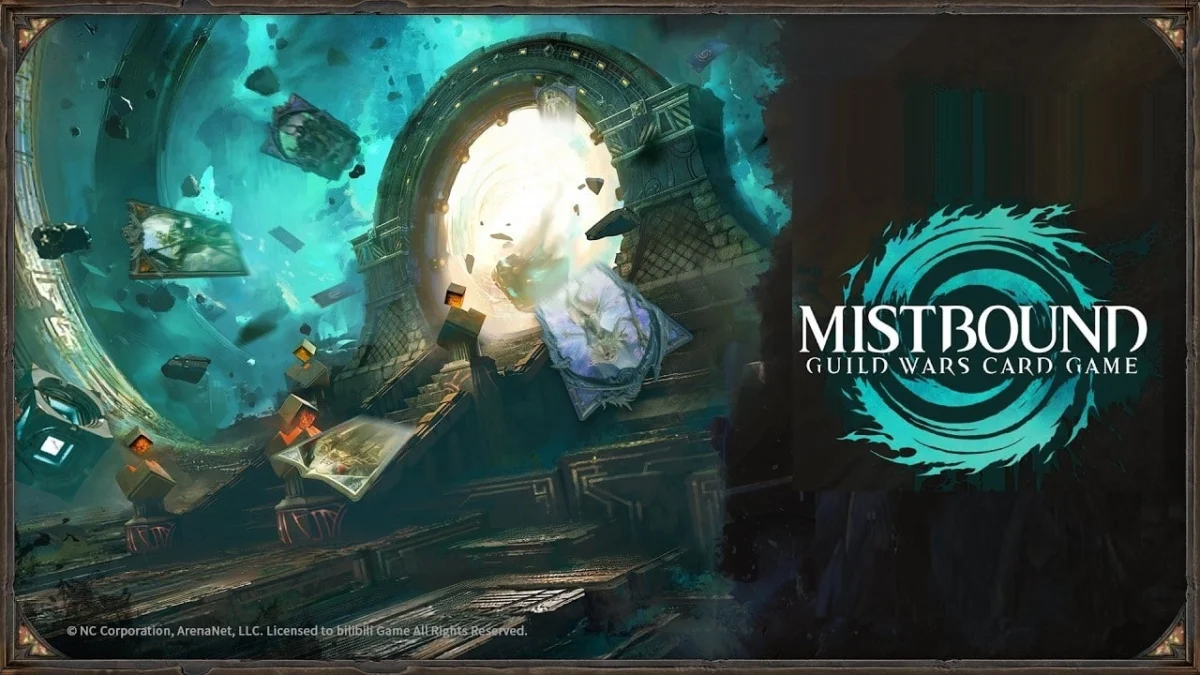
The Guild Wars franchise, a titan of the MMORPG genre known for its rich lore, distinct artistic direction, and revolutionary gameplay systems, is preparing to step into uncharted territory. ArenaNet and NCSoft have officially announced Mistbound, a digital collectible card game (CCG) that promises to translate the strategic depth of Tyria into a mobile-first, grid-based tactical experience. Set for release on Android and iOS, Mistbound represents a bold pivot for the long-standing franchise, shifting from the real-time, open-world chaos of Guild Wars 2 to a calculated, position-heavy battlefield.
Main Facts: The Anatomy of Mistbound
Mistbound is an officially licensed spin-off developed by NC and published globally by bilibili. Unlike standard digital card games that rely on static lanes or singular board slots, Mistbound introduces a 5×3 tactical grid, moving the genre closer to the realm of turn-based strategy titles like Fire Emblem or Into the Breach.
The core gameplay loop centers on "Dynamic Movement Gameplay." Players assume the role of a Commander—a powerful central unit—and lead an army of cards onto the grid. The objective is not merely to deplete an opponent’s health through raw power, but to outmaneuver them using a sophisticated system of spatial tactics. Key mechanics include:
- The 5×3 Battlefield: Every unit and the Commander themselves can move across the grid, allowing for flanking, retreating, and aggressive positioning.
- Tactical Interaction: Cards are designed to interact with the environment. Players can utilize knockbacks, pulls, and lane-shifting to disrupt enemy formations.
- Active Commander Participation: Unlike many CCGs where the "Hero" or "Commander" is a passive health pool, the Commanders in Mistbound are active participants. They possess unique abilities, traits, and distinct tactical identities that evolve based on the "Commander x Profession" system.
Chronology: A New Chapter in the Tyrian Saga
The announcement of Mistbound arrives at a curious moment in the franchise’s history. For over two decades, Guild Wars has maintained a reputation as a premium MMORPG experience. The move toward a mobile-centric card game follows a growing industry trend of established MMO IPs diversifying into auxiliary genres to capture a broader, more casual, or on-the-go demographic.
- Developmental Genesis: The project has been under wraps for some time, with NC taking the lead on development to ensure the title maintains the "look and feel" of the Guild Wars universe.
- The Announcement: Following weeks of speculation and subtle teasers, the official announcement dropped alongside a cinematic trailer, confirming that the game would feature music from original franchise composers and voice performances intended to ground the game in the established canon.
- The Global Rollout: With bilibili serving as the global publisher, the game is positioning itself for a wide-scale mobile launch, targeting the vast Android and iOS ecosystems.
Supporting Data: Understanding the "Commander x Profession" System
One of the most intriguing elements of Mistbound is its reliance on the legacy of Guild Wars 2. The developers have confirmed that the game’s primary unit system is directly inspired by the nine iconic professions that have defined the MMO for years.
In Mistbound, this is categorized as the "Commander x Profession" system. Each Commander represents a specialized archetype—likely mirroring the Guardian, Mesmer, Elementalist, and others—that dictates the deck composition and win conditions. By selecting a specific profession, players commit to a tactical identity. For instance, a Commander specializing in the Mesmer profession might focus on illusions and mobility, while a Guardian-aligned Commander might favor defensive buffs and grid control.
The grid system itself acts as a massive data variable. By introducing a 5×3 layout, the game moves away from the "poker-style" math of Hearthstone or Magic: The Gathering Arena and into the realm of positional probability. The "Dynamic Movement" allows for a higher skill ceiling, where the physical placement of a unit is just as important as the card’s individual stats.
Official Responses and Creative Direction
In the official statements released alongside the announcement, the development team emphasized that Mistbound is not just a "reskin" of an existing card game engine. It is an attempt to distill the Guild Wars experience—specifically the importance of positioning and environmental awareness—into a smaller, more accessible format.
The inclusion of original music creators and professional voice actors highlights a commitment to narrative continuity. For veteran players of the Guild Wars series, the game will feel familiar in its aesthetic, drawing heavily from the established art style of Tyria. The developers noted that the goal was to make the player feel like they are commanding the forces they spent years playing as in the MMORPG, rather than simply playing a card game that happens to have Guild Wars branding.
The trailer, which showcases a mix of card-playing animations and tactical board movement, suggests a polished UI. The visual fidelity of the unit models and the "weight" of the card interactions appear designed to bridge the gap between high-fantasy MMORPG visuals and the clean, functional design required for mobile card games.
Implications: What Does This Mean for Guild Wars?
The launch of Mistbound has significant implications for the future of the franchise.
1. Genre Diversification
By expanding into the tactical CCG space, ArenaNet and NC are effectively testing the elasticity of the Guild Wars IP. If Mistbound succeeds, it could open the door for further spin-offs in different genres, such as mobile RTS titles or isometric action-RPGs, further cementing the franchise as a multi-platform media powerhouse rather than just an MMO developer.
2. The Mobile Frontier
The choice of Android and iOS as the primary platforms is telling. Mobile remains the most accessible entry point for new players. By stripping away the hardware requirements of a full-scale PC MMO, Mistbound serves as a "gateway drug" to the Guild Wars universe, potentially funneling mobile gamers into the larger Guild Wars 2 ecosystem.
3. A Shift in Tactical Expectations
For the genre itself, Mistbound serves as a challenge to the established dominance of static-lane card games. If the 5×3 grid system proves successful, it may push the CCG industry toward more complex, spatially aware gameplay. It forces players to consider not just their hand, but the battlefield as a changing map, which could lead to a more dynamic meta-game where "board control" takes on a literal, physical meaning.
4. Community Reception
The reception from the existing community has been a mix of cautious optimism and intense curiosity. For years, the Guild Wars fanbase has been protective of the series’ integrity. The success of Mistbound will likely hinge on whether it feels like a "true" Guild Wars experience. If the game successfully integrates the depth of the profession system while maintaining the series’ legendary focus on balance, it could become a staple in the mobile strategy market. Conversely, it must avoid the pitfalls of predatory monetization often associated with mobile CCGs—a concern that the developers will need to address as the launch date approaches.
Conclusion
Mistbound is more than just a card game; it is a strategic experiment for one of gaming’s most cherished franchises. By moving from the vast, sprawling maps of the MMO world to a tightly contained 5×3 grid, the developers are stripping the Guild Wars experience down to its most essential components: professional identity, tactical positioning, and the weight of command.
As the mobile gaming landscape continues to evolve, the ability to translate complex, high-fantasy worlds into bite-sized, intellectually stimulating experiences is becoming the hallmark of a successful brand. Whether Mistbound can capture the magic of the Mists while delivering the precision of a tactical battler remains to be seen. However, with its emphasis on dynamic movement and deep ties to the Guild Wars lore, it is positioned to be a significant addition to the mobile tactical landscape when it arrives on the App Store and Google Play.
For those eager to dive into the lore or stay updated on the game’s development, the official Mistbound website provides a hub for further details, including potential closed beta opportunities and deeper dives into the profession mechanics. As the release date draws near, the gaming community will be watching closely to see if this shift into the card-battling genre is the start of a new golden age for the Guild Wars brand.

