

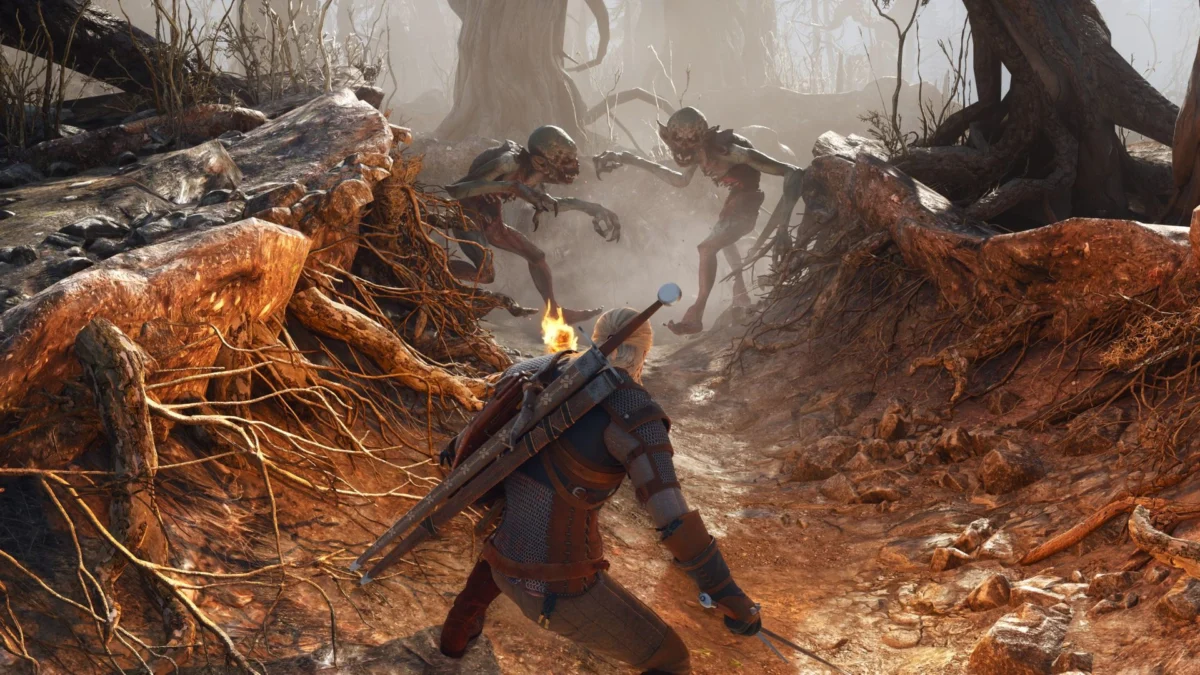
CD Projekt Red’s masterclass in open-world role-playing, The Witcher 3: Wild Hunt, has returned to the gaming zeitgeist with a comprehensive remaster. Launching today, the updated version brings a suite of modern graphical enhancements to PC, headlined by advanced ray tracing and full path tracing capabilities. However, such visual leaps come with a steep cost in computational overhead.
While the entry barrier for baseline performance remains surprisingly accessible, pushing The Witcher 3 Remastered to its absolute visual limits requires some of the most powerful consumer hardware available on the market. For players eager to step back into the boots of Geralt of Rivia, understanding these updated system requirements is critical before downloading the massive graphical overhaul.
Main Facts: What You Need to Run The Witcher 3 Remastered
The hardware spectrum outlined by CD Projekt Red spans everything from aging mid-range setups to bleeding-edge enthusiast rigs. At the lowest end, players can experience the game at 1080p and 30 frames per second using hardware that is nearly a decade old. Conversely, activating the game’s pinnacle visual setting—Path Tracing at 4K resolution with 60 FPS—demands top-tier components, heavy reliance on upscaling technologies like DLSS, and frame generation capabilities.
Entry-Level and Mid-Range Expectations
For baseline players targeting 1080p at 30 FPS on Low settings, the requirements are surprisingly forgiving. You will need:
- GPU: Nvidia GeForce GTX 1660 / AMD Radeon RX 550 XT (8GB) / Intel Arc A580
- CPU: Intel Core i5-8400 / AMD Ryzen 5 2600
- RAM: 12 GB
- VRAM: 6 GB
Stepping up to High settings at 1080p and 60 FPS requires a more modern architecture, shifting the baseline to cards like the Nvidia GeForce RTX 2060 Super, AMD Radeon RX 6600 XT, or Intel Arc B580, alongside 16 GB of system RAM.
The Ultra and Path Tracing Thresholds
At the absolute peak of visual fidelity, the requirements escalate dramatically:
- Resolution & FPS: 2160p (4K) at 60 FPS with Frame Generation (Path Tracing mode)
- GPU: Nvidia GeForce RTX 5080
- CPU: Intel Core i9-13900K / AMD Ryzen 7 9800X3D
- RAM: 24 GB
- VRAM: 16 GB
Notably, AMD’s high-end Radeon RX 9070 XT is conspicuously absent from the official path tracing tier. Industry analysts note that AMD architectures traditionally face stiffer performance penalties when handling heavy path-tracing algorithms compared to Nvidia’s specialized RT cores, explaining its exclusion from the top-tier configuration.
Chronology: The Evolution of The Witcher 3’s Hardware Requirements
To understand how far PC hardware demands have shifted, it helps to look at the timeline of The Witcher 3: Wild Hunt from its original 2015 launch to today’s remaster.
2015: The Original Launch
When CD Projekt Red originally released The Witcher 3 in May 2015, it was hailed as a generational benchmark. Running the game at high settings required an Nvidia GeForce GTX 980 or AMD Radeon R9 290X paired with an Intel Core i7-3770 or AMD FX-8350. At the time, 8 GB of system RAM was considered the sweet spot, and mechanical hard drives were still the standard storage medium for most gamers.
December 2022: The Next-Gen Update (Ray Tracing Era)
CD Projekt Red initially rolled out its major next-gen graphics patch in late 2022, introducing global illumination, ambient occlusion via ray tracing, and numerous quality-of-life mods integrated directly into the base game. This update drastically increased the minimum and recommended specs, alienating many players still relying on older Pascal-generation Nvidia cards and forcing an industry-wide conversation about the rapid adoption of hardware-accelerated ray tracing.
Today: The Remaster and Path Tracing Debut
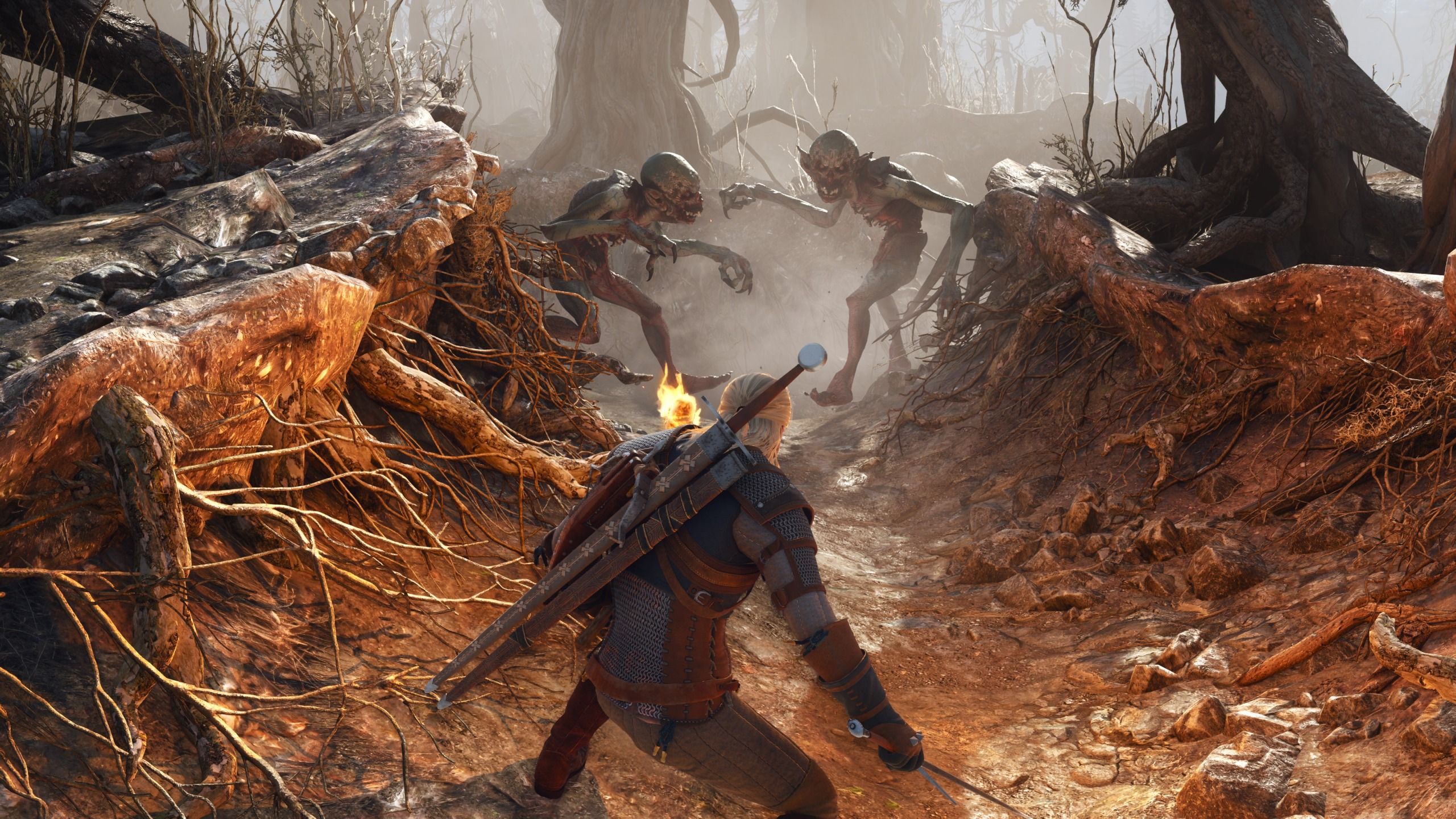
Today’s release pushes the envelope even further. By incorporating full path tracing (often referred to as ray-tracing overdrive), the game simulates light behavior with near-physical accuracy. However, this level of fidelity requires cutting-edge hardware architectures that were unavailable during the 2022 patch, cementing the remaster as a true stress test for modern gaming rigs.
Supporting Data: Comprehensive System Requirements
For quick reference, CD Projekt Red’s official hardware matrix details the exact specifications required across various fidelity presets:
| Graphical Preset | Resolution & Upscaling | Target FPS | CPU | GPU | VRAM | RAM | Storage |
|---|---|---|---|---|---|---|---|
| Low | 1080p | 30 | Intel Core i5-8400 / AMD Ryzen 5 2600 | Nvidia GTX 1660 / AMD RX 550 XT / Intel Arc A580 | 6 GB | 12 GB | 60 GB SSD |
| High | 1080p | 60 | Intel Core i7-8700K / AMD Ryzen 5 3600X | Nvidia RTX 2060 Super / AMD RX 6600 XT / Intel Arc B580 | 8 GB | 16 GB | 60 GB SSD |
| Ultra | 1440p | 60 | Intel Core i7-13700K / AMD Ryzen 7 7700X | Nvidia RTX 3070 Ti / AMD RX 6800 XT / Intel Arc B580 (XeSS) | 12 GB | 24 GB | 60 GB SSD |
| RT Minimum | 1080p (DLSS/FSR/XeSS) | 30 | Intel Core i7-11700K / AMD Ryzen 7 5800X | Nvidia RTX 2060 Super / AMD RX 6600 XT / Intel Arc B580 | 8 GB | 16 GB | 60 GB SSD |
| RT Recommended | 1440p (DLSS/FSR) | 60 | Intel Core i7-13700K / AMD Ryzen 7 7700X | Nvidia RTX 4080 / AMD Radeon RX 9070 XT | 12 GB | 24 GB | 60 GB SSD |
| Path Tracing | 2160p (DLSS) | 60 (w/ Frame Gen) | Intel Core i9-13900K / AMD Ryzen 7 9800X3D | Nvidia GeForce RTX 5080 | 16 GB | 24 GB | 60 GB SSD |
Note: All configurations strictly require a solid-state drive (SSD) with 60 GB of available space.
Official Responses and Developer Insights
CD Projekt Red has defended the steep hardware requirements by emphasizing the sheer complexity of path tracing. Unlike traditional rasterization or standard hybrid ray tracing—which only casts rays for specific effects like reflections or shadows—path tracing simulates entire light transport paths across the scene.
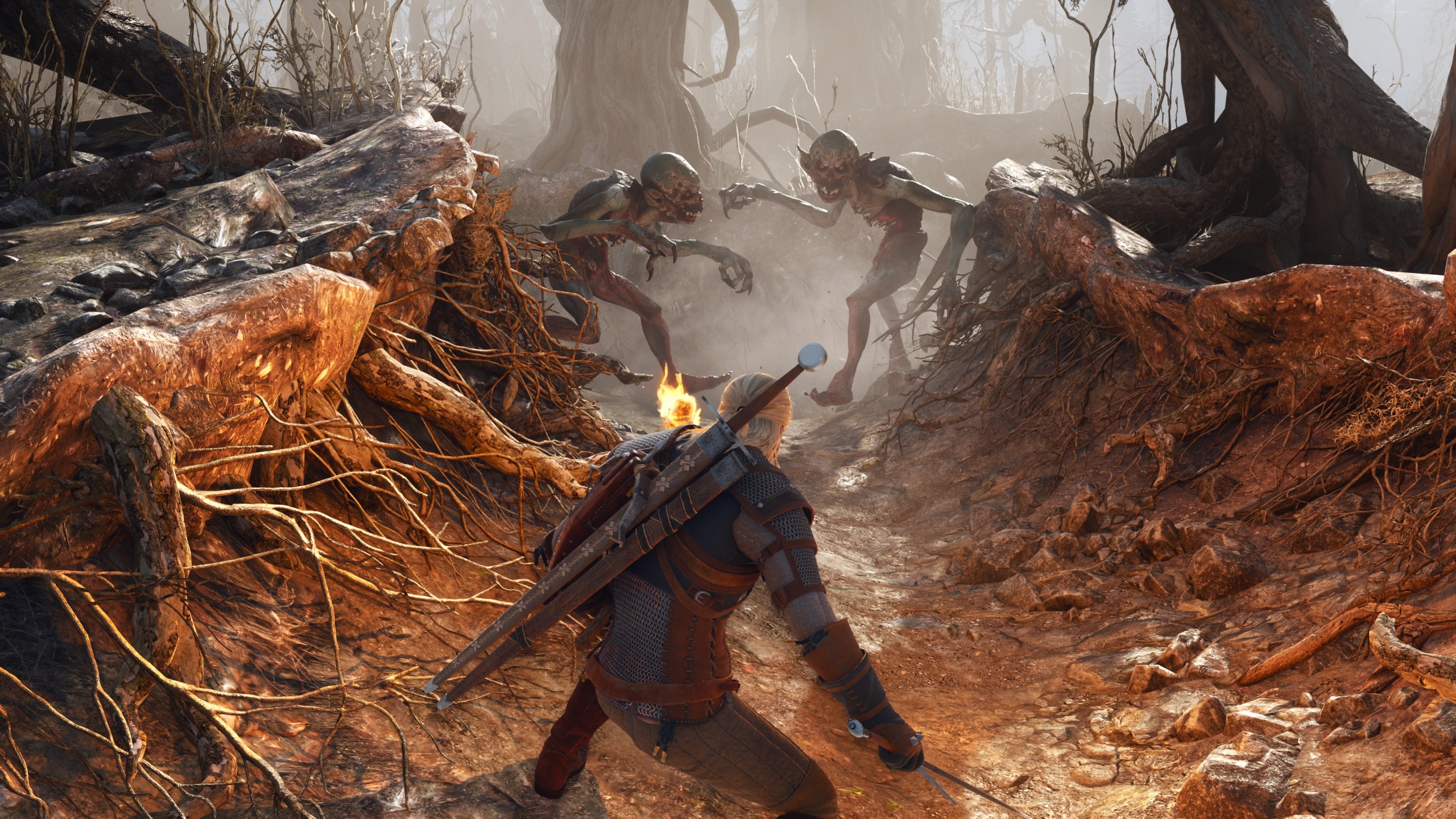
In developer deep-dives accompanying the release, studio representatives noted that the overhaul was designed to future-proof the game for the next generation of PC hardware. "We wanted to give players with high-end machinery a reason to experience the Continent in a completely new light," a studio spokesperson stated. "Path tracing changes how shadows interact, how light bleeds through dense foliage, and how reflections realistically map onto armor and water surfaces. It is an uncompromising vision."
Furthermore, CDPR confirmed that players who already own the original PC version of The Witcher 3: Wild Hunt will receive the remaster as a free upgrade. For newcomers, the Complete Edition is currently seeing steep promotional discounts across major storefronts like Steam and GOG.
Implications: Hardware Realities and the Cost of Immersion
The release of The Witcher 3 Remastered highlights several broader trends within the current PC gaming landscape.
The Memory and Component Cost Dilemma
One of the most pressing concerns for players looking to adopt the Ultra and Path Tracing presets is the 24 GB RAM and 16 GB VRAM requirement. Amid ongoing supply chain pressures and fluctuating component costs—often exacerbated by industrial AI infrastructure demands—acquiring high-capacity memory kits and enthusiast-grade graphics cards remains an expensive endeavor. Gamers running older rigs with 16 GB of system RAM may find themselves facing stutters or memory bottlenecks at higher resolutions.
Is Path Tracing Worth the Performance Tax?
From an aesthetic standpoint, path tracing introduces hyper-realistic indirect lighting, lifelike ambient occlusion, and flawless shadow cascades. The Continent feels palpably more atmospheric, darker, and more immersive during nocturnal hunts or explorations through Velen’s foggy bogs.
However, opinions remain divided within the community. Standard ray tracing already demands significant computational resources for marginal visual gains in fast-paced gameplay. Full path tracing, which requires aggressive upscaling (DLSS/FSR) and frame generation to maintain a smooth 60 FPS at 4K, introduces artifacts and input latency that some purists prefer to avoid.
Ultimately, The Witcher 3 Remastered serves as a technological showcase. For those with the hardware to spare—particularly an RTX 50-series card and a modern X3D or high-core-count CPU—it offers the definitive way to experience one of the greatest RPGs ever made. For everyone else, the flexible lower-end presets ensure that Geralt’s journey remains accessible, proving that you do not need a multi-thousand-dollar rig to enjoy a masterpiece, provided you are willing to dial down the lighting equations.

