

Main Facts: The Great FPS Mode Tournament Kicks Off
First-person shooters (FPS) have anchored the PC gaming landscape for decades, serving as an interactive canvas where countless rivalries, friendships, and memorable gaming moments have been forged. From tactical, slow-paced bomb defusals to chaotic, high-velocity team deathmatches, the genre’s versatility is its greatest strength.
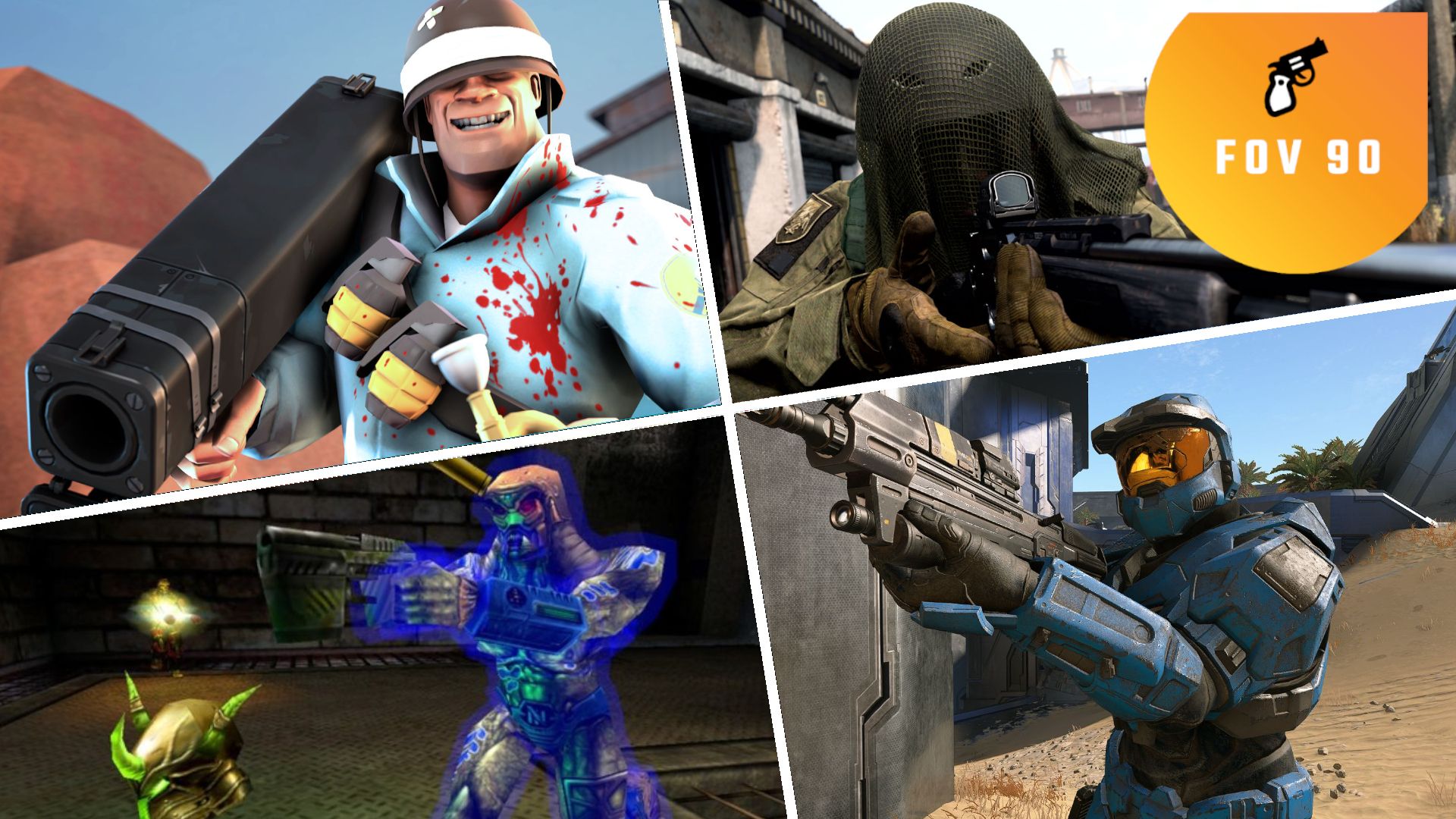
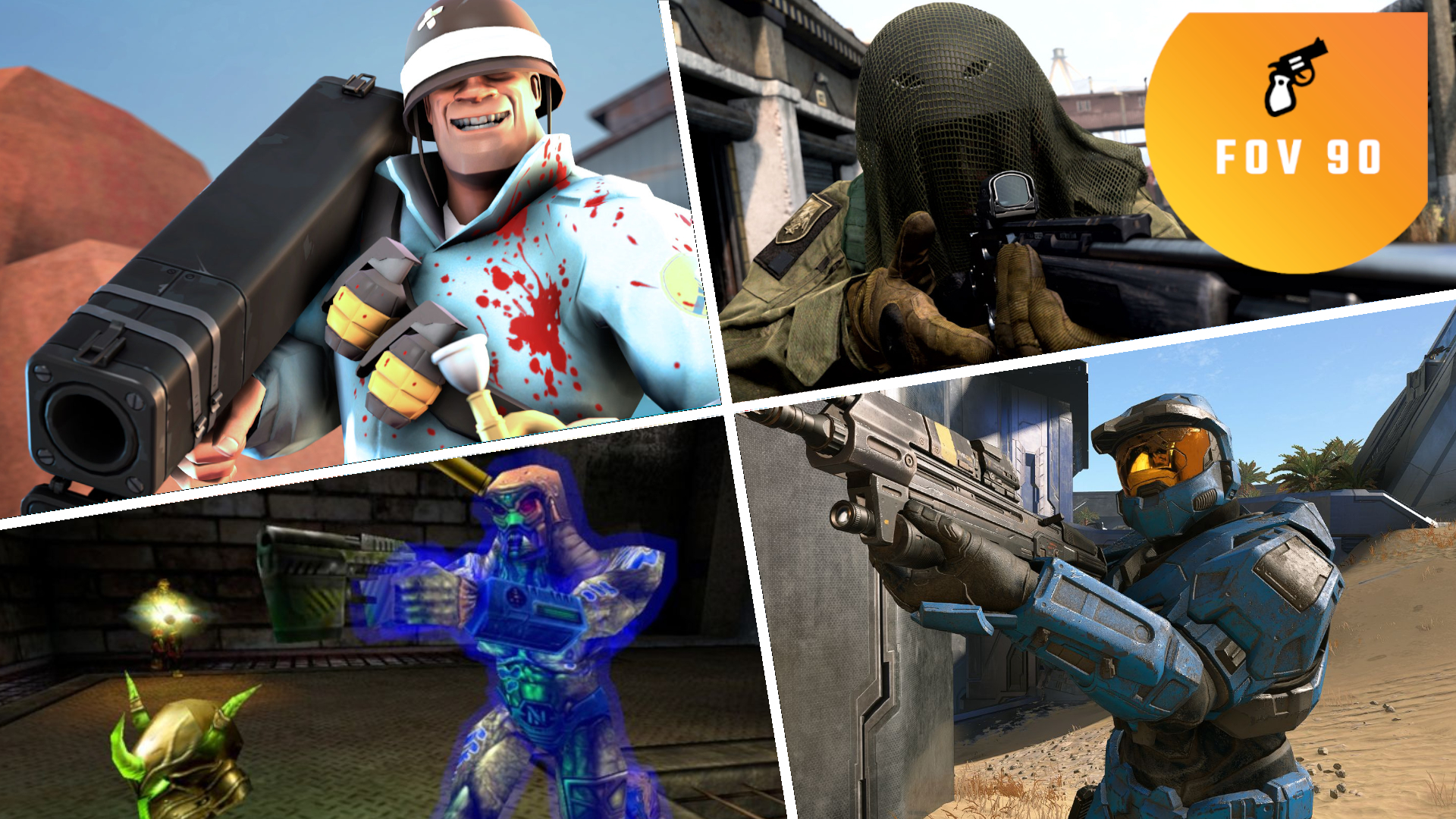
To determine which gameplay format truly reigns supreme, staff writer Morgan Park of PC Gamer has launched a definitive, single-elimination tournament via the publication’s dedicated FPS column, FOV 90. Pitting legendary multiplayer modes against one another in a bracket-style competition, the event relies entirely on community voting to advance competitors through each round.
Round 1 voting is officially underway, giving players around the globe a chance to advocate for their historical favorites. Voting for the opening round is scheduled to conclude on Saturday, October 3, at 11:59 PM PDT, with the results and subsequent bracket pairings slated to be revealed the following week.
Chronology: Tracing the Evolution of Competitive FPS Modes
The journey toward this monumental bracket began decades ago with the genesis of online multiplayer gaming. Understanding how these modes evolved provides vital context for why players are so fiercely divided in the current tournament.
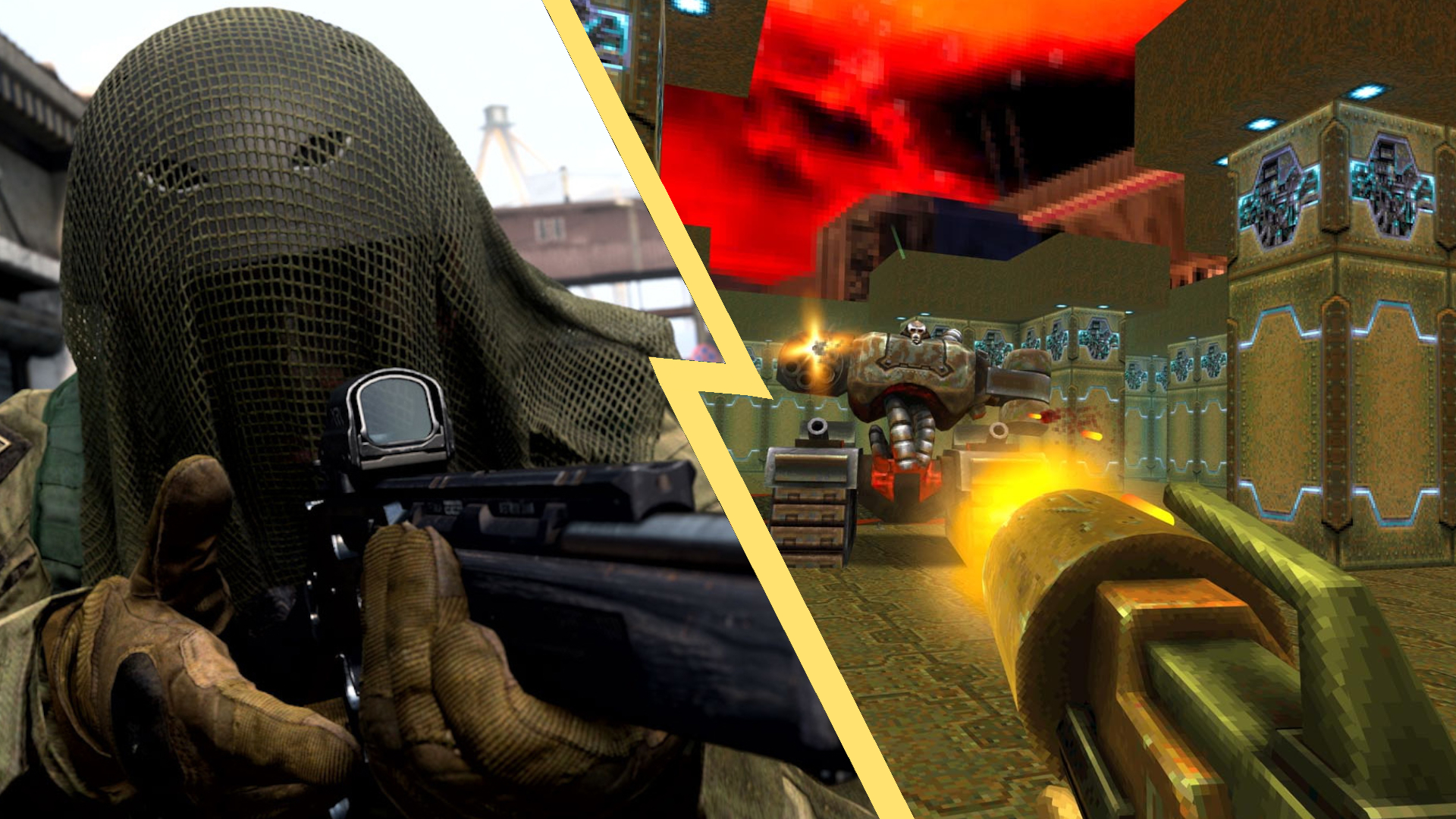
- The 1990s: The Dawn of Deathmatch: The multiplayer FPS genre originated with titles like Doom and Quake. These early platforms introduced Deathmatch and Team Deathmatch (TDM), establishing the fundamental core of player-versus-player combat.
- The Early 2000s: Objective-Based Innovation: As LAN parties and broadband internet grew, developers expanded beyond simple elimination. Games like Unreal Tournament, Counter-Strike, and Battlefield 1942 introduced objective-driven gameplay, pioneering mechanics such as Capture the Flag (CTF), Conquest, and tactical Bomb Defusal.
- The 2010s: The Rise of Subgenres and Asymmetry: The decade brought immense diversification. Tactical hero shooters popularized Payload and Control Point variations (e.g., Team Fortress 2, Overwatch), while survival mechanics birthed entirely new ecosystems: Battle Royale (PUBG, Fortnite) and Extraction Shooters (Escape from Tarkov). Creative party modes like Infection and Prop Hunt also cemented themselves as community staples.
- The Present Day: The Ultimate Crossover: With decades of design refinement behind them, the modern gaming ecosystem boasts a rich tapestry of distinct modes. FOV 90’s tournament seeks to synthesize this history by forcing these divergent genres into direct competition.
Supporting Data: Breaking Down the Round 1 Matchups
The Round 1 bracket features eight distinct head-to-head pairings, organizing classic and contemporary modes by their underlying design philosophies.
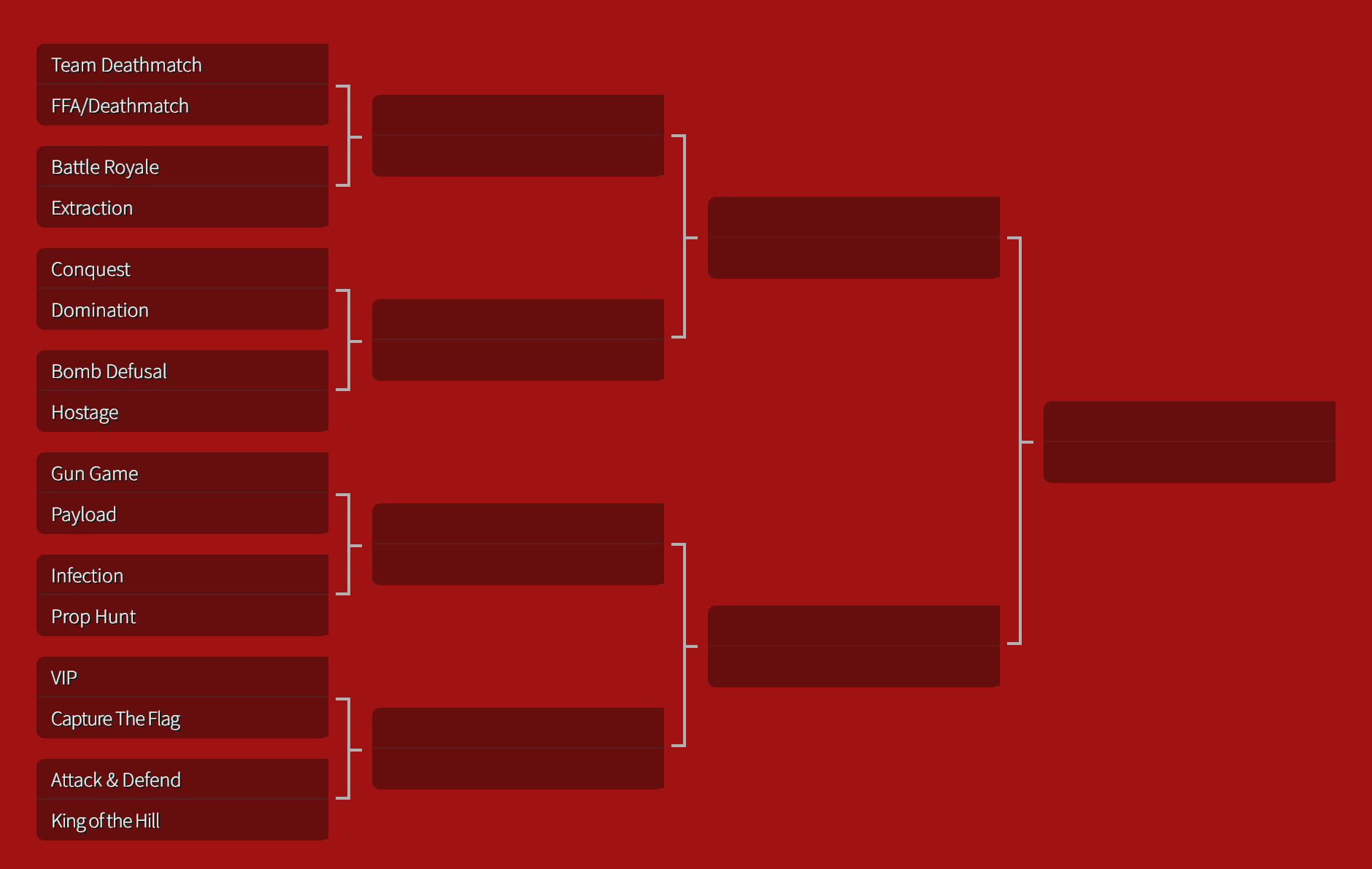
1. Team Deathmatch (TDM) vs. Free-For-All (FFA) / Deathmatch
- Alternate Names: Team Slayer, Slayer (Halo)
- The Dilemma: Would you rather fight alone, relying entirely on individual reflex and spatial awareness, or coordinate with a squad to manage map control and trade kills? While FFA tests pure mechanical skill, TDM introduces rudimentary team synergy.
2. Battle Royale vs. Extraction Shooters
- Alternate Names: BR, Extraction Shooters (Escape from Tarkov, Hunt: Showdown)
- The Dilemma: Two colossal formats that have single-handedly birthed entire subgenres over the last decade. Battle Royale focuses on the relentless survival of the last player or squad standing within a shrinking map, whereas Extraction Shooters emphasize risk versus reward, inventory management, and tactical survival across persistent economies.
3. Conquest vs. Domination
- Alternate Names: Warfare (Hell Let Loose); Territories (Halo), Domination Control Point (Team Fortress 2)
- The Dilemma: Large-scale territorial control featuring vehicles, sprawling environments, and dynamic spawn points (popularized by Battlefield) versus small-scale point capture characterized by tight chokepoints, frantic pacing, and randomized respawns (popularized by Unreal Tournament and Call of Duty).
4. Bomb Defusal vs. Hostage
- Alternate Names: Bomb (Rainbow Six Siege), Plant/Defuse (Valorant, Counter-Strike)
- The Dilemma: The quintessential single-life elimination showdown. While Bomb Defusal has historically driven the global competitive esports scene with its intricate economy and strategic depth, many casual veterans retain a nostalgic fondness for escorting non-player characters or objectives out of fortified buildings.
5. Gun Game vs. Payload
- Alternate Names: Arms Race (Counter-Strike), Escalation (Valorant)
- The Dilemma: A selfish, fast-paced free-for-all race where players cycle through every weapon in the game upon securing a kill, pitted directly against Payload—a heavily coordinated team mode requiring push-and-pull defensive lines to move a static objective down a linear track.
6. Infection vs. Prop Hunt
- Alternate Names: Generally uniform nomenclature across platforms (Halo, Garry’s Mod, Call of Duty)
- The Dilemma: A clash of asymmetrical party mode titans. Infection pits a heavily armed human survivor force against rapidly multiplying, melee-only infected monsters, while Prop Hunt transforms the traditional shooter into an elaborate game of hide-and-seek where players disguise themselves as inanimate objects.
7. VIP vs. Capture the Flag (CTF)
- Alternate Names: VIP Escort (Call of Duty), Multi-Team Flag variants
- The Dilemma: Two legendary objective formats centered around asymmetric protection and mobility. One mode charges a team with defending a uniquely vulnerable, high-value asset, while the other challenges squads to infiltrate enemy territory, grab a flag, and execute a high-stakes return run.
8. Attack & Defend vs. King of the Hill
- Alternate Names: 2CP (Overwatch), Breakthrough (Battlefield); Headquarters (Call of Duty)
- The Dilemma: Widely predicted to be the most contentious matchup, this pits teams against each other in structured, multi-stage assaults across static frontlines versus chaotic, shifting struggles over a single moving control point that forces constant repositioning.
Official Responses and Industry Context
While developers have not formally entered the voting arena, major industry stakeholders—including Valve, Microsoft, EA, Riot Games, and Epic Games—have long acknowledged that game modes are just as important as the underlying gunplay in defining a title’s longevity.
Designers frequently note that a strong core mode can sustain a game’s community for over a decade, far outlasting the lifespan of graphical engines or promotional marketing cycles. By opening the floor to community participation, PC Gamer’s tournament taps directly into ongoing developer discussions about player retention, map design, and what makes a video game genuinely fun to play with others.
Implications: What the Tournament Means for the Future of Shooters
The outcome of the FOV 90 mode bracket offers more than just bragging rights for a specific community favorite; it serves as a cultural barometer for the modern shooter audience.
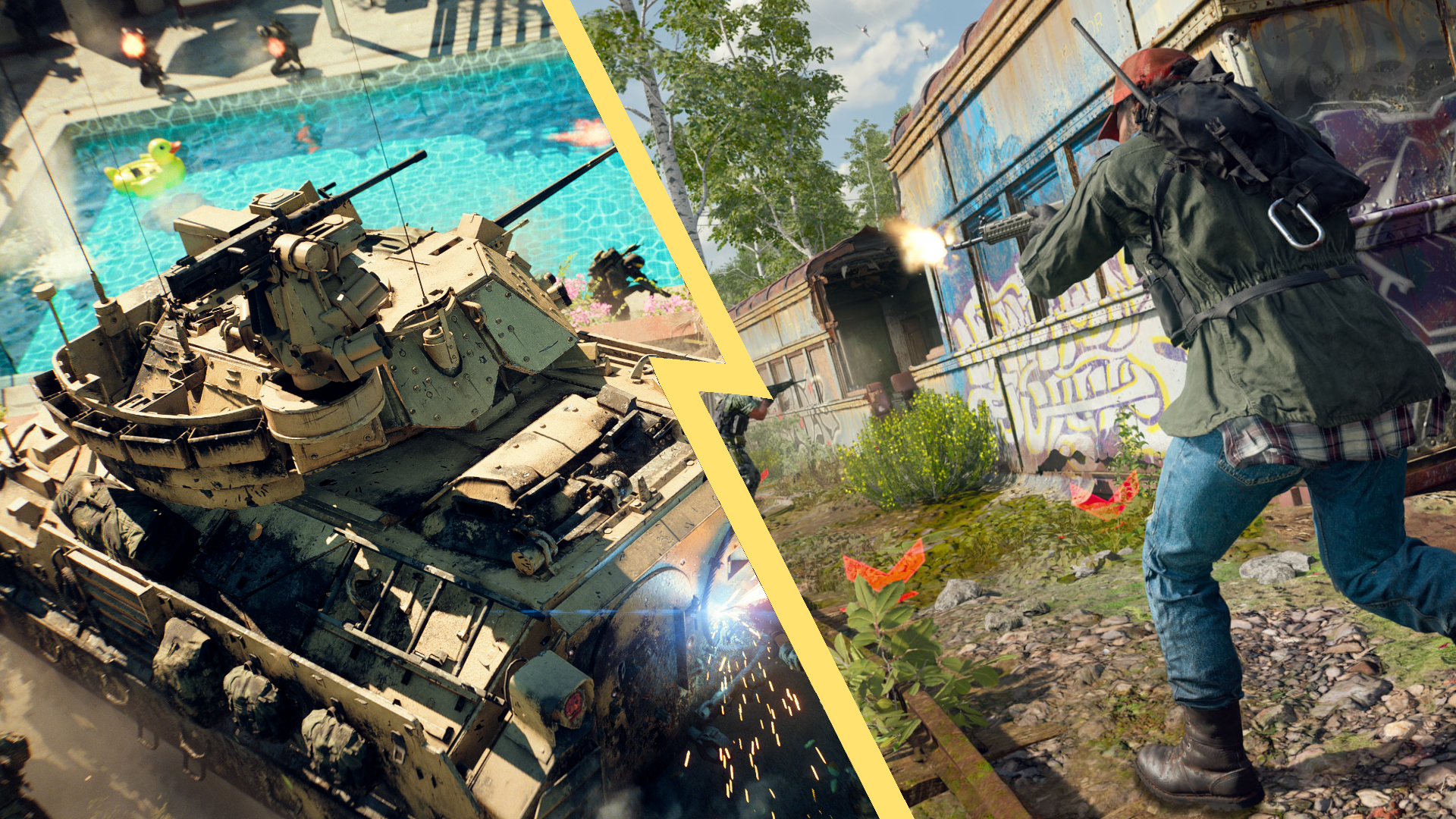
For years, the industry trend has heavily favored live-service Battle Royale and Extraction mechanics, occasionally sidelining classic arcade-style modes like TDM or CTF. If traditional arena formats or tactical defusal modes manage to upset the modern giants in this bracket, it could signal a strong consumer appetite for focused, classic multiplayer design over sprawling, time-intensive trends.
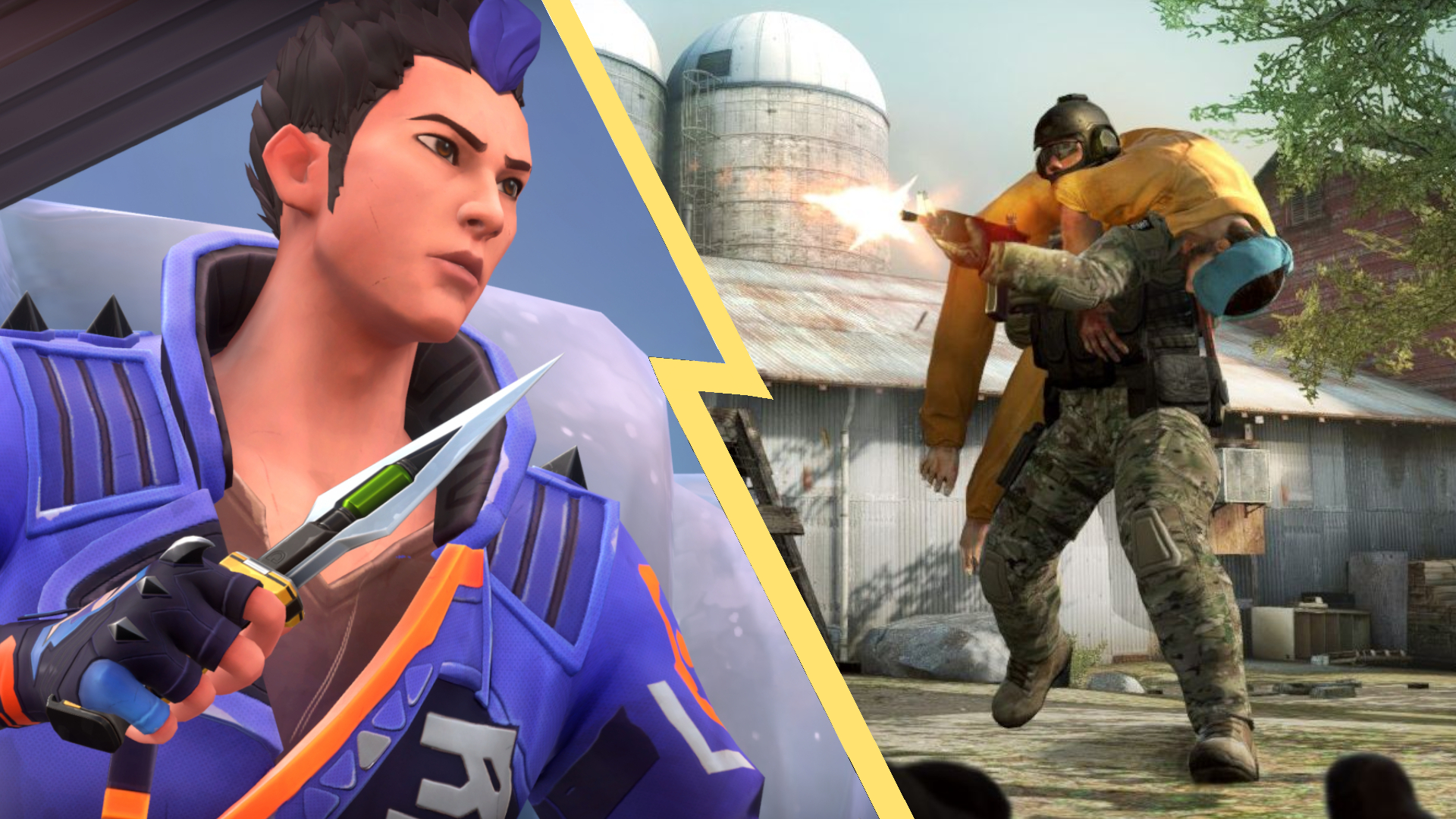
As Round 1 progresses toward its October 3 deadline, the results will highlight which gameplay loops truly capture the hearts of modern PC gamers—and set the stage for an unpredictable journey toward crowning the ultimate first-person shooter mode.

