

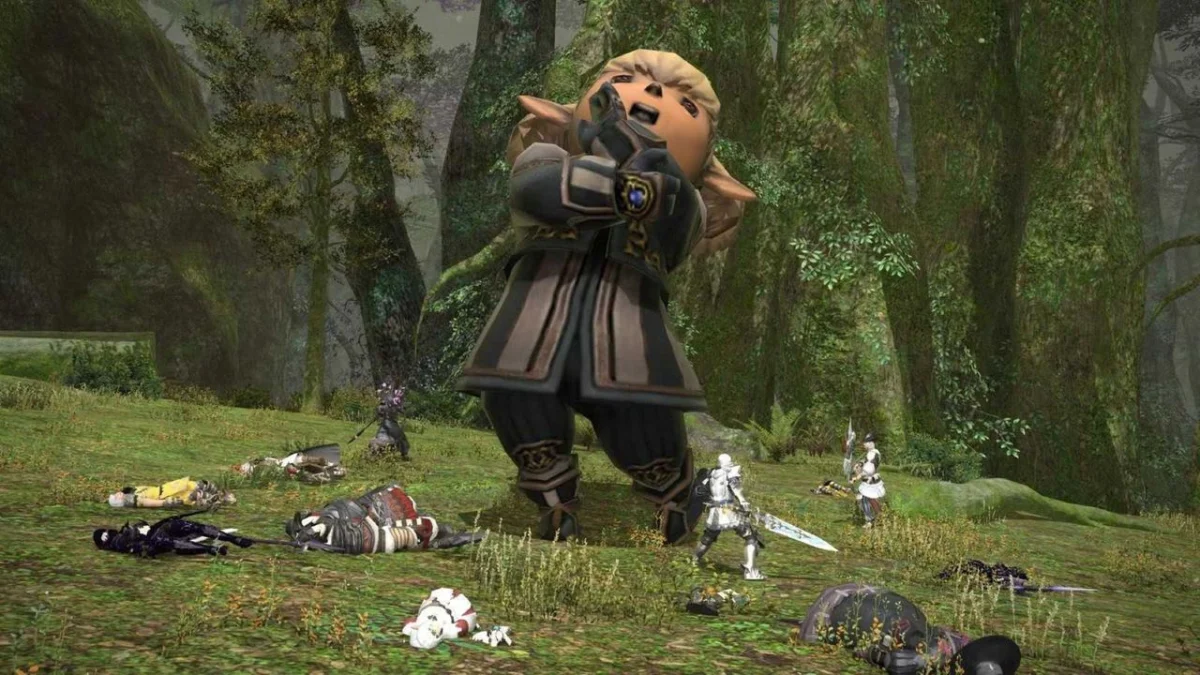
In the sprawling, interconnected multiverse of Square Enix’s flagship MMORPG franchise, few characters command the level of respect, fear, and sheer chaotic reverence as Shantotto, the legendary Black Mage of Windurst. In the recent Final Fantasy XIV crossover event, Echoes of Vana’diel, players were treated to a spectacle that served as a love letter to Final Fantasy XI veterans: the introduction of Shantotto as the final boss of the "Windurst: The Third Walk" encounter.
However, the encounter is defined not just by its mechanics, but by a narrative choice that has sent shockwaves through the community. Masayoshi Ishikawa, the battle content designer for Final Fantasy XIV, recently revealed that the inclusion of the infamous "Absolute Virtue" in the pre-fight cutscene—only to have it unceremoniously dismantled by Shantotto—was a deliberate, calculated move to cement her status as an untouchable force of nature.
The Context: Power Scaling in an MMO Environment
Designing a boss encounter for a modern MMORPG like Final Fantasy XIV requires a delicate balance. Developers must ensure the fight remains accessible to a broad player base while still capturing the essence of a legendary character’s lore-accurate power.
Ishikawa, speaking in an exclusive interview with Famitsu, highlighted the inherent constraints of his role. "As she’s the first boss, there are limits on how strong we can make her [in terms of mechanics]," Ishikawa explained. To bridge the gap between "gameplay boss" and "lore powerhouse," the team had to rely on environmental storytelling and cinematic flair.
During the encounter, the arena is bombarded with falling Meteors that explode in chaotic displays of raw magic. Shantotto weaves a complex rotation of high-level spells, and the battle features dynamic terrain changes—most notably, the Quake spell, which manifests as massive, rising walls of stone that reshape the battlefield. These elements were designed to broadcast one clear message to the player: you are facing the most formidable Black Mage in existence.
The Chronology of a Legend: From Vana’diel to Eorzea
To understand the weight of Ishikawa’s design choice, one must look at the historical context of Final Fantasy XI (FFXI), the game that set the foundation for the modern Square Enix MMO experience.
The Rise of the Super Boss
For years, Absolute Virtue stood as the apex predator of the Final Fantasy XI ecosystem. Introduced as part of the Rise of the Zilart expansion, it was designed as a "super boss" meant to challenge the absolute limits of player coordination. At its peak, it was notoriously unbeatable. It utilized every job ability in the game, possessed an astronomical health pool, and could recover HP at a rate that made legitimate victory mathematically improbable for years.
The "Legitimacy" Controversy
The lore of Absolute Virtue is inextricably linked to the history of the FFXI player base. For years, the gaming community engaged in a "cold war" with Square Enix over the boss. Players were frequently banned or disqualified for using third-party exploits or "kiting" tactics to defeat the entity, as the developers insisted that there was a "legit" way to win. It wasn’t until years later, after immense community pressure, that the developers finally released tactical hints and eventually issued significant nerfs to the encounter, effectively admitting that the original design was an insurmountable wall.
The Crossover Payoff
When Final Fantasy XIV launched the Echoes of Vana’diel series, the stage was set for a collision between these two worlds. By pitting the current iteration of the legendary Shantotto against the ghost of the Final Fantasy XI’s most infamous terror, Ishikawa managed to bridge two decades of MMO history in a single cutscene.
Official Commentary: The "Cherry on Top"
The most striking aspect of the encounter is not the fight itself, but the few seconds of cinematic footage that precede it. As Ishikawa notes, "The cherry on top is that she defeats Absolute Virtue in the cutscene before the battle starts."
When asked by the Famitsu interviewer whether Absolute Virtue would have served as the actual encounter for players had that cutscene not existed, Ishikawa’s response was a knowing chuckle: "Could’ve been."
This revelation has transformed the encounter from a simple boss fight into a meta-commentary on the evolution of game design. By having Shantotto treat one of the most notoriously difficult enemies in series history like a mere nuisance, Ishikawa effectively tells the player: "You think you’ve seen tough bosses? You’ve seen nothing compared to the true power of Vana’diel’s finest."
Implications for Future Crossover Content
The success of the Echoes of Vana’diel content, and specifically the way it handles legacy characters, has significant implications for how Square Enix approaches future expansions.
Maintaining Legacy Prestige
Ishikawa’s approach demonstrates a deep understanding of "prestige maintenance." By acknowledging the difficulty of Absolute Virtue, he validates the struggle of the original Final Fantasy XI player base while simultaneously elevating Shantotto to a tier of power that feels earned rather than forced. It is a rare instance where the developers explicitly acknowledge the "infamy" of an older game’s design while using it to enhance the narrative stakes of a new one.
The Power of Environmental Storytelling
The use of "Meteor" and "Quake" as visual cues serves as a template for how designers can convey power without necessarily increasing the mechanical difficulty of a fight to an oppressive degree. By focusing on the spectacle of the magic, Ishikawa keeps the fight fair for the Final Fantasy XIV player while maintaining the fantasy of the lore.
The "What If" Factor
The revelation that Absolute Virtue was considered for a full boss fight role suggests that the development team is not afraid to lean into the more "masochistic" roots of the genre when the narrative calls for it. It leaves the door open for future content that might challenge the player base in ways that harken back to the "Golden Age" of MMOs, provided it is framed correctly within the story.
Conclusion: A Love Letter to the Grind
The Final Fantasy XIV and Final Fantasy XI crossover is more than just a nostalgic trip; it is a carefully curated interaction between two different eras of game design. By choosing to have Shantotto effortlessly delete Absolute Virtue, Masayoshi Ishikawa has done more than just create a cool boss entrance—he has acknowledged the history of the Final Fantasy franchise, validated the struggle of the players who fought Absolute Virtue in 2005, and firmly established the hierarchy of power within the current game.
As players continue to engage with the Echoes of Vana’diel content, they are reminded that while the games may change, the legends within them remain constant. Shantotto remains the undisputed, chaotic queen of the Black Mages, and Absolute Virtue—once the bane of thousands of players—is now merely a footnote in her long, storied history of magical dominance.
For the veterans of Vana’diel, it is a vindicating moment. For the newcomers to Eorzea, it is an introduction to the kind of legendary status that only a franchise with twenty years of history can provide. And for Masayoshi Ishikawa, it was a chance to prove that sometimes, the best way to show strength isn’t by giving the player a hard fight, but by showing them exactly what happens to those who get in the way of a true master.

