


The global gaming community is currently holding its breath for the release of Grand Theft Auto 6. For Rockstar Games, the pressure is immense; for the gaming industry, the title represents a massive economic pillar, arguably second only to the rapid expansion of artificial intelligence in terms of market anticipation. However, amidst the fervor, the upcoming open-world epic has found an unlikely critic in the halls of the Russian State Duma.
Vitaly Milonov, a prominent deputy from the ruling United Russia party, has recently launched a scathing verbal assault on the franchise, characterizing the series—and by extension, the upcoming installment—as a purveyor of "the stench of Americanism." His comments have sparked a conversation about the intersection of digital entertainment, geopolitics, and the ongoing culture wars within the Russian Federation.
A History of Controversy: The Politician Behind the Critique
To understand the weight—or perhaps the lack thereof—behind Milonov’s comments, one must examine his track record. Milonov is not merely a legislator; he is a career contrarian who has spent decades positioning himself at the forefront of Russia’s most polarizing social debates.
As the deputy chairman of the State Duma Committee on Family, Women, and Children, Milonov has cultivated a reputation as a staunch defender of "traditional values." His legislative history includes, most notably, the spearheading of Russia’s infamous "gay propaganda" laws. His crusades, however, extend far beyond domestic policy. He has gained international notoriety for public outbursts targeting everything from "homoerotic" Finnish postage stamps to the perceived moral decay of Western media.
His rhetoric is frequently characterized by extreme, often inflammatory, language. He has been cited for using antisemitic tropes against political opponents and has famously referred to LGBT rights activists as "non-human." Given this context, his sudden interest in Grand Theft Auto is less a critique of gaming mechanics and more a reflection of his broader ideological struggle against what he perceives as a corrupting Western influence.
The Chronology of the Outburst: The Radio Interview
The current controversy stems from a recent interview with the Russian radio station Govorit Moskva. During the broadcast, Milonov did not mince words regarding the Rockstar franchise, which has been a cultural lightning rod since its inception in 1997.
"GTA, from its very first version, has been about violence and hooliganism," Milonov stated. "The last version doesn’t differ at all from those before it, in terms of deviance."
When pressed on what he defines as "deviance," Milonov pivoted to his recurring theme: the moral degradation of the West. He argued that the franchise serves as a digital vessel for American cultural values, which he views as fundamentally antithetical to his vision of Russian society.
However, the interview took a bizarre turn when Milonov addressed whether he believed the game would actually influence Russian youth. Surprisingly, he dismissed the idea that GTA 6 would convert citizens to Western "lifestyles," arguing that "a normal person" can clearly distinguish between the fantasy world of the game and reality.
The Paradox of "Useful" Violence
Perhaps the most startling aspect of Milonov’s critique is his paradoxical endorsement of the game’s violence, provided that the violence remains confined to an American context.
"Any violence in GTA is violence against a potential enemy," Milonov reasoned during the broadcast. "So, if they all tear each other apart—even just in GTA—it will only be for the better."
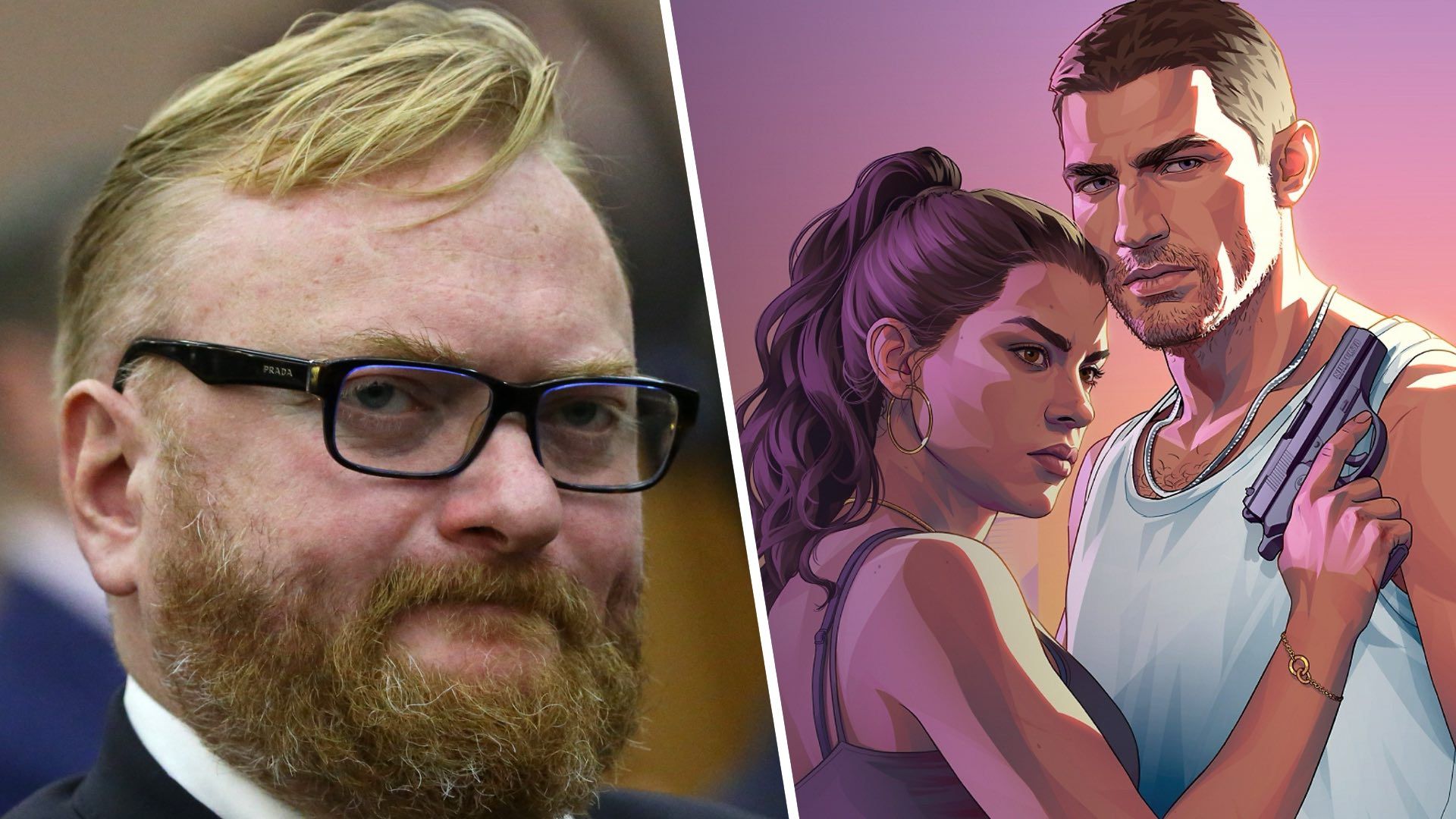
This sentiment reveals a strategic framing: Milonov is attempting to recontextualize Grand Theft Auto from a corrupting influence into a form of cathartic, albeit "deviant," American self-destruction. By framing the game as a simulation of a hostile society consuming itself, he effectively shields his constituents from the moral danger he otherwise preaches about, while simultaneously disparaging the nation that produced the software.
Supporting Data: The Global Reach of the GTA Franchise
The cultural footprint of Grand Theft Auto is difficult to overstate. GTA V, released over a decade ago, remains one of the best-selling entertainment products in human history, having sold over 200 million units. It is not just a game; it is a persistent virtual economy.
For many in the international gaming community, the series represents the pinnacle of satire. Rockstar Games has always maintained that the GTA series is a biting critique of American culture—a caricature of consumerism, political corruption, and societal apathy.
Milonov’s critique, while intended to condemn the game, inadvertently highlights the effectiveness of Rockstar’s satire. By interpreting the game’s depiction of "violence, sex, and drugs" as an accurate, albeit "stinking," representation of the United States, Milonov is essentially agreeing with the game’s satirical premise: that modern American life is chaotic, violent, and devoid of traditional moral anchors.
Implications: Censorship and the Digital Iron Curtain
The implications of such rhetoric from a senior Russian official are significant. While there has been no formal move to ban GTA 6 in Russia, the framing of the game as a "stench of Americanism" aligns with the state’s increasing efforts to isolate its citizens from Western media.
1. The Chilling Effect on Retailers
Even without a federal ban, political figures labeling a product as "deviant" or "anti-Russian" can lead to de facto bans. Major retailers in Russia may choose to pull the title from shelves or digital storefronts to avoid government scrutiny, effectively creating a barrier between Russian gamers and global cultural phenomena.
2. The Weaponization of Culture
Milonov’s comments are part of a larger trend of weaponizing cultural products to fuel geopolitical tension. By painting American media as a source of "deviance," officials can solidify the "us versus them" narrative that has become central to current Russian domestic policy.
3. The Resilience of Gaming Communities
Despite the rhetoric, history suggests that digital media is remarkably resilient to state-level condemnation. In an era of VPNs and global digital distribution, it is highly probable that Russian gamers will still find ways to access and enjoy the highly anticipated title. The question remains whether the political pressure will eventually reach a threshold that results in severe restrictive legislation, or if this is merely performative outrage from a legislator seeking to stay relevant in a tightening political landscape.
Conclusion: A Game Too Big to Ignore
Rockstar Games has yet to respond to Milonov’s comments, and it is unlikely they ever will. In the world of AAA game development, being called "deviant" by a political figure known for fringe extremist views is rarely a detriment to sales; if anything, it serves as a stark reminder of the game’s disruptive power.
As GTA 6 nears its release, it will continue to be a Rorschach test for the world. To some, it is a masterpiece of interactive storytelling and satire. To others, like Vitaly Milonov, it is a tangible manifestation of a culture they wish to keep at arm’s length. Regardless of the political posturing, the sheer anticipation for the title proves one thing: in the modern world, the "stench of Americanism" is a product millions of people are still lining up to buy.

