

[Editor’s Note: Tubefilter Charts is a weekly rankings column from Tubefilter with data provided by GospelStats. It is a top-number ranking of YouTube channels based on statistics collected within a given time frame. Check out all of our Tubefilter Charts with new installments every week right here.]
Scroll down for this week’s Tubefilter Chart.
T-Series Maintains an Iron Grip on the Global Top 50
The final week of September has drawn to a close, and with it, the Indian music and film juggernaut T-Series has cemented its position as the undisputed titan of the platform. By securing the #1 spot for the entirety of the month, T-Series has once again demonstrated that legacy media, when adapted for the digital age, remains an unstoppable force.
During this most recent tracking period, T-Series pulled in a staggering 946.5 million weekly views. This figure is more than a mere statistical milestone; it represents the accumulation of a lifetime of content strategy that has pushed the channel’s total view count past the 357 billion mark. As the channel continues to hover near the trillion-view horizon, industry analysts are beginning to ask the inevitable question: Is a YouTube "trillionaire" inevitable? While that milestone remains a distant goal, the sheer consistency of T-Series—operating at a scale that dwarfs the vast majority of its competitors—suggests that the ceiling for digital content has yet to be reached.
However, while T-Series occupies the stratosphere of global viewership, the most interesting movements in the YouTube ecosystem are occurring among the challengers—specifically those channels pulling in between 250 million and 300 million weekly views. It is here that we see a fascinating shift in content creation, characterized by the rise of animated avatars and the clever manipulation of internet trends.
The Evolution of the "Human" Creator
For years, the gold standard of YouTube success was the "face-cam" personality. Whether it was the high-octane energy of a gaming streamer or the polished aesthetic of a lifestyle vlogger, the audience connected with a human presence. But as the creator economy has matured and AI-driven animation tools have become more accessible, the definition of a "creator" is undergoing a seismic shift.
Anything Humans Can Do, Animations Do Better
The current landscape of YouTube Shorts—the primary battleground for the Top 50—is rife with bizarre, high-engagement trends. Recently, the platform has been flooded with "cooking" videos, specifically those involving questionable timeframes for preparing food. These clips often begin with cook times so absurdly brief that they seem designed to prioritize shock value over culinary safety.
This creates a significant dilemma for human creators. To participate in these viral trends, one must choose between losing the audience’s attention by being boring or risking health and safety by handling raw, under-processed food. It is a no-win scenario for the creator, but it is an opportunity for the virtual entity.
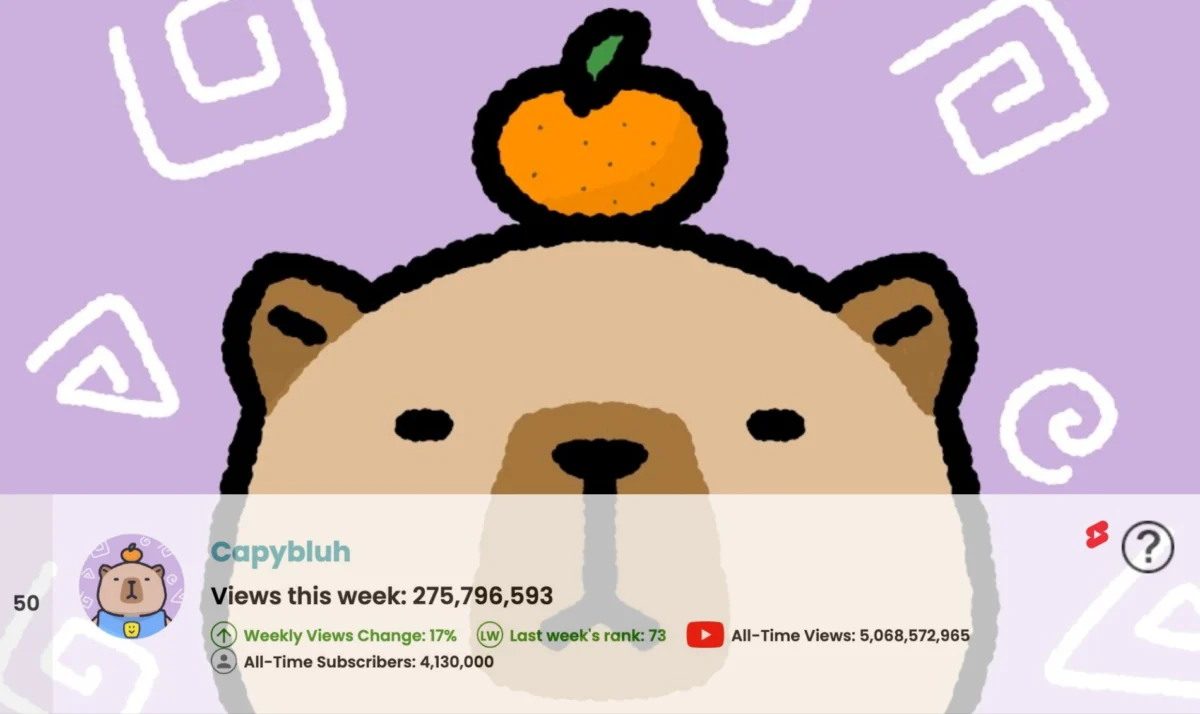
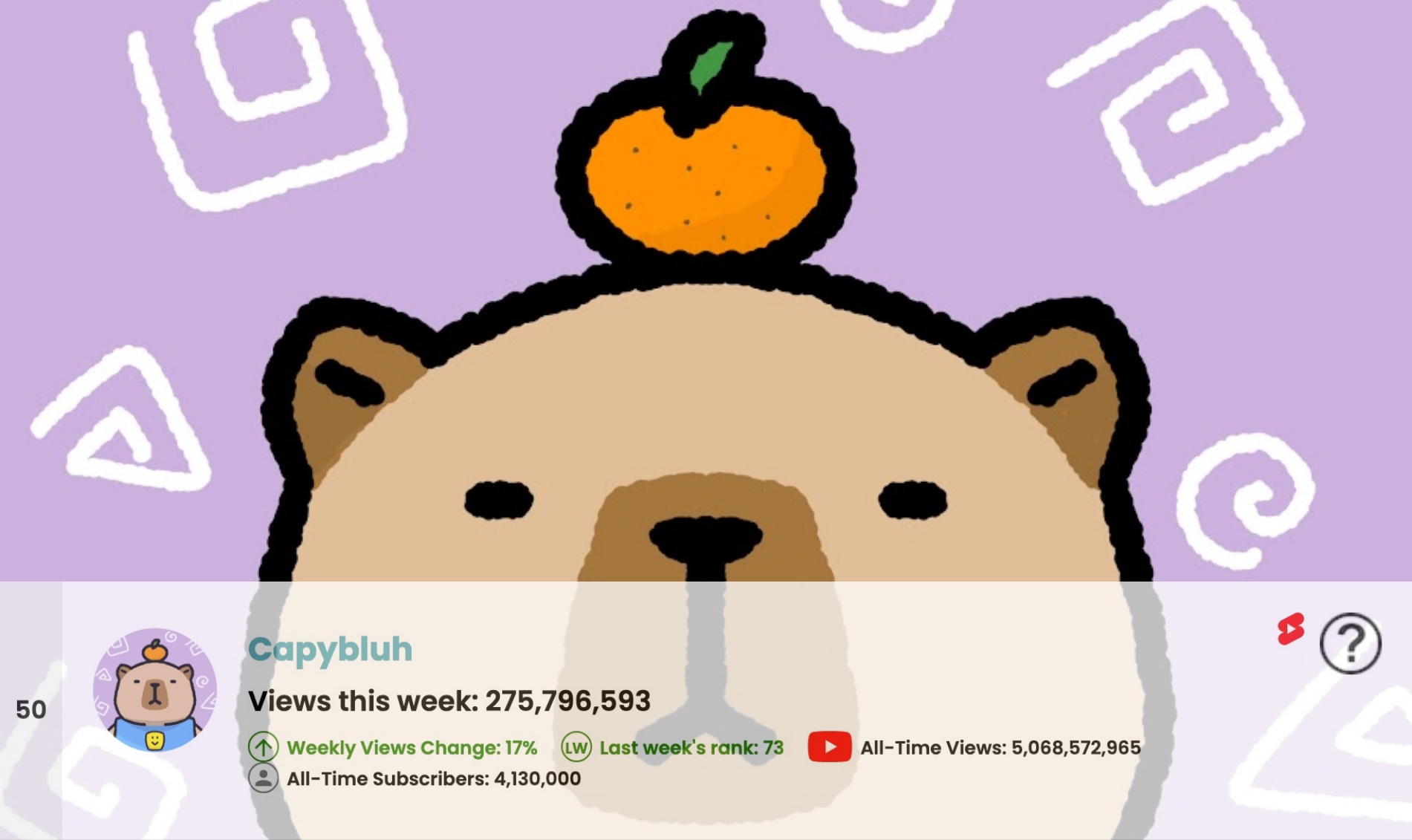
Take, for example, Capybluh, a short-form powerhouse that has bypassed this dilemma entirely. By utilizing a "Lego-style" animated avatar accompanied by a mascot rodent, Capybluh can engage with any trend—no matter how dangerous or absurd—without the physical constraints of reality. Whether the video calls for a 30-second flash-fry or a blowtorch-heavy hour of cooking, Capybluh remains unscathed. There is no risk of salmonella, no threat of fire, and most importantly, no risk of creator burnout.
Chronology of the Virtual Shift
The transition toward virtual creators did not happen overnight. It began with the early days of VTubing (Virtual YouTubing) in Japan, where anime-inspired avatars allowed streamers to maintain privacy while cultivating a distinct persona.
- 2020-2021: The Early Adoption: As pandemic-era lockdowns drove record traffic to YouTube, creators began exploring motion-capture software to enhance their gaming streams.
- 2022: The Professional Pivot: Notable creators like Jordi van den Bussche, better known as Kwebbelkop, began publicizing their intent to transition away from traditional "face-cam" content. Kwebbelkop’s experiment with VTuber alternatives signaled a realization that the human element of a channel—the face and voice—could be separated from the creator themselves. As Kwebbelkop noted, animated characters do not get tired, they do not experience the psychological weight of burnout, and they can produce content at a pace that human biological limits simply do not allow.
- 2023-2024: The AI-Driven Surge: With the explosion of Generative AI, the cost of creating and animating these avatars plummeted. What was once the domain of highly skilled studios became accessible to individual creators with a decent PC and a stable internet connection.
- September 2024 (Present): The Global Top 50 now reflects a landscape where animation is no longer a niche hobby but a primary driver of mass-market, high-volume engagement.
Supporting Data: The Case of BlobbyClips
The success of these virtual entities is quantifiable. Consider BlobbyClips, which landed at 48th place in this week’s Global Top 50 with 291.5 million weekly views.
Blobby is a masterclass in minimalist design. As a stick figure, he is a "blank canvas" character that can be inserted into any scenario. By eschewing complex facial expressions or hyper-realistic textures, the channel creator can pivot from one trending topic to another with ease.
The strategy employed by BlobbyClips relies on a two-pronged approach:
- The Avatar: A simple, recognizable character that serves as a consistent brand identity.
- The Environment: Pairing these animations with Minecraft or Roblox gameplay in the background.
This combination is a direct response to the "low-attention-span" consumption habits of Gen Alpha and Gen Z. By providing visual stimulation through gameplay footage while using the avatar to narrate or act out a story, the creator creates a multi-sensory experience that keeps the viewer from scrolling past.
Implications: The Future of Content
The implications of this shift are profound. If characters like Blobby or Capybluh can outperform human creators, what does this mean for the future of entertainment?
The "Overstimulated" Consumer
The prevalence of Minecraft or Roblox background footage in successful Shorts is not a coincidence. It is a psychological hook. As audiences become increasingly overstimulated, they crave multiple layers of visual information. We are seeing a move toward a "split-screen" economy, where the primary content (the animation) must compete with the background content (the game) for the viewer’s focus.
The Rockstar Engine and Beyond
As we look forward, the technology underpinning these videos will only improve. We are already seeing the integration of Grand Theft Auto VI’s advanced engine into the creator toolkit. The visual fidelity of the next wave of "virtual cooking" or "extreme challenge" videos will be indistinguishable from professional CGI.
This leads to a market where the "human" behind the content is increasingly abstract. The barrier to entry for high-quality, high-view-count content is becoming purely a matter of software proficiency rather than personal charisma or traditional media skills.
The Sustainability Question
While virtual creators offer a solution to burnout, they raise new questions regarding parasocial relationships. Can an audience maintain the same level of emotional connection with a stick figure that they can with a human? For now, the data says yes—provided the character can replicate the emotional highs and lows of a real human experience.
Conclusion: A Changing Chart
This week’s Top 50 features 35 channels that are primarily active on YouTube Shorts, a testament to the platform’s focus on short-form, rapid-fire consumption. As the T-Series empire continues its slow, steady march toward a trillion views, the "new guard" of creators—the avatars, the stick figures, and the AI-generated hosts—are the ones dictating the pace of the daily, weekly, and monthly trends.
As we watch the charts in the coming months, keep an eye on how many more "human" creators decide to pass the torch to their digital counterparts. The era of the animated avatar is here, and if the data from this final week of September is any indication, it is only just beginning.
For more insights, data, and analysis on the changing face of digital media, subscribe to the Tubefilter newsletter at newsletter.tubefilter.com.

