

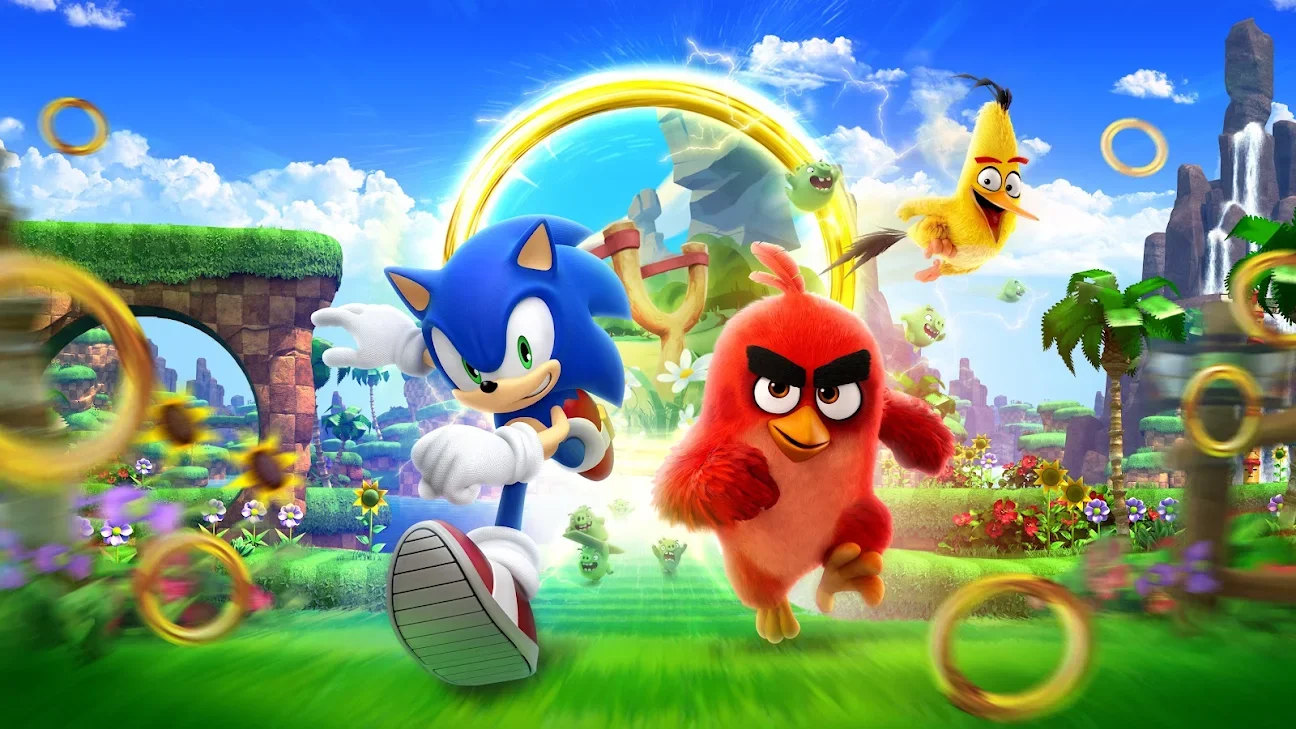
In 2023, the gaming world watched as Japanese powerhouse Sega Sammy executed a bold, $776 million acquisition of Rovio Entertainment, the Finnish studio behind the global phenomenon Angry Birds. On paper, the merger was billed as the "perfect coupling"—a marriage of Sega’s legendary intellectual property (IP) library and Rovio’s deep-rooted mobile-first expertise.
However, less than two years later, the narrative has shifted from synergistic growth to sobering reality. In February 2024, Sega recorded a $200 million impairment charge on the acquisition, signaling that Rovio’s profitability had plummeted well below initial forecasts. As Sega pivots to "rebuilding," the industry is left to dissect why a marriage that seemed destined for success has hit such a turbulent, costly wall.
A Chronology of a High-Stakes Union
The acquisition journey began with high aspirations. Sega, while a titan of the console and arcade eras, had long struggled to find its footing in the West’s mobile gaming landscape. Rovio, conversely, possessed the "Beacon" technology—a proprietary platform designed to optimize live operations, data analytics, and user retention—alongside one of the most recognizable brands in mobile history.
- April 2023: Sega announces its intent to acquire Rovio for $776 million, citing the need to bolster its mobile capabilities.
- August 2023: The acquisition is finalized. Integration begins, with hopes of applying Beacon to Sega’s stable of titles, including Sonic the Hedgehog.
- February 2024: Sega reports a $200 million impairment loss, admitting that the integration of Beacon into existing Sega mobile titles had failed to meet performance expectations.
- May 2025/26 Fiscal Reporting: Sega acknowledges a $316 million net loss and confirms the cancellation of its "Super Game" project, forcing a strategic pivot for the Rovio division toward "rebuilding."
The Mechanics of the Miscalculation
Why did the integration fail? According to Sega CEO Haruki Satomi, the disconnect was primarily operational. "Upon actual installation with existing live titles, we found that the operational and marketing methods and approaches significantly differ from Rovio titles," Satomi explained to investors. The Beacon system, which worked flawlessly for the casual, puzzle-based nature of Angry Birds, could not simply be "plugged in" to the more complex, varied live-service requirements of Sega’s broader portfolio.
The "Fading Brand" Trap
Industry analysts point to a more fundamental issue: the state of the Angry Birds franchise itself. Louise Wooldridge, senior research manager at Ampere Analysis, argues that Sega bought into a mature brand that had already peaked.
"Angry Birds is a mature brand and not really a major growth franchise," Wooldridge says. "The deal was priced based on the assumption of continued, rapid growth in the mobile space and cheap user acquisition, but instead, we saw growth slow and marketing costs rise."
Joost van Dreunen, founder of Aldora, echoes this sentiment, suggesting that Sega fell for the "false sense of security" provided by household-name IP. According to earnings reports, Rovio’s sales dropped from €309 million to €181 million post-acquisition, and internal management noted that Angry Birds 2 had effectively "bottomed out."
Supporting Data: A Shifting Mobile Landscape
The struggle of the Sega-Rovio merger is a symptom of a larger, systemic shift in the mobile games market. The era of the "viral hit" has been replaced by an era of "data-intensive dominance."

The "Cost of Entry" Problem
Pascal Clarysse, founder of Big Karma, highlights that the mobile market has reached a point of extreme saturation. "Every genre has its dominating leaders that have the capacity to spend tremendous amounts in user acquisition and retention," he notes.
The data confirms this:
- User Acquisition (UA) Costs: Since the implementation of Apple’s App Tracking Transparency (ATT) framework, the cost to acquire a high-value user has skyrocketed.
- The "Winner-Takes-All" Dynamic: Small or mid-sized studios can no longer compete with the "mega-spenders" who dominate the top of the charts.
- Revenue Discrepancies: Rovio’s reliance on legacy titles meant that when new titles underperformed, there was no secondary revenue stream to buoy the company’s bottom line.
Unlike console gaming, where a game’s value is fixed at purchase, mobile economics are fluid and fragile. A minor tweak to an advertising algorithm or a change in app store visibility can destabilize an entire company’s quarterly revenue.
Comparing the Giants: The Zynga Contrast
Critics often point to Take-Two’s acquisition of Zynga as a cautionary tale—or a success story, depending on the timeline. Initially, Take-Two recorded billions in goodwill impairments following the 2022 purchase. However, by the 2026 fiscal year, Zynga had become the backbone of Take-Two’s revenue, contributing over 50% of the firm’s total net bookings.

The difference? According to Van Dreunen, the strategy was fundamentally different. "Take-Two’s acquisition of Zynga was less about buying up existing IP and more about a legacy publisher expanding its technical infrastructure into mobile gaming," he explains. Take-Two didn’t just buy a brand; they bought a machine that they successfully integrated into their existing ecosystem. Sega’s mistake, by comparison, was hoping that the Angry Birds brand would do the heavy lifting that the underlying technology and market conditions could not support.
Strategic Implications and the Road Ahead
Sega is now in a period of intense reflection. The immediate path forward involves a return to basics, focusing on the release of Angry Birds 3 in December 2026 and leveraging the "transmedia" approach that helped revitalize the Sonic the Hedgehog franchise.
Leveraging the Transmedia Playbook
The appointment of the same team that successfully managed the Sonic movies to oversee the third Angry Birds film is a calculated attempt to recapture the brand’s former glory. The strategy includes:
- Influencer Integration: Partnerships with figures like MrBeast to broaden the brand’s appeal to younger, digital-native audiences.
- Merchandising Expansion: Rolling the IP into Sega’s global licensing network to create a more cohesive presence across toys, apparel, and live events.
- New Distribution: There is a growing consensus that Rovio needs to move away from being purely an "app store" company and start integrating with platforms like Roblox, where the next generation of consumers is spending their time.
The Pivot to New IP
Perhaps the most significant implication of the current struggle is that Sega may move away from viewing Angry Birds as a growth engine. Analysts suggest the future of the partnership lies in using Rovio’s team to develop mobile versions of Sega’s more "gacha-friendly" and high-growth titles, such as the Persona franchise.

"Ultimately, Angry Birds should not be treated as a growth engine, but as a steady revenue generator," Wooldridge concludes. "Investment should be focused on other, perhaps existing, Sega IP that has higher potential for long-term monetization."
Conclusion: A Lesson in Modern Publishing
The Sega-Rovio saga serves as a definitive case study for the modern gaming industry. It illustrates the danger of overestimating the power of "legacy IP" in a market that has fundamentally changed. When a legacy publisher acquires a mobile studio, the goal can no longer be to simply "port" an iconic character to a new screen.
Instead, success in the modern mobile landscape requires a delicate balance of social integration, creator-led engagement, and a cold, analytical approach to user acquisition costs. For Sega, the $200 million impairment is a bitter pill, but one that may ultimately lead to a more sustainable, if less grandiose, mobile strategy. The lesson for the industry is clear: in the age of mobile gaming, the slingshot is only as good as the infrastructure supporting the bird.

