

For decades, the Thief franchise has existed in a state of quiet, respectful reverence. Since the release of the original Thief: The Dark Project in 1998, the series has served as the gold standard for stealth mechanics, influencing everything from Dishonored to Hitman. While the franchise has seen periods of dormancy and a polarizing reboot in 2014, the current climate for Garrett and the City has shifted dramatically. With a high-profile remaster on the horizon and the announcement of a new, canon-adjacent graphic novel, it is, by all accounts, a remarkably good time to be a Thief fan.
A Renaissance in the Shadows: The Core Developments
The current resurgence of the Thief brand is built on a two-pronged strategy: preserving the legacy of the original Looking Glass Studios classics and expanding the narrative footprint of the series through new media.
Earlier this month, at the 2026 PC Gaming Show, the industry received the news that long-time remaster maestros Nightdive Studios would be applying their proprietary engine technology to Thief: The Dark Project. This announcement sent waves through the immersive sim community. Nightdive, known for their meticulous work on titles like System Shock and Quake, has been tasked with bringing the seminal stealth title into the modern era, promising not just a fresh coat of paint, but a revitalization of the original experience for a new generation.
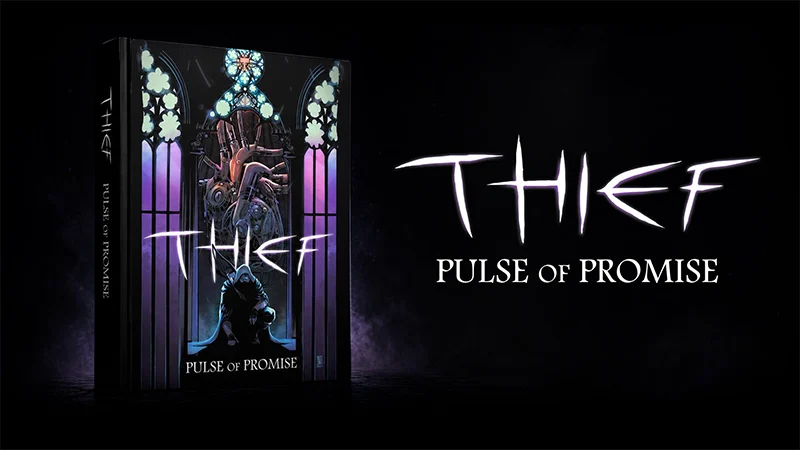
Simultaneously, Bit Bot Media—in close collaboration with Eidos-Montreal—has unveiled Thief: Pulse of Promise, an officially licensed graphic novel. This project marks a significant departure from the trend of mere remasters, signaling that the stewards of the IP are interested in exploring new narrative territory within the established lore of the first two games.
Chronology of a Master Thief
To understand the weight of these announcements, one must look at the timeline of the series and the unique positioning of these new projects.
- 1998: The release of Thief: The Dark Project changes the face of stealth gaming, introducing a focus on sound, light, and verticality.
- 2000: Thief II: The Metal Age refines the formula, cementing the City as one of gaming’s most atmospheric settings.
- 2004: Thief: Deadly Shadows transitions the series to the Unreal Engine, concluding the original trilogy.
- 2014: Eidos-Montreal releases a Thief reboot. While visually striking, it receives mixed reviews for its departure from the systemic depth of the originals.
- 2024–2025: A wave of indie "stealth-likes" appears, culminating in the release of Thick as Thieves, which brings back some of the creative DNA of the original developers.
- 2026: Thief: The Dark Project Remastered is announced at the PC Gaming Show.
- Present Day: The Thief: Pulse of Promise crowdfunding campaign is announced, bridging the gap between the first and second installments of the original series.
Thief: Pulse of Promise is specifically positioned to bridge the chronological gap between The Dark Project and The Metal Age. This is a strategic decision that effectively sidesteps the 2014 reboot universe, appealing directly to the purists who have championed the original Garrett’s journey. By setting the story in this interregnum, the creators have a canvas that is rich with established lore but free from the constraints of the games’ specific mission structures.

Supporting Data: The Scope of the Pulse of Promise Project
The Thief: Pulse of Promise project is not merely a book; it is a full-scale multimedia celebration. The creators are utilizing a BackerKit crowdfunding campaign to finance an expansive collection of goods that cater to the deepest sensibilities of the Thief fanbase.
The campaign highlights include:
- The Graphic Novel: A serialized expansion of the Garrett narrative.
- Collectibles: High-end statues and physical replicas of in-game items, designed to mimic the tactile aesthetic of the City.
- Apparel: Thematically appropriate merchandise.
- The Original Soundtrack: A standout inclusion, the project features a new score by Celldweller. Crucially, this soundtrack will feature a new performance by Stephen Russell, the legendary voice actor whose portrayal of Garrett defined the character’s laconic, cynical persona.
The inclusion of Russell is arguably the most important data point for fans. His voice is the heartbeat of the series, and his return—even in a musical capacity—provides a layer of authenticity that legitimizes the project in the eyes of the community.
Official Responses and Strategic Implications
The collaboration between Bit Bot Media and Eidos-Montreal suggests a shift in how the Thief IP is being managed. By allowing a third-party partner to take the lead on a narrative project while the studio maintains oversight, Eidos-Montreal appears to be testing the waters for how fans respond to "new" old-school content.
The primary implication here is one of risk mitigation. By focusing on the "Classic" universe rather than the 2014 reboot, the stakeholders are acknowledging that the core identity of Thief is tied to the original Looking Glass philosophy. The 2014 reboot attempted to modernize the game for a contemporary audience, but in doing so, it alienated those who valued the systemic freedom and emergent gameplay of the 1998 original.
For the Thief: The Dark Project remaster, the implications are equally significant. Nightdive Studios has confirmed that the release will feature:

- Technical Modernization: Native 4K support and uncapped framerates (120 FPS+).
- Quality of Life Improvements: A dedicated level-select mode, allowing players to bypass the menu-heavy structure of the 90s and jump straight into fan-favorite missions like "The Sword."
- Community Integration: Full support for custom campaigns. This is perhaps the most vital feature, as it ensures the remaster will benefit from the massive, multi-decade library of fan-made missions, including acclaimed works like The Black Parade.
The Future of Stealth: An Analysis
The success of these projects will likely dictate the long-term future of the Thief franchise. If Pulse of Promise proves that there is a viable market for non-interactive storytelling within this universe, we could see an expansion into other media formats. Similarly, if the Nightdive remaster captures the "lightning in a bottle" quality of the original, it could provide the necessary proof-of-concept for an entirely new, big-budget entry in the series that returns to the design roots of the original games.
The skepticism regarding the peripheral merchandise (the plushies and replicas) is understandable. In an era where "legacy" IPs are often leveraged for quick cash-grabs, fans are naturally cautious. However, the decision to center the graphic novel on the classic timeline and to involve original talent like Stephen Russell suggests that the creators have done their homework. They understand that for Thief to be successful, it must maintain the specific, melancholic, and claustrophobic atmosphere that made the City so compelling in the first place.
Final Reflections
We are witnessing a rare moment where an older, "hardcore" franchise is being granted a second life that respects its history rather than trying to overwrite it. While we wait for concrete release dates, the mere existence of these projects is a victory for the community. The Thief franchise was never about high-octane action or cinematic set-pieces; it was about the tension of the darkness, the sound of boots on cobblestone, and the thrill of the unseen.
As the industry moves toward increasingly complex and interconnected gaming ecosystems, there is something deeply satisfying about seeing a project like Pulse of Promise take us back to the basics: a thief, a shadow, and a story worth telling. Whether these efforts will lead to a full-scale franchise revival remains to be seen, but for now, the fans can finally step out from the shadows with a sense of genuine optimism. The City is waking up, and this time, it seems it hasn’t forgotten who we are.

