

By Gaming Industry Desk
Expanded and Updated Feature
Main Facts: The Reluctant Auteur and His Unconventional Career
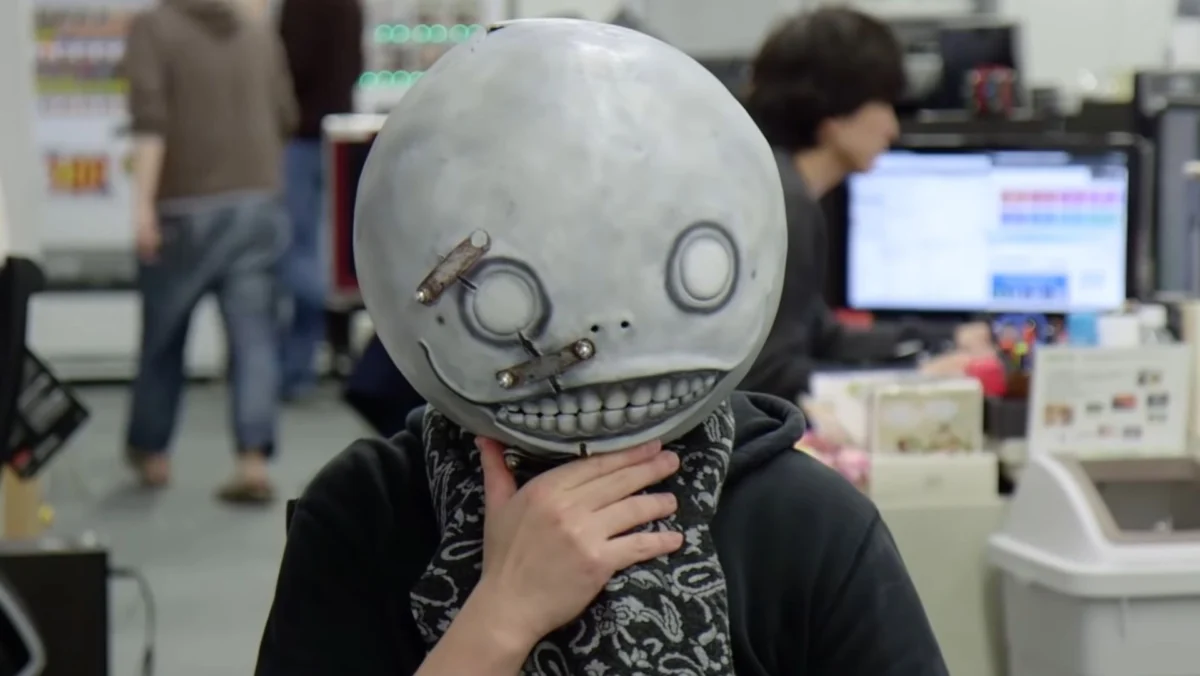
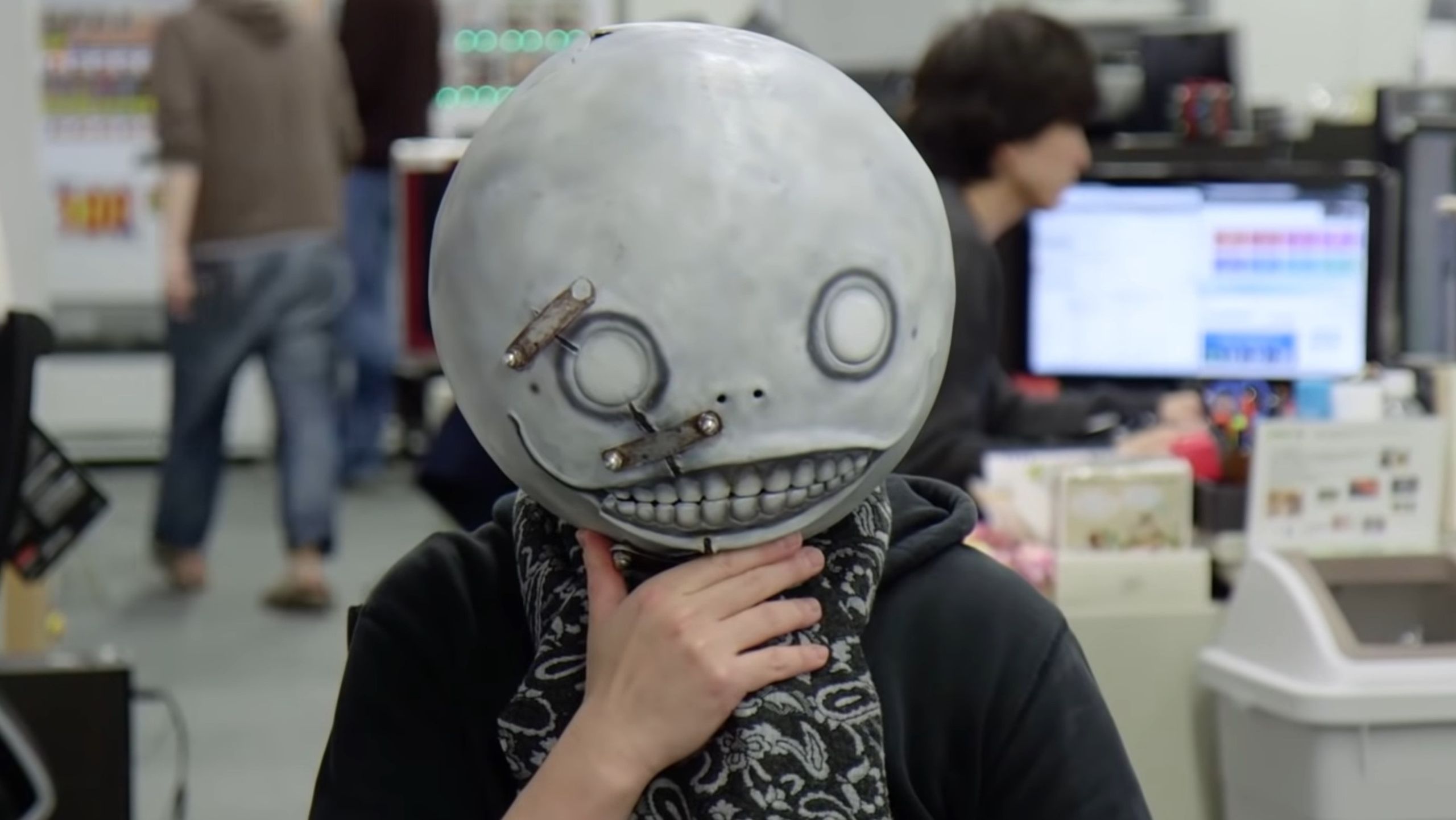
Yoko Taro, the eccentric mastermind behind cult-classic masterpieces like NieR: Automata, NieR: Replicant, and the Drakengard series, has never quite fit the traditional mold of a corporate game director. Instantly recognizable across the globe by his trademark, grinning Emil helmet—a whimsical yet deeply unsettling visual signature—Taro has cultivated a reputation as gaming’s ultimate nihilistic philosopher wrapped in the guise of a self-deprecating prankster.
However, behind the humor and the plastic mask lies a startling revelation. Speaking recently at an appearance at the Tokyo French Institute, Taro admitted that he has long considered walking away from the video game industry entirely. According to reports from Denfaminicogamer and IGN, the veteran developer feels he achieved his ultimate artistic ambitions right at the very start of his directorial career.
"With Drakengard, the first game I was given the opportunity to direct, I was actually able to do almost everything the way I wanted," Taro stated during the panel discussion. "As a game otaku, I think the dream is to release something you’ve always wanted to create into the world. Having achieved that dream, I view everything after that as the remainder of my life."
Rather than scaling creative new peaks, Taro views his subsequent multi-decade career as an unexpected bonus round. When pressed on why he continues to toil away in the demanding trenches of modern game development despite having already checked off his ultimate professional bucket list, Taro offered a characteristically blunt mix of pragmatism and dark humor: the paycheck helps pay the bills, but more importantly, he harbors a genuine fear of mental stagnation.
"This is good for preventing dementia," he deadpanned, explaining that keeping his brain active through design challenges wards off the cognitive decline of retirement.
Chronology: From Drakengard to Philosophical Stardom
To understand Yoko Taro’s current outlook on retirement, it is essential to trace the unlikely trajectory of his career within the Japanese video game industry.
- 2003 (The Genesis): Taro makes his directorial debut with Drakengard (Drag-On Dragoon in Japan) at Cavia, published by Square Enix. Developed on a relatively constrained budget, the dark fantasy action RPG shocked players with its grim narrative, morally compromised characters, and taboo themes, including incest and mass slaughter. Despite mixed reviews regarding its repetitive gameplay, the game established Taro’s signature penchant for existential dread and multi-layered, reality-bending storytelling.
- 2004–2010 (The Cult Wilderness): Following the moderate success of Drakengard 2 (which Taro had minimal involvement in), he directed Drakengard’s infamous spin-off, NieR (released as NieR Replicant and NieR Gestalt in 2010). While critically overlooked at launch due to dated visuals and mechanical roughness, NieR cultivated a fiercely loyal cult following thanks to its staggering emotional depth, magnificent soundtrack by Keiichi Okabe, and meta-narrative structures that demanded multiple playthroughs to uncover the true scope of the plot.
- 2010–2016 (Studio Uncertainty and Freelance Struggles): Following the closure of Cavia, Taro operated as a freelance director, facing periods of severe financial instability. During these lean years, he worked on mobile titles and smaller projects, famously expressing doubts about whether he would ever helm another major console release.
- 2017 (The Masterpiece Breakthrough): Partnering with PlatinumGames and Square Enix, Taro releases NieR: Automata. The action RPG becomes a critical and commercial phenomenon, selling millions of copies worldwide, propelling Taro into mainstream industry stardom, and solidifying his reputation as a visionary auteur who uses the medium of video games to explore transhumanism, artificial intelligence, and the meaning of existence.
- Present Day (The Twilight of Intentions): Now reflecting on a career spanning over two decades, Taro acknowledges that everything following Drakengard’s initial greenlight has been an unexpected post-script—a career sustained by a mixture of financial necessity, creative restlessness, and a desire to keep his mind sharp.
Supporting Data: Filling the Gaps in an Overcrowded Medium
Taro’s approach to game design has always been dictated by humility rather than ego. Rather than attempting to compete directly with masterpieces that he feels have already perfected a genre, Taro deliberately seeks out the rough edges, the narrative gaps, and the unpolished spaces of the industry.
"I’ve always worked in the games industry with the mindset of ‘filling in the gaps,’" Taro explained. "I really like games like Ico and Ikaruga, but when I played them they were so perfect that I thought, ‘I don’t need to make games in these genres.’"
This self-awareness sheds light on why titles associated with his name often feature unconventional mechanical loops, jarring genre shifts, and purposefully polarizing design choices.
"That’s not jealousy, it’s the feeling of, ‘This gap has already been filled, so I need to fill a different one,’" he continued. "I think the reason that my games are crude games full of terrible things is because the pioneers have already seized all the beautiful aspects."
Furthermore, industry watchers note that Taro’s self-deprecating remarks often mask a deep understanding of modern game production pipelines. While he frequently jokes about his laziness or his reliance on external developers (such as PlatinumGames for Automata and Toylogic for the NieR Replicant upgrade), his ability to weave low-budget limitations directly into his narratives—such as using fake loading screens or breaking the fourth wall when a player accesses menu systems—demonstrates a masterclass in turning weaknesses into artistic strengths.
Official Responses and Industry Context
Taro’s recent statements at the Tokyo French Institute have sparked widespread discussion across the global gaming community, eliciting reactions from fans, critics, and fellow developers alike.
Industry analysts point out that Taro’s musings arrive at a precarious crossroads for the medium. During the same panel, Taro touched upon the rapid rise of generative artificial intelligence and the looming pressures of younger, tech-assisted generations entering the development space. He half-jokingly expressed a desire to dodge the "flames" of this new competitive era before he eventually departs the industry.
While veterans of the games press—and those familiar with Taro’s infamous public persona—caution against taking every word entirely literally, the underlying sentiment resonates with the modern realities of AAA game development. Burnout is at an all-time high among veteran creators, many of whom find themselves trapped in grueling corporate cycles of sequels, live-service pivots, and ballooning budgets.
By framing his continued presence in the industry as a way to "prevent dementia" and supplement his income, Taro subverts the traditional romantic narrative of the tireless artist. Yet, this cynical wrapping paper conceals a creator who remains deeply, if reluctantly, engaged with the art form he has spent his life critiquing and expanding.
Implications: What Lies Ahead for Yoko Taro and Square Enix?
The admission that Yoko Taro considers his entire career past Drakengard to be an accidental bonus round raises critical questions about the future of the NieR franchise and any potential upcoming projects.
For Square Enix, Taro represents an irreplaceable creative wildcard—one of the few directors whose name alone can move millions of units while defying conventional marketing strategies. While Square Enix has previously signaled interest in expanding the NieR intellectual property following the massive success of Automata and its various anime and concert adaptations, the timeline and nature of any future installments remain shrouded in typical Taro-esque secrecy.
Several vital takeaways emerge from his recent disclosures:
- The Fragility of Auteur-Driven Projects: Taro’s reliance on external studios (like PlatinumGames and Toylogic) proves that unique visions require collaborative ecosystems. If Taro were to genuinely retire, replicating his specific brand of existential melancholy and meta-narrative trickery would be an immense challenge for any successor.
- The Threat of Technological Shifts: As generative AI and rapid shifting industry paradigms threaten to upend traditional development pipelines, veterans of Taro’s generation are increasingly vocal about the changing soul of game design. Taro’s commentary on younger generations highlights an impending generational guard shift.
- Artistic Liberation Through Acceptance: By accepting that he achieved his core creative dream decades ago, Taro operates with a radical freedom that few high-profile directors possess. Unencumbered by the pressure to continually top himself in traditional metrics of scale and fidelity, he remains free to experiment, troll his audience, and explore taboo narratives that mainstream publishers would otherwise reject.
Whether Yoko Taro steps away tomorrow or continues designing games well into his golden years simply to keep his synapses firing, his legacy is secure. He leaves behind a body of work that proved video games could be high art, profound philosophy, and absurd, mask-wearing performance art all at once.

