

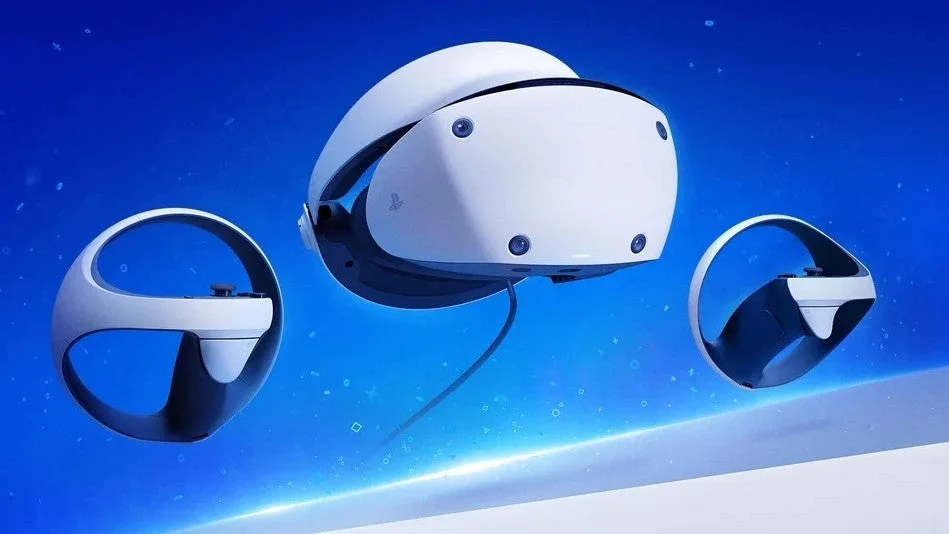
In a move that marks a definitive turning point for the future of immersive entertainment, Sony Interactive Entertainment has entered into a sweeping agreement to transfer 419 global virtual reality (VR) patents to Meta Platforms. The deal, finalized in December 2025, represents a significant consolidation of intellectual property, signaling a strategic retreat by the Japanese electronics giant from the hardware-heavy VR sector while fueling Meta’s ambitious, if volatile, journey toward a future of augmented and virtual reality.
The Scope of the Agreement: A Global IP Shift
The transfer, which has been executed in stages throughout 2026, involves a massive portfolio of technological advancements. Of the 419 patents, 180 were filed in the United States, with the remainder distributed across key strategic markets including Japan, China, South Korea, and the European Union.
According to reports from ZDNet Korea and Digital Foundry, the patents cover the foundational architecture of the immersive industry. This includes proprietary technology related to virtual reality, augmented reality (AR), mixed reality (MR), and the complex sensor and optics systems required for high-end head-mounted displays. Between June and September 2026 alone, over 40 of these critical patents were formally migrated to Meta’s possession. For the industry, this is not merely an administrative transfer; it is a signal that the “arms race” for VR dominance is entering a phase of consolidation rather than expansion.
A Chronology of Sony’s VR Ambitions
To understand the weight of this decision, one must look at Sony’s trajectory in the VR space over the last several years.
- February 2023: Sony launches the PlayStation VR 2 (PSVR 2) at a retail price of $549.99. The device was positioned as the premium gateway to high-fidelity console VR, supported by titles like Horizon Call of the Mountain.
- Early 2023: Initial sales show promise, with 600,000 units sold in the first six weeks—outpacing the adoption rate of the original 2016 PSVR.
- 2024: Recognizing the limitations of a closed ecosystem, Sony releases a PC adapter for the PSVR 2, an attempt to broaden the device’s appeal to the enthusiast PC market.
- December 2025: Sony signs the landmark agreement to transfer its global VR patent portfolio to Meta.
- October 2026: The scale of the patent transfer becomes public knowledge, coinciding with Sony’s announcement that it will skip the 2027 Consumer Electronics Show (CES)—the first time the company has missed the event since 1967.
Supporting Data: The Cost of Innovation
Sony’s decision to offload its patents follows a period of stagnation in the consumer VR market. While the PSVR 2 provided a high-end experience, the install base remained tethered to the PlayStation 5 console, creating a "walled garden" that limited long-term growth.
Conversely, Meta’s Reality Labs division—the heart of the company’s Metaverse and hardware ambitions—has been hemorrhaging capital. Despite a staggering loss of $19.2 billion in fiscal year 2025, Meta has doubled down on its R&D. The company’s pivot toward "VR Glasses," set to launch in Spring 2027 at a premium price point of $1,299.99, suggests that Meta is betting on a form factor that is more wearable and less cumbersome than the bulky headsets of the previous generation.
Meta’s internal struggles have been well-documented. Following a 10% staff reduction in Reality Labs and the closure of key development studios like Twisted Pixel Games, Sanzaru Games, and Armature Studio, the company is clearly in a "survival of the fittest" mode. By acquiring Sony’s patent portfolio, Meta is essentially purchasing a shortcut, bypassing years of potential litigation or R&D cycles by absorbing the intellectual labor of a competitor that has decided the cost of entry is no longer worth the return.
Official Responses and Strategic Realignment
Sony’s communications regarding its future have been characteristically opaque, yet telling. In explaining their decision to skip CES 2027, the company stated that its current focus is on "entertainment, intellectual property, and technology geared to support creators."
Industry analysts interpret this as a pivot away from hardware-intensive "gimmicks" and toward software-as-a-service (SaaS) and content creation. By shedding its VR patent portfolio, Sony is clearing its balance sheet of assets that require constant, high-cost maintenance and litigation.
Meta, meanwhile, has been vocal about its shift toward mobile-integrated VR experiences and Unity-supported glasses. Their acquisition of the Sony patents serves as a defensive moat. With these patents now under the Meta umbrella, they effectively prevent other competitors from utilizing the specific VR tracking and display methods that Sony spent the last decade perfecting.
The Implications for the Future of Tech
The implications of this deal are twofold: for the consumer and for the broader tech industry.
For the Consumer
For the average gamer, this development likely signals the end of the line for major first-party VR investment from Sony. While the PSVR 2 will continue to function, the lack of new, high-budget, first-party software—following the release of Horizon Call of the Mountain and Firewall Ultra—suggests that Sony is content to let the hardware ecosystem sunset. Gamers who invested in the platform may find themselves with a capable, but increasingly unsupported, piece of legacy hardware.
For the Industry
The industry is witnessing a "Great Consolidation." As the hype cycle of the "Metaverse" has transitioned into the cold reality of hardware engineering challenges, the players who remain are those with the deepest pockets. Meta, by absorbing Sony’s intellectual property, is attempting to establish itself as the sole steward of the VR/AR standard.
The closure of Meta’s internal studios and the discontinuation of Horizon Worlds further emphasize that the market for "social VR" has largely failed to materialize at scale. Instead, the focus has shifted toward productivity, AR-integrated glasses, and AI-powered tools.
Conclusion: A Changing of the Guard
The transfer of 419 VR patents from Sony to Meta represents a significant historical marker. It closes the chapter on the initial console-led VR boom and opens a new, more uncertain chapter where the technology is stripped of its gaming-first roots and repurposed for a broader, albeit more elusive, vision of digital reality.
Sony, ever the master of the "pivot," appears to be betting that the future lies in high-end gaming experiences that do not require a headset, leaving the costly and complex battle for the "next reality" to Meta. Whether this move allows Meta to finally turn a profit on its Reality Labs division or simply serves as a costly collection of dust-gathering patents remains to be seen. However, one thing is certain: the landscape of virtual reality has fundamentally changed, and the primary actors in that drama have decided to switch roles.

