

By Hardware Desk
Published: October 2023
Main Facts: The Illuminated Evolution of the Gaming Rig
Step into the room of almost any modern PC enthusiast, and you will likely be greeted by a luminescent glow. From blinding rainbow-wave keyboards and pulsing chassis fans to subtle motherboard accents and glowing RAM sticks, RGB (Red, Green, Blue) lighting has cemented itself as an inescapable pillar of contemporary PC hardware design. What began as a niche modification for hardcore modders in the early 2000s has evolved into a multi-million-dollar mainstream standard.
Yet, beneath the glow of millions of LEDs lies a deeply polarized community. While hardware manufacturers continue to integrate customizable lighting into virtually every component—from graphics cards and power supplies to mouse pads and desk chairs—a vocal segment of the gaming population actively rejects the trend.
The core debate centers around a fundamental question of taste and psychology: Does RGB lighting elevate the immersive gaming experience by transforming a rig into a personalized work of art, or is it a distracting, garish gimmick that turns high-performance machinery into the visual equivalent of "unicorn vomit"?
This article explores the trajectory of PC lighting, examines the psychological paradoxes of hardware aesthetics, and investigates whether the industry is reaching peak neon or if the glow is here to stay.
Chronology: From Cold Cathode Tubes to Addressable Ecosystems
To understand how personal computers transformed from drab, beige office boxes into synchronized neon lightshows, one must look back at the evolutionary timeline of PC customisation.
Phase One: The Industrial Era (Pre-2000s)
In the early days of personal computing, aesthetics were largely an afterthought. Computers were functional tools housed in utilitarian, industrial chassis designed for corporate offices or dens. Internal components were selected strictly for performance and reliability. Wiring was hidden out of necessity rather than pride, and lighting inside a PC case was virtually nonexistent.
Phase Two: The Modding Underground (Early 2000s)
As LAN parties gained popularity in the early 2000s, enthusiasts sought ways to make their rigs stand out. This era birthed the PC modding community. Early pioneers introduced acrylic side panels to showcase internal components, accompanied by rudimentary lighting solutions: bulky cold cathode fluorescent lamps (CCFLs) and single-color, static LEDs wired manually to power supplies. Blue and green were the dominant hues of choice, often paired with clumsy cable management and DIY fan grills.
Phase Three: The RGB Revolution (2010s)
As surface-mount technology matured, multi-color LEDs became cheaper and more reliable. The watershed moment arrived in the mid-2010s when peripheral manufacturers began implementing per-key RGB lighting into gaming keyboards. Companies like Corsair, Razer, and Logitech realized that programmable lighting wasn’t just a cosmetic feature—it was a powerful marketing tool. Soon, RGB migrated from peripherals to motherboards, RAM modules, and cooling solutions, culminating in the standardized RGB headers we see today.
Phase Four: The Ecosystem Wars (Present Day)
Today, the battleground has shifted from hardware lighting to software ecosystems. Modern builders must navigate a fragmented landscape of proprietary software suites—such as Corsair iCUE, Razer Synapse, ASUS Armoury Crate, and MSI Mystic Light—just to synchronize their lighting profiles. While platforms like OpenRGB strive for open-source unification, the current market is defined by tightly locked ecosystems where hardware choices are frequently dictated by software compatibility.
Supporting Data: The Psychology and Market Reality of PC Aesthetics
Market research within the consumer electronics space reveals that aesthetics play a disproportionate role in purchasing decisions for gaming hardware. According to internal metrics from major hardware vendors, over 70% of mid-to-high-end motherboards and graphics cards ship with pre-installed lighting features. For peripheral categories like keyboards and mice, that figure climbs north of 90%.
However, hardware reviewers and community sentiment polls—such as recent surveys conducted across enthusiast forums and hardware publications—paint a more nuanced picture of user preferences:
- The Purists (Approx. 25%): Prefer a "stealth" build with zero illumination. These users often opt for solid metal chassis with sound-dampening foam, opaque side panels, and blacked-out components. Their primary concerns are acoustic performance and a clean, professional workspace.
- The Accent Enthusiasts (Approx. 50%): Represent the middle ground. These users utilize RGB lighting strategically—often locking their entire system to a single static color (such as deep red, icy white, or subtle cyan) or utilizing low-intensity backlighting to create a sophisticated ambiance without visual fatigue.
- The Maximalists (Approx. 25%): Embrace the full spectrum. They leverage dynamic wave patterns, reactive audio-visualizers, and complex multi-zone synchronization across every available surface, treating their desk space as an extension of digital expression.
Hardware reviewers often note an ironic dichotomy in testing labs: while manufacturers default their review units to eye-searing, multi-color rainbow waves straight out of the box, long-term industry veterans frequently gravitate toward understated, static configurations.
Consider the perspective of veteran hardware journalist Andy, who has spent decades dissecting components:
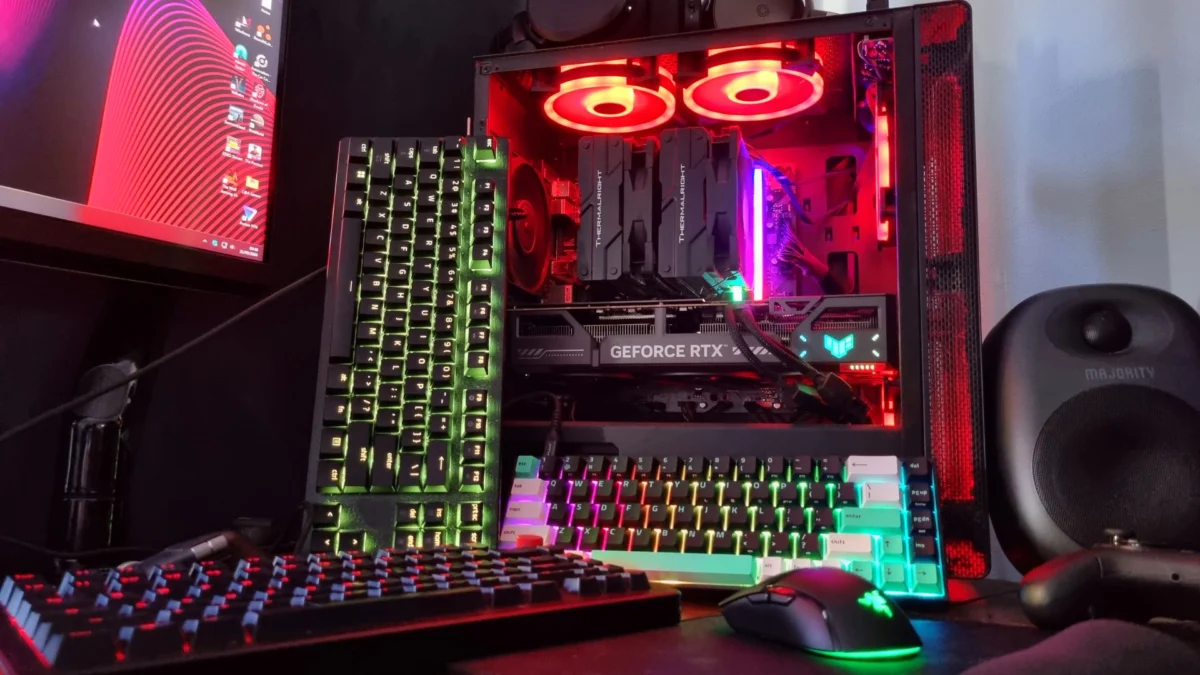
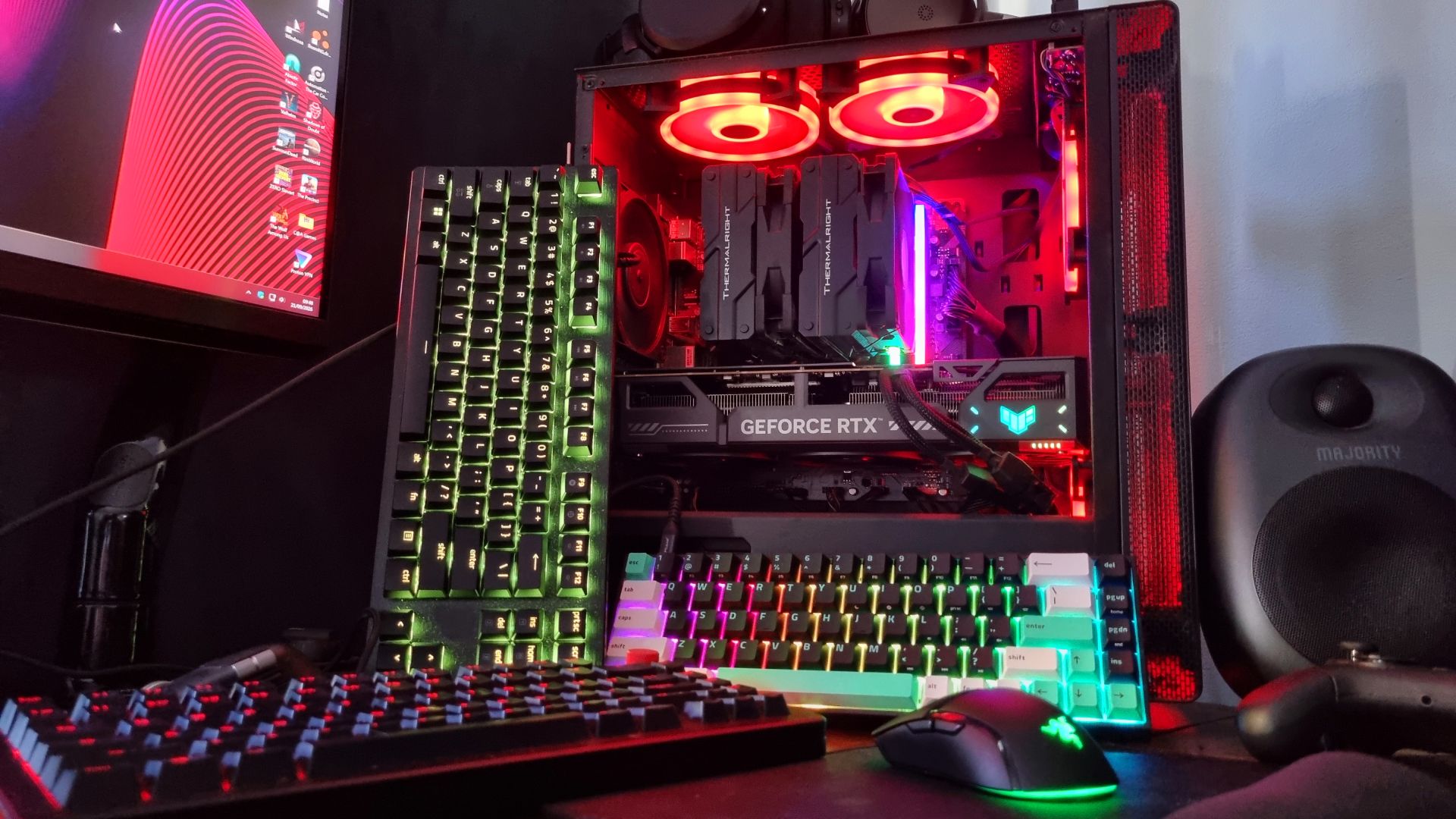
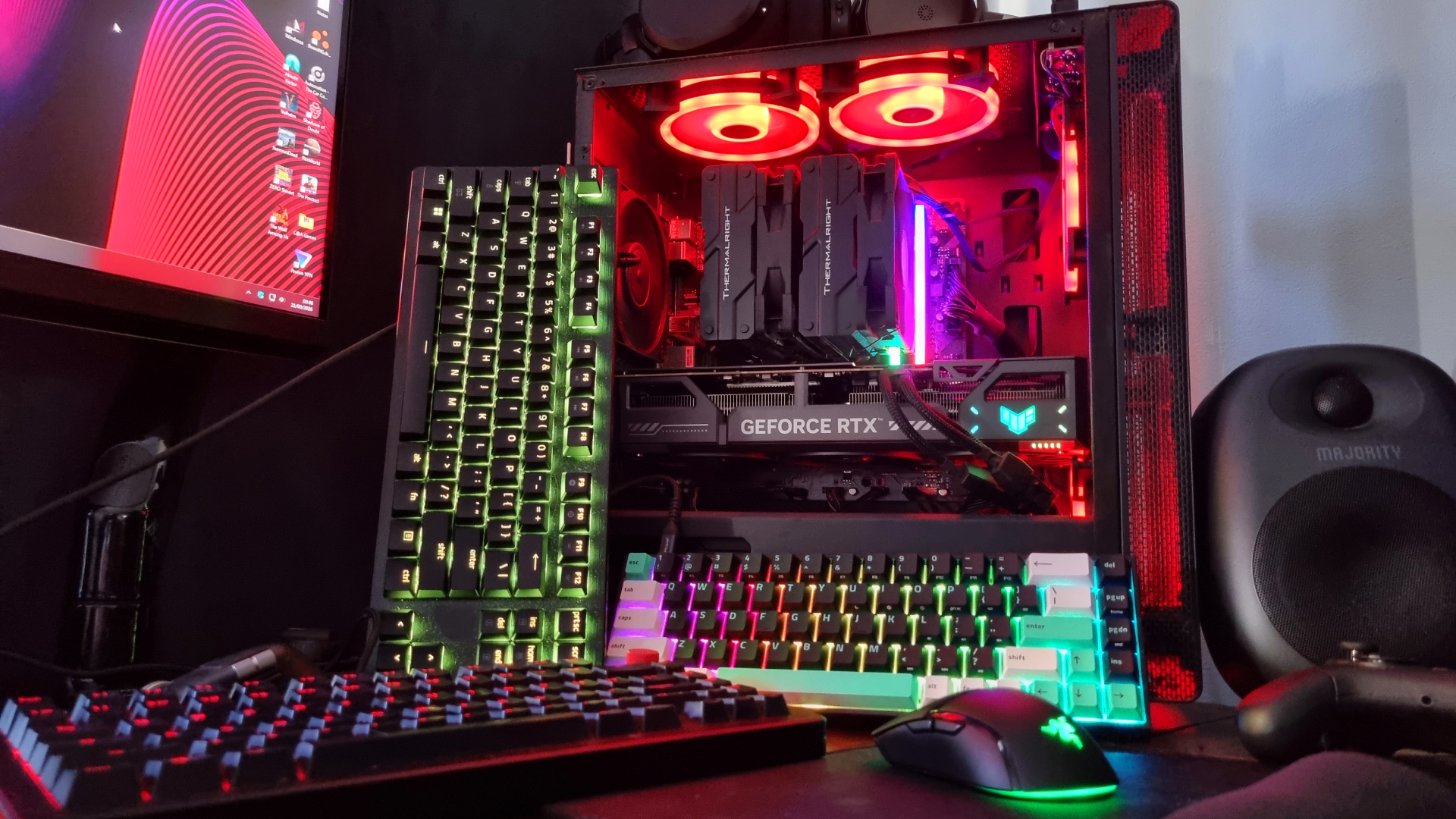
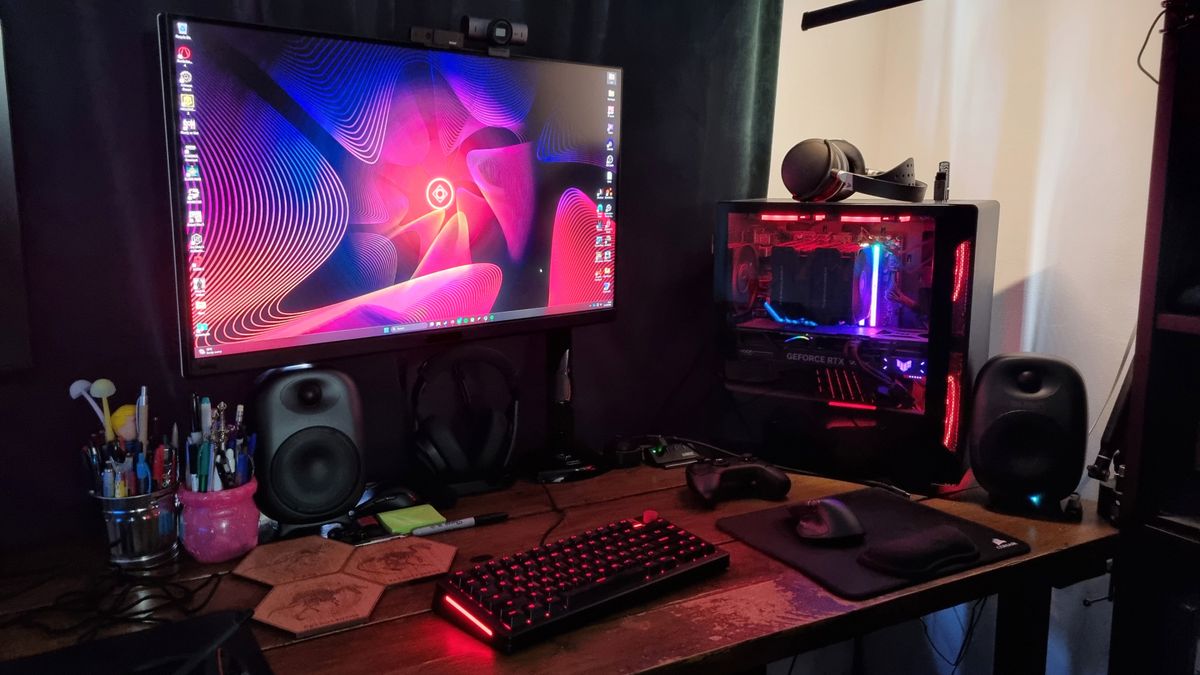
"There are enough distractions in modern life without my peripherals winking at me all day long. The exception, however, is my Corsair Vengeance RGB DDR5 kit, which has been softly glowing in rainbow tones since the day I first installed it three years ago… Occasionally I stare at those modules, nestled in my otherwise all-red PC, and wonder whether I should change the settings. Yet they’ve been there long enough to be oddly comforting."
This psychological shift—from initial skepticism to accidental affection—highlights how lighting can transcend mere gimmickry to become a familiar, anchoring element of a workstation.
Official Responses: What Manufacturers and Designers Say
Industry designers and product managers defend the ubiquity of RGB lighting not merely as a superficial trend, but as a response to consumer demand for personalization.
In statements gathered from various hardware summits over recent years, representatives from leading PC brands emphasize modularity and user agency.
- Customization as Self-Expression: "A PC is no longer just a tool for productivity or gaming; it is an extension of the user’s personal identity," explains a senior product designer for a major peripheral manufacturer. "Just as people customize cars with custom paint jobs or rims, PC builders want the ability to alter their hardware’s visual mood on a whim."
- Technological Convergence: Manufacturers also point out that modern LEDs consume negligible power and generate minimal heat compared to older lighting standards, making their inclusion technically frictionless. Furthermore, advanced addressable LEDs (ARGB) allow for granular control that was mathematically impossible a decade ago.
- The Software Conundrum: Responding to frequent consumer complaints regarding bloated control software, manufacturers have begun implementing onboard memory profiles and hardware-level toggles. Brands are slowly recognizing that forcing users to run resource-heavy background applications just to turn off a glowing logo is a friction point they must resolve.
Implications: The Future of PC Design and Workspace Culture
As we look toward the future of hardware design, the presence of RGB lighting carries several broader implications for consumers, manufacturers, and the broader tech culture.
1. Environmental and Resource Considerations
While individual LEDs draw very little power, the proliferation of lighting controllers, extra wiring harnesses, and illuminated plastic diffusers across millions of devices globally contributes to manufacturing complexity and electronic waste. As sustainability becomes a more pressing concern for tech consumers, brands may face pressure to offer non-RGB variants of popular components at a reduced cost.
2. The Rise of the "Stealth" Counter-Culture
In direct opposition to the neon trend, a thriving counter-culture of minimalist PC building has emerged. High-end boutique builders frequently showcase ultra-clean, industrial designs inspired by high-end audio equipment or architectural minimalism. This division suggests a bifurcated market: vibrant, highly customizable setups for the mainstream gaming audience, and sophisticated, utilitarian machinery for professionals and mature enthusiasts.
3. Software Standardization
The ongoing friction caused by proprietary lighting software has reached a tipping point. As open-source initiatives gain traction and operating systems like Windows begin baking native lighting controls directly into the OS settings (such as Windows Dynamic Lighting), third-party bloatware is facing obsolescence. The future of RGB management will likely be unified, seamless, and hardware-agnostic.
Conclusion: Where Do You Stand?
Ultimately, the great RGB debate comes down to a matter of personal taste. Whether your desktop resembles a cyberpunk neon alleyway or a sleek, midnight-black monolith, the beauty of modern PC building lies in customisation.
As hardware ecosystems continue to evolve, one thing remains certain: the glowing heart of the PC gaming community will continue to burn—whether in a quiet, single-tone static glow or a brilliant, full-spectrum rainbow wave.

