

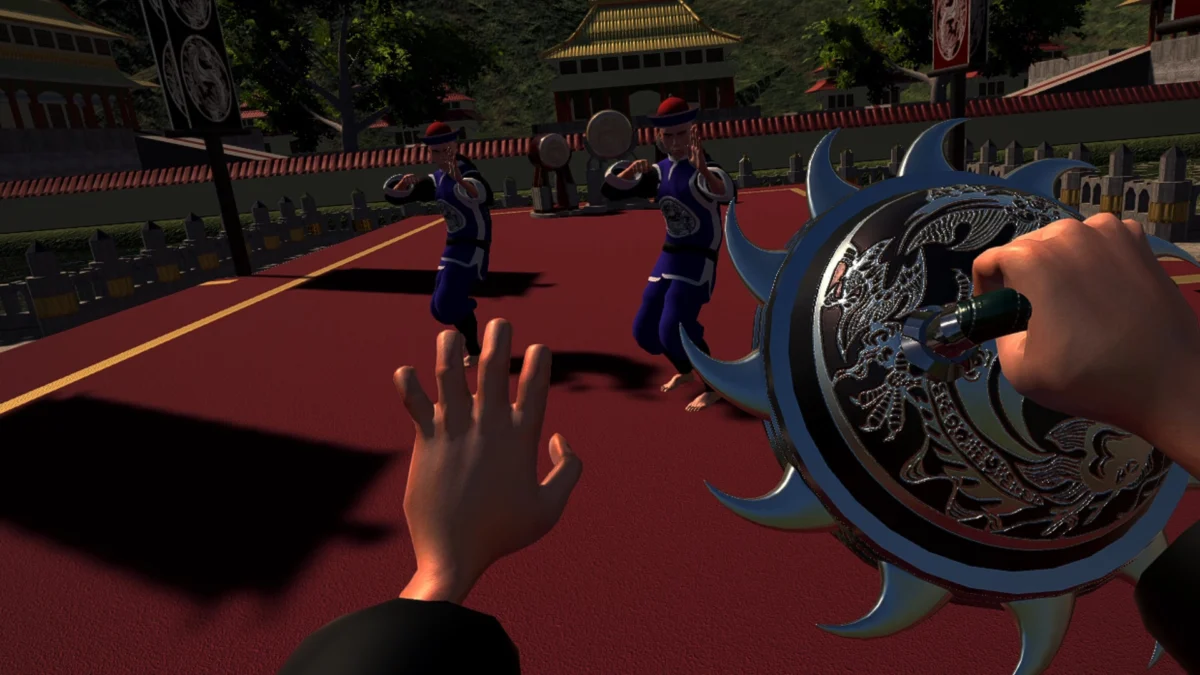
The landscape of Virtual Reality (VR) has long been defined by the struggle between hardware accessibility and software depth. For years, the barrier to entry—costly tethered headsets and high-end PC requirements—kept VR in the realm of enthusiast hobbyists. However, the paradigm is shifting. With the democratization of hardware through the Oculus Quest 2 and the refinement of wireless connectivity tools like Air Link and Virtual Desktop, VR is entering a new era of accessibility. Standing at the forefront of this movement is Dragon Fist: VR Kung Fu, a title that proves sophisticated, physics-driven martial arts combat is not only possible in a virtual space but is arguably the genre’s most exhilarating evolution to date.
The State of VR Combat: A New Horizon
For a long time, VR fighting games were plagued by "the waggle problem"—the tendency for players to simply flail their controllers in a frantic, immersion-breaking motion to rack up hits. Dragon Fist: VR Kung Fu addresses this by introducing a layer of tactical depth that forces the player to consider their movements with the precision of a real martial artist.
As of December 2021, the game has emerged as a standout title on Steam, offering a first-person experience that demands rhythm, technique, and strategic thinking. Unlike its predecessors, Dragon Fist treats combat as a language of strikes and counters, effectively bridging the gap between arcade-style action and authentic martial arts simulation.
Core Gameplay Mechanics: The Art of the Strike
At the heart of Dragon Fist lies a sophisticated hit-detection system that prioritizes precision over raw speed. The game categorizes strikes into three distinct modalities: punches, palm strikes, and finger jabs. Each input is not merely a trigger press but a calculated maneuver designed to manipulate the opponent’s state.
Tactical Debuffs and Stamina Management
The brilliance of the game’s combat system lies in its consequence-based damage model. The AI opponents are not mere sponges for damage; they are dynamic entities that react to the anatomical location of your strikes.
- Ocular Interference: A well-placed finger jab to the eyes temporarily impairs an opponent’s vision, creating an opening for a follow-up combo.
- Stamina Depletion: Direct strikes to the lower ribs do more than just lower an opponent’s health bar; they effectively throttle their stamina regeneration. This forces the opponent to play defensively, allowing the player to seize momentum.
- Strategic Variety: Players are discouraged from "swinging wildly." As the difficulty curve accelerates, the game demands that you observe your opponent’s stance. Rushing in blindly is a recipe for failure, as high-level AI will exploit the openings created by your erratic movements.
Character Archetypes and Progression
Dragon Fist features a robust roster of fighters, each meticulously balanced to cater to different playstyles. By selecting from a diverse pool of characters, players can find a martial artist that aligns with their personal strengths—whether that be a heavy-hitting powerhouse focused on raw force or a swift, elusive combatant designed for counter-attacking.
Each character is equipped with unique special moves, adding a layer of meta-game strategy. Choosing the right fighter for a specific opponent becomes a crucial component of the experience. This diversity ensures that the replay value remains high, as mastering each archetype requires a distinct approach to the game’s physics-based engine.
Chronology of the VR Fighting Genre
To understand the significance of Dragon Fist, one must look at the trajectory of VR development:

- The Early Era (2016–2018): Dominated by tech demos and "wave shooters." Fighting games were largely limited by tethered hardware, leading to poor immersion and frequent motion sickness.
- The Hardware Transition (2019–2020): The release of standalone headsets like the Oculus Quest allowed for more physical movement. Developers began experimenting with 360-degree fighting mechanics.
- The Refinement Period (2021): The rise of wireless streaming (Air Link/Virtual Desktop) meant that players could enjoy high-fidelity PC VR games without the restrictive cable. Dragon Fist arrived during this window, benefiting from improved tracking latency and better player freedom.
Supporting Data: The Physics of Immersion
The primary challenge in VR combat is the "proprioceptive gap"—the disconnect between the player’s physical action and the in-game result. In Dragon Fist, the developers have utilized a proprietary physics system that measures the velocity and angle of the player’s hand.
While no VR game is yet perfect, Dragon Fist manages to mitigate the tracking limitations inherent in current-gen consumer headsets. While occasional tracking hiccups persist—often due to the hardware’s camera-based tracking losing sight of the controllers during rapid, behind-the-back, or complex weaving motions—the experience remains remarkably consistent compared to its peers.
The Fitness Factor
Beyond the gameplay itself, Dragon Fist has gained traction in the "VR Fitness" community. Because the game requires genuine, full-body movement—including ducking, weaving, and extended reach—it functions as a high-intensity interval training (HIIT) session. Reports from early adopters suggest that playing for 30 to 60 minutes can lead to significant cardiovascular exertion, positioning the game as a viable alternative to traditional home workout routines.
Implications for the Future of VR
The success of Dragon Fist signals a shift in consumer demand. Players are no longer satisfied with passive VR experiences; they want titles that utilize the medium’s unique potential for physical agency.
- Accessibility: By supporting wireless play, developers are reaching a wider audience who previously lacked the floor space or technical setup for traditional PC VR.
- Design Philosophy: The shift toward "tactical combat" suggests that future VR titles will likely focus on deep, systems-driven mechanics rather than shallow, visually driven gimmicks.
- The "Workout" Economy: As VR headsets become standard equipment in home gyms, titles that offer both high-tier gameplay and legitimate fitness benefits will likely command the most market share.
Final Assessment: Is It Worth the Investment?
Dragon Fist: VR Kung Fu is not just a game; it is a proof-of-concept for the future of martial arts gaming. While it is not without the minor technical constraints that define the current generation of VR hardware, it offers an depth of combat that is currently unrivaled in the genre.
Whether you are a martial arts enthusiast looking to test your reaction time, a fitness buff seeking a more engaging workout, or a VR veteran searching for a title that demands actual skill, Dragon Fist provides a compelling argument for why virtual reality is the most exciting frontier in gaming. As the technology continues to mature, we can expect titles like this to serve as the foundation for a new, highly interactive genre of virtual sports.
For those ready to step onto the digital mat, the game is currently available on Steam, providing an accessible, exhilarating, and physically demanding journey into the heart of Kung Fu. Just be sure to clear your living room of furniture before you start throwing those palm strikes.

