

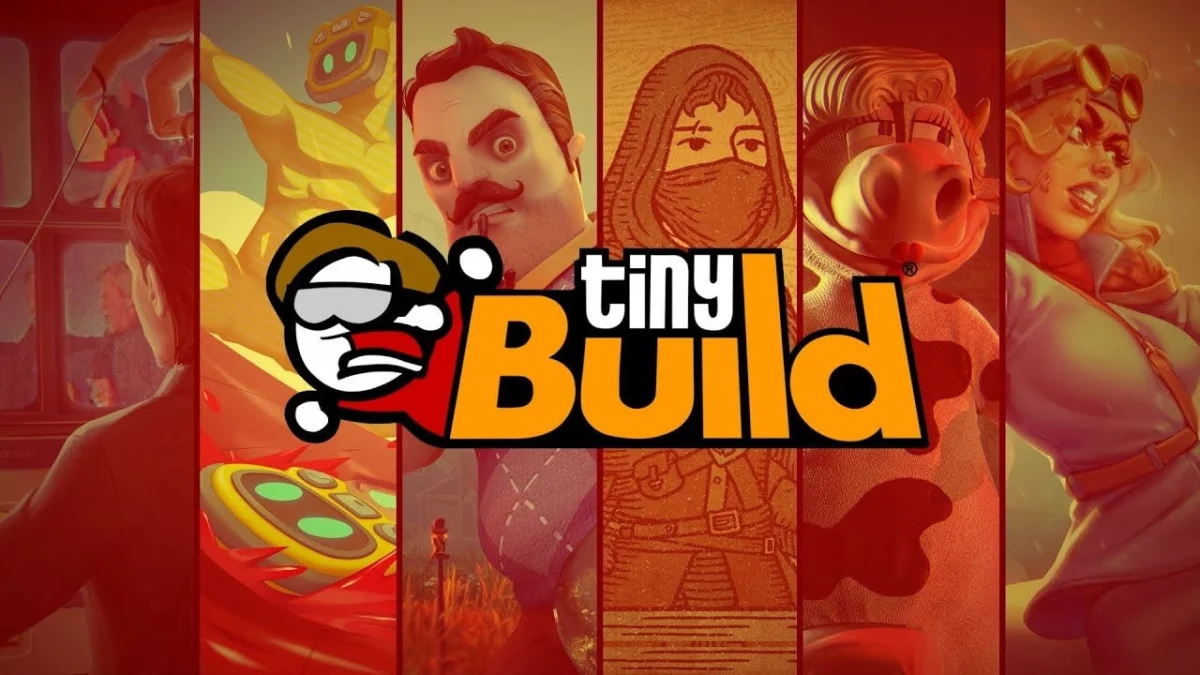
In a move that signals renewed investor confidence in the mid-market gaming sector, venture capital giant Griffin Gaming Partners has officially acquired a 3.24% equity stake in TinyBuild, the globally recognized developer and publisher of indie-focused intellectual properties. The announcement, which rippled through the financial markets, saw TinyBuild’s share price climb by approximately 5% immediately following the disclosure, underscoring the market’s positive reception to the partnership.
This investment serves as a significant endorsement of TinyBuild’s long-term business strategy, which has transitioned from simple publishing to the aggressive cultivation of sustainable, multi-platform franchises.
The Core Transaction: A Meeting of Minds
Griffin Gaming Partners, a firm renowned for its deep-seated expertise in the interactive entertainment sector, identified TinyBuild as a pivotal player in the indie space. The 3.24% stake acquisition is not merely a financial transaction; it represents a strategic alignment between a capital-heavy specialist investor and a publisher known for its high-output, community-driven development cycle.
The decision by Griffin to move into TinyBuild’s cap table comes at a time when the indie gaming landscape is increasingly viewed as the "engine room" of the industry. While AAA titles grapple with ballooning budgets and elongated development cycles, TinyBuild has maintained a lean, agile model that prioritizes the longevity of its IP.
Chronology: From Indie Upstart to Market Force
Founded in 2011 by Alex Nichiporchik, Luke Burtis, and Tom Brien, TinyBuild began its journey as a boutique studio with a knack for viral, high-energy gaming experiences. To understand the significance of Griffin’s investment, one must look at the company’s trajectory:
- 2011–2015: The Formative Years: The company established its reputation with cult hits like SpeedRunners and Party Hard. During this period, TinyBuild acted as a bridge between small-scale developers and a global audience, proving that low-budget titles could achieve massive commercial success through clever marketing and community engagement.
- 2016–2020: The Hello Neighbor Era: The release of Hello Neighbor proved to be the company’s "breakout" moment. The title transitioned from a game into a transmedia franchise, spawning merchandise, books, and sequels. This era solidified TinyBuild’s transition into a major publisher capable of turning indie concepts into household names.
- 2021–2023: Public Markets and Consolidation: TinyBuild’s IPO on the London Stock Exchange marked its maturation into a public entity. During this time, the company focused on internalizing development capabilities, acquiring multiple studios to ensure that its IP pipeline remained robust.
- 2024–2025: The Efficiency Pivot: Following market volatility, TinyBuild shifted its focus toward organic growth and "own-IP" sustainability. Recent successes like The King is Watching demonstrate a sharpened focus on data-driven publishing, leveraging regional markets and platform-specific algorithm shifts to maximize revenue.
Supporting Data: Proof of Concept
The investment from Griffin Gaming Partners is backed by concrete performance indicators. TinyBuild’s recent portfolio performance has been robust, defying the broader industry trend of stagnation.
The "King is Watching" Success Story
In 2025, the company reported substantial success with The King is Watching, a roguelite kingdom builder. The game surpassed 500,000 units sold, a milestone attributed to a dual-pronged strategy: aggressive localization for the Chinese market and an adept navigation of Valve’s evolving Steam discovery algorithms. This title proved that TinyBuild remains at the forefront of digital distribution trends.
The Sand: Raiders of Sophie Debut
The company’s most recent release, Sand: Raiders of Sophie, serves as a benchmark for its current operational velocity. In its first five days of availability, the game moved over 150,000 copies. For an indie-published title, such numbers represent an elite tier of performance, confirming that the publisher’s audience remains highly engaged and willing to adopt new IPs immediately upon release.
Official Perspectives: The Rationale Behind the Deal
Both parties have expressed high levels of optimism regarding the partnership, highlighting a mutual commitment to the "indie-to-franchise" pipeline.
Frankie Zhu, Partner at Griffin Gaming Partners, emphasized the stability of the indie market in his statement:
"The indie gaming space remains one of the most compelling areas of the industry, continuing to produce some of gaming’s most enduring franchises. TinyBuild has assembled a differentiated portfolio of IP with significant long-term potential, and we are excited to become shareholders and participate in the company’s next chapter."
Alex Nichiporchik, CEO and Co-founder of TinyBuild, responded with a focus on strategic validation:
"We are pleased to welcome Griffin Gaming Partners as a shareholder. As a specialist investor in the games sector, Griffin brings a strong understanding of the industry, and their investment reflects confidence in TinyBuild’s strategy, own-IP focus, diversified portfolio, and long-term growth opportunities."
The Implications of the Partnership
What does this mean for the future of TinyBuild and the broader gaming market? Several key implications arise from this equity infusion:
1. Increased Capital for M&A and Development
With Griffin Gaming Partners now holding a vested interest, TinyBuild may find itself in a stronger position to pursue selective acquisitions or fund more ambitious internal projects. The "VC backing" adds a layer of institutional credibility that can be leveraged for future financing rounds or banking partnerships.
2. A Focus on "Sustainable Franchises"
The language used by both parties—specifically the term "sustainable franchises"—suggests that TinyBuild will continue to move away from one-off releases. Expect the company to double down on titles that have "live service" potential or those that can be expanded into multimedia franchises, similar to the Hello Neighbor model.
3. Market Signaling
By taking a 3.24% stake, Griffin is effectively sending a signal to other institutional investors that the "indie-publisher" model is not dead, merely evolving. As AAA studios face increasing pressure to consolidate and cut costs, the nimble, high-ROI nature of firms like TinyBuild becomes increasingly attractive to venture capital.
4. Navigating the Steam and Global Ecosystems
TinyBuild has mastered the art of "platform optimization." Their ability to capitalize on Steam’s under-the-hood changes and penetrate the Chinese market is a core competency. Griffin’s involvement will likely provide additional resources to scale these capabilities, potentially opening doors in regions or platforms where TinyBuild has had a smaller footprint to date.
Conclusion: A New Chapter
The acquisition of a 3.24% equity stake by Griffin Gaming Partners is a pivotal moment for TinyBuild. It serves as a bridge between the company’s roots as a scrappy, viral-hit-maker and its future as a sophisticated, global gaming publisher.
As the industry navigates a period of significant transition, TinyBuild’s ability to remain profitable while consistently delivering high-engagement titles has clearly struck a chord with investors. Whether this partnership will lead to even larger acquisitions or a series of high-budget internal projects remains to be seen. However, one thing is clear: with the financial backing and strategic guidance of Griffin Gaming Partners, TinyBuild is positioning itself to be a dominant force in the independent gaming sector for the remainder of the decade.
Investors and gamers alike will be watching closely as the company leverages this new capital to expand its reach, refine its portfolio, and continue the momentum built by the recent successes of The King is Watching and Sand: Raiders of Sophie.

