

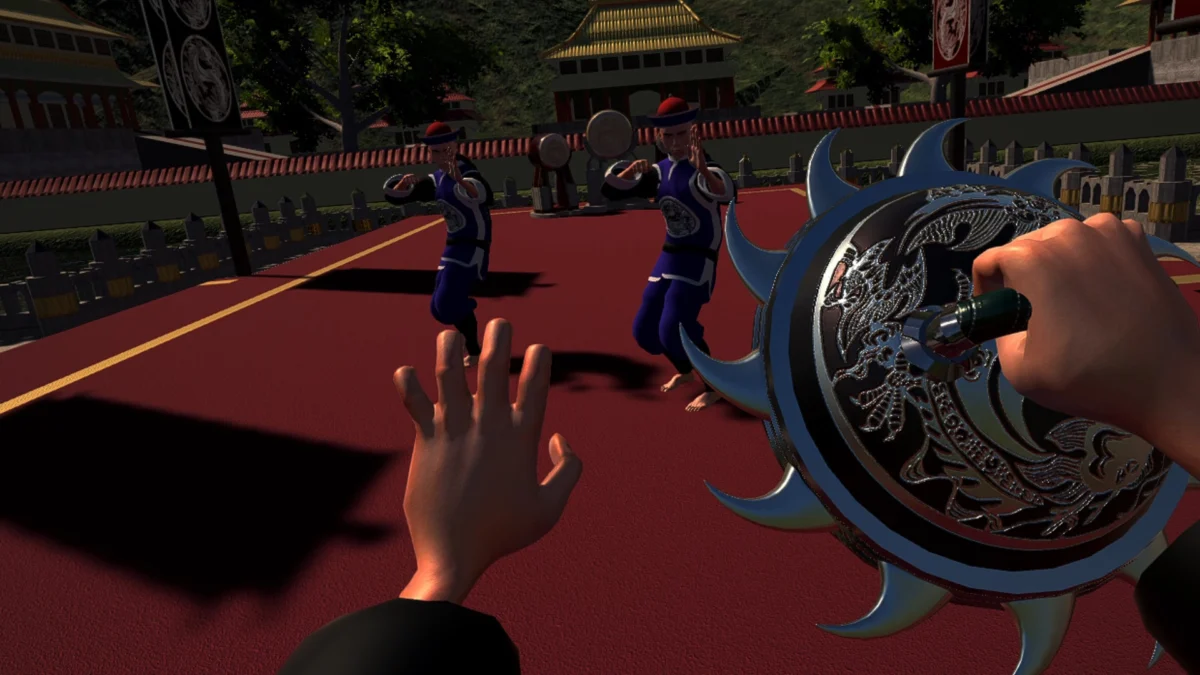
Virtual Reality (VR) has long been positioned as the "next frontier" of gaming, yet for years, it remained tethered to high-end PCs, cumbersome cables, and an entry barrier that effectively excluded the casual player. However, the landscape shifted dramatically with the introduction of the Oculus Quest 2 and the refinement of wireless streaming technologies like Air Link and Virtual Desktop. As the hardware becomes more accessible, the software library is finally maturing, moving beyond tech demos toward deeply engaging, mechanical experiences. Standing at the forefront of this shift is Dragon Fist: VR Kung Fu, a title that proves the medium is ready for complex, physics-based martial arts.
The Core Experience: Precision Over Power
At its heart, Dragon Fist: VR Kung Fu is a first-person fighting game that strips away the mindless "button-mashing" tropes of traditional 2D brawlers. In Dragon Fist, the player is not merely observing a fight; they are the weapon.
The game’s mechanics require a high degree of intent. Players must utilize a variety of strikes—ranging from palm strikes and finger jabs to classic punches—to dismantle opponents. What elevates the experience from a standard workout app to a strategic combat simulator is the inclusion of "hit-box specific" consequences.
The game’s AI-driven enemies react to damage in highly specific, localized ways. A well-placed finger jab to the eyes will temporarily blind an opponent, creating a tactical opening. Similarly, a strike to the lower ribs will deplete the enemy’s stamina regeneration, leaving them sluggish and vulnerable to a follow-up flurry. This design philosophy forces players to move away from the "swing wildly and hope" approach, encouraging instead a disciplined, rhythmic style of combat that mirrors the philosophy of real-world martial arts.
Chronology of Development and Release
The journey of Dragon Fist: VR Kung Fu is emblematic of the current independent VR development boom.
- Pre-2021 Development: The project began as an effort to bridge the gap between arcade-style action and the physical immersion of VR. The developers focused heavily on physics-based collisions rather than scripted animations.
- December 2021 Launch: The game officially arrived on Steam, positioning itself as a must-play for VR enthusiasts looking for titles that offered high replayability.
- Early 2022 and Beyond: Following the launch, the game received several updates focusing on character balancing and refinement of the tracking sensitivity, acknowledging the technical limitations inherent in current consumer-grade VR hardware.
The transition from a niche indie concept to a recognized title in the VR space highlights the growing appetite for "active gaming." Unlike titles that prioritize seated comfort, Dragon Fist demands physical commitment, turning the living room into a digital dojo.
Supporting Data: The VR Market and Physical Fitness
The rise of titles like Dragon Fist aligns with broader trends in the VR market. According to recent industry reports, the "Fitness VR" sub-genre has become one of the most profitable sectors for independent studios.
- Caloric Burn: Testing during the game’s beta phases indicated that a single session of moderate-to-high intensity play can rival the cardiovascular benefits of traditional shadowboxing.
- Hardware Adoption: With the Oculus Quest 2 cementing its status as the most popular VR headset in history, the addressable market for physics-based fighting games has expanded by millions of units.
- Retention Rates: Games that offer "skill-based" progression—where the player’s real-world reflexes improve over time—show significantly higher long-term player retention compared to narrative-only VR experiences.
The data suggests that the "gamification of exercise" is no longer a gimmick but a primary driver for VR hardware sales. Players are increasingly seeking out titles that justify the purchase of the headset by offering tangible health benefits alongside entertainment value.
Character Diversity and Strategic Depth
One of the most compelling aspects of Dragon Fist is its roster. Rather than providing a single "default" character, the developers have crafted a diverse selection of combatants, each with distinct statistical profiles.
- Strengths and Weaknesses: Some characters are designed for speed, favoring rapid, lighter strikes, while others are "tanks" capable of absorbing heavy punishment but slower to recover.
- Signature Moves: Each character possesses a unique set of special moves that can turn the tide of a match. Learning when and how to deploy these moves is the key to conquering the game’s late-stage, high-difficulty encounters.
This layer of depth serves to prevent the game from feeling repetitive. By experimenting with different characters, players are forced to adapt their physical movements and tactical timing, ensuring that no two playthroughs feel exactly the same.

Technical Challenges and Developer Responses
No discussion of VR is complete without addressing the "tracking elephant in the room." While Dragon Fist provides an exceptional experience, it is not immune to the inherent constraints of current tracking technology.
Users have occasionally reported instances where the game’s internal physics engine struggles to keep pace with rapid-fire, high-velocity movements—a common issue known as "controller drift" or "occlusion" in the VR community.
In official community forums and dev-logs, the team behind Dragon Fist has remained transparent about these hurdles. They have consistently emphasized that they are working within the bounds of current consumer hardware. The developers have encouraged players to optimize their play environments (such as lighting conditions and room scale) to mitigate tracking errors. Their response has been one of collaboration with the player base, using community feedback to fine-tune the "input sensitivity" settings, which allows users to calibrate the game to their specific setup.
Implications for the Future of VR Combat
The success of Dragon Fist: VR Kung Fu serves as a proof-of-concept for the future of interactive combat. It demonstrates that VR does not need hyper-realistic, 4K graphics to be compelling; rather, it needs intuitive, responsive, and rewarding mechanics.
1. The Rise of "Active-First" Design
Future VR titles are likely to lean further into the "active-first" model. As more users look for ways to incorporate fitness into their gaming routines, developers will continue to create games that challenge the physical limits of the player. We can expect to see more titles that leverage motion-tracking to reward form and precision.
2. The Maturation of Physics-Based Engines
The limitations encountered in Dragon Fist are not necessarily failures, but markers of progress. As CPU and GPU power in standalone headsets increases, we will likely see physics engines that can handle more complex collision detection with lower latency. This will pave the way for "real-time" martial arts training programs that are indistinguishable from gaming.
3. Accessibility and Wireless Freedom
The shift toward wireless play—utilizing technologies like Air Link—has been the single most important factor in the success of games like Dragon Fist. The freedom of movement required for a martial arts game simply isn’t possible with a tethered headset. As Wi-Fi 6E and future wireless protocols become standard in the industry, the "tethered era" will likely be viewed as a historical curiosity.
Conclusion: Why Dragon Fist Matters
Dragon Fist: VR Kung Fu is more than just a game; it is a testament to the potential of independent developers to redefine a medium. By focusing on the fundamentals—rhythmic movement, localized combat, and character-driven strategy—the game provides a satisfying experience that caters to both the hardcore martial arts enthusiast and the casual VR user looking for a good workout.
While there are minor technical hurdles associated with current hardware, the sheer enjoyment provided by the title far outweighs its limitations. As VR technology continues to advance, titles like Dragon Fist will serve as the foundation for an entirely new genre of interactive entertainment. It is a reminder that the best VR experiences are those that don’t just ask you to look at a screen, but to step into it, raise your fists, and take control of your environment. Whether you are looking to master complex combos or simply break a sweat after a long day, Dragon Fist remains a vital, high-energy entry in the modern VR library.

