

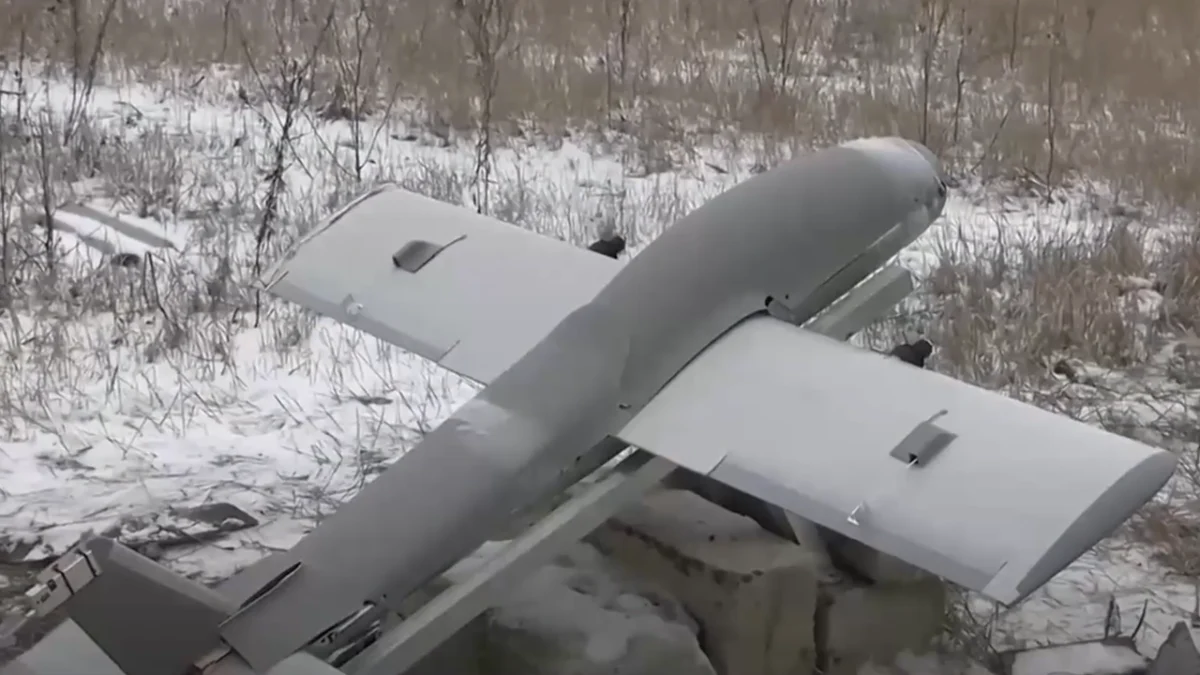
Kyiv, Ukraine – In the crucible of the protracted war of attrition against Russian aggression, Ukraine has become an unforgiving laboratory for combat innovation. While the battlefield is increasingly dominated by cutting-edge drone warfare, featuring everything from Starlink-powered long-range drones to jam-proof fiber optic-tethered units, a stark reminder of warfare’s enduring pragmatism has emerged. Russian forces, facing sophisticated electronic warfare (EW) countermeasures from Ukraine, are reportedly resorting to a surprisingly low-tech solution: crudely installing $2 magnetic compasses on their Molniya drones to maintain navigation. This seemingly anachronistic "field upgrade" underscores a critical facet of modern conflict – the relentless human ingenuity to overcome technological challenges, echoing historical improvisations seen as far back as World War II.
The conflict has pushed both sides to the limits of technological adaptation and improvisation. As advanced systems enter the fray, so too does the need for resilient, often rudimentary, solutions when sophisticated technology is jammed, destroyed, or simply unavailable. The integration of a simple, analog compass onto a modern drone, observed by military analysts and reported by Defence Blog, highlights the complex interplay between high-tech and low-tech solutions in the highly contested Ukrainian airspace. It is a testament to the adage that in war, whatever works, no matter how simple, is valuable.
Main Facts: A Compass in the Digital Fog of War
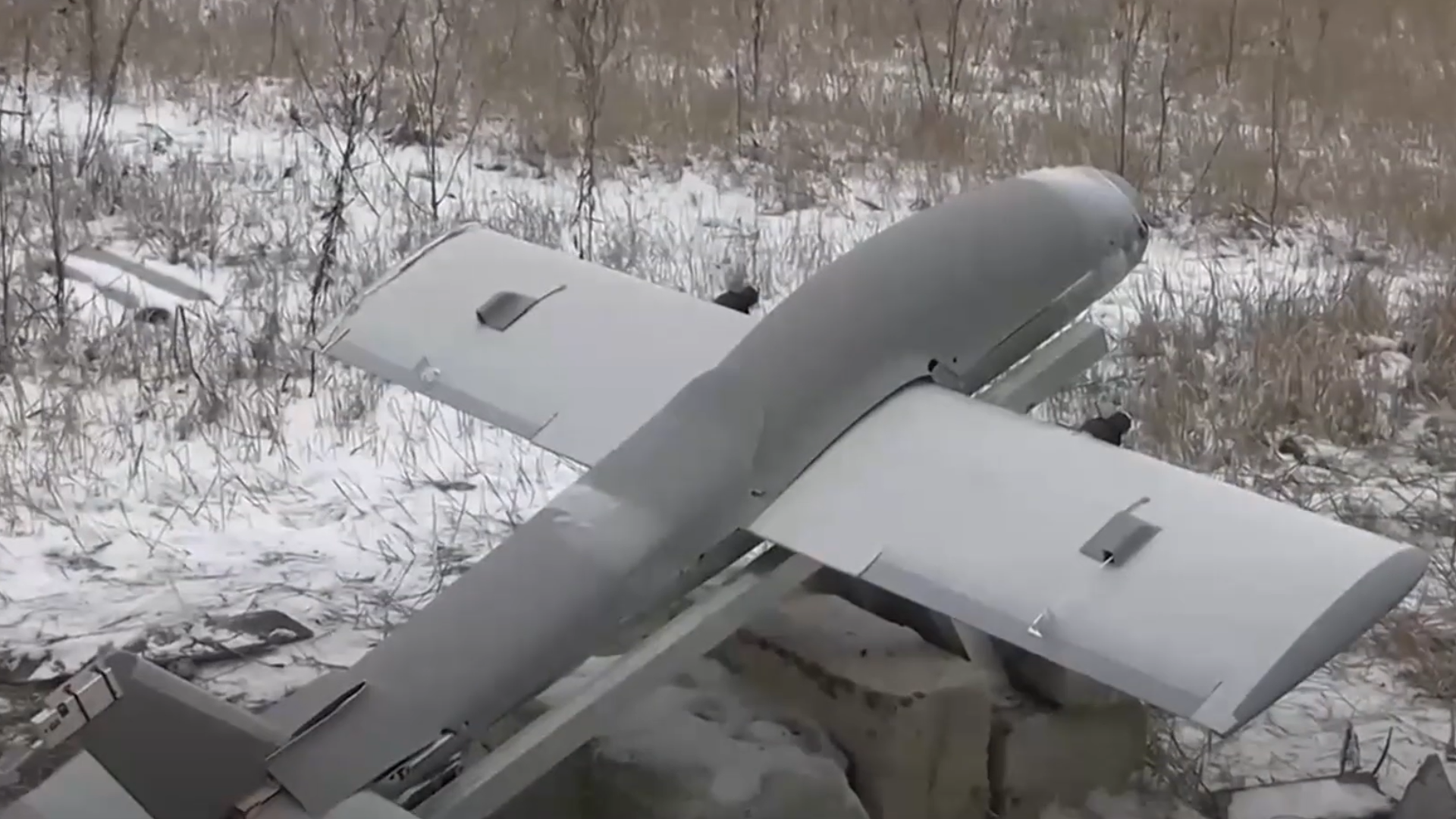
The core of this developing story revolves around Russian ground units modifying their Molniya (Lightning) drones, a relatively inexpensive and versatile unmanned aerial vehicle (UAV), with basic magnetic compasses. These modifications are not factory-issued enhancements but rather improvised "field upgrades," reminiscent of the ad-hoc armor plating welded onto American tanks during World War II to counter formidable German Panzers.
Key takeaways include:
- The Adversary: Russian forces operating Molniya drones in Ukraine.
- The Innovation: The crude installation of off-the-shelf, $2 magnetic compasses onto the drone’s frame, typically visible through the drone’s First-Person View (FPV) camera.
- The Purpose: To provide a basic, jam-proof navigational reference when Global Positioning System (GPS) signals are jammed or spoofed by Ukrainian electronic warfare units.
- The Context: The ongoing war in Ukraine, characterized by intense electronic warfare, which frequently disrupts satellite navigation and radio communications crucial for drone operations.
- The Drone: The Molniya drone, known for its affordability and reliance on the open-source ExpressLRS radio control system, has also seen variants utilizing Starlink for communication and fiber optic cables for jam-proof control, each with its own advantages and limitations.
- The Significance: This modification, despite its primitive appearance, represents a critical tactical adaptation, ensuring mission continuity and drone recovery in environments where high-tech navigation fails, thereby enhancing the operational resilience of Russian drone units.
This development serves as a poignant reminder that even in an era of AI-driven combat and networked warfare, the most basic principles of navigation and human ingenuity can prove decisive on the battlefield.
Chronology of Adaptation: From High-Tech Hopes to Low-Tech Necessity
The evolution of drone warfare in Ukraine has been rapid and relentless, forcing both sides into a continuous cycle of innovation and counter-innovation. Early in the conflict, drones, particularly FPV kamikaze drones and reconnaissance UAVs, quickly became indispensable, providing critical intelligence, targeting data, and direct strike capabilities. This surge in drone usage naturally led to an equally aggressive deployment of electronic warfare systems.
The Rise of Drone Warfare and EW Countermeasures
The conflict effectively began a new chapter in military history, establishing Ukraine as a global epicenter for drone development and deployment. Initially, both sides leveraged readily available commercial drones, quickly adapting them for military purposes. As the war progressed, more specialized and purpose-built military drones, alongside sophisticated adaptations of commercial platforms, began to dominate the skies. This period saw the rapid integration of advanced communication systems, including satellite internet constellations like Starlink, which offered robust, low-latency connectivity, crucial for controlling drones over extended ranges and in complex environments.
However, the very effectiveness of these drones, particularly those relying on satellite navigation (GPS, GLONASS) and traditional radio frequencies, made them prime targets for electronic warfare. Ukrainian and Russian EW units quickly developed and deployed an array of jamming and spoofing technologies. GPS jamming, in particular, became a pervasive threat, rendering precision navigation unreliable or impossible for drones and other guided munitions. NATO, recognizing the widespread nature of this threat, has openly expressed concerns about Russia’s capacity to disrupt Western internet and GPS services, highlighting the strategic importance of this domain.
Starlink’s Promise and Peril
Starlink, SpaceX’s satellite internet service, initially offered a significant advantage, particularly for Ukrainian forces, by providing resilient communication channels. Its ability to combat jamming efforts was seen as a game-changer. Russian forces, in turn, sought to exploit this technology, with reports indicating their use of Starlink terminals on some drones, including variants of the Molniya, to circumvent jamming. However, this strategy faced a significant hurdle: Ukraine’s requirement for all Starlink units to be registered within the country. This regulatory measure, coupled with emergency fixes deployed by SpaceX to block unauthorized use, significantly blunted the effectiveness of Russian Starlink-equipped drones, forcing them to seek alternative solutions for jam-proof communication and control.
The Fiber Optic Interlude
Another technological adaptation seen on the battlefield is the deployment of fiber optic drones. These specialized UAVs, tethered by a physical fiber optic cable, achieve near-absolute immunity to electronic interference. The cable transmits control signals and video feeds, making the drone impervious to radio jamming or GPS spoofing. While highly effective against EW, this solution comes with a severe limitation: range. A drone’s operational radius is physically restricted by the length of its tether, often limiting it to just 18 miles (30 kilometers) for the Molniya. This trade-off between jam-proof operation and limited range underscores the constant compromise inherent in battlefield technology.
The Return to Fundamentals: The Magnetic Compass
It is against this backdrop of escalating electronic warfare and the inherent limitations of both high-tech and semi-high-tech solutions that the humble magnetic compass has re-emerged as a viable, albeit rudimentary, navigational tool. When sophisticated GPS signals are rendered useless, and fiber optic tethers are impractical for longer-range missions, a device relying on the Earth’s magnetic field offers a last-resort, unjammable solution. The transition from complex satellite constellations and secure data links to a simple magnetic needle reflects a full circle in battlefield improvisation, demonstrating that the most basic principles of navigation can sometimes be the most reliable. Reports of these modifications, accompanied by leaked images, suggest that this is a relatively recent, albeit widespread, adaptation by frontline Russian units, highlighting the urgency of finding immediate and effective counters to Ukrainian EW capabilities.
Supporting Data: The Anatomy of a Low-Tech Solution
The decision to install magnetic compasses on Molniya drones is not a sign of technological regression but rather a pragmatic response to a highly challenging operational environment. To understand its rationale, one must delve into the capabilities of the Molniya drone, the impact of GPS jamming, and the practical application of this low-tech upgrade.
The Molniya Drone: A Platform for Adaptation
The Molniya is a medium-range, relatively low-cost drone, making it an attractive platform for mass deployment and experimentation by Russian forces. Its reliance on the open-source ExpressLRS radio control system allows for a potential maximum control range of up to 62 miles (100 kilometers) under ideal conditions. This open-source nature also facilitates easier modification and integration of various payloads and, crucially, navigational aids.
Its affordability means that losses are less impactful than with more sophisticated, expensive platforms, encouraging a "throwaway" mentality that permits bold tactical experiments. When Starlink connections became less viable due to Ukrainian registration requirements and SpaceX’s countermeasures, and fiber optic cables limited operational reach, the Molniya required a new way to navigate contested airspace. The compass filled this void.
The Pervasive Threat of GPS Jamming
GPS jamming is not merely an inconvenience in Ukrainian airspace; it is a critical threat that can neutralize the effectiveness of modern weaponry and reconnaissance. Both sides employ advanced electronic warfare systems designed to flood specific frequency bands with noise, thereby drowning out weak satellite signals. For a drone relying on GPS for precise positioning and navigation, this jamming can lead to:
- Loss of Positional Data: The drone no longer knows its exact location.
- Disorientation: Without accurate coordinates, the drone cannot follow pre-programmed flight paths or return to its launch point.
- Mission Failure: Inability to reach targets, conduct effective reconnaissance, or guide munitions.
- Loss of Control/Crash: In severe cases, jamming can lead to the drone drifting off course or crashing due to complete loss of navigational awareness.
NATO’s assessment that Russia poses a significant threat to GPS services underscores the seriousness of this electronic battleground. In such an environment, any system that bypasses satellite dependence offers a tactical advantage.
The Mechanics of the Compass Modification
Leaked images reveal the rudimentary nature of the compass installation. A simple, likely commercially available, magnetic compass (costing as little as $2) is affixed to the drone’s body, often near the FPV camera. This placement is critical: it allows the drone operator, viewing the feed from the FPV camera, to directly observe the compass needle.
While not offering the sub-meter precision of GPS, a magnetic compass provides:
- Directional Bearing: It reliably indicates magnetic north, allowing the operator to determine the drone’s heading relative to a known direction.
- Jam-Proof Operation: Magnetic fields are unaffected by radio frequency jamming, making the compass immune to the primary form of electronic interference affecting drones.
- Redundancy: When combined with other available telemetry data (such as airspeed, altitude, and flight time), an experienced operator can use the compass bearing to dead reckon, or estimate their position, even without a live GPS fix. For instance, if the operator knows the drone flew for X minutes at Y speed on a Z bearing, they can approximate its current location and guide it back or towards a general target area.
This "analogue backup" allows for basic navigation, preventing complete mission abortion and enabling the drone’s recovery, which is crucial for cost-effective operations in a high-attrition environment.
A Historical Echo: WWII Tank Armor
The improvisation of magnetic compasses on drones draws a striking parallel to the "field upgrades" of World War II. American tankers, facing the superior armor and firepower of German Panzers like the Tiger and Panther, often resorted to welding additional steel plates, sandbags, or even concrete onto their M4 Sherman tanks. These were not factory-sanctioned modifications but desperate measures by frontline crews to increase their vehicles’ survivability. While crude and often unevenly effective, these improvisations reflected the same battlefield pragmatism: use whatever resources are at hand to gain an advantage or simply survive.
This historical analogy highlights a timeless principle of warfare: necessity is the mother of invention. When standard equipment proves inadequate or vulnerable, soldiers on the ground will find ways to adapt, often with simple, readily available tools. The $2 compass on a Molniya drone is merely the latest iteration of this enduring military tradition.
Official Responses and Analytical Perspectives
Unsurprisingly, there has been no official confirmation or statement from the Russian Ministry of Defense regarding the crude installation of magnetic compasses on their Molniya drones. Such an admission would likely be perceived as an acknowledgment of vulnerabilities in their advanced systems or a lack of sophisticated navigational alternatives, potentially undermining the image of their military technological prowess. Military forces rarely publicize their improvised, low-tech adaptations, especially when they might be seen as signs of desperation or resourcefulness born of necessity.
However, the reports from sources like Defence Blog, corroborated by leaked images and analysis from open-source intelligence (OSINT) communities, provide compelling evidence of these modifications.
Ukrainian and International Reactions
The initial reaction from some observers, particularly those aligned with Ukraine or critical of Russia, has been a mix of mockery and astonishment. The idea of a modern military, supposedly possessing advanced technology, resorting to a $2 camping compass on a drone designed for the digital age, appears almost farccomic. Comments have circulated online describing it as a "step backward" for Russia’s "advanced arsenal."
Yet, beneath the sarcasm, a more sober analytical perspective recognizes the pragmatic effectiveness of such a modification. Military analysts and strategists understand that in warfare, efficacy trumps elegance. As one analyst might put it, "It doesn’t matter how primitive it looks; if it helps achieve the mission, it’s a valid and often deadly modification." This perspective acknowledges the core truth that a drone that can navigate, even crudely, is infinitely more useful than one rendered blind and lost by electronic jamming.
From a Ukrainian perspective, while such modifications might be mocked publicly, they also represent a challenge. It means that their electronic warfare efforts, while effective in neutralizing high-tech navigation, are now pushing the adversary towards simpler, harder-to-defeat methods. This forces Ukrainian EW units to adapt their strategies, perhaps focusing more on drone detection and destruction rather than solely on jamming navigation.
Expert Commentary on Battlefield Adaptability
Defense experts often point to such improvisations as indicators of battlefield resilience and the critical importance of ground-level initiative. Dr. Aris S. Spirtos, a military technology specialist, might comment: "This isn’t about cutting-edge technology; it’s about operational continuity. When your sophisticated GPS system is degraded, an analog backup, however simple, provides redundancy. It ensures that valuable assets can still perform their basic function or, at the very least, be recovered. This kind of grassroots innovation is a hallmark of any protracted conflict."
Another perspective might come from Dr. Lena Petrova, an expert in electronic warfare: "The deployment of compasses highlights the success of Ukrainian EW in denying satellite navigation. But it also demonstrates the adaptability of the adversary. This push-and-pull, where one side develops a countermeasure and the other develops a counter-countermeasure, often leads to surprisingly low-tech solutions that bypass complex electronic systems entirely. It’s a reminder that the electromagnetic spectrum is just one domain; the physical world, with its magnetic fields, remains a reliable constant."
The lack of an official response is typical for battlefield improvisations. These are often driven by immediate operational needs at the unit level rather than top-down directives. They reflect the resourcefulness of soldiers facing real-time challenges, and their success often leads to wider adoption across front-line units before any formal recognition or standardization.
Implications: Resilience, Redundancy, and the Future of Warfare
The seemingly minor detail of a $2 compass on a Molniya drone carries significant implications across tactical, strategic, technological, and even philosophical dimensions of modern warfare. It speaks volumes about the nature of the conflict in Ukraine and potentially shapes future military doctrine.
Tactical and Operational Resilience
At the tactical level, the compass modification directly enhances the operational resilience of Russian drone units. It allows for:
- Mission Continuation: Even if GPS is jammed, a drone can continue its reconnaissance, targeting, or even strike mission with a degree of directional awareness, preventing complete mission failure.
- Improved Recovery Rates: Drones that lose GPS signal are less likely to become completely lost or crash. Operators can use the compass to guide them back to base or a designated recovery zone, saving valuable assets.
- Reduced Training Burden (for basic navigation): While sophisticated navigation requires extensive training, basic compass reading is a fundamental skill, allowing operators to quickly adapt to the improvised system.
This translates to more persistent drone operations in contested environments, putting continuous pressure on Ukrainian forces despite their EW capabilities.
Strategic Adaptation and Resourcefulness
Strategically, this improvisation underscores Russia’s capacity for adaptive warfare and resourcefulness in the face of technological superiority or effective countermeasures. It suggests:
- Prioritizing Cost-Effectiveness: The Molniya drone itself is cheap, and adding a $2 compass maintains this low-cost, high-volume approach to drone warfare. This contrasts with Western military doctrines that often emphasize fewer, more sophisticated, and expensive systems.
- Embracing Hybrid Warfare: The integration of high-tech (drones, ExpressLRS, Starlink initially) with low-tech (compasses) exemplifies hybrid warfare, where diverse methods are employed to achieve objectives.
- The Endurance of Analog: It highlights the enduring value of analog systems as backups or primary tools when digital systems are compromised. This principle of redundancy, often overlooked in the pursuit of advanced technology, is proving vital.
Technological Limitations and the Battle for the Electromagnetic Spectrum
The compass modification implicitly acknowledges the formidable nature of modern electronic warfare. It signals that even advanced militaries struggle to maintain continuous GPS and radio links in a high-intensity EW environment. This has profound implications for military technology development:
- The Need for Jam-Proof Alternatives: It reinforces the demand for alternative navigation systems, such as advanced Inertial Navigation Systems (INS) that do not rely on external signals, or even completely new paradigms.
- EW as a Force Multiplier: It validates the immense power of EW as a force multiplier, capable of neutralizing an adversary’s technological advantages.
- Designing for Resilience: Future drone designs and military systems will likely incorporate more robust, multi-layered navigation solutions, including integrated analog backups, from the outset.
The Human Element and Future of Warfare
Perhaps the most profound implication lies in the human element. The compass modification is a direct product of human ingenuity on the ground, a testament to soldiers adapting to unforeseen challenges. It reminds us that technology, no matter how advanced, is ultimately a tool wielded by humans, and the ability to improvise and adapt remains a critical skill.
Looking to the future, this incident suggests that:
- Low-Tech Counters will Persist: As technology advances, so too will countermeasures. Simple, elegant, and unjammable low-tech solutions will continue to emerge as effective counters to sophisticated threats.
- The "Battle of the Brains" Endures: Warfare remains a continuous "battle of the brains," where innovation, adaptation, and cunning are as crucial as raw technological power.
- Redundancy is Key: Military planners will need to increasingly design systems with multiple layers of redundancy, including completely independent analog or physical backups, to ensure operational continuity in highly contested environments.
In conclusion, the $2 magnetic compass on a Russian Molniya drone, while seemingly trivial, is a powerful symbol of the ongoing conflict in Ukraine. It embodies the relentless cycle of innovation and counter-innovation, the enduring value of improvisation, and the fundamental truth that in the chaos of war, effectiveness, no matter how crudely achieved, reigns supreme. It serves as a stark reminder that even in an age of hyper-connectivity and artificial intelligence, the simplest solutions can sometimes cut through the most complex electronic fog of war.

