

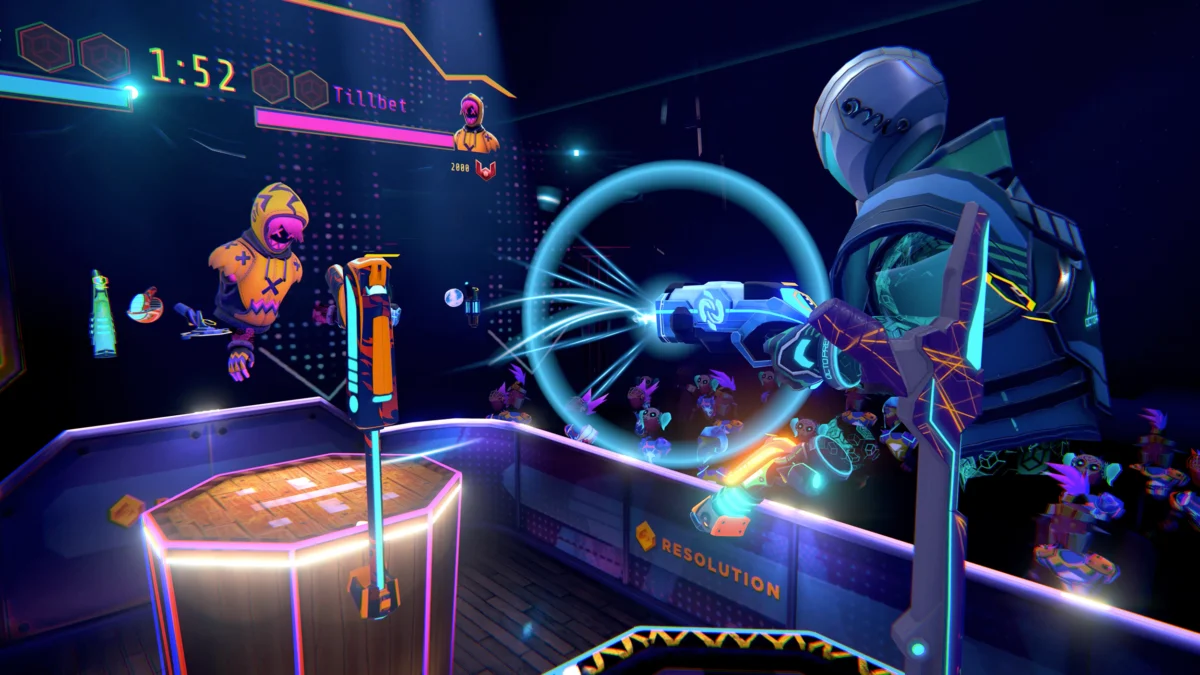
In the rapidly evolving ecosystem of Virtual Reality, few titles manage to capture the elusive "visceral" quality that early adopters once promised. While high-fidelity simulations and narrative-driven adventures often dominate the headlines, a leaner, more kinetic experience has quietly emerged as a gold standard for the platform. Blaston, the competitive dueling game from Resolution Games, has transformed from a niche title into a mandatory fixture for anyone looking to understand the physical and tactical potential of VR.
This analysis explores the mechanics, the strategic depth, and the cultural impact of Blaston, examining why a "whim" purchase can quickly become a nightly ritual for even the most seasoned gamers.
The Evolution of Escapism: Why VR Matters Now
To understand the success of Blaston, one must first acknowledge the current landscape of digital entertainment. After a year defined by screen fatigue and the blurring lines between home and office, the appeal of a device like the Oculus Rift 2 (or the Meta Quest 2) goes beyond mere graphical fidelity. It represents a "purer form of escapism."
For many, the draw of VR is the total sensory isolation. By shutting out the physical world, the player is not just observing a game; they are inhabiting a space. As the boundaries of the digital desktop fade away, players are seeking experiences that utilize this newfound freedom of movement. Blaston thrives in this environment because it refuses to be a "sit-down" experience. It demands that the player occupy a three-dimensional arena, turning the living room into a high-stakes dueling floor.
The Core Mechanics: A Dance of Lethality
At its heart, Blaston is a tactical dueling game, but to label it a "shooter" would be a disservice to its design. The game pits two players against each other in a confined arena. The objective is deceptively simple: deplete your opponent’s health bar while preserving your own.
The Weapon Economy
The brilliance of Blaston lies in its weapon management system. Rather than providing a static loadout, the game forces players to adapt to a shifting arsenal. Weapons spawn randomly in one of six positions around the player, creating a dynamic, ever-changing tactical map.
There are no inherently "overpowered" weapons; instead, every tool serves a specific strategic purpose:
- Area Denial: Certain weapons, such as the electrical beam, are less about immediate impact and more about controlling space. By firing these, a player can force their opponent to move, effectively gating off sections of the arena.
- Surprise Aggression: Other tools are designed for rapid bursts, rewarding players who can track their opponent’s movement and predict their pathing.
- Defensive Maneuvering: Because the weapons are physical objects in the game world, players must learn to dodge, weave, and physically interact with the space around them.
This creates a "bullet-hell" dynamic where the player is not just a gunner, but a participant in a high-speed dance. You are constantly moving your body, ducking under incoming fire, and repositioning yourself to reach the next spawning weapon.
Chronology of a Viral Success
Blaston did not arrive with the thunderous fanfare of a AAA blockbuster. Its rise is a classic example of "word-of-mouth" success within the VR community.
- Late 2020: Resolution Games launches Blaston on major VR storefronts. Initial reception is positive, praised for its unique "active" gameplay loop.
- Mid-2021: The competitive scene begins to coalesce. Community-led tournaments start appearing on Discord and Reddit, highlighting the high skill ceiling of the game.
- Late 2021: The game receives significant updates, refining the matchmaking and expanding the roster of weapons. This period marks a surge in player counts as the game becomes a staple for new headset owners looking for titles that truly utilize the wireless capabilities of the Quest 2.
- December 2021: With holiday sales in full swing, Blaston sees a massive influx of new players, cementing its status as an essential entry in the VR library.
Supporting Data: The Physics of Play
What does it mean to play Blaston for two hours a night? Beyond the competitive rankings, the data points to a significant shift in player behavior. Unlike sedentary gaming, where endurance is measured in focus, Blaston requires physical stamina.
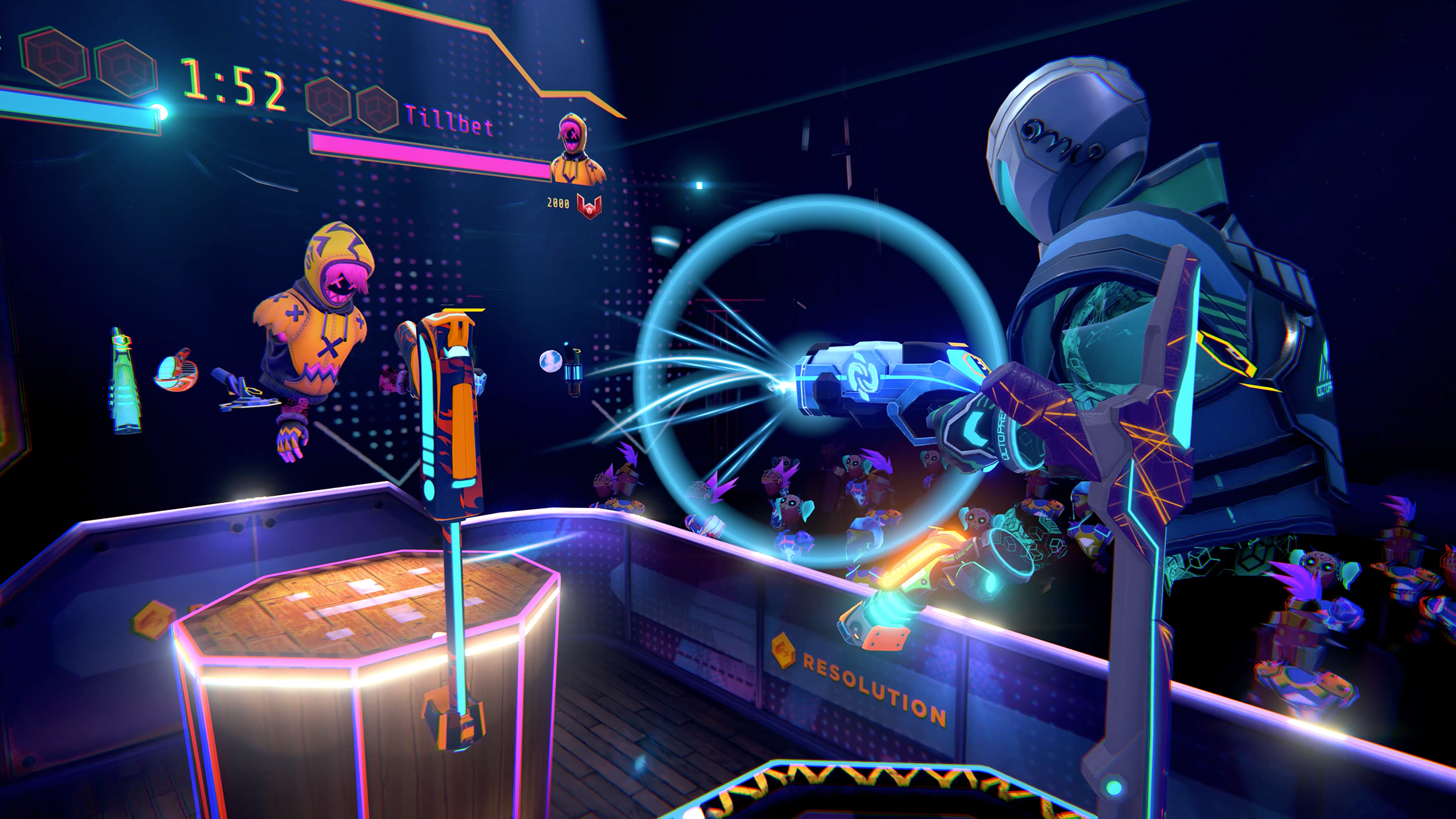
Players report that Blaston functions as a form of "gamified cardio." Because the game necessitates constant torso movement, crouching, and reaching, it bridges the gap between traditional gaming and fitness applications. In a study of VR engagement, titles that require physical movement—like Blaston or Beat Saber—show a higher "return rate" among users. The visceral satisfaction of physically dodging a projectile provides a dopamine hit that standard button-mashing simply cannot replicate.
Official Responses and Developer Philosophy
Resolution Games has been vocal about their design philosophy regarding Blaston. In various developer diaries and community updates, the team has emphasized the importance of "fair play" and "spatial awareness."
"We wanted to make a game where the player’s physical skill was just as important as their tactical knowledge," says a representative from the studio. By intentionally limiting the arena size and forcing players to interact with the weapon spawns, Resolution Games successfully avoided the "teleportation" trap that makes many VR shooters feel sluggish. The result is a game that feels tight, responsive, and incredibly fair. Even when you lose, it rarely feels like the game cheated you; it feels like you were outmaneuvered.
Implications for the Future of VR
The success of Blaston carries several important implications for the future of the VR industry:
1. The Death of the "Sit-Down" Expectation
Blaston proves that players want to move. The success of the game suggests that developers should prioritize room-scale experiences that encourage physicality. The industry is moving away from joystick-based movement and toward experiences where the player’s body is the primary controller.
2. The Power of "Micro-Loops"
The game’s design is a masterclass in the "micro-loop." A round of Blaston is short, intense, and immediately rewarding. This format is perfect for the way people consume VR—in shorter, highly immersive bursts rather than 10-hour marathon sessions.
3. Esports Potential
As VR hardware becomes more affordable and more ergonomic, Blaston is perfectly positioned to serve as a flagship for VR esports. Its spectator-friendly design, where the action is contained within a small, easy-to-follow arena, makes it an ideal candidate for broadcasted competition.
Conclusion: Why You Should Play
If you find yourself with a new VR headset and a feeling of "been there, done that" regarding traditional gaming, Blaston offers a necessary recalibration. It is a game that demands presence. It forces you to stand up, move your body, and think tactically under pressure.
Whether you are a casual player looking for a fun way to spend 20 minutes or a competitive gamer looking to master the art of space control, Blaston delivers. It is a rare example of a game that doesn’t just use VR as a gimmick, but as a fundamental pillar of its design. By turning the player into the avatar, Blaston manages to do what every game aspires to: it makes you forget the world around you and brings you entirely into the fight.
In a year where escapism has become a vital commodity, Blaston isn’t just a game; it is an essential piece of technology that reminds us why we bought these headsets in the first place.

