

In an era where virtual reality (VR) hardware has become increasingly accessible, the software landscape remains a crowded, often overwhelming marketplace. For many, the purchase of a headset like the Meta Quest 2—formerly the Oculus Rift 2—is driven by a desire for a "purer" form of escapism. When the physical world feels stagnant or exhausting, the ability to fully immerse oneself in a digital space becomes not just a hobby, but a necessary respite.
It was in this spirit of impulsive, weary optimism that I recently dove into Blaston, a title that has quietly emerged as one of the most compelling reasons to strap on a headset. What began as a whim—a simple purchase based on a digital storefront sale—has transformed into a nightly ritual of physical exertion and tactical brilliance. Blaston is more than just a game; it is a masterclass in kinetic design and spatial awareness that proves VR’s true potential lies in movement.
The Core Concept: A High-Stakes Duel
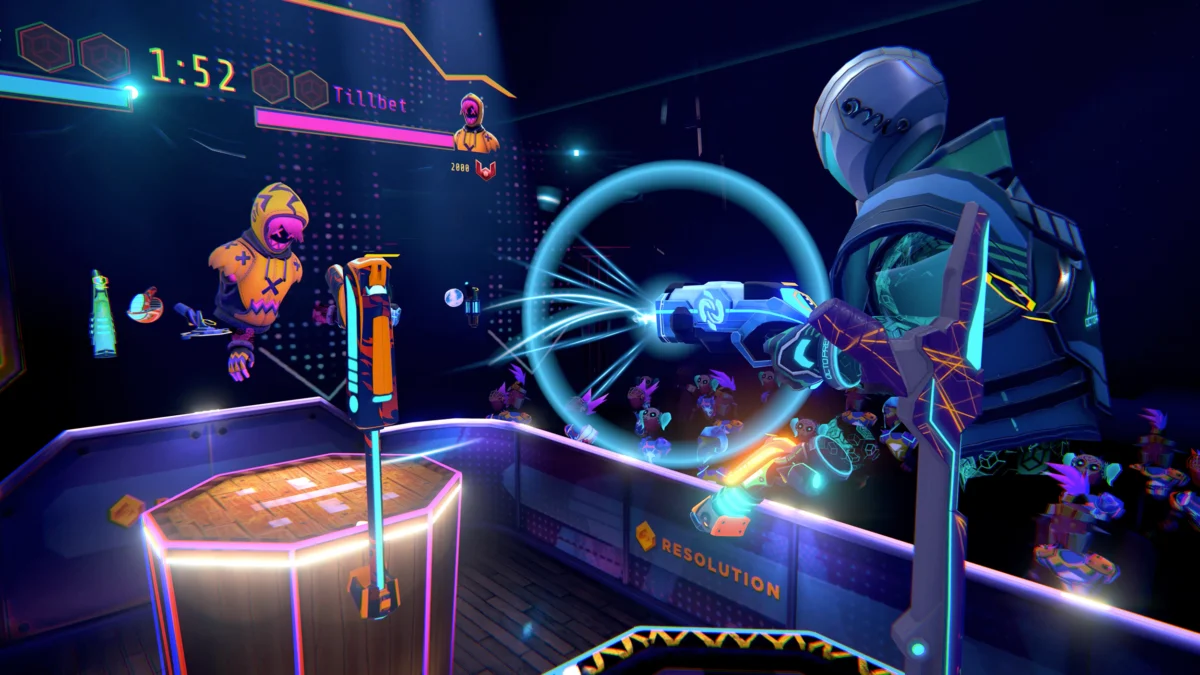
At its heart, Blaston is a dueling simulator that strips away the complexity of traditional shooters in favor of pure, high-stakes tactical combat. Players are placed in a confined, circular arena, facing off against an opponent with a singular goal: reduce the other’s health to zero.
Unlike conventional shooters that rely on aiming down sights or navigating sprawling maps, Blaston is stationary yet hyper-dynamic. You do not move your character via a joystick; you move your own physical body. The game forces you to squat, weave, lean, and reach, turning the player into a human shield and a tactical architect simultaneously.
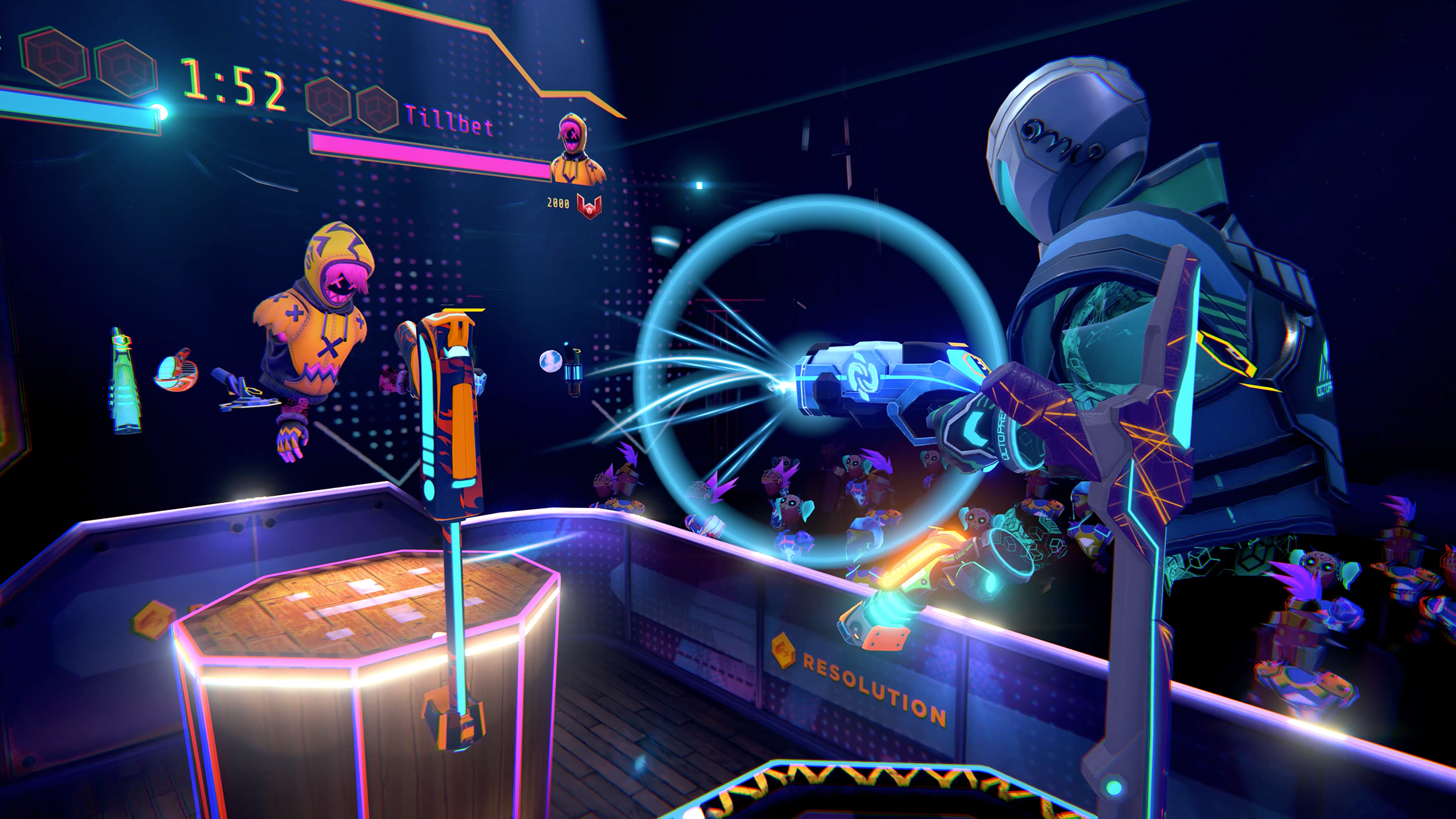
The weapons system is the game’s true stroke of genius. Rather than selecting a "loadout" that you spawn with, weapons appear at six distinct points around your immediate perimeter. This randomization forces players to adapt on the fly. You are not just fighting your opponent; you are fighting for resources.
Chronology of a VR Staple
Blaston, developed by Resolution Games, did not arrive with the fanfare of a AAA blockbuster, yet its growth trajectory has been steady and impressive.
- Early Access and Development: Resolution Games, known for their focus on high-quality VR experiences, spent significant time refining the "dueling" feel to ensure that the physical movement felt intuitive rather than gimmicky.
- The Global Launch: Upon its release, the game garnered immediate praise from the enthusiast community for its low barrier to entry and high skill ceiling.
- Post-Launch Evolution: Throughout 2021 and beyond, the developers have continued to tweak weapon balance and arena aesthetics. The game has evolved from a simple "twitch" shooter into a complex strategic exercise where space control is the primary objective.
- Current State: Today, Blaston stands as a pillar of the Quest library, frequently recommended by users who have moved past the initial "wow" factor of VR and are looking for something with lasting competitive substance.
Supporting Data: The Mechanics of Movement
The brilliance of Blaston lies in its deceptively simple physics. To understand why it has become a "must-play," one must examine the specific mechanics that define the experience:
1. Spatial Control
Every weapon in the game serves a specific tactical purpose. For instance, the "electrical beam" weapons do not simply deal damage; they act as area-of-effect hazards. By placing these beams across the arena, a player can effectively gate off sections of the space, forcing their opponent into a corner or into the path of a secondary projectile.
2. Physical Engagement
While many VR games suffer from "VR legs" or motion sickness caused by artificial locomotion, Blaston eliminates this entirely. Because the player stays in one spot, the brain remains tethered to the physical reality of the room, while the body engages in intense cardiovascular exercise. It is essentially a high-intensity interval training (HIIT) workout disguised as a competitive shooter.
3. Tactical Randomization
The six spawn points mean that no two duels are ever the same. You might find yourself surrounded by long-range snipers, or you might be forced to rely on short-range melee projectiles. The ability to manage your surroundings—constantly scanning the periphery while maintaining focus on your opponent—requires a level of mental agility that keeps the game fresh even after dozens of hours of play.
Official Perspectives and Industry Reception
Resolution Games has consistently emphasized that their goal with Blaston was to move away from the "gimmick-heavy" VR titles of the past. In various developer diaries and community Q&As, the team has highlighted the importance of "flow state"—that elusive mental condition where the player becomes so absorbed in the action that the hardware disappears.
Critics have lauded the game for its accessibility. In an industry where VR headsets are often criticized for their isolation, Blaston is inherently social. It pits human against human in a way that feels intimate yet professional. The lack of "good or bad" weapons is a specific design choice aimed at ensuring that the player’s skill—their reaction time and spatial reasoning—is the ultimate arbiter of victory, not the digital gear they have unlocked.
Implications for the Future of VR
Blaston provides a blueprint for the future of virtual reality gaming. For years, developers have struggled with the "locomotion problem"—how to move a character in a virtual space without causing nausea or breaking immersion. Blaston elegantly sidesteps this by turning the player’s own body into the primary controller.
The Rise of "Active" Gaming
As VR hardware continues to shrink in size and weight, games that require physical activity are likely to see a surge in popularity. Blaston proves that there is a massive, underserved market for games that combine the thrill of competition with the benefits of physical movement. It is a compelling argument against the sedentary nature of traditional console gaming.
The Longevity of Simplicity
Perhaps the most significant implication of Blaston’s success is the lesson it provides for indie developers: depth does not require complexity. By focusing on a single, perfectly executed loop—spawn weapons, control space, dodge projectiles, win—Resolution Games has created a title with more replayability than many titles with ten times the budget.
Conclusion: A Necessary Escape
When I first purchased my headset, I was looking for a distraction. I wanted to escape the mundanity of a long year and find a place where the world felt reactive and visceral. I did not expect to find a game that would demand so much of my physical coordination and tactical focus.
Blaston is not merely a game you play; it is an experience you inhabit. Whether you are a competitive gamer looking for a new arena or a casual user hoping to turn your living room into a high-octane dueling pit, the value proposition here is undeniable. In a digital landscape often cluttered with noise, Blaston is a clear, sharp, and essential reminder of why we embraced virtual reality in the first place.
If you have the hardware, treat yourself to a copy. It is, quite simply, the best reason to get moving in VR today. As the competitive scene continues to grow and the weapon meta shifts with every patch, there has never been a better time to step into the arena and test your reflexes against the best. Just make sure you have plenty of floor space—and a towel nearby. You’re going to need it.

