

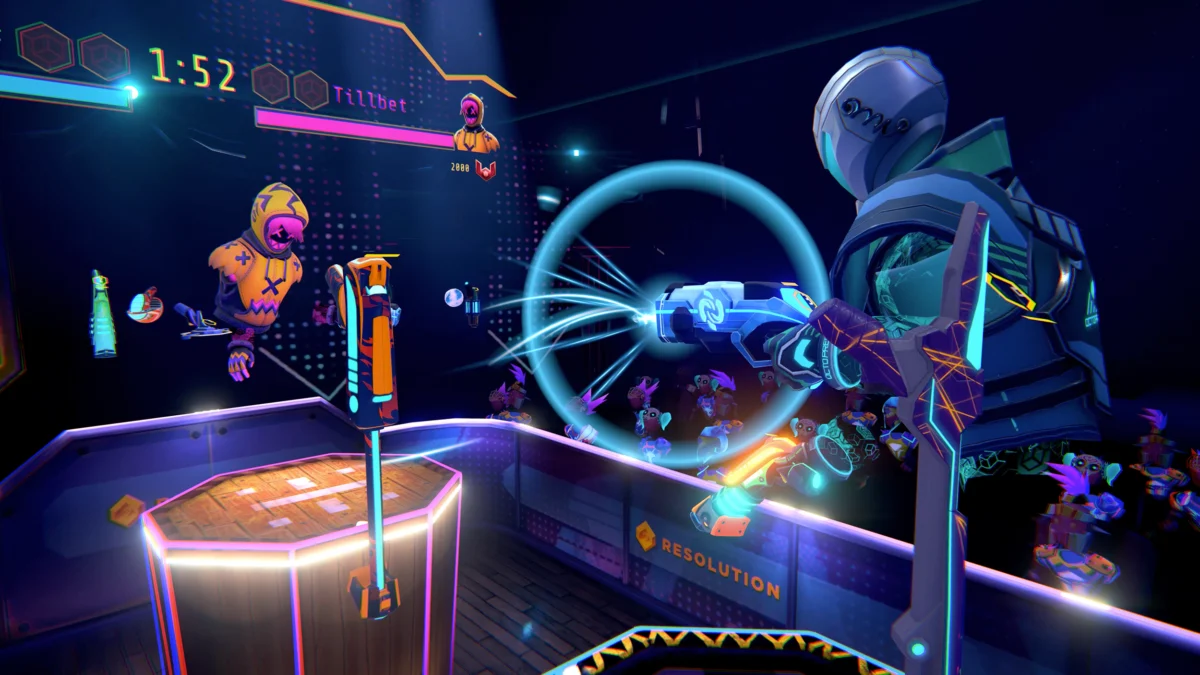
In the rapidly expanding ecosystem of Virtual Reality, few titles manage to capture the elusive "flow state" that transforms a piece of hardware into a portal for genuine physical and mental exertion. Among the sea of immersive experiences, Blaston—the high-octane dueling game from Resolution Games—has emerged as a masterclass in minimalist design and kinetic mastery.
For many users, the transition into VR is driven by a desire for total escapism. As the boundaries between our physical environment and digital playgrounds blur, the demand for titles that move beyond simple "room-scale" exploration and into the realm of athletic competition has spiked. Blaston stands at the forefront of this movement, turning the simple act of dodging and firing into a high-stakes tactical chess match.
The Genesis of an Immersive Duelist
To understand the impact of Blaston, one must first examine the hardware landscape of late 2021. With the rise of standalone headsets like the Oculus Quest 2, the barrier to entry for high-fidelity VR plummeted. Users seeking relief from the mundane frustrations of the physical world found solace in the untethered freedom of wireless VR.
When Blaston was released, it wasn’t marketed with the heavy fanfare of AAA blockbusters. Instead, it relied on the "pick-up-and-play" ethos that defines successful indie VR titles. For many players, the initial discovery of the game was a whim—a digital purchase driven by a desire for something visceral, fast, and uncompromising. What they discovered was a title that demanded not just quick reflexes, but the total physical engagement of the player.
Core Mechanics: The Geometry of Combat
At its heart, Blaston is a 1v1 dueling simulator that strips away the complexity of traditional shooters to focus on pure, unadulterated reaction. The player is placed within a confined arena, face-to-face with an opponent. The goal is simple: deplete the opponent’s health bar before they deplete yours. However, the path to victory is paved with complex spatial management.
The Weapon Economy
Unlike traditional FPS titles where players load out with a preferred arsenal, Blaston utilizes a rotating, randomized weapon system. Players choose a "loadout" of weapons, but these do not spawn in the player’s hands. Instead, they materialize at six designated points around the player’s immediate vicinity.
This mechanic creates a unique tactical layer:
- Spatial Awareness: Players must constantly scan their environment to see which tools have spawned.
- Weapon Synergy: Each weapon has a distinct function. Some are slow-moving projectiles designed to flush an opponent out of cover, while others are high-speed bursts meant to punish a momentary lapse in movement.
- Area Denial: As noted by enthusiasts, certain weapons—such as electrical beam projectors—do not merely deal damage. They act as "spatial gates," forcing the opponent to physically move into a more vulnerable position or risk continuous chip damage.
The Physicality of the "Flow State"
What sets Blaston apart from its peers is the requirement for physical movement. In most shooters, the "dodge" is a button press. In Blaston, the dodge is a genuine physical action. Players must duck, weave, lean, and stretch to avoid incoming fire.
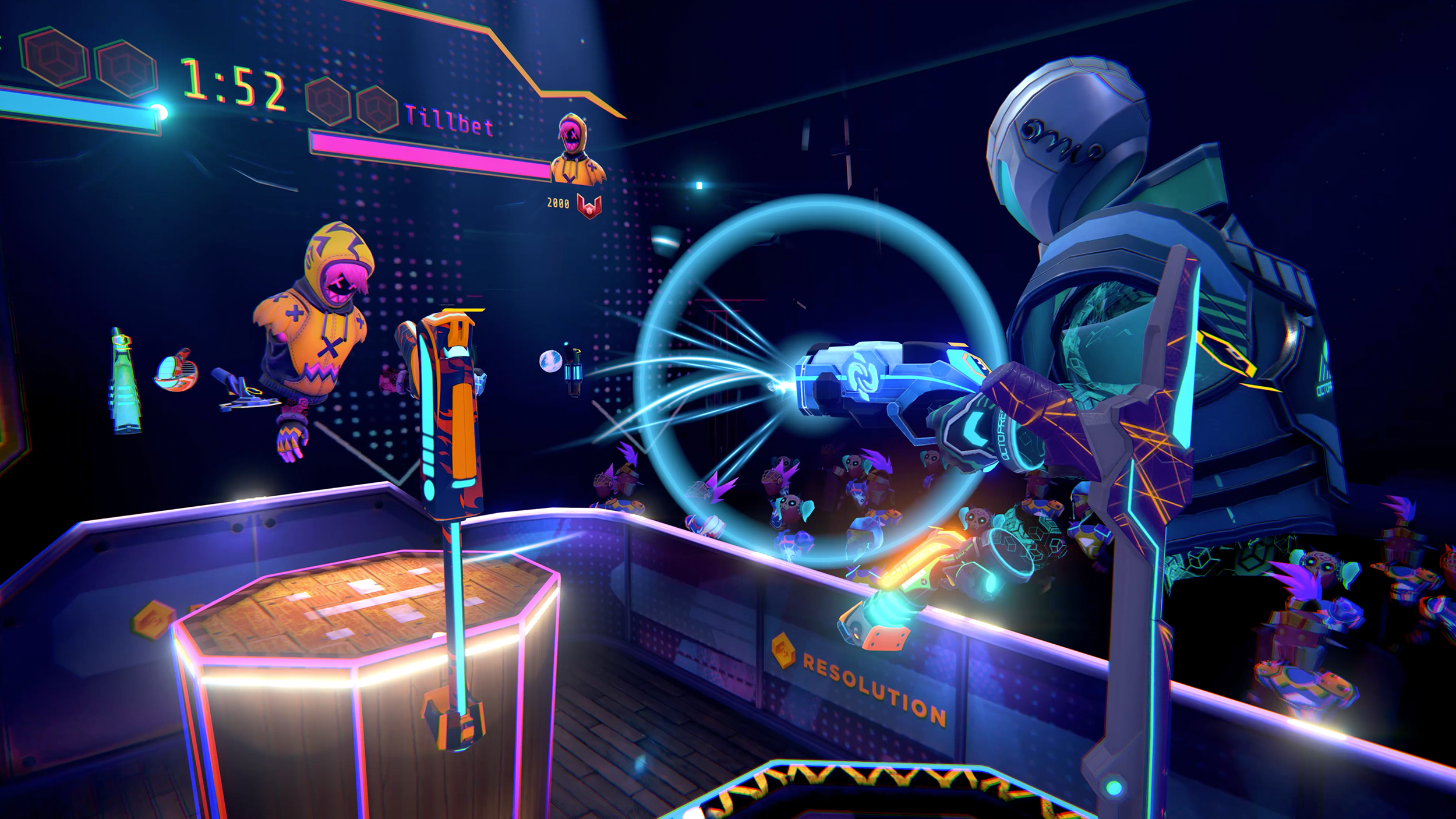
This creates a visceral feedback loop. Because the player’s hitbox is their actual body, the psychological tension of an incoming projectile is amplified. When a glowing orb of energy zips past the user’s ear, the instinct to flinch is real. This elevates Blaston from a game to an exercise, with many players reporting that daily sessions of just an hour or two provide a significant cardiovascular workout.
Chronology of Development and Community Growth
- Initial Launch: Resolution Games introduced Blaston with a focus on competitive balance and low-latency netcode, essential for a game where millisecond timing determines victory.
- The "Air Link" Era: With the widespread adoption of wireless PC-to-VR streaming, the player base expanded, allowing for a more diverse range of skill levels. The game’s ability to run natively on Quest hardware ensured that the user base remained stable and accessible.
- Competitive Evolution: Over time, the meta-game evolved from simple "shoot-and-dodge" tactics to complex, multi-layered strategies involving "weapon trapping"—where players bait opponents into firing patterns that lead them directly into a trap.
Implications for the Future of VR Esports
Blaston serves as a proof-of-concept for the future of VR esports. While many developers are chasing the "VR MMORPG" dream, Blaston demonstrates that the most successful VR experiences are those that lean into the medium’s unique strengths: physical presence, spatial awareness, and intuitive interaction.
The Sustainability of Minimalist Design
The longevity of Blaston can be attributed to its "easy to learn, impossible to master" philosophy. By limiting the arena size and the number of weapon spawns, the developers created a game that is easy for a newcomer to understand within seconds. Yet, the high ceiling for mastery ensures that the game remains relevant to seasoned competitive players.
Impact on VR Fitness
The intersection of gaming and fitness—"exergaming"—has long been a goal for the tech industry. Blaston achieves this naturally. It does not feel like a workout app; it feels like a competitive sport. This distinction is vital for the continued growth of the VR industry. By gamifying physical exertion, Blaston encourages daily engagement, keeping the hardware on the player’s head and off the shelf.
Official Stance and Community Feedback
Resolution Games has consistently maintained a stance of iterative improvement. By listening to the community’s feedback regarding weapon balance and matchmaking, the developers have kept the game fresh. Unlike titles that suffer from "feature creep," Blaston has remained focused on its core loop, refining the physics and the responsiveness of the combat system.
Professional analysts and VR enthusiasts alike have noted that the game’s success signals a shift in consumer preference. As the novelty of "VR tourism" (simply looking at environments) wears off, players are gravitating toward games that provide a sense of agency and physical accomplishment.
Conclusion: A New Standard for Interaction
Blaston is more than just a game; it is a testament to the power of minimalist VR design. By stripping away the clutter of traditional UI and focusing on the relationship between the player’s body and the digital environment, it has carved out a unique space in the VR landscape.
For those who feel that the gaming industry has become too focused on graphical fidelity at the expense of gameplay, Blaston is a breath of fresh air. It proves that you don’t need a sprawling open world to be immersive; you only need a small arena, a set of tools, and the freedom to move. Whether you are a competitive gamer looking for the next esports challenge or simply someone trying to reclaim the visceral thrill of play, Blaston remains an essential addition to any VR library. As VR technology continues to advance, the lessons learned from this "small" game will likely shape the design of the "big" games of the future.

