

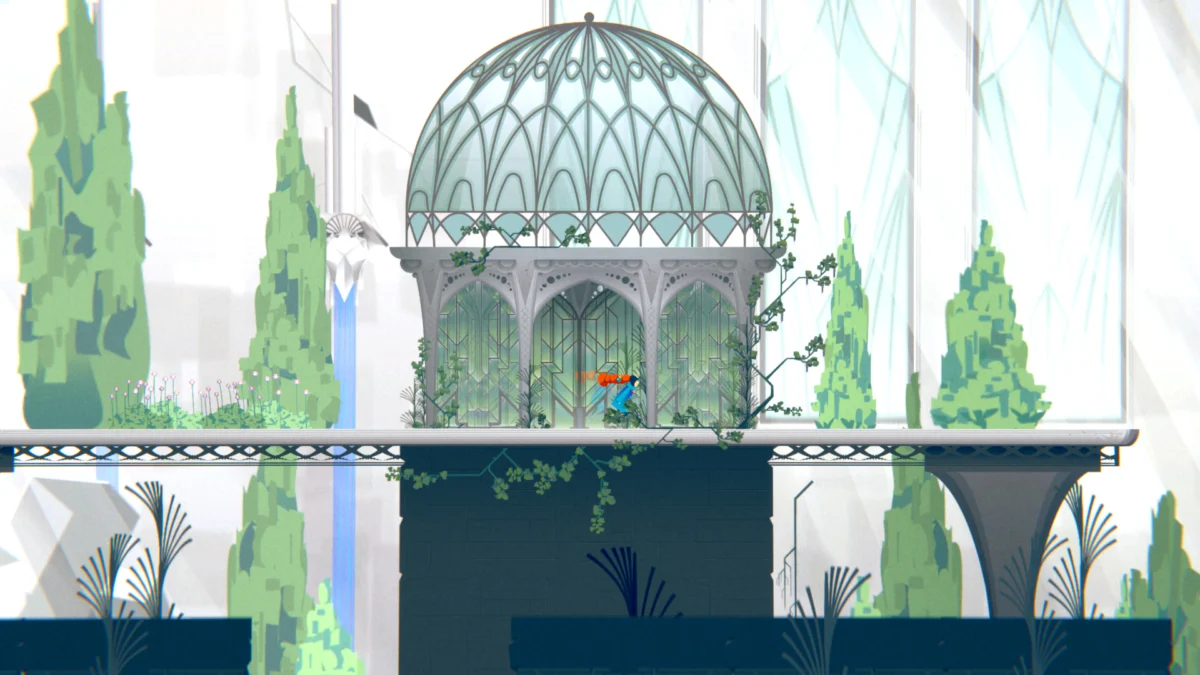
In an era where the term “story-rich” has become a ubiquitous marketing buzzword—often as hollow as an advertisement for a “gluten-free egg”—the release of Aspire: Ina’s Tale serves as a poignant case study in the current state of indie 2D platformers. Developed by Wondernaut Studio, the title arrived with high expectations, promising a hand-painted aesthetic and a narrative depth that aimed to resonate with fans of the genre. However, as the dust settles on this ethereal journey, the consensus remains fragmented: while the game succeeds in its visual presentation, it falters significantly under the weight of its own derivative narrative and mechanical inconsistency.
The Premise: Familiar Tropes in a Beautiful Package
Aspire: Ina’s Tale introduces players to Ina, a waifish, spindly-legged protagonist who wakes up within the confines of a mysterious, sprawling Tower. The setting is established as a place that feeds off the dreams of its inhabitants. Ina, identified as the “Heart of the Tower” and the “Keeper of Kamiura,” is tasked with navigating the labyrinthine structure to secure her freedom and return home.
The narrative framework is deeply reminiscent of recent indie darlings like Gris, Hoa, and Minute of Islands. It follows the well-trodden path of an amnesiac protagonist navigating a world built by a mysterious “Architect,” charged with the burden of a destiny she doesn’t fully understand. While the art direction is undeniably crisp—featuring polished reflections and atmospheric lighting that glints off ancient suits of armor—the story itself struggles to move beyond boilerplate tropes. The game attempts to explore themes of fear versus light, questioning why the Tower’s creators would venerate demons in sculpture. Yet, these philosophical musings feel underdeveloped, failing to provide the emotional anchor necessary to justify the “story-rich” label.
Chronology of the Experience
The progression through Aspire is segmented into distinct zones, each introducing specific environmental mechanics. The opening hours offer a deceptive sense of charm; the puzzles appear to strike a balance between accessible logic and satisfying engagement. However, as the player ventures deeper into the Tower, the structural pacing begins to fray.
- Act I: The Introduction to Mechanics. Players are eased into the Tower’s logic. The gameplay loop here focuses on movement and basic interaction with light-emitting power sources. Death, in this early phase, is mitigated by an abundance of checkpoints, allowing for a forgiving learning curve.
- Act II: The Escalation of Frustration. As the narrative shifts toward the middle act, the complexity of the puzzles spikes. Mechanics involving object manipulation—such as scaling blocks to interact with machinery—begin to feel less like intuitive challenges and more like chores.
- Act III: The Descent into Resignation. By the final act, the charm of the hand-painted environments struggles to mask the mechanical fatigue. The lack of a compelling narrative payoff leaves the player feeling disconnected from Ina’s plight, turning the final segments of the game into a test of patience rather than a satisfying conclusion.
Supporting Data: Mechanical Hurdles and Platforming Constraints
The primary friction point in Aspire: Ina’s Tale lies in its execution of physics-based platforming. A precision platformer lives or dies by the responsiveness of its controls, and Aspire frequently stumbles in this regard.

Precision vs. Clunkiness
On platforms like the Nintendo Switch, the discrepancy between intended precision and actual input response is palpable. Even with high-quality, drift-free controllers, Ina’s movement lacks the fluidity required for the game’s more demanding sequences. Specifically, the rope-swinging mechanics are prohibitively stiff. Players are often required to engage in “Goldilocks-style” trial and error, searching for the exact pixel-perfect position to trigger a successful jump or swing.
The Checkpoint Paradox
While the generous checkpoint system is a saving grace, it also highlights a flaw in the game’s design: if a developer feels the need to place checkpoints every few seconds, it is often an admission that the platforming mechanics themselves are prone to unfair frustration. In Aspire, these checkpoints function as a band-aid over deep-seated issues with movement physics and collision detection.
Official Responses and Developer Intent
Wondernaut Studio positioned Aspire: Ina’s Tale as a love letter to atmospheric storytelling. In various promotional materials, the developers emphasized the importance of the Tower’s history and the “Keeper” mythology. They intended to craft a world where silence speaks volumes—a bold aim, given that some of the most profound narrative games (such as Journey or Hyper Light Drifter) manage to tell complete, evocative stories without a single line of dialogue.
However, the industry standard for “minimalist storytelling” has evolved. Where previous titles succeeded by using environment and sound design to convey complex history, Aspire leans heavily on exposition and familiar archetypes that lack the courage to “get weird” or take risks. By adhering too closely to the aesthetic and narrative conventions established by its contemporaries, Wondernaut Studio inadvertently relegated their work to the realm of the “derivative,” despite the undeniable polish of their art team.
Implications for the Indie Market
The critical reception of Aspire: Ina’s Tale highlights a broader trend within the indie gaming industry: the “aesthetic trap.” Many smaller studios are now capable of producing stunning, hand-painted, or high-fidelity 2D art. However, visual fidelity is no longer a unique selling point; it is a baseline expectation.
The Saturation of the “Waif-Platformer”
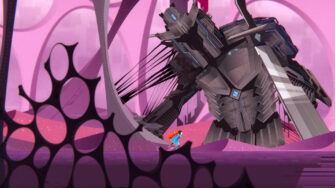
The recurring image of the small, solitary protagonist in a massive, ruinous world has become a visual shorthand for “prestige indie.” While this imagery is evocative, it is beginning to wear thin with audiences. For a game to truly stand out, the mechanical depth must match the artistic ambition. When a game offers little more than a visually pleasing facade and repetitive, sometimes frustrating, platforming mechanics, it risks being forgotten in a market saturated with high-quality content.
A Lesson in Balancing Style and Substance
For future developers, the takeaway from the Aspire experience is clear: atmosphere cannot carry a game if the player feels like they are fighting the controls rather than engaging with the challenges. When a narrative is designed to be “understated,” it requires a high degree of confidence and originality to ensure that the silence doesn’t feel like an absence of substance.
Final Reflections
Aspire: Ina’s Tale is not a bad game; it is a beautiful one that lacks the mechanical rigor and narrative audacity to be truly great. It is a title that will satisfy those who value aesthetics above all else—players who want to lose themselves in a pretty, fleeting world for a few hours. However, for those seeking a challenging, coherent, and emotionally resonant platforming experience, the journey through the Tower may prove to be a test of endurance rather than an exploration of wonder.
In the end, Aspire serves as a reminder that “story-rich” is not a classification that can be achieved through intent alone. It requires the weaving of mechanics, lore, and player agency into a tapestry that feels both fresh and essential. While Ina’s journey is certainly one of light and beauty, it remains a shadow of what it could have been—a cautionary tale of style preceding substance in an increasingly competitive indie landscape.

