By Staff Gaming Correspondent Published September 23, 2026
Main Facts: The Meteoric Rise and Growing Pains of Wardogs
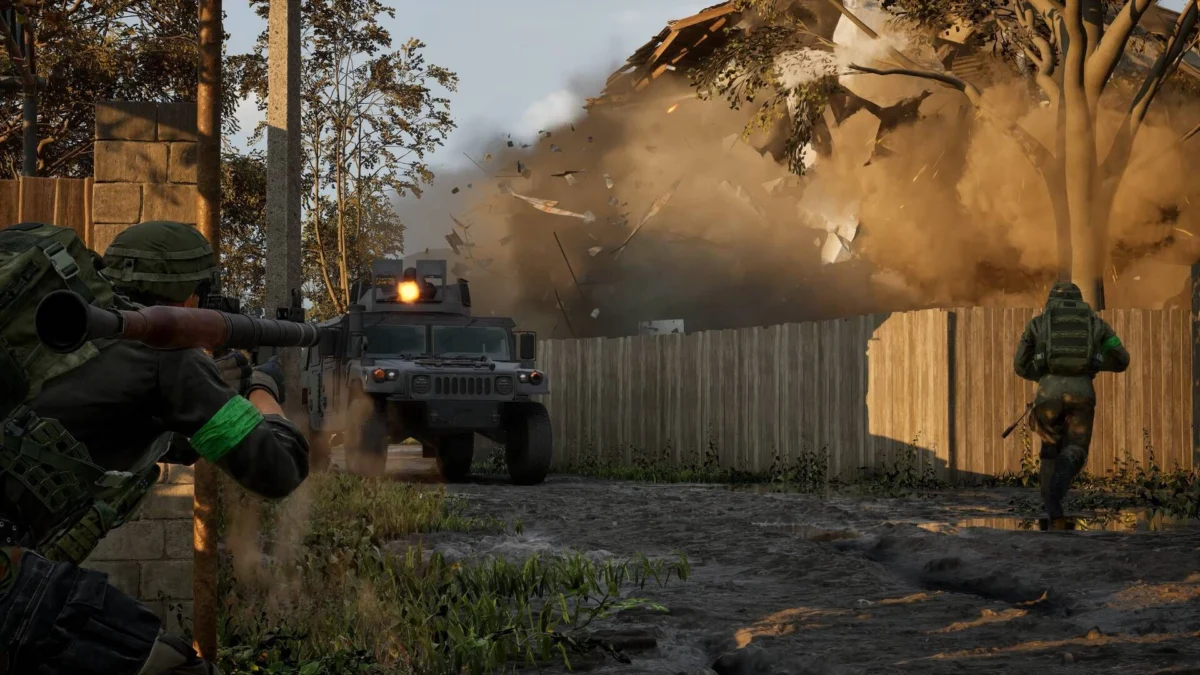
Bulkhead’s newly launched tactical multiplayer first-person shooter, Wardogs, entered Steam Early Access on September 10, capturing the global PC gaming community by storm. Blurring the lines between the chaotic, large-scale vehicular warfare of Battlefield and the high-stakes, gear-loss anxiety of Escape from Tarkov, the shooter positioned itself as a breath of fresh air in a saturated tactical-FPS market.
However, less than three weeks into its public lifecycle, the initial wave of unbridled praise is beginning to give way to critical scrutiny. As the community progresses past the introductory tiers, severe balancing issues revolving around base-building mechanics, high-tier armor systems, and long-range artillery have come to the forefront. While player counts remain remarkably high, developers and players alike are confronting a rapidly shifting in-game meta that threatens to stall the game’s momentum if left unchecked.
Chronology: How the Meta Evolved in Under a Month
To understand the current friction points within Wardogs, one must examine how the player base has evolved since its launch.
Week 1: The Sniper and Foliage Era
During the first few days of the Early Access rollout, the game was defined by its wide-open maps and low-tier gear. With all players restricted to basic equipment and Level 1 armor, sharpshooters and solo roamers dominated the landscape. Anyone capable of reliably landing long-range shots with a sniper rifle could effortlessly control matches, turning grassy fields and tree lines into deadly gauntlets.
Week 2: The Golden Age of the Hot Zone
As players adapted to the shooter’s unique economy—which demands both in-game cash (earned through match performance to buy respawn loadouts) and experience points (XP) to unlock advanced gear—the meta shifted toward mobility. The community spent several days actively chasing the roaming "hot zone," a dynamic area on the map where every player kill or objective capture counts for double points. This period sparked continuous, high-octane infantry firefights. Many veterans of the game cite this specific window as the most enjoyable and mechanically balanced period of Wardogs‘ early life cycle.
Week 3 to Present: The FOB, Drill, and Mortar Meta
As the community crossed the threshold into mid-to-late-game unlocks, the pacing of matches altered dramatically. Rather than engaging in active infantry skirmishes within the hot zones, optimal strategies have devolved into defensive fortifications. Matches are now heavily dictated by forward operating bases (FOBs), automated drills, and coordinated mortar shell spam, leading to slower, more calculated, and arguably frustrating gameplay loops.
Supporting Data: Numbers, Player Sentiments, and Community Backlash
The data surrounding Wardogs tells a story of immense initial engagement paired with emerging structural frustrations. According to tracking metrics from SteamDB, the game achieved an astronomical peak of 428,666 concurrent players during its opening weekend. Crucially, player retention has proven exceptionally resilient, with only a modest drop-off of roughly 26,000 concurrent players heading into its second weekend.
Despite these stellar numbers, community sentiment across platforms like Reddit and X (formerly Twitter) has shifted perceptibly.
The FOB and Mortar Dominance
A primary grievance centers on how Forward Operating Bases and drills interact with the match scoring system. Once a team establishes a drill within an FOB, the mechanic functions as a geographic magnet, frequently pulling the roaming hot zone directly onto its location. If a defending team hunkers down within the boundaries of that FOB, they accumulate points at an unprecedented rate, rendering mobile map control largely redundant.
Prominent FPS content creator TheTacticalBrit highlighted this shift on X, posting:
"Wardogs is progressively becoming FOB building fobbits and less about fighting in the control zone."
This sentiment was mirrored by Reddit user Icy_Hurry8645, who shared a match map screenshot showing nearly an entire team clustered inside a single fortified base, noting:
"90% of the time, when I go outside the FOB, I open my map looking for action and I just don’t know where to go."
Other players, such as Reddit user markyymark13, have called for immediate nerfs to the drill mechanic, arguing that the most profitable and strategically secure way to win is also the least engaging to play against. This has given rise to an influx of stationary mortar teams raining down explosive shells from miles away, effectively locking opposing teams out of active gunfights.
The Level 4 Armor Controversy
Compounding the map-control debate is the introduction of Level 4 player protection—the highest tier of body armor and headwear currently accessible in the game.
Stories of encounters with heavily armored players have sparked widespread debate over "bullet-sponge" mechanics. Reddit user I_C_Weiner2 recounted an instance where an opponent wearing a Level 4 helmet and vest absorbed three point-blank 12-gauge shotgun slugs before casually turning around, eliminating the shooter, and racking up over 30 kills early in the match. The post concluded with a warning that balance issues risk stripping the game of its core fun factor too quickly—a perspective that received thousands of upvotes and widespread community resonance.
Not all players agree on the need for sweeping nerfs, however. Counter-arguments on Reddit argue that Wardogs should not cater exclusively to "run-and-gun" shooter fans, defending the validity of tactical positioning, logistics, and resource management. Nevertheless, the prevailing consensus among critics is not that defensive playstyles should be removed, but rather that they currently outclass aggressive, objective-focused play by too wide a margin.
Official Responses: Bulkhead’s Proactive Stance
Bulkhead, the development studio behind Wardogs, has not been caught off guard by these growing pains. Industry veterans understand that live-service games entering Early Access inevitably face radical shifts in meta-analysis once the player base reaches critical mass.
Crucially, studio leadership anticipated the community backlash well before it reached a boiling point. Joe Brammer, CEO of Bulkhead and executive producer on Wardogs, took to X ahead of the community friction to manage expectations, stating that the studio was actively preparing for "the sentiment around Wardogs to go more negative."
By acknowledging these hurdles publicly, Bulkhead has maintained a transparent line of communication with its player base, reassuring fans that data is being gathered from live matches to inform upcoming patches.
Implications: What Lies Ahead for Wardogs
As Wardogs looks toward the horizon, the stakes for its continued development are exceptionally high. The game represents a rare, successful innovation in the modern tactical FPS space, marrying the scale of traditional military shooters with the high-consequence economy of extraction-style games.
However, the honeymoon period is definitively over. With the game’s second major season scheduled to launch on October 15, the pressure is squarely on Bulkhead to deliver a comprehensive balance patch that bridges the gap between tactical logistics (FOBs, drills, and mortars) and active infantry combat.
If the developers can successfully recalibrate the risk-reward ratio of high-tier armor and rein in stationary base dominance without alienating the tactical simulation crowd, Wardogs could secure its place as a genre-defining staple for years to come. Conversely, failing to address these balancing cracks swiftly risks alienating the massive audience that propelled it to the top of the Steam charts in September.