

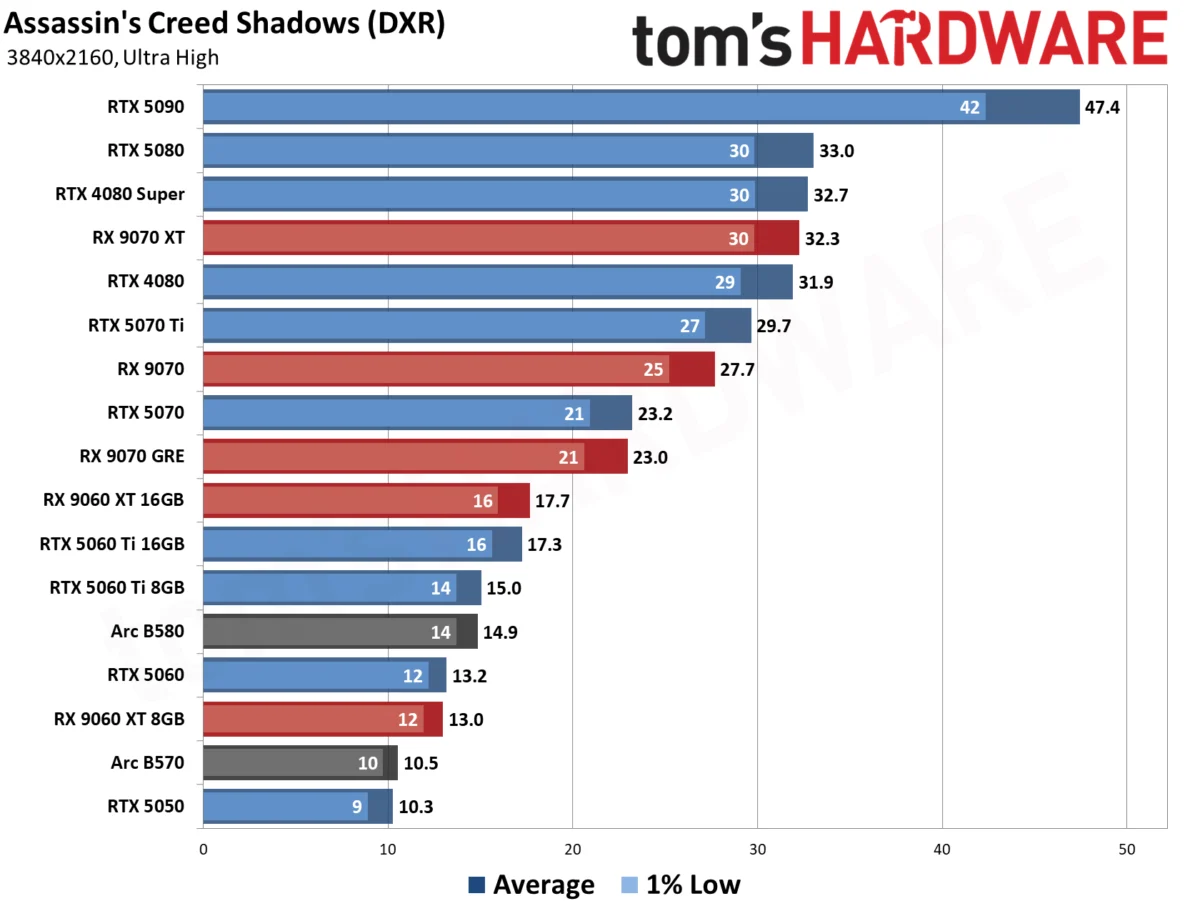
For enthusiasts, professionals, and hardcore gamers, the launch of NVIDIA’s flagship graphics card generation was supposed to herald a new era of high-fidelity rendering, ray tracing, and computational might. Instead, the arrival of the GeForce RTX 5090 has transformed into a masterclass in market volatility, severe shortages, and staggering aftermarket inflation.
With standard retail channels entirely wiped clean, securing NVIDIA’s crown jewel has become nearly impossible at its baseline Manufacturer’s Suggested Retail Price (MSRP) of $1,999. Desperate buyers turning to secondary marketplaces have found themselves staring down extortionate reseller quotes soaring past $8,000—and in some extreme instances, touching $9,500.
Yet, amid this hardware drought, a brief window of relief has opened. As part of its ongoing "GeForce Week" promotional event, retail giant Walmart offered a temporary respite, listing the MSI Gaming Trio GeForce RTX 5090 32G for $4,299 directly from a reputable seller. While more than double the original MSRP, the drop has been widely characterized by market analysts as a relative bargain in a landscape dominated by rampant scalping and systemic supply chain failures.
Main Facts
The current state of the high-end graphics card market can be distilled into a few stark realities:
- The Supply Void: Major online retailers across the United States have seen their inventories of NVIDIA’s GeForce RTX 5090 completely vanish. Standard stock replenishments are virtually nonexistent.
- Price Inflation: MSRP-priced units at $1,999 are effectively mythical. Primary retail channels are dry, leaving third-party marketplace sellers to dictate terms, with prices routinely ranging from $8,000 to $9,500.
- The Walmart Exception: Capitalizing on its "GeForce Week" event, Walmart temporarily surfaced a reputable listing for the MSI Gaming Trio GeForce RTX 5090 32G at $4,299. Although out of stock almost as quickly as it appeared, the listing highlighted the widening chasm between standard retail expectations and reality.
- The Hardware: The RTX 5090 features an immense 32GB of high-speed video memory, cementing its status as not only a gaming titan but an essential tool for artificial intelligence development, machine learning, and enterprise-grade 3D rendering.
Chronology of a Crisis: How the RTX 5090 Disappeared
To understand how a top-tier consumer electronics product reached a state of near-mythical scarcity, one must trace the timeline from anticipation to systemic market failure.
Phase 1: The Hype and the Launch
Months before the official unveiling, industry insiders and hardware enthusiasts anticipated that NVIDIA’s next-generation architecture would push the boundaries of silicon fabrication. When the GeForce RTX 5090 was formally introduced alongside a baseline MSRP of $1,999, it was immediately recognized as an expensive luxury—yet one that commanded proportional performance. Early reviews confirmed its dominance, setting off an unprecedented wave of demand from both wealthy enthusiasts and enterprise-adjacent buyers who needed enterprise-grade compute without paying enterprise-grade Quadro or RTX Ada workstation prices.
Phase 2: The Initial Sell-Out and Bot Infiltration
On launch day, digital storefronts buckled under the weight of traffic. Within seconds, automated purchasing scripts—commonly known as scalper bots—swept through major inventory pools at retailers like Best Buy, Newegg, and Amazon. Genuine consumers attempting manual checkouts were met with cascading error screens and sudden "Out of Stock" banners. Within minutes, the first wave of secondary market listings appeared on platforms like eBay and specialized forum marketplaces, with markup prices instantly doubling the card’s value.
Phase 3: The Secondary Market Explosion
As weeks progressed, it became clear that this was not merely a launch-day bottleneck. Replenishment shipments failed to materialize in meaningful quantities. As official retail channels remained bone dry, third-party marketplaces became the only viable hunting grounds for buyers desperate to secure units. Prices steadily escalated. What began as a $3,500 resale market quickly metastasized into a $5,000, then $7,000, and finally an $8,000-to-$9,500 ecosystem.
Phase 4: The Walmart "GeForce Week" Interruption
Enter Walmart’s "GeForce Week." Eager to capture high-value hardware traffic, promotional channels surfaced an allocation of the MSI Gaming Trio GeForce RTX 5090 32G. Priced at $4,299, the card represented a massive variance from the original $1,999 MSRP, yet it triggered a buying frenzy because it bypassed the predatory, unverified third-party scalpers plaguing platforms like eBay. Within hours, the inventory was entirely depleted, leaving prospective buyers once again reliant on tracking tools and retail alerts.
Supporting Data and Market Dynamics
The astronomical pricing of the RTX 5090 is not occurring in a vacuum. Several converging economic, technical, and logistical factors explain why acquiring NVIDIA’s flagship silicon is an exercise in financial endurance.
| Metric / Factor | Status / Value | Impact on Consumer |
|---|---|---|
| Official MSRP | $1,999 | Theoretical baseline price; virtually unobtainable at this figure. |
| Typical Reseller Price | $8,000 – $9,500 | Unregulated third-party market rate driven by scarcity and high demand. |
| Promotional Retail Price | $4,299 (e.g., Walmart/MSI Trio) | Considered a "deal" relative to scalpers, though still a 115% markup over MSRP. |
| VRAM Capacity | 32GB GDDR7 | Massive memory pool fuels demand from both 4K/8K gamers and AI researchers. |
| Primary Bottlenecks | Global silicon allocation, advanced packaging, enterprise demand | Limits the volume of consumer-facing boards leaving assembly lines. |
The AI Factor: Consumer Cards as Enterprise Subsitutes
A significant driver behind the RTX 5090 shortage is its utility outside of gaming. With 32GB of cutting-edge memory and immense parallel processing power, the card serves as a cost-effective alternative to enterprise AI accelerators. Small-to-medium-sized tech startups, independent machine learning researchers, and data scientists have aggressively targeted consumer RTX 5090 inventory to train localized large language models (LLMs) and run complex neural networks. When a $2,000 consumer card can replace a workstation card worth four to five times as much, traditional gamers find themselves competing against enterprise procurement budgets.
Official Responses and Industry Stakeholders
As frustration mounts within the PC building community, hardware manufacturers, retailers, and market analysts have offered various perspectives on the ongoing inventory crisis.
NVIDIA has maintained that production lines are operating at maximum capacity, pointing to complex global supply chains, high costs associated with cutting-edge wafer fabrication nodes, and intense multi-sector demand for advanced silicon packaging. The company has continuously emphasized its commitment to getting cards into the hands of gamers, though concrete solutions for mitigating bot-driven purchases at major storefronts remain largely decentralized and dependent on individual retailer security implementations.
Major retail partners have similarly struggled to implement foolproof anti-scalping measures. While systems like queue lotteries, two-factor authentication, and captcha verifications have been deployed, determined scalpers continue to leverage sophisticated proxy networks to bypass security protocols.
Retailers participating in events like Walmart’s "GeForce Week" have defended their pricing structures by noting that third-party partnerships and custom board partner (AIB) designs—such as MSI’s factory-overclocked Gaming Trio variants—naturally command higher premiums than base reference cards, even before factoring in the severe supply-demand imbalance currently distorting the market.
Implications for PC Gamers and the Hardware Industry
The unprecedented trajectory of the RTX 5090 launch carries long-term implications for the future of high-end PC gaming and hardware retail.
1. The Normalization of Extreme Pricing
When a $2,000 component sees its market value quadruple on secondary platforms without triggering a total collapse in demand, it signals a dangerous shift in consumer tolerance thresholds. Manufacturers may view these inflated secondary market values as validation that the high-end enthusiast tier possesses significantly more purchasing power than historical pricing models suggested, potentially influencing future generation baseline pricing.
2. The Death of Accessible Flagship Tiering
For decades, the XX90 (and formerly Titan) class represented the absolute pinnacle of what an individual enthusiast could acquire for a high-end desktop rig. As these cards increasingly blur the line between consumer luxury and enterprise workstation hardware, the traditional consumer graphics card market risks fracturing entirely, pushing elite-tier performance permanently out of reach for traditional hobbyists.
3. The Need for Better Retail Infrastructure
The ongoing fiasco underscores an urgent need for systemic reform in online retail architecture. Until major distributors implement mandatory identity verification, hardware-locked purchase histories, and robust bot-mitigation frameworks, product launches will continue to favor automated extraction scripts over genuine consumers.
What’s Next?
For now, prospective buyers looking to harness the raw power of the RTX 5090 face a grueling waiting game. As hardware analysts continue to monitor inventory fluctuations, industry watchdogs advise caution against paying predatory aftermarket rates. Whether supply will stabilize later in the hardware lifecycle remains to be seen, but until then, tracking platforms and sporadic promotional events like Walmart’s GeForce Week remain the rare, contested battlegrounds for securing NVIDIA’s elusive flagship.

