

By Ford James
Published July 3, 2026
Eight years ago, the gaming industry stood still. The launch of Red Dead Redemption 2 (RDR2) was not merely a release; it was a cultural event. For many, it represented the zenith of interactive storytelling and technical fidelity. However, as we look back from the vantage point of 2026—with the highly anticipated release of Grand Theft Auto 6 on the horizon—the luster of Rockstar Games’ cowboy epic has begun to fade for a vocal segment of the player base. The question remains: is Red Dead Redemption 2 a masterpiece of the medium, or is it, as some critics now argue, a beautiful, high-fidelity chore?
The Anatomy of a Technical Achievement
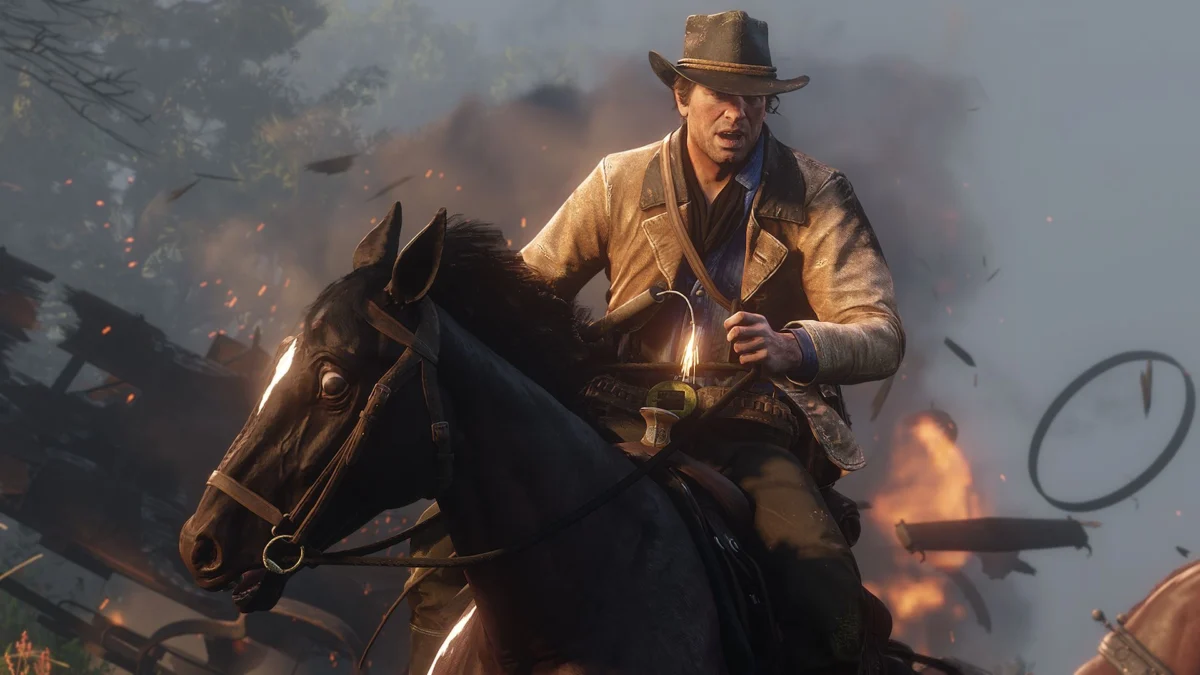
To understand the divide, one must first acknowledge the sheer scale of Rockstar’s ambition. At its debut, RDR2 was a technical revelation. It pushed the capabilities of eighth-generation consoles to their absolute breaking point. The world of Arthur Morgan was not just a map; it was a living, breathing ecological simulation.
The game’s attention to detail is, by any metric, staggering. From the way snow deforms under a horse’s hoof to the dynamic growth of facial hair and the complex social hierarchies within the Van der Linde gang, the level of immersion was unprecedented. Rockstar’s engine rendered a version of the American West that felt dangerous, vast, and achingly real.
Yet, this commitment to realism—the very pillar upon which the game’s reputation is built—is the source of its most significant friction. When developers prioritize simulation over playability, they risk alienating the player. In RDR2, the act of simply existing in the world is a multi-step process. Maintaining the camp, feeding and grooming your horse, cleaning your weapons, and even the deliberate pace of looting individual desk drawers creates a rhythm that feels more like a second job than a recreational activity.
A Chronology of Expectation vs. Experience
The hype cycle for RDR2 was, in hindsight, dangerously high. Following the massive success of Grand Theft Auto 5, the gaming public expected a fast-paced, action-oriented experience set against the backdrop of the frontier.
- October 2018: The game launches to near-unanimous critical acclaim, with reviewers citing the narrative depth and open-world density as game-changing.
- Early 2019: The "honeymoon phase" begins to wane as players reach the mid-game, with forums like Reddit and ResetEra seeing an uptick in threads discussing "sluggish" movement and "tedious" survival mechanics.
- 2020–2022: The debate settles into a permanent schism. One camp defends the game as a slow-burn narrative masterpiece, while the other labels it as "watching paint dry."
- 2026: With GTA 6 looming, the discourse has reignited. Players are now questioning whether the lessons learned from RDR2—the focus on hyper-realism—will benefit or hinder the upcoming title.
The Friction of Realism: Why "Fun" Suffers
The core issue facing RDR2 is the "Sim-vs-Fun" paradox. In a medium defined by interaction, speed, and player agency, RDR2 intentionally slows everything down.
The Burden of Mechanics
Consider the hunting system. In many games, hunting is a quick-time event or a simple skill check. In RDR2, it is a tactical simulation. You must track an animal, account for wind direction, use the correct bait, and ensure a clean kill to preserve the pelt. While this is objectively impressive, it is often antithetical to the "flow state" that gamers seek.
The Clunkiness of Control
Then there is the movement. Rockstar has long utilized a weight-based animation system, but in RDR2, it feels cumbersome. Whether you are navigating a narrow mountain pass or attempting to maneuver in a high-stakes shootout, the character feels heavy, and the input latency—while intentional to provide a sense of weight—often leads to player frustration. When the player dies because they could not turn their character fast enough to address a threat, the game stops being a narrative experience and becomes a source of irritation.
Supporting Data: The Attention Span Crisis
Modern media consumption has shifted dramatically. With the rise of short-form content platforms like TikTok and the increasing prevalence of high-octane, "live-service" games, the average player’s patience for slow, meditative pacing has dwindled.
Psychological studies on game design suggest that "reward loops"—the frequency with which a player receives feedback or progress—are crucial for engagement. RDR2 breaks these loops constantly. A player might spend 20 minutes traveling across the map, engaging in a slow-paced interaction, only to find the "reward" is a minor cosmetic upgrade or a small amount of cash. For a generation accustomed to constant gratification, this design choice is not just bold; it is arguably a barrier to entry.
The Industry Perspective: Rockstar’s Stance
Rockstar Games has remained largely silent on the specific criticisms regarding the game’s pacing, choosing instead to let the sales figures speak for them. RDR2 remains one of the best-selling games of all time, which, from a corporate perspective, validates the design philosophy.

However, insider leaks and industry speculation regarding GTA 6 suggest that Rockstar is aware of the "pacing problem." Reports indicate that the studio is looking to modernize the player experience, potentially integrating faster traversal mechanics and a more streamlined UI. The challenge for Rockstar is balancing the "prestige" of their realistic world-building with the necessity of being an entertaining product.
The Implications for the Future of Open Worlds
The legacy of Red Dead Redemption 2 is a cautionary tale for the industry. While developers should strive for depth, they must also recognize that realism is a tool, not a goal in itself.
- The "Slow-Burn" Ceiling: There is a limit to how much realism a player will tolerate before the game stops being an escape and starts being a chore.
- The Modding Solution: The fact that the PC community has had to rely on mods to improve movement, looting, and survival speed is a testament to the fact that the original design was, for many, fundamentally flawed.
- Modernizing the Formula: If GTA 6 follows the RDR2 blueprint too closely, it risks alienating the massive, fast-paced audience that expects a different type of experience from the Grand Theft Auto franchise.
Final Thoughts: A Masterpiece or a Misstep?
Ultimately, Red Dead Redemption 2 sits in a unique category. It is undeniably a technical achievement—a masterclass in writing, acting, and environmental design. It is a game that demands respect, but not necessarily one that asks to be played.
As we look toward the future, we must ask ourselves what we value more: a game that mimics reality with terrifying precision, or a game that understands the fundamental joy of play? For now, the most honest assessment of Red Dead Redemption 2 is that it is a profound artistic statement that occasionally forgets it is meant to be a video game. Whether that makes it a "terrible" game or a misunderstood classic depends entirely on what you, the player, are looking for when you pick up the controller.

