


Main Facts
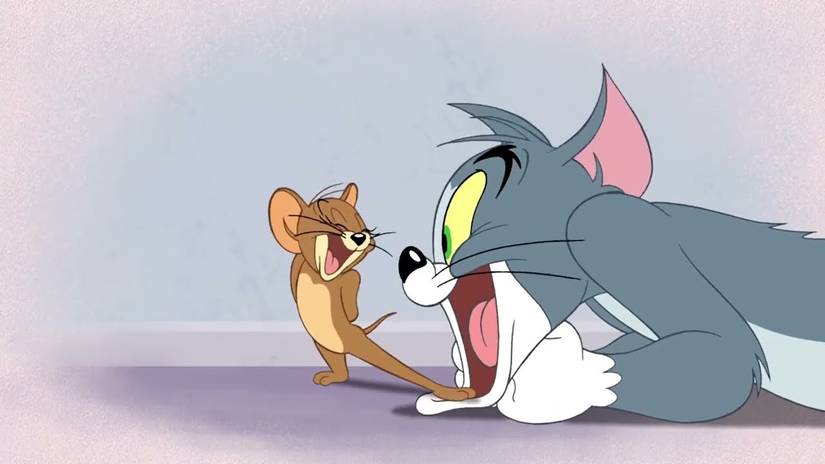
Decades after their cinematic debuts in the golden age of American animation, William Hanna and Joseph Barbera’s legendary creation, Tom and Jerry, continue to thrive as major silver-screen stars—though perhaps not where domestic American audiences might expect. The chaotic feline and mouse are back in the spotlight via a brand-new 3D animated feature titled Tom and Jerry: Forbidden Compass. The film drops the timeless rivals into an expansive world of Chinese mythology, a magical detour sparked by routine museum-bound chaos.
Yet, despite an arrival in Western territories, many filmgoers may realize they missed its domestic theatrical rollout. That oversight is deliberate: Forbidden Compass was conceptualized, financed, and produced primarily for international markets, specifically scoring a theatrical run in China last August.
Co-produced by Warner Bros. Pictures and China’s state-owned film enterprise, China Film Group, and directed by Chinese filmmaker Zhang Gang, the movie highlights a shifting paradigm in Hollywood legacy IP. Rather than relying solely on domestic box office receipts, classic Western properties are increasingly leaning into the robust, multi-generational fandoms they have cultivated overseas for decades.
Chronology of a Global Phenomenon: From MGM Shorts to International Stardom
1. The Golden Era of Theatrical Shorts (1940–1957)
The journey of Tom and Jerry began in 1940 at Metro-Goldwyn-Mayer (MGM) under the creative direction of animators William Hanna and Joseph Barbera. During an era when MGM’s animation division was struggling to keep pace with Walt Disney Productions and Warner Bros.’ Looney Tunes, the cat-and-mouse duo emerged as an immediate cultural touchstone.

Between 1940 and 1957, the duo starred in 161 theatrical animated shorts. Crucially, these were never originally produced for television; instead, they preceded feature films in movie theaters, anchoring cinematic programming blocks worldwide.
2. The International Pivot and the Gene Deitch Era (1961)
By 1957, tightening budgets at MGM—spurred by the sudden, explosive rise of household television—forced the studio to shutter its internal animation department. However, recognizing the enduring profitability of the characters, MGM revived Tom and Jerry in 1961.
To slash production costs, the studio outsourced animation to Soviet-aligned Czechoslovakia under director Gene Deitch. In a strange quirk of Cold War politics, MGM Americanized the crew’s credits to mask the fact that an iconic American property was being crafted within a communist nation. While the resulting 13 shorts faced criticism for limited animation styles—known today by fandom historians as the "Gene Deitch Era"—this foreign collaboration marked the functional beginning of Tom and Jerry’s deep ties to overseas production pipelines.
3. The Television Boom and Global Syndication (1965–1980s)
By the mid-1960s, theatrical shorts were systematically repackaged into half-hour television blocks. Tom and Jerry made their formal leap to television in 1965, rapidly expanding into global broadcasting networks.

While rival properties like Disney relied heavily on musical numbers and Looney Tunes depended on rapid-fire verbal gags (with rare exceptions like the wordless Wile E. Coyote and the Road Runner shorts), Tom and Jerry possessed a unique advantage. Because their comedy was almost entirely physical and non-verbal, language barriers vanished entirely. Jerry dropping an anvil on Tom’s head required no translation, making the slapstick universally accessible.
The characters arrived on Japanese television in 1965, followed closely by the Philippines in 1966. Due to the political landscape of U.S.-China relations, which normalized in the 1970s, mainland China officially welcomed the duo into its living rooms during the 1980s, where they instantly secured a permanent home in popular culture.
Supporting Data: Why Slapstick Crosses All Borders
The longevity of Tom and Jerry in Asian markets is no accident of geography; it is rooted in deep cultural and generational habits.
In an interview with industry outlet Cartoon Brew, Warner Bros. producer and Singapore native Charlene Tan detailed the ubiquitous nature of the franchise across Southeast Asia:
"I’m sure that it was the same for kids my age all around the world — Tom and Jerry was something that was just always there growing up. What we all loved about the show was that it also made our parents and even our grandparents laugh. It’s truly multi-generational. Living in Singapore, when you were waiting at the dentist, waiting to collect your passport, or at the hairdresser, it was on the screens. Everybody watched it, and everybody enjoyed it."
Tan emphasizes that the core appeal transcends American cultural idioms. Slapstick comedy is fundamentally universal, bridging gaps between audiences in China, Korea, Japan, India, and beyond.
Following corporate consolidation—including Warner Bros.’ acquisition of the franchise via mergers in 2006—the studio began actively tailoring content specifically for these fiercely loyal international markets:
- November 2022: Japan debuted the localized streaming series Tom and Jerry Gokko.
- 2023: Singapore launched its own regionally produced short-form series, widely distributed across Cartoon Network and HBO GO as Tom and Jerry Singapore.
- August 2025/September 2026: Tom and Jerry: Forbidden Compass pushed the envelope further, transitioning from short-form regional television to a full-scale, theatrical co-production between Warner Bros. and China Film Group.
Official Responses and Critical Reception
The critical reception for Tom and Jerry: Forbidden Compass has been mixed. Major trade reviews—including assessments from outlets like The Guardian, which noted that the furry foes often feel "out of their depth in a candy-coated Chinese adventure"—highlight the narrative challenges of grafting Western characters into dense, localized mythological frameworks.

Even within its primary box office target of mainland China, the film experienced a relatively modest theatrical run following its initial release. Yet, executives at Warner Bros. view these localized experiments through a long-term lens. Rather than judging the brand solely by domestic U.S. box office receipts or critical consensus on a single feature film, the corporate strategy recognizes that regional adaptations keep legacy characters vital, culturally relevant, and commercially active in territories where traditional American cartoons still command immense multi-generational affection.
Implications: The Future of Cross-Cultural IP Management
The rollout of Tom and Jerry: Forbidden Compass serves as a fascinating case study for the modern entertainment industry, offering several clear implications for how Hollywood manages legacy intellectual property:
- Decoupling IP from Domestic Box Office Expectations: As the domestic U.S. theatrical market faces saturation and shifting consumer habits, Hollywood studios are increasingly willing to produce theatrical features tailored explicitly for overseas superpowers. A film can be deemed a success based on regional box office performance and localized streaming metrics, regardless of whether it makes a massive splash in North America.
- Hyper-Localization as a Growth Strategy: Rather than simply exporting identical, dubbed American content—the traditional model of the 20th century—major media conglomerates are partnering directly with foreign state and private entities (such as China Film Group) to co-produce projects embedded with local folklore, mythology, and regional creative talent.
- The Universal Currency of Physical Comedy: While dialogue-heavy comedies often struggle with overseas localization due to nuances in translation, physical slapstick remains a bulletproof export. Properties like Tom and Jerry prove that timeless visual gags can outlast shifting geopolitical landscapes, bridging cultural divides that dialogue-driven franchises frequently struggle to cross.
Ultimately, whether Forbidden Compass earns universal critical acclaim or quietly comes and goes in Western cinemas, it underscores an undeniable truth: the relentless cartoon cat and mouse are entirely unstoppable on a global scale.

