

By [Author Name]
Published: [Current Date]
Main Facts
In the sprawling, persistent digital landscape of massively multiplayer online (MMO) role-playing games, few relics hold as much sentimental value as a player’s very first character. For one now-34-childhood veteran, that digital avatar was named Don L Legs—a moniker forged during an era of wide-eyed innocence and boundless dial-up internet wonder.
Born during the golden age of classic RuneScape when the author was a young child under the age of 10, Don L Legs became a fixture of early-2000s gaming nostalgia. Recently, after a hiatus spanning well over two decades, the owner attempted to resurrect the account in 2025. What followed was a journey through digital archaeology, uncovering a childhood legacy compromised by a hijacking, and culminating in an unexpected act of customer support heroism that restored a foundational piece of gaming history.
The core narrative highlights several key developments:
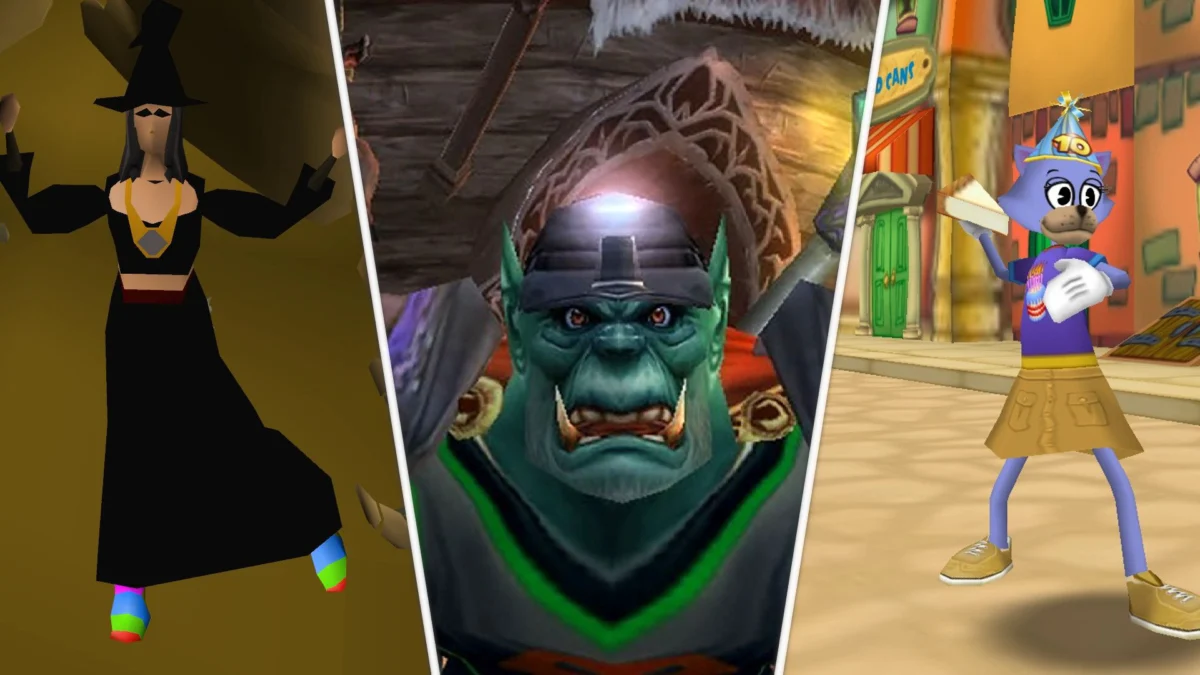
- The Origin: Created by a pre-teen player, Don L Legs achieved high-level status in Fishing and Cooking, trading commodities with veteran players to secure coveted gear like black armor with gold trim, a red face mask, and a black halberd.
- The Abandonment: Like many childhood gaming chapters, the account eventually fell dormant as real life intervened, leaving the character frozen in time.
- The Discovery: Upon logging back in during 2025 at age 33 (now 34), the author discovered the account was permanently banned due to hijacking and illicit activity performed by unauthorized third parties.
- The Redemption: Following an appeal to Jagex support—specifically credited to a representative or team alias known as "Mod Frenzy"—the account ban was successfully lifted, restoring access to one of the internet’s oldest surviving virtual identities.
Chronology: A Quarter-Century in Gielinor
To fully appreciate the gravity of Don L Legs’ resurrection, one must traverse the timeline of both the player’s life and the evolution of RuneScape, Jagex’s legendary MMORPG.
Phase I: The Age of Innocence (Early 2000s)
Long before modern high-definition graphics, microtransactions, and Twitch streams dominated the gaming landscape, millions of children logged onto RuneScape Classic or early iterations of RuneScape 2 via web browsers. Memories from this era are often hazy, filtered through the nostalgic lens of youth, yet certain milestones remain crystal clear.
Young Don L Legs did not conquer dragons immediately or engage in high-stakes PvP combat. Instead, the character specialized in the quiet, methodical art of the digital blue-collar worker. The player dedicated countless hours to Fishing and Cooking, rising through the ranks until reaching the upper echelons of those specific skill trees.
In the player economy of early RuneScape, these skills were currency. By operating as a virtual fishmonger, Don L Legs supplied high-level adventurers with cooked provisions in exchange for premier equipment. This industrious barter system yielded the ultimate adolescent status symbols: the sleek, intimidating black armor adorned with golden highlights, a striking red face mask, and the formidable reach of a black halberd.
Phase II: The Long Silence (Mid-2000s to 2024)
Without fanfare or dramatic declaration, the adventures of Don L Legs came to an end. As is common in childhood, interests shifted, schoolwork piled up, and the browser tab was closed for what felt like the final time. Players rarely recognize the precise moment they log out of an MMO for the last time as children; it simply dissolves into the background of growing up.
Despite abandoning the game, the author preserved the account credentials—a digital time capsule tucked away in a mental vault. Decades passed. The gaming industry evolved through console generations, the rise of mobile gaming, and the transition to Old School RuneScape (OSRS). Life moved forward: childhood turned to adolescence, adolescence to adulthood, bringing career milestones, responsibilities, and the quiet passage of time.
Phase III: The 2025 Awakening and Betrayal
Nearly twenty-five years after first setting foot in Gielinor, the author—now 33 years old (turning 34)—felt the familiar pull of nostalgia. Armed with childhood login details, a decision was made to log back into the account and see what remained of Don L Legs.
The homecoming, however, was immediately marred by disappointment. The account dashboard did not greet a veteran adventurer returning to a peaceful retirement; instead, it flashed a grim notice: Permanently Banned.
Sometime during the multi-decade dark period, cybercriminals or gold-farming syndicates had compromised the dormant account. Without the original owner’s knowledge, Don L Legs had been drafted into the shadowy underworld of botting networks or illicit real-world trading, committing infractions that triggered Jagex’s automated and manual security sweeps.
Phase IV: The Intervention of Mod Frenzy (2025)
Facing the permanent erasure of a foundational digital artifact, a sense of profound grief set in. Despite years of inactivity, the psychological attachment to the character remained intact. Refusing to let Don L Legs fade into ignominy, the author submitted an appeal ticket to developer Jagex.
Miracles do happen in customer support tickets. Reviewing the historical context, a Jagex support representative operating under the moniker "Mod Frenzy"—whether an individual employee or a collective team pseudonym—evaluated the appeal and made the executive decision to overturn the ban. The account was restored, bridging a 25-year chasm and uniting an adult player with the pixelated avatar of their youth.
Supporting Data and Context
The story of Don L Legs is not an isolated incident; it reflects broader trends within the longevity of legacy MMOs and account security challenges in the gaming industry.
The Longevity of Legacy MMOs
RuneScape, launched initially in January 2001 by brothers Andrew and Paul Gower, stands as one of the longest-running and most successful MMORPGs in history. According to historical data from Jagex, hundreds of millions of accounts have been created over the past two decades.
| Metric / Aspect | Early 2000s Era (RuneScape Classic / RS2) | Modern Era (OSRS / RuneScape 3) |
|---|---|---|
| Graphics Engine | 2.5D Java Applet / Low-poly 3D | Updated proprietary engines / Mobile ports |
| Player Base Demographics | Predominantly children and teenagers | Aging millennial demographic (avg. ages 25–40) |
| Account Security | Basic username/password combinations | Two-factor authentication (2FA), Jagex Accounts |
| Economy Driver | Manual skilling and direct player barter | Grand Exchange, automated markets, gold-farming bots |
The demographic shift of RuneScape players is heavily skewed toward adults in their late 20s and 30s who return to the game for therapeutic nostalgia—a phenomenon heavily capitalized upon by the 2013 launch and subsequent sustained success of Old School RuneScape.
Account Hijacking Trends
Dormant accounts represent prime targets for cybercriminal organizations. Because older accounts lack modern security protocols like two-factor authentication (2FA) or mandatory Jagex Account integration, they are frequently harvested via credential-stuffing attacks. Hackers utilize stolen databases from unrelated website breaches to test old combinations against legacy gaming platforms, converting abandoned avatars into automated bots used for resource gathering or RMT (Real-Money Trading) operations.
Official Responses and Industry Perspective
While Jagex maintains strict automated security parameters to protect its virtual economy from malicious actors—issuing hundreds of thousands of bans annually for botting and real-world trading—the developer also implements human review processes for legacy appeals.
In statements regarding account recovery and security, Jagex representatives have repeatedly emphasized the importance of modern account migration. The introduction of the Jagex Account system in recent years aims to eliminate traditional vulnerabilities by centralizing security across multiple characters with advanced multi-factor protection.
When reached for informal reflection regarding customer support intervention cases like that of Don L Legs, industry analysts note that humanizing support roles fosters immense brand loyalty. The intervention by support staff such as "Mod Frenzy" highlights a critical corporate philosophy: recognizing that for millions of players, virtual assets represent genuine emotional investments spanning decades.
Implications: The Emotional Value of Digital Heritage
The resurrection of Don L Legs raises profound philosophical questions about ownership, memory, and identity in the digital age. As video games transition entirely from physical media to cloud-based, live-service ecosystems, players invest significant emotional labor into digital constructs that technically remain the property of corporate entities.
1. Digital Nostalgia as a Psychological Anchor
For adults navigating the stresses of modern life, childhood MMO characters serve as anchors to simpler times. Losing an account like Don L Legs is akin to losing a box of childhood photographs or a cherished childhood toy. The fact that Jagex chose to restore the account underscores a growing recognition within the gaming industry that digital memories hold real, non-monetary value.
2. The Vulnerability of Digital Heritage
Unlike physical heirlooms preserved in attics, digital heritage is fragile. It relies on active server infrastructure, corporate benevolence, and robust cybersecurity. The case of the hijacked RuneScape account serves as a cautionary tale for returning veterans: securing legacy credentials via modern authentication frameworks is paramount to preventing third-party exploitation.
3. A Tribute to the First Characters
Ultimately, tales like the restoration of Don L Legs validate a broader cultural sentiment shared across the global gaming community: may our first MMO characters never be forgotten. They are the pixels upon which modern gaming culture was built, representing the awkward, joyful first steps of an entire generation entering the boundless digital frontier.
For further reading on how the PC Gamer community honors their foundational avatars, check out the full feature archive on PC Gamer.

