

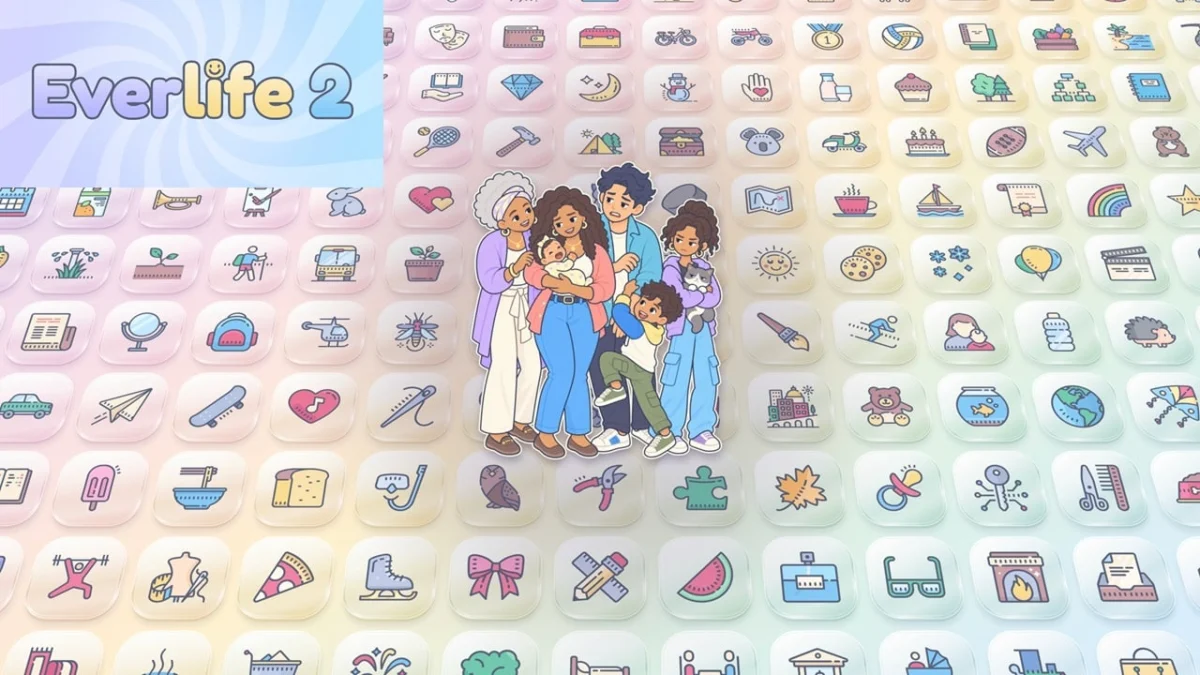
The landscape of mobile gaming has long been dominated by hyper-casual titles and fleeting experiences. However, a new contender has emerged that seeks to capture the complexity of the human experience in its entirety. Everlife 2 – Life Simulator, developed by Philip Kessler and published by Eververse, has officially arrived on mobile platforms. Serving as a standalone sequel to the acclaimed Everlife Classic, this title offers an expansive, narrative-driven experience that allows players to navigate the triumphs and tragedies of life, generation after generation.
For those unfamiliar with the original, the transition to Everlife 2 is seamless. While the predecessor was locked within the iOS ecosystem, this sequel marks a significant milestone by bringing the franchise to the Google Play Store, finally allowing Android users to participate in this intricate simulation universe without needing prior knowledge of the series’ lore.
The Architecture of a Life: Main Facts and Gameplay Mechanics
At its core, Everlife 2 is a single-player, text-based generational life simulator. The gameplay loop is built upon a foundation of "story cards"—a mechanic that provides players with thousands of branching narrative paths. From the moment of birth to the inevitability of death, the player is tasked with making a series of decisions that dictate the trajectory of their character’s existence.
From Childhood to Legacy
The journey begins with character creation, a process that is far more granular than typical mobile life sims. Players define their character’s physical appearance, birthday, zodiac sign, and backstory. These initial choices are not merely aesthetic; they influence starting values that ripple throughout the character’s life.
Once the character enters the world, the player is presented with a deluge of choices. Will your character be a diligent student, or will they risk expulsion by cheating on their exams? Will they pursue a stable, traditional path of marriage and homeownership, or will they descend into a life of crime and chaos? The game facilitates total player agency, allowing for both noble successes and spectacularly questionable life decisions.
Chronology and the Generational Engine
One of the most compelling aspects of Everlife 2 is its temporal scope. The game is not limited to a single life cycle. Once a character reaches the end of their narrative, the game transitions into a generational system. Players can continue the family lineage by stepping into the shoes of a descendant.
The Weight of Ancestry
This inheritance system is the true engine of Everlife 2. When a player takes control of a descendant, they do not start with a clean slate. The character inherits the accumulated property, financial assets, and familial relationships of their predecessor. More importantly, they inherit the consequences of past actions. If a grandfather squandered the family fortune or a parent left behind a reputation for scandal, the next generation must grapple with those realities. This creates a persistent world where history feels tangible and impactful, rather than static.
Supporting Data: The Scale of Simulation
To achieve such a deep level of immersion, the developers have employed a staggering amount of content. Everlife 2 features over one million words of handwritten text. This is not procedural generation; it is curated narrative content designed to feel authentic and responsive to player input.
Breadth of Experience
The game’s database includes thousands of unique scenarios and outcomes covering a wide spectrum of life’s realities, including:
- Education and Career: Players can navigate 35 distinct career tracks, which encompass 350 specific jobs. Climbing the corporate ladder involves navigating job interviews and advancing through ten tiers of promotion.
- Social Dynamics: Building and losing friendships, falling in love, and navigating the complexities of parenthood are central pillars of the experience.
- Lifestyle Choices: Beyond the major milestones, the game tracks hundreds of micro-actions. Whether it is working overtime to make ends meet, entering rehab to recover from addiction, or simply catching fireflies on a summer evening, these small moments add layers of texture to the larger narrative.
- The Supernatural and the Mundane: The game does not shy away from the fringes of reality. Alongside standard life management, players may encounter supernatural events, crime-related dilemmas, and fame-seeking opportunities, ensuring that no two lives ever feel exactly the same.
Official Stance and Accessibility
Philip Kessler and the team at Eververse have positioned Everlife 2 as an accessible, "pick-up-and-play" experience that respects the player’s time and resources. Unlike many modern mobile games that gate progress behind aggressive monetization, Everlife 2 is free to download on the Google Play Store.
Offline Utility and Expansion
A critical feature for many mobile gamers is the ability to play without a constant internet connection. Everlife 2 functions entirely offline and does not require users to create an account, prioritizing privacy and convenience.
For those who wish to deepen their experience, the developer offers optional expansion packs. These include:
- Nightfall: Adding deeper, perhaps darker, narrative elements.
- Fame & Fortune: Focused on the complexities of wealth and celebrity status.
- Life of Crime: Expanding the illicit and high-risk career paths.
- Dreams & Degrees: Focused on academic pursuits and professional specialization.
These expansions are presented as entirely optional, allowing players to tailor the depth of their simulation to their own preferences without feeling pressured to participate in a "freemium" trap.
Implications for the Mobile Simulation Genre
The release of Everlife 2 carries significant implications for the mobile gaming market. It challenges the prevailing trend of "low-effort" simulators that rely on repetitive tapping mechanics, proving that there is a substantial audience for long-form, text-heavy narrative experiences.
The Shift Toward Narrative Depth
By focusing on a generational model, Everlife 2 aligns itself with the "legacy" genre of gaming, where the satisfaction comes from building something that lasts. It elevates the player from a simple participant to an architect of a multi-generational saga. This approach fosters an emotional connection between the player and their virtual characters—when a character dies, it isn’t just a "game over" screen; it is the end of a personal story that the player has meticulously crafted over hours of gameplay.
Market Accessibility
The move from an iOS-exclusive Everlife Classic to a multi-platform release for Everlife 2 suggests a strategic effort to consolidate the life-sim community. By lowering the barrier to entry, Eververse is tapping into the vast Android user base, which has historically been underserved in the high-quality, text-based narrative genre.
Conclusion: A Living Legacy
Everlife 2 – Life Simulator is a masterclass in scale and scope. It manages to capture the chaotic, often messy, and deeply personal nature of human life within the confines of a mobile application. Its strength lies in its refusal to simplify the human experience. Whether you are aiming for a career as a CEO, attempting to build a healthy family, or testing the limits of how much trouble one character can get into, the game provides a sandbox that feels both infinite and intimate.
As the mobile gaming industry continues to evolve, titles like Everlife 2 serve as a reminder that the most compelling technology doesn’t always involve high-fidelity graphics or complex physics engines. Sometimes, the most immersive experience is a well-told story, a meaningful choice, and the opportunity to leave a mark on a world that remembers exactly what you did. For those looking to experience the full breadth of a simulated existence, Everlife 2 is a mandatory installation on any mobile device.

