

The world of roguelike gaming is built upon the fragile foundation of probability. Players expect—and demand—that every card draw, enemy encounter, and loot drop be governed by the cold, impartial hand of fate. However, when a dedicated player discovered that the start of their Slay the Spire 2 run was fundamentally rigged, it sparked a development investigation that has now resulted in a major balance patch, fundamentally changing how the game handles its internal logic.
For fans of the genre, the news that a game’s "randomness" is compromised is more than a technical footnote; it is a fundamental breach of the unspoken contract between developer and player. This week, Mega Crit addressed this breach head-on, validating a fan’s obsessive, eight-hour investigation into why the "Neow’s Bones" mechanic was producing skewed outcomes.
The Anatomy of an Investigation: A "Descent Into Madness"
The story begins not in a developer studio, but on the Slay the Spire 2 subreddit. User tckmn posted a detailed technical breakdown—a manifesto that would eventually be cited directly in official patch notes—detailing an "eight-hour descent into madness."
The player had been testing the "Neow’s Bones" starting option, a high-stakes gamble where players accept a random curse in exchange for two powerful starting relics. It is a quintessential Slay the Spire risk-reward proposition. However, tckmn began to notice a recurring pattern: when the game’s procedural generation placed them in the "Underdocks" at the start of Act 1, the probability of receiving the "Debt" curse—a particularly punishing card that can cripple an early-game economy—skyrocketed to a staggering 54%.
In a truly random system, the starting location of a run should have no mathematical correlation with the specific curse granted by Neow. Yet, the data suggested that the game was effectively "cheating" by linking these two disparate events. The player’s persistence in documenting this anomaly proved that the game’s internal seed generation was leaking information across different modules of the code.
Understanding Pseudo-Randomness: The "Seed" Problem
To understand the implications of this discovery, one must first understand how games like Slay the Spire 2 generate "randomness." Computers are inherently deterministic; they cannot be truly random. Instead, developers use Pseudo-Random Number Generators (PRNGs).
A PRNG is a mathematical algorithm that takes a "seed" value—a starting number—and uses it to generate a long, complex sequence of numbers that appear random. If you feed the same seed into the same PRNG, you will always get the exact same sequence.
Mega Crit’s error, as they later acknowledged, lay in how they distributed these seeds across different game systems. They assumed that by feeding different seeds to different PRNG instances, the results would remain distinct and unrelated. However, the logic governing the Act 1 environment generation was effectively "talking" to the logic governing the Neow’s Bones curse table.
As the developers explained in their patch notes: "The decimals which governed which Act 1 you got also happened to correlate to your Neow’s Bones curse roll. For example, if our act roll is >0.5 (we’re in the Underdocks), then it’s highly likely that our Neow’s Bones curse roll will be <0.5, which cuts the potential curses you can obtain in half."
Essentially, the game was using the same pool of mathematical "space" to decide two different things, leading to a collision that made specific runs feel fundamentally cursed before they even began.
Official Response: Restoring the Integrity of the Spire
The reaction from Mega Crit was swift and remarkably transparent. Rather than dismissing the player’s findings as an edge case, they integrated the fix into the latest major balance update.
"Your suffering is now truly random!" the developers jokingly noted in the patch log, before pivoting to a more serious technical explanation. They have moved to a more robust system of PRNG management, ensuring that the seed responsible for the environmental layout is cryptographically isolated from the seed responsible for loot and curse tables.
This move is a vital step for the game’s long-term health. Slay the Spire is a game built on the concept of "solved" play, where top-tier players calculate probabilities to the decimal point. If those calculations are based on a biased system, the entire competitive integrity of the game is compromised. By fixing this, Mega Crit has ensured that a "bad run" is now a result of poor decision-making or bad luck, rather than a hidden flaw in the game’s architecture.
Beyond the Bug: A Massive Balance Overhaul
While the RNG fix stole the headlines, the new patch is a massive content update that touches almost every aspect of the game’s current build. The meta-game for the "Silent" class, in particular, is being completely upended, forcing veterans to rethink their strategies.
The Rise and Fall of Cards
The balance changes are extensive. Some cards, such as "Monarch’s Gaze," have received significant buffs, making them more viable in higher-ascension play. Conversely, long-time staples like "Reflect" have been nerfed, forcing players to diversify their deck-building strategies. These changes are part of the standard iterative process for a game in development, but they carry extra weight given the game’s recent shift in RNG logic.
The End of the Doormaker
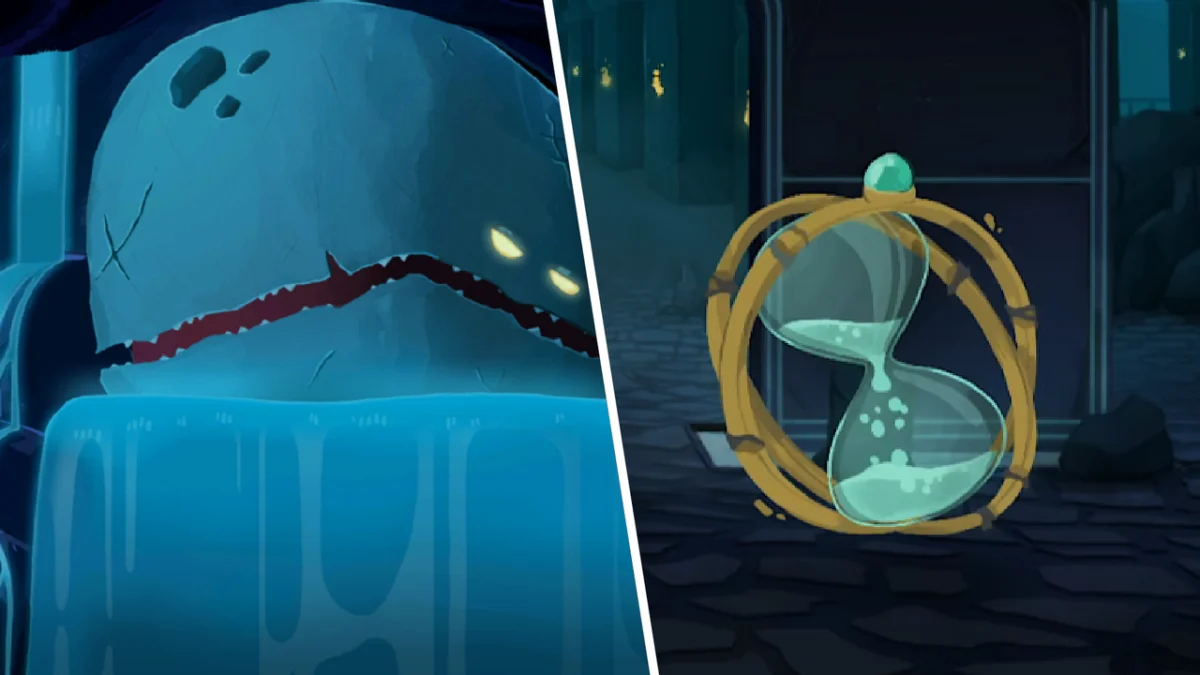
Perhaps the most visually striking change is the removal of the boss known as "The Doormaker." According to Mega Crit, the decision to remove him was based on a desire for higher-quality gameplay loops in Act 3.
"While Doormaker had interesting micro-decisions in the fight, he was over the complexity threshold of what we want," the developers stated. They found that the boss was simply too cumbersome to balance effectively, leading to a design that felt disconnected from the rest of the game’s rhythm.
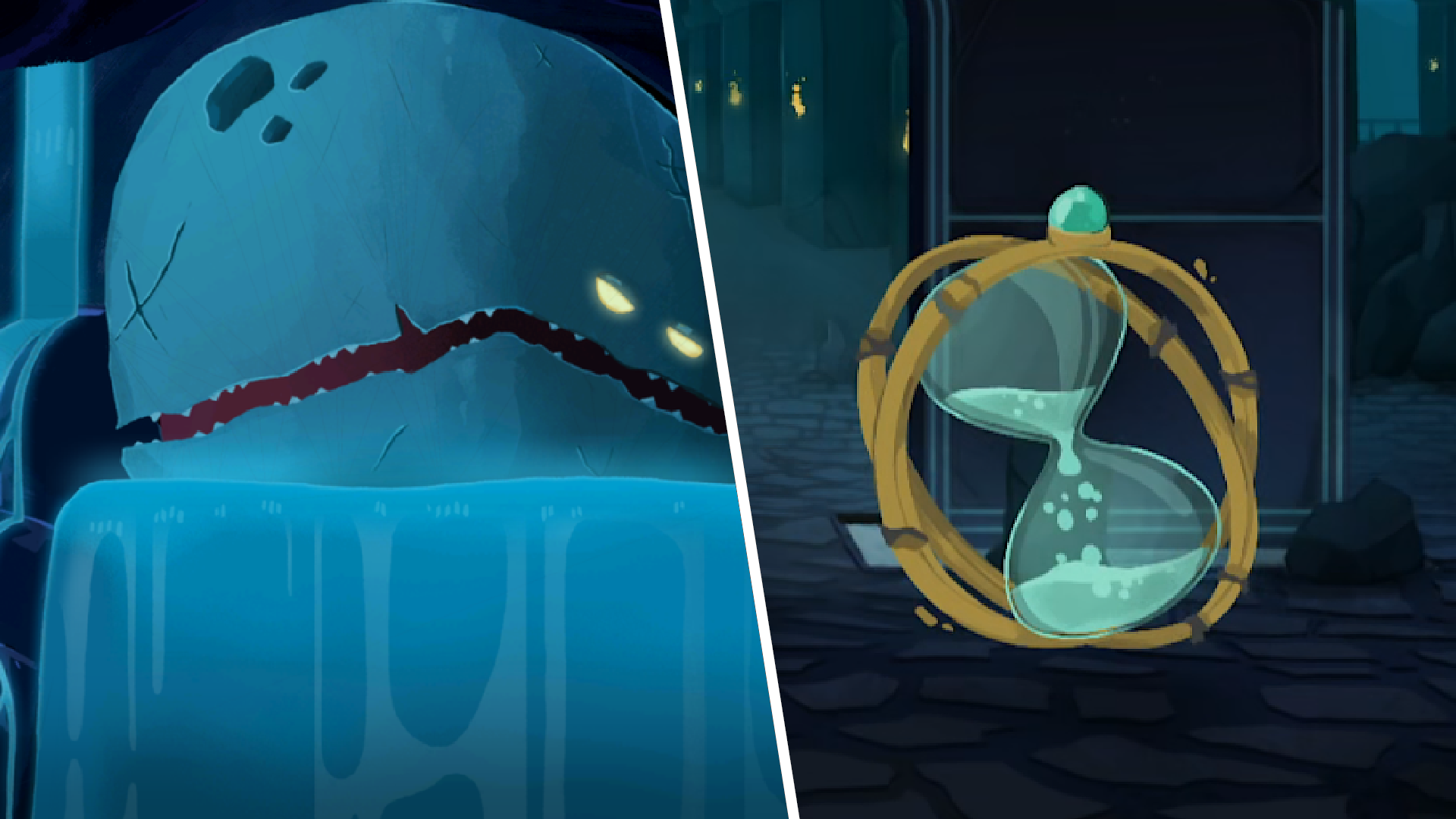
He has been replaced by "The Aeonglass," an ominous and thematic addition to the game’s boss roster. The Aeonglass introduces a punishing "DPS race" mechanic, forcing players to manage a hand filled with "Wither" curses. These curses don’t just sit there—they deal damage to the player and ramp up in intensity as the fight progresses. It is a classic Slay the Spire boss design: a mechanical challenge that tests the player’s ability to balance offense and defense under extreme pressure.
Implications for the Future of Roguelikes
This incident serves as a case study for the modern era of "Early Access" and live-service gaming. The relationship between the developer and the community is now more symbiotic than ever.
- The Power of Community Auditing: The fact that a single player could spend eight hours verifying a theory and then effectively change the game’s code is a testament to the dedication of the Slay the Spire fanbase. Developers who provide the tools and transparency for this kind of community involvement often find themselves with a more polished, stable product.
- Technical Debt and Transparency: Mega Crit’s decision to own the PRNG error publicly is a masterclass in community management. By explaining why the error occurred rather than just patching it silently, they have reinforced the trust of their player base.
- Iterative Design: The removal of the Doormaker proves that even established designs are not sacred. If a mechanic does not fit the "complexity threshold," it is better to excise it entirely than to force a balance fix that may not work.
Conclusion
As Slay the Spire 2 continues its development cycle, it is clear that the game is in the hands of a team that is not only listening to its players but is willing to perform deep-tissue surgery on the game’s logic to ensure a fair experience.
For the average player, this update means a cleaner, more reliable experience. For the theory-crafters and speedrunners, it means the rulebook has been rewritten. The RNG is no longer a shadow-puppet theater controlled by the environment; it is a true, cold, and unpredictable challenge.
As for the player who spent eight hours in a "descent into madness" to uncover this? They have successfully cemented their legacy in the patch notes of one of the most anticipated games of the year. In the world of Slay the Spire, sometimes the greatest relics aren’t found in a chest—they are forged in the fires of community-led bug hunting.

