

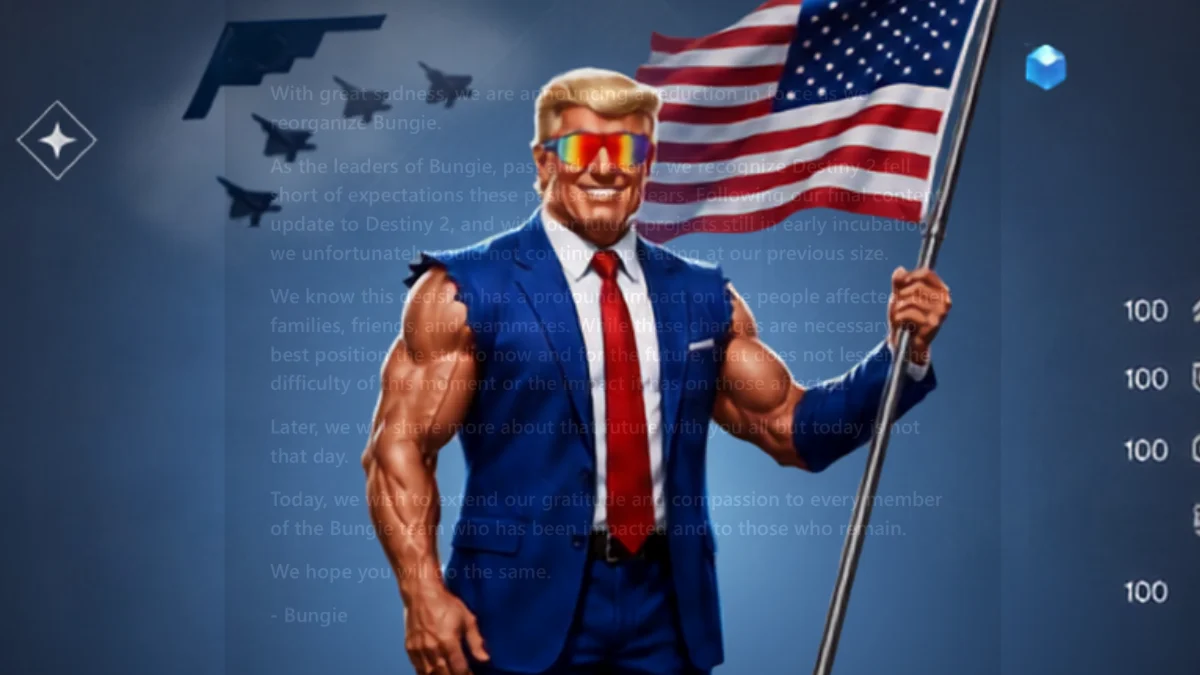
In an era where the boundaries between government communications and internet subculture have blurred, the official White House X (formerly Twitter) account has reached a new, controversial milestone. The administration recently published an AI-generated image depicting Donald Trump as a hyper-muscular, Destiny 2-inspired "Guardian." The image, which features the former president wielding the iconic Gjallarhorn rocket launcher, has ignited a firestorm of debate, sitting at the intersection of political propaganda, the ethics of generative AI, and the grim reality of the current gaming industry landscape.
The Viral Image: A Study in Political Symbolism
The graphic in question is a masterclass in unsubtle visual messaging. Utilizing generative AI to render a "Duke Nukem-esque" version of Donald Trump, the image places the figure against a backdrop of fighter jets and a Rolls Royce. In a nod to the Destiny franchise, the character sheet displays a "Power Level" of 4,700—a figure that exists far beyond the actual mechanics of the game, where the current ceiling sits at 550.
Most notably, the image features a B-2 Spirit stealth bomber as a "companion." Given that each B-2 unit carries a price tag exceeding $2 billion and was recently utilized in U.S. military operations against Iran, the inclusion is clearly intended to telegraph strength and military dominance. However, the juxtaposition of a beloved science-fiction video game aesthetic with the high-stakes reality of American foreign policy has left many observers questioning the strategic intent—and the taste—of the administration’s social media team.
A Growing Pattern: The Government’s Videogame Pivot
The Destiny 2 post is far from an isolated incident. Over the past several months, federal departments have increasingly turned to AI-generated, video-game-themed imagery to reach younger demographics and disseminate official messaging.
A Chronology of Recent "Meme Diplomacy"
- The GTA VI Campaign: Within the last seven days, both the Department of Labor and Customs and Border Protection have released materials riffing on the aesthetic and promotional art of Grand Theft Auto VI.
- The Wind Waker Initiative: Earlier today, the Department of Homeland Security utilized a visual style reminiscent of The Legend of Zelda: The Wind Waker to celebrate the United States Coast Guard.
- The Iran Propaganda Spray: This strategy reached a darker inflection point in March, when the White House utilized clips from various video games—including the iconic dialogue of CJ from Grand Theft Auto: San Andreas—to frame and promote military actions in Iran.
This trend suggests a concerted, top-down decision to move away from traditional press releases in favor of "native" social media content. Yet, as media analysts have noted, the disconnect between the playful nature of these games and the gravity of the government actions being promoted has created a sense of "malevolent parody" that is increasingly difficult for the public to reconcile with official statecraft.
The Bungie Paradox: Why the Timing Matters
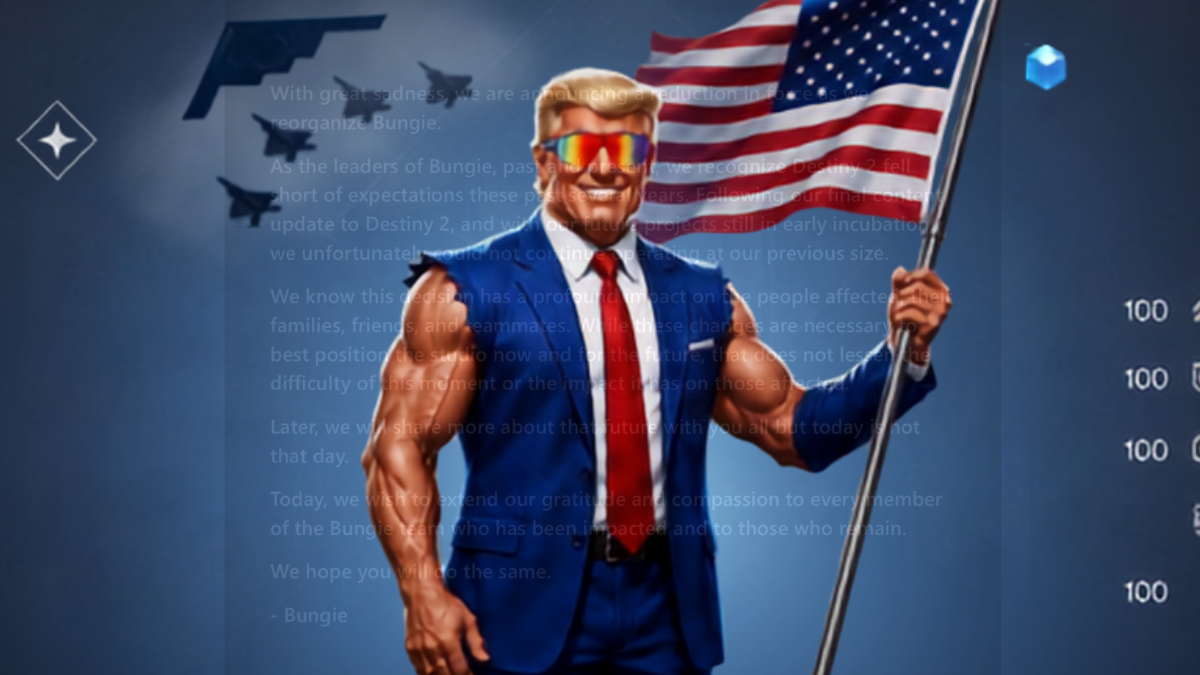
The most severe criticism of the Destiny 2 post stems from its catastrophic timing. On the very day the image was published, Bungie—the developer behind Destiny 2—announced a series of devastating, company-wide layoffs.
Sony executive Hermen Hulst confirmed that a "significant number of employees" were affected, including the majority of the Destiny team and several members of the Marathon project. To many in the gaming community, the White House’s decision to use a Destiny motif to promote political imagery while the developers behind that very game were cleaning out their desks felt tone-deaf, if not outright cruel.
Whether the post was scheduled in advance or was a result of genuine ignorance regarding the state of the gaming industry, the fallout highlights the dangers of government agencies attempting to "play along" with internet culture without understanding the communities they are borrowing from. When a government account attempts to leverage a cultural product, it implicitly endorses the current state of that product. By celebrating Destiny 2 at the exact moment the studio is dismantling its workforce, the White House inadvertently placed itself in the crosshairs of a community already grieving the loss of "generational talent."
Supporting Data: The Costs of Cultural Appropriation
The irony of the White House using a B-2 bomber as an "accessory" in an AI-generated meme is not lost on economic observers. The $2 billion-per-unit cost of the B-2 bomber stands in stark contrast to the economic instability currently plaguing the tech and gaming sectors.
According to industry trackers, 2024 has been a year of historic contraction for the gaming industry, with over 10,000 developers laid off in the first half of the year alone. The juxtaposition of a government touting the cost of a single stealth bomber while its domestic creative workforce faces systemic collapse serves as a poignant, if unintentional, critique of modern fiscal priorities.
Official Responses and Public Sentiment
The White House has yet to issue a formal statement regarding the backlash, maintaining its silence as the image continues to circulate. In contrast, the gaming community has been vocal. Developers and industry commentators have characterized the move as a hollow attempt at "relatability" that lacks the tact required for high-level political communication.
Edward Bernays, the father of modern public relations, once argued that the manipulation of the masses should be a subtle art. By contrast, the current administration’s reliance on blunt-edged AI imagery represents a shift toward what some call "post-truth communication"—where the visual spectacle takes precedence over the actual substance of the message.
The Broader Implications for Statecraft
What does this signal for the future of government communications? The reliance on AI to generate memes is a low-cost, high-engagement strategy. It is designed to hack the algorithms of platforms like X, favoring high-contrast, recognizable imagery that triggers emotional responses.
However, there are three primary risks to this approach:
- Alienation of Digital Communities: By attempting to co-opt the aesthetic of games without respecting the culture or the labor conditions of the creators, the government risks being viewed as a parasitic entity, further eroding trust among younger voters.
- The "Uncanny Valley" of Policy: When policy is communicated through deep-fried, AI-generated memes, the policy itself becomes subject to the same skepticism as the image. If the government cannot be "real" in its depictions, the public is increasingly likely to doubt the reality of the actions being depicted.
- Intellectual Property and Ethics: The use of copyrighted assets or heavily derivative AI art by federal agencies sets a precarious legal and ethical precedent. While the government has wide latitude, the optics of "stealing" the visual identity of a private company to promote a partisan figure are fraught with potential for conflict.
Conclusion: A Call for Tact
The "Guardian Trump" image is a snapshot of a government struggling to navigate a digital landscape that is moving faster than its institutional capacity to understand it. In its rush to appear relevant, the administration has stumbled into a minefield of industrial tragedy and public cynicism.
If the White House intends to continue its foray into the world of gaming, it may need to trade its AI-generated memes for a more nuanced understanding of the industries and communities it chooses to reference. Until then, these posts will likely remain what they are today: a jarring, neon-lit reminder that the gap between the halls of power and the realities of the modern creative economy has never been wider. As developers continue to respond with dignity and calls for better labor protections, the government’s attempt to "game" the system appears less like a clever strategy and more like a failure of empathy in the digital age.

