

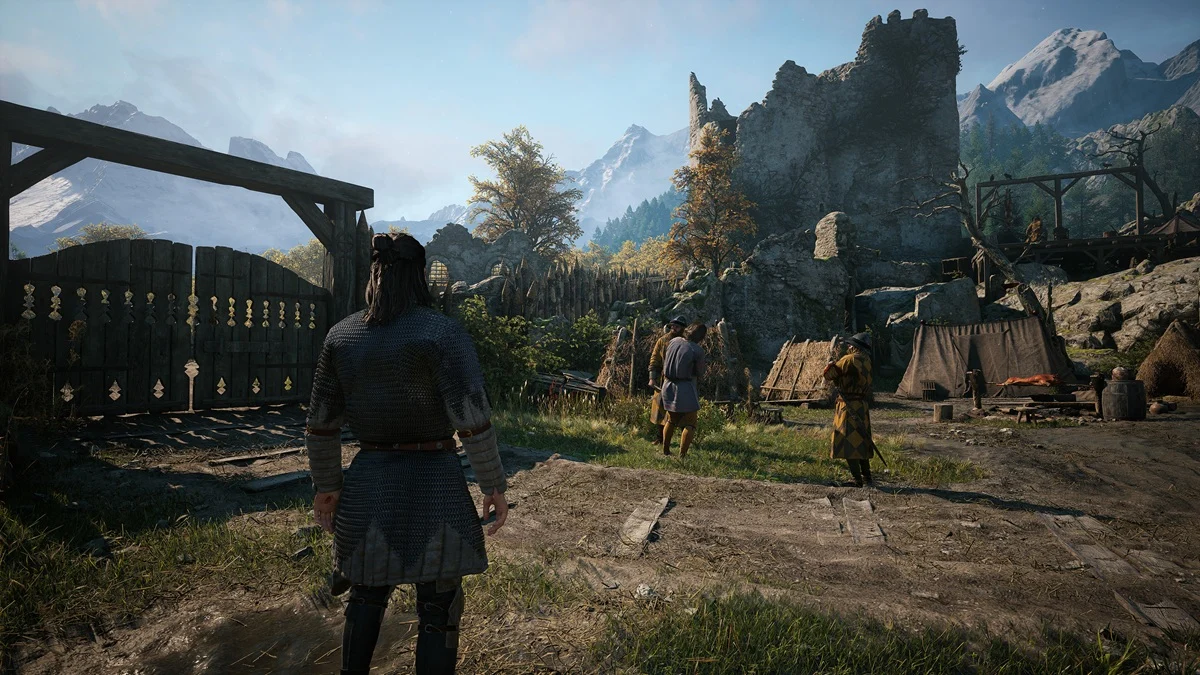
As the gaming industry sets its sights on the latter half of 2026, one title has emerged from the shadows of anticipation to dominate the conversation: The Blood of Dawnwalker. Developed by the newly formed powerhouse studio Rebel Wolves, this upcoming PlayStation 5 title is not merely another entry in the crowded fantasy RPG landscape; it is a meticulously crafted contender for Game of the Year. With a scheduled release date of September 3, 2026, the game has already begun to generate the kind of critical consensus usually reserved for established franchises.
Behind the curtains of development sits a team of industry veterans, primarily former core members of CD Projekt RED. Their pedigree, which includes seminal work on The Witcher 3: Wild Hunt and Cyberpunk 2077, has imbued The Blood of Dawnwalker with an expectation of narrative depth and systemic complexity that, according to early hands-on impressions, the studio is not only meeting but exceeding.
The Genesis: A Pedigree of Excellence
To understand the fervor surrounding The Blood of Dawnwalker, one must first understand the talent behind the code. Rebel Wolves was founded on the philosophy of returning to the "old school" roots of role-playing games, where player agency is not a marketing buzzword but the foundational pillar of the experience.
The studio’s leadership team comprises developers who defined the modern narrative RPG. By channeling the dark, morally gray storytelling of the Continent from The Witcher and the gritty, vertical world-building of Night City, the team has aimed to create a synthesis of these two design philosophies. The result is a game that feels both familiar to genre veterans and refreshingly innovative in its execution.
Chronology of Development
- Late 2022: Rebel Wolves is formed by industry veterans, promising a "next-gen" AAA narrative RPG.
- Mid-2024: The first teaser trailer drops, showcasing a high-fantasy aesthetic with a darker, more grounded tone.
- Summer 2025: A closed-door demo is presented to select media outlets, sparking the first wave of industry buzz.
- Summer 2026: Official gameplay reveals occur at Summer Game Fest, confirming the game’s deep combat mechanics and non-linear quest structure.
- July 2026: A deep-dive PlayStation Blog post details the "time-driven" quest system, cementing the game’s status as a technical marvel.
- September 3, 2026: Official global launch on PlayStation 5, PC, and Xbox Series X/S.
Narrative Execution: The New Gold Standard
Perhaps the most significant praise leveled at The Blood of Dawnwalker concerns its writing. In an era where many open-world games rely on repetitive, checklist-style quest design, The Blood of Dawnwalker opts for a more curated approach.
"The Blood of Dawnwalker seems like it offers a ridiculous amount of flexibility in how you can play it and how its story can shake out," reported GameSpot during their recent preview session. This sentiment of "narrative flexibility" is echoed across the industry. Unlike traditional RPGs, where quest outcomes are often binary (good vs. evil), Dawnwalker appears to utilize a complex web of consequences that evolve based on the player’s unique approach to time and social interaction.
The official Xbox News outlet highlighted the game’s "high level of narrative execution," specifically praising the dialogue trees and the depth of the non-player characters. It is evident that the writing team has prioritized world-building that rewards curiosity rather than just combat prowess.
Systemic Innovation: Beyond the Blade
While the narrative serves as the game’s soul, its mechanical systems provide the backbone. One of the most daring design choices in The Blood of Dawnwalker is its combat system. Eurogamer noted that the studio’s biggest risks—including the combat fluidity and the unconventional time-driven quest mechanics—work "surprisingly well."
The Time-Driven Quest System
Unlike most RPGs, where quests remain static until the player arrives, The Blood of Dawnwalker implements a dynamic world-state system. If a player ignores a quest to save a village from a monster attack, the world reacts. The village may be destroyed, a key merchant might disappear, or a secondary conflict might escalate into a full-scale war. This temporal pressure forces players to make difficult choices, effectively making the game world a living, breathing entity that refuses to wait for the protagonist.
Combat Mechanics
The combat is described as a hybrid of tactical precision and visceral action. It avoids the "button-mashing" tropes of modern action games, requiring players to study enemy patterns and utilize the environment to their advantage. Whether using magic or traditional weaponry, the weight and impact of every swing are designed to mirror the stakes of the narrative.
Industry Implications and Competitive Landscape
The release of The Blood of Dawnwalker in September 2026 is strategically positioned to capture the fall gaming market. However, its implications for the industry go far beyond a quarterly sales report.
If The Blood of Dawnwalker succeeds as expected, it will likely signal a shift away from the "Ubisoft-style" open-world design—which favors map saturation and repetitive activities—toward a more dense, reactive, and narrative-focused experience. This is a direct challenge to the current industry status quo. By prioritizing "quality of quests" over "quantity of content," Rebel Wolves is betting that modern players are suffering from open-world fatigue and are ready for a tighter, more meaningful experience.
Official Responses and Critical Consensus
The initial reception on platforms like ResetEra has been overwhelmingly positive, with users dissecting every frame of the Summer Game Fest trailer. The discourse surrounding the game is notably more analytical than the typical "hype cycle" seen for other AAA titles, suggesting that the core RPG audience is deeply invested in the promise of a return to high-quality, choice-driven gameplay.
Why This Matters for the PlayStation 5
For Sony, The Blood of Dawnwalker represents a crucial win in the mid-cycle of the PlayStation 5. As the hardware matures, players are looking for titles that truly utilize the console’s SSD capabilities and processing power to handle complex systems—not just high-resolution textures. The "time-driven" quest system and the depth of the world-state tracking are exactly the kind of features that demonstrate why the current console generation is a technological leap forward.
Looking Toward September 3
As we approach the September 3 launch, the focus will undoubtedly shift toward technical performance and the scope of the final build. The question remains: can the game maintain this level of narrative depth across a 60-to-100-hour campaign?
Based on the evidence provided by IGN, GameSpot, and the PlayStation Blog, the foundation is undeniably strong. The synergy between the former CD Projekt RED talent and a fresh, ambitious development team has resulted in a project that feels both classic and revolutionary.
For those who grew up playing the titans of the genre—The Witcher 3, Dragon Age, and Baldur’s Gate—The Blood of Dawnwalker feels like the next logical step in the evolution of interactive storytelling. It is a title that demands your attention, not because of its marketing budget, but because of the sheer density of its design.
Final Thoughts
Is the gaming community ready for a title that forces them to live with their mistakes? If the current wave of positive sentiment is any indication, the answer is a resounding "yes." The Blood of Dawnwalker is not just aiming to be a hit; it is aiming to be a landmark. As the industry watches, the countdown to September 3 begins, with the promise that the "Dawnwalker" may very well change the way we perceive the role-playing game forever.
Are you prepared to face the consequences of your choices in the world of The Blood of Dawnwalker? The journey begins this autumn, and for many, it will be the defining gaming experience of 2026.

